 White Noise
 Non-Cover Scene Prompt
A prompt direction that asks Member Image Studio for a fresh scene or product-use image rather than another book-cover-style visual.
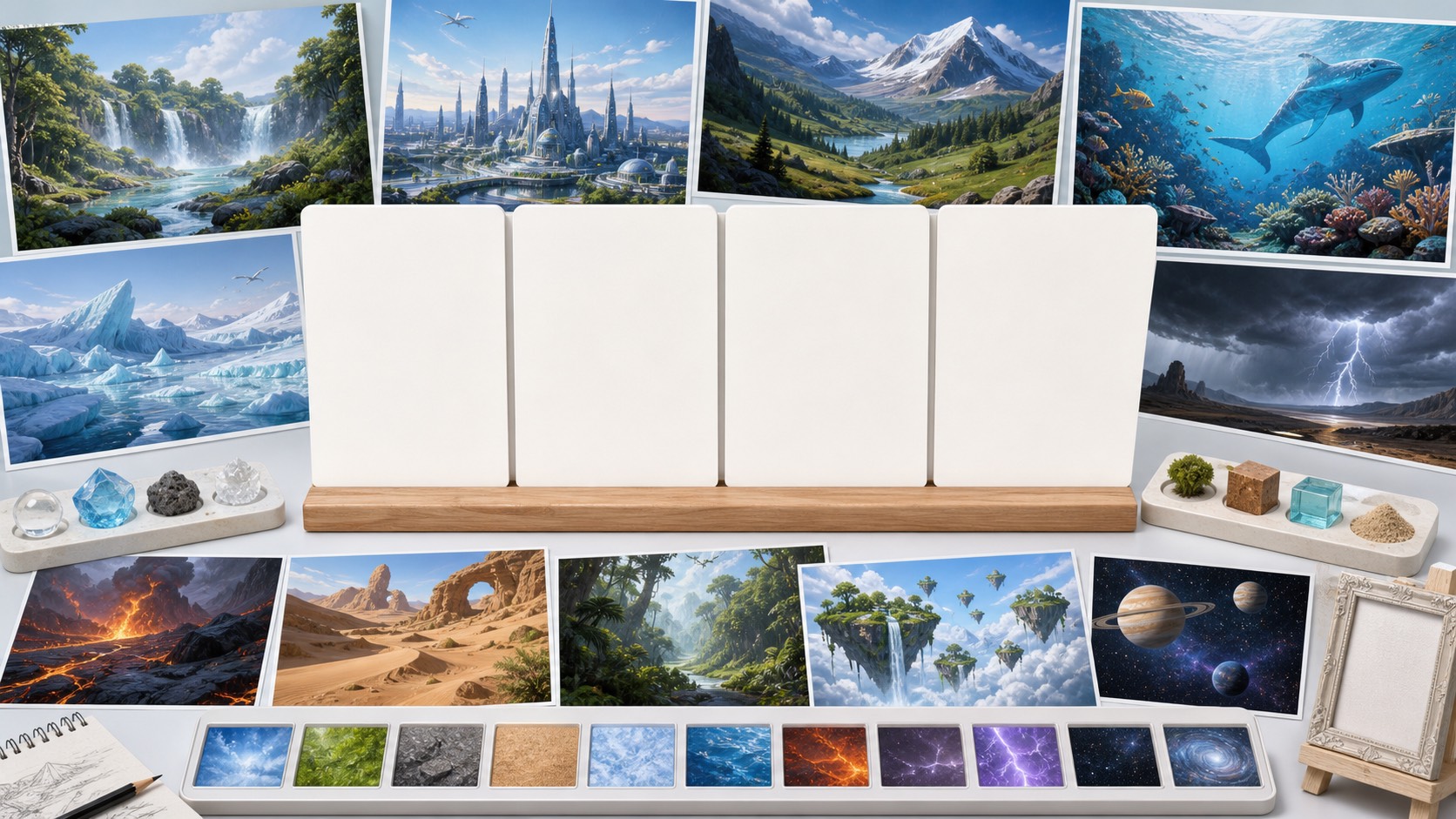
Non-Cover Scene Prompt defines a White Noise reference term and keeps source-world imagination separate from established present-day capability.
assets/encyclopedia/generated/non-cover-scene-prompt.jpg, for White Noise Inc. encyclopedia and editorial use. The image is illustrative and does not depict a shipping product or validated capability.Non-Cover Scene Prompt is a WN Encyclopedia reference entry. It defines a term used to translate White Noise Totality into careful public language, internal links, and practical research questions. The term should not be read as evidence that the underlying White Noise capability exists as a shipping product.
Definition and Scope
A non-cover scene prompt centers a specific world, workflow, instrument, or member task and records why the output is not cover art.
The scope is deliberately narrow. The entry names a boundary, artifact, or review practice. It does not authorize claims about working White Noise Computers, Replicators, engineered verses, synthetic suns, android labor, clinical continuity, or any other speculative system unless the evidence is separately supplied and clearly marked.
Source-World Context
The White Noise visual system can honor the book without making every image imitate a cover.
The source text is valuable because it organizes ambition at civilizational scale. The encyclopedia's job is to preserve that ambition while restoring the missing steps: instruments, operators, energy, latency, consent, maintenance, social license, and negative results.
Present-Day Frame
The grounded frame is AI image prompting, member creativity, generated scene design, visual provenance, and Totality worldbuilding.
This present-day frame is the useful bridge between the book and the site. It gives WN Academy a teachable exercise, gives WN Labs a bounded research question, gives services a scoping vocabulary, and gives readers a way to understand where speculation ends.
Failure Modes
The failure mode is cover lock-in, where the visual universe narrows to a single artifact type.
A second failure mode is category drift: education begins to sound like accreditation, provenance begins to sound like investment return, research language begins to sound like deployment, or a source-world idea begins to sound like a present commercial product. WN Encyclopedia entries should slow that drift.
Governance and Use
Use the term when it clarifies responsibility. Avoid the term when it merely decorates a page with the feeling of review. A good use identifies who can inspect the claim, who can refuse, what evidence would change the status, and what language should remain off the page until stronger proof exists.
Related Entries and Articles
- Fresh Scene Prompts Not Book Covers
- Source Cards For Image Studio Canvas
- Redraw Lineage For Totality Worlds
- Source Card Canvas Link
- Prompt-Scene Rights Gate
- Saved-Chat Redraw Continuity Room
- Assistant-Canvas Coherence Note
- Web-Scale Training Claim Fence
- Member Canvas Evaluation Harness
- Image Provider Receipt
- Export Packet Provenance Trail
- Generated World Null Result
- Member Studio Memory Boundary
- Licensed Visual Source Register
- Exchange Asset Seed Custody
- Academy Image Boundary Lesson
- Generated Scene Lab Brief
- AI Output Route Card
- Totality World Redraw Lineage
- Style-Transfer Source-Rights Review
- Image Studio Refusal State
- Generative Canvas Research Instrument
References
- Perlov, V. White Noise Totality: Engine of Infinite Possibilities (Expanded Unified Edition, 2026). Primary source. Book page
- White Noise Inc. public product, service, Academy, Labs, Exchange, Project Utopia, and terms pages. Site overview