 White Noise
 Programmable Matter Inspection Cadence
Programmable Matter Inspection Cadence defines a WN reference term for an inspection cadence for programmable matter and Blue Gue demonstrations, with source
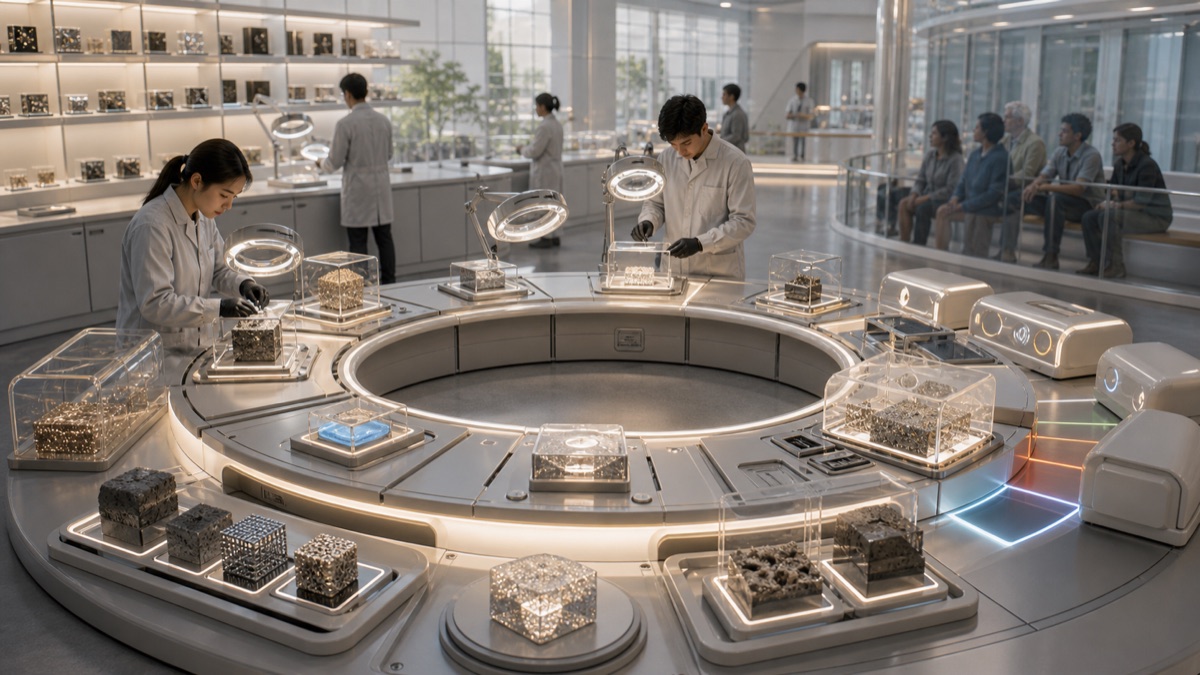
Programmable Matter Inspection Cadence keeps a White Noise concept tied to source status, practical limits, and governance use.
Programmable Matter Inspection Cadence is a WN Encyclopedia reference term for an inspection cadence for programmable matter and Blue Gue demonstrations. It names a review artifact, interface pattern, or language boundary used to keep White Noise Totality concepts separate from present-day capability.
Definition and Scope
The term describes an inspection cadence for programmable matter and Blue Gue demonstrations. It is not evidence that the underlying White Noise capability exists as a shipping product. Its scope is editorial, educational, research-scoping, and governance-oriented.
Use the term when it helps a page state source status, proof burden, consent, reversibility, and maintenance. Avoid it when it merely decorates speculative language with the appearance of review.
Source-World Context
In the source-world frame, Programmable Matter Inspection Cadence belongs to the larger White Noise program of computation, matter, medicine, settlement, intelligence, and civilization design. The book's ambition remains visible, but the encyclopedia restores the missing steps between imagination and accountable work.
Present-Day Frame
The grounded frame is smart materials, sample custody, public exhibits, inspection intervals, quarantine, recall, and retirement. Those disciplines can support lessons, diagrams, source cards, prototype criteria, dataset reviews, and public-facing disclaimers without implying that a far-future system already operates.
Failure Modes
The primary failure mode is letting responsive-material spectacle hide sample status, visitor safety, recall routes, or retirement conditions. A related failure mode is category drift: education starts to sound like accreditation, provenance starts to sound like investment return, research starts to sound like deployment, or a source-world idea starts to sound like a present product.
Governance and Use
The practical governance rule is to record sample status, handler, inspection interval, quarantine rule, recall route, and retirement trigger beside the exhibit. The minimum implementation should identify who can inspect the claim, who can refuse it, what evidence would change the status, and when the language must remain noncommercial or nonclinical.
Image provenance. GPT-generated reference image created for this entry on 2026-06-29; prompt intent: public materials lab with sealed programmable matter samples, inspection windows, quarantine trays, recall shelf, and visitor-safe rail.
Related Entries and Articles
References
- Perlov, V. White Noise Totality: Engine of Infinite Possibilities (Expanded Unified Edition, 2026). Primary source. Book page
- White Noise Inc. public product, service, Academy, Labs, AI, Exchange, Project Utopia, science, and terms pages. Site overview