 White Noise
 Project Utopia Repair Log
A public record of defects, repairs, complaints, utility interruptions, and corrective actions in a designed-flourishing project.
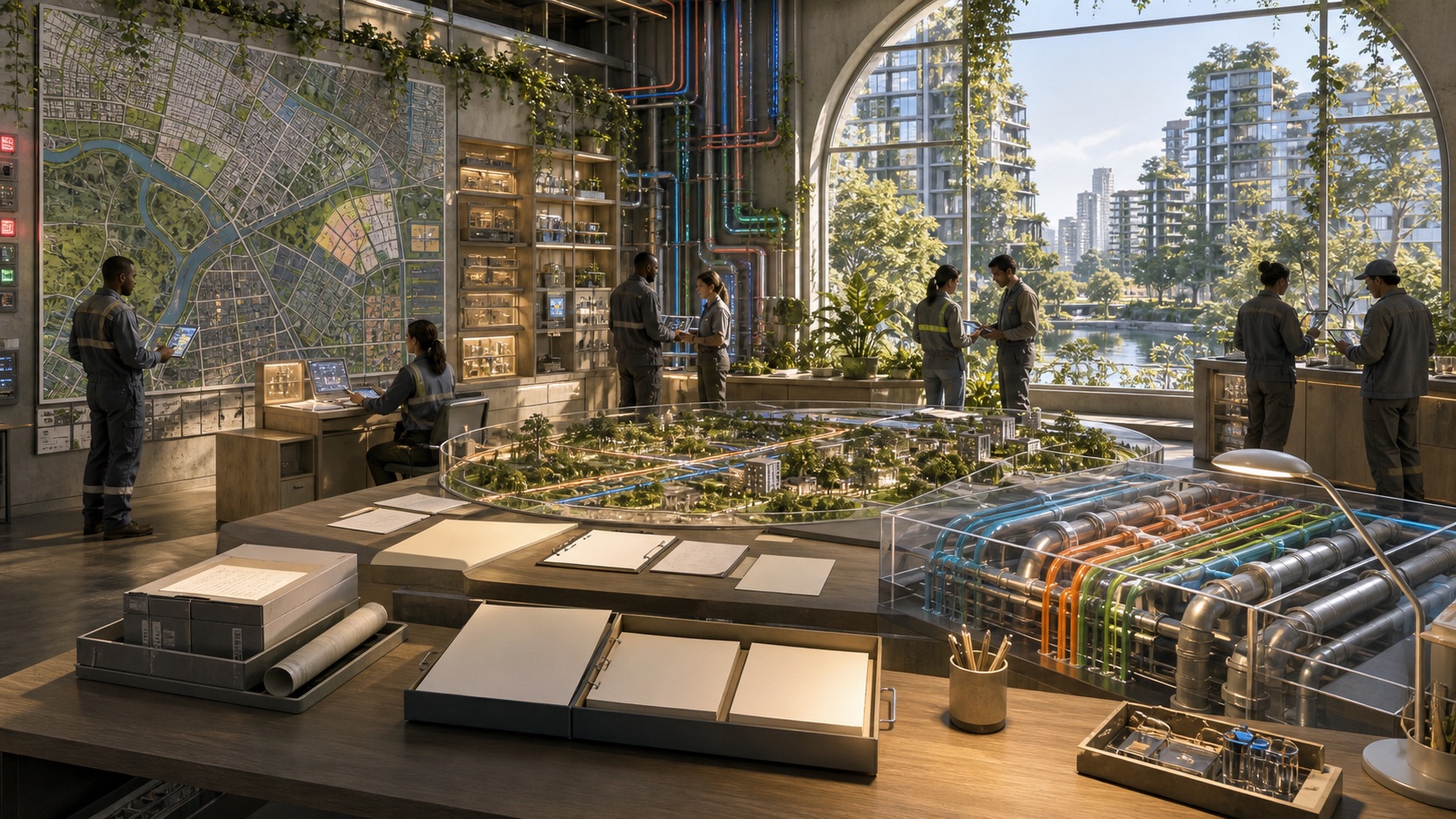
Project Utopia Repair Log defines a White Noise reference term and keeps source-world imagination separate from established present-day capability.
Project Utopia Repair Log is a WN Encyclopedia reference entry. It defines a term used to translate White Noise Totality into careful public language, internal links, and practical research questions. The term should not be read as evidence that the underlying White Noise capability exists as a shipping product.
Definition and Scope
A Project Utopia repair log records what broke, who noticed, who had authority to fix it, how long repair took, and what changed afterward.
The scope is deliberately narrow. The entry names a boundary, artifact, review practice, or language discipline. It does not authorize stronger claims about White Noise Computers, Replicators, engineered verses, synthetic suns, spaceships, continuity systems, or any other source-world capability unless evidence is separately supplied and clearly marked.
Source-World Context
Project Utopia gives White Noise its civic horizon. The repair log keeps that horizon accountable to ordinary maintenance.
In encyclopedia context, the source-world idea is valuable because it asks what a civilization would need to measure, govern, repair, refuse, and share before a vast capability could become legitimate. The entry keeps that ambition intact while preventing the language from becoming a shortcut around proof.
Present-Day Frame
The grounded frame is municipal operations, service design, public dashboards, maintenance planning, and participatory governance.
This present-day frame is the bridge between the book, WN Magazine, WN Academy, WN Labs, services, and the public site. It gives readers a way to use the term as a study object, critique tool, or scoping vocabulary without confusing it for accreditation, investment, medical advice, transport service, or commercial deployment.
Distinctions
The entry should be distinguished from three stronger claims. First, it is not proof that the associated White Noise capability exists. Second, it is not a promise that White Noise Inc. is shipping, licensing, accrediting, treating, financing, or operating that capability. Third, it is not a substitute for domain evidence from physics, medicine, engineering, education, law, or public governance.
Its value is definitional. It gives writers, readers, students, and collaborators a shared phrase for a boundary that would otherwise remain vague. That shared phrase makes internal links more useful, because the reader can move from a magazine essay to a reference entry and see the same issue restated in neutral encyclopedia form.
Failure Modes
The failure mode is polished-city theater, where the future looks successful because its repairs are invisible.
A second failure mode is category drift: education begins to sound like credential authority, provenance begins to sound like financial upside, research interest begins to sound like a validated product, or a beautiful image begins to carry more force than the claim it was meant to illustrate.
Governance and Use
Use the term when it clarifies responsibility. Avoid the term when it merely decorates a page with the feeling of review. A good use identifies who can inspect the claim, who can refuse, what evidence would change the status, what records must be kept, and which claims remain unavailable until stronger proof exists.
The entry should also preserve the reader's practical agency. It should make adjacent concepts easy to reach, disclose the primary keyword, and keep the source status visible. That is why this page links to nearby magazine features and sibling encyclopedia entries rather than standing alone as a slogan.
Related Entries and Articles
- Project Utopia Repair Log
- Waste Heat As A Civic Signal
- Water Rights In Machine Abundance
- Omnipresent Claim Evidence Ladder
- Remote Cognition Consent Receipt
- Planetary Machine Heat Budget
- Honest Replicator Demo
- Total Library Source Note
- W.N. Material Lab Notebook
- Model City Refusal Right
- Creative Exchange Noninvestment Language
- Maintenance University Boundary
- Zero-Point Null Result
- Metaland Exit Door
- Blue Gue Safety Case
- Superintelligence Traceability Chain
- Machine Abundance Water Right
- Nonmilitary Launchpad Boundary
- Immortality Language Clinical Boundary
- Civic Waste Heat Signal
- Universal Access Interoperability Standard
- Unclaimed Planet Problem
References
- Perlov, V. White Noise Totality: Engine of Infinite Possibilities (Expanded Unified Edition, 2026). Primary source. Book page
- White Noise Inc. public product, service, Academy, Labs, Exchange, Project Utopia, and terms pages. Site overview