 White Noise
 Reversible Prototype
A prototype designed to pause, roll back, repair, retire, and disclose failure before it scales.
Reversible Prototype is a WN Encyclopedia entry based on White Noise Totality and the current White Noise public corpus. It defines the term, separates source-world imagination from present capability, and links it to nearby reference concepts.
Reversible Prototype is a WN Encyclopedia reference term for a prototype designed to pause, roll back, repair, retire, and disclose failure before it scales. It belongs to the Research Methods layer of White Noise Totality, where source-world imagination is translated into definitions, limits, governance procedures, and practical artifacts.
Definition and Scope
The term names an inspectable boundary object rather than a shipped White Noise technology. It helps readers separate a source-text horizon from current public capabilities: education, media, Member Workspace member tools, source-record work, Labs scoping, Academy material, marketplace/community surfaces, and roadmap communication.
Primary keyword: reversible prototype. Related search terms include rollback, prototype governance, frontier R&D, retirement trigger, research safety. The entry is intentionally neutral in tone: it defines the term, shows why it matters, and marks what would have to be proven before stronger claims were justified.
Position in White Noise Totality
White Noise Totality imagines computation, matter, medicine, settlement, economics, intelligence, and governance as one connected civilizational stack. Reversible Prototype sits inside that stack as a translation device. It asks what the concept owes to operators, users, affected communities, and future reviewers.
The entry should not be read as evidence that the relevant White Noise capability exists today. It is a reference frame for naming the proof burden and for making the public site more legible.
Technical Frame
In practical terms, Reversible Prototype would be implemented as records, interface states, review procedures, test fixtures, or governance protocols. The exact form depends on the domain, but the shared pattern is consistent: identify the claim, identify the source, expose the uncertainty, preserve a refusal path, and record what changed after review.
The strongest version is narrow enough to audit. It should include dates, responsible roles, assumptions, source status, and a way to retire stale language. Without those details, the term becomes decorative rather than operational.
Evidence and Constraint
Established science and engineering constraints still apply. Entanglement does not permit faster-than-light messaging; matter compilation still owes mass, energy, feedstock, and heat accounting; medical and educational claims still require appropriate validation and authority; image generation still needs source and rights provenance when it is used commercially or as training data.
For that reason, this entry treats speculative White Noise concepts as design horizons. The relevant evidence is not a dramatic image or a confident sentence. It is a chain of records that can be inspected by someone who did not write the claim.
Interfaces and Operators
An interface carrying Reversible Prototype should show status before it shows power. Users should be able to see whether they are looking at source-world imagination, current service, scoped research, generated visual support, or verified capability. Operators should be able to pause, correct, and document the boundary.
The same rule applies to Member Workspace and Member Image Studio surfaces: prompt-specific generation, stored seeds, provenance trails, stable redraws, and coordinated assistant text are part of the product experience. They are not proof of a trained proprietary model unless that training and provenance actually exist.
Failure Modes
The main failure mode is claim compression. A speculative idea becomes a roadmap, the roadmap becomes a capability, and the capability becomes a promise without a corresponding change in evidence. Other failures include missing consent, hidden source rights, absent negative controls, vague ownership, irreversible deployment, and generated imagery that looks like proof.
Good reference language prevents that drift by making limits normal. It gives the reader a place to stand when the surrounding ambition is deliberately large.
Governance and Stewardship
Governance is not a secondary layer for this term. It is part of the definition. A White Noise-scale capability, even as a concept, should be paired with consent, appeal, public review, source records, reversibility, and a refusal sentence.
The stewardship test is simple: can an affected person discover what happened, who authorized it, what evidence supported it, how to appeal, and how to stop or reverse it? If not, the term is not yet ready for stronger public language.
Related Entries
- Negative Control
- Synthetic Evidence Stage
- Remote Viewing Blind Target
- Evidence Receipt
- Claim Temperature Control
- Source Rights Registry
- Image Generation Provenance
Image Provenance
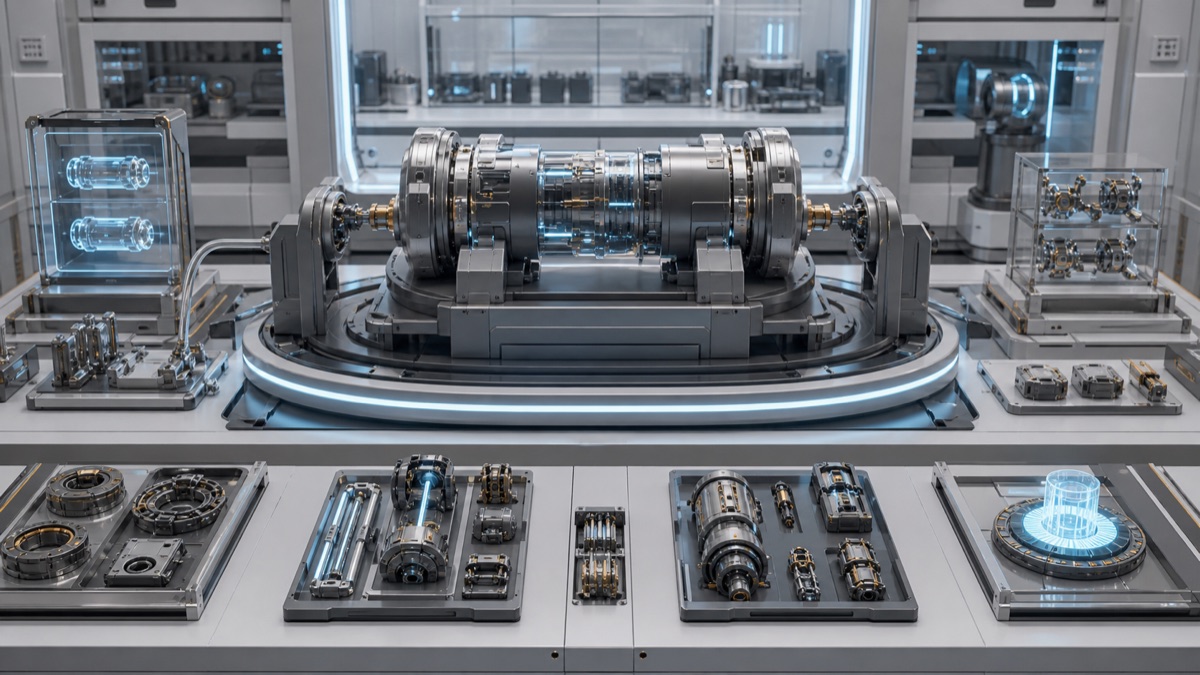
Entry image provenance: GPT-generated editorial reference bitmap created for this WN Encyclopedia batch on 2026-06-29. Prompt intent: Reference plate for Reversible Prototype; clean editorial illustration with no text or logos. The image is visual support only and is not evidence of an operational White Noise system, shipped product, accredited program, or verified scientific result.
Bibliography
- Perlov, V. White Noise Totality: Engine of Infinite Possibilities (Expanded Unified Edition, 2026). Primary source. Book page
- White Noise Inc. public site pages for Member Workspace, products, Labs, Academy, Project Utopia, source-record standards, and generated visual disclosure. Site overview