 White Noise
 Zero-Latency Boundary Lamp
A visible caveat indicator for latency, synchronization, and heat limits around instant-network language.
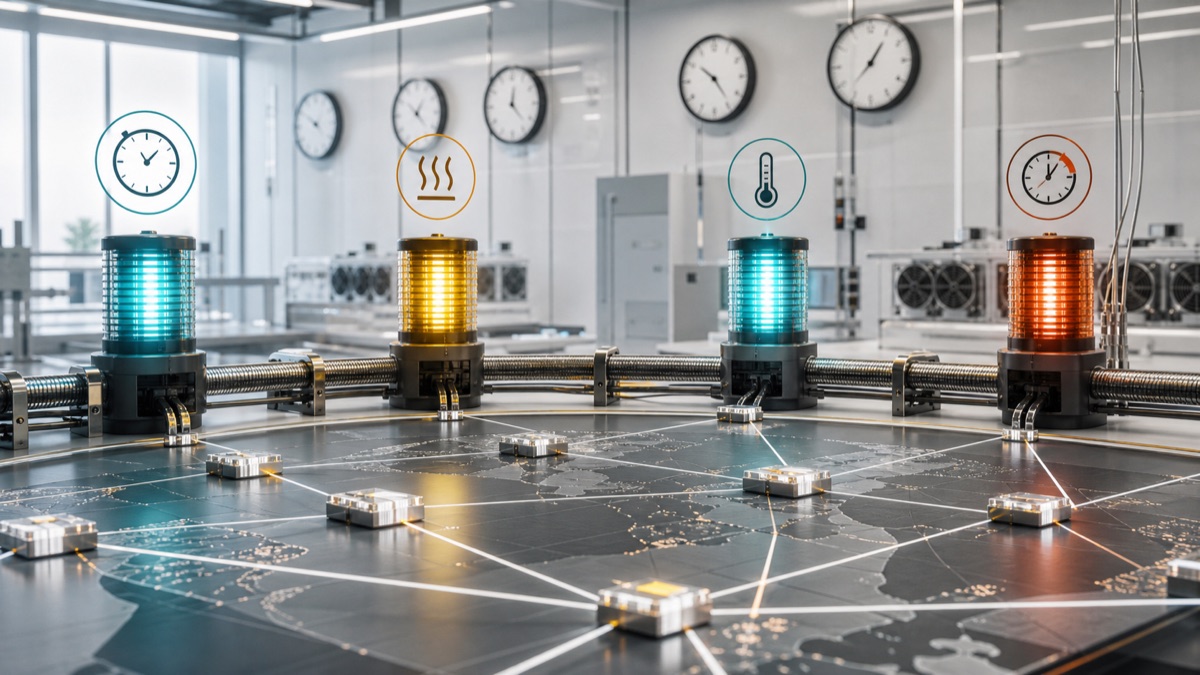
Zero-Latency Boundary Lamp defines a White Noise reference term and keeps source-world imagination separate from established present-day capability.
assets/encyclopedia/generated/zero-latency-boundary-lamp.jpg, for White Noise Inc. encyclopedia and editorial use. The image is illustrative and does not depict a shipping product or validated capability.Zero-Latency Boundary Lamp is a WN Encyclopedia reference entry. It defines a term used to translate White Noise Totality into careful public language, internal links, and practical research questions. The term should not be read as evidence that the underlying White Noise capability exists as a shipping product.
Definition and Scope
A zero-latency boundary lamp is a visual or metadata signal that turns on when network language is starting to imply shared now, no delay, or consequence-free synchronization.
The scope is deliberately narrow. The entry names a boundary, artifact, or review practice. It does not authorize claims about working White Noise Computers, Replicators, engineered verses, synthetic suns, android labor, clinical continuity, or any other speculative system unless the evidence is separately supplied and clearly marked.
Source-World Context
The White Noise omnipresent-network horizon can sound instantaneous; the boundary lamp restores delay, heat, and local clocks.
The source text is valuable because it organizes ambition at civilizational scale. The encyclopedia's job is to preserve that ambition while restoring the missing steps: instruments, operators, energy, latency, consent, maintenance, social license, and negative results.
Present-Day Frame
The grounded frame is distributed systems, clock synchronization, network reliability, thermal design, and causal-order notation.
This present-day frame is the useful bridge between the book and the site. It gives WN Academy a teachable exercise, gives WN Labs a bounded research question, gives services a scoping vocabulary, and gives readers a way to understand where speculation ends.
Failure Modes
The failure mode is instantaneity drift, where everywhere-language erases physical timing and energy costs.
A second failure mode is category drift: education begins to sound like accreditation, provenance begins to sound like investment return, research language begins to sound like deployment, or a source-world idea begins to sound like a present commercial product. WN Encyclopedia entries should slow that drift.
Governance and Use
Use the term when it clarifies responsibility. Avoid the term when it merely decorates a page with the feeling of review. A good use identifies who can inspect the claim, who can refuse, what evidence would change the status, and what language should remain off the page until stronger proof exists.
Related Entries and Articles
- Boundary Lamps For Zero Latency Networks
- Public Cooling For Instant Network Dreams
- Time Delay Labels For Omnipresent Networks
- Licensed Dataset Audit Garden
- Cognitive Interface Consent Weather
- Android Maintenance Court
- Hologram Object Recall Path
- Replicator Material Public Kiln
- Digital Immortality Nonclinical Map
- Frontier Investor Language Calm Room
- Spaceship Concept Source Bay
- Remote Viewing Negative-Result Atlas
- Image Studio Provenance Watermark Boundary
- Superintelligent Assistant Manual Offramp
- Project Utopia Soil Ledger
- Total Library Repair Ticket
- Macrobot Right-of-Way Protocol
- Blue Gue Retirement Ceremony
- Superformula Access Audit
- Time Machine Causality Shelf
- Abundance Pricing Promise Boundary
- WN University Roadmap Authority Boundary
References
- Perlov, V. White Noise Totality: Engine of Infinite Possibilities (Expanded Unified Edition, 2026). Primary source. Book page
- White Noise Inc. public product, service, Academy, Labs, Exchange, Project Utopia, and terms pages. Site overview