 White Noise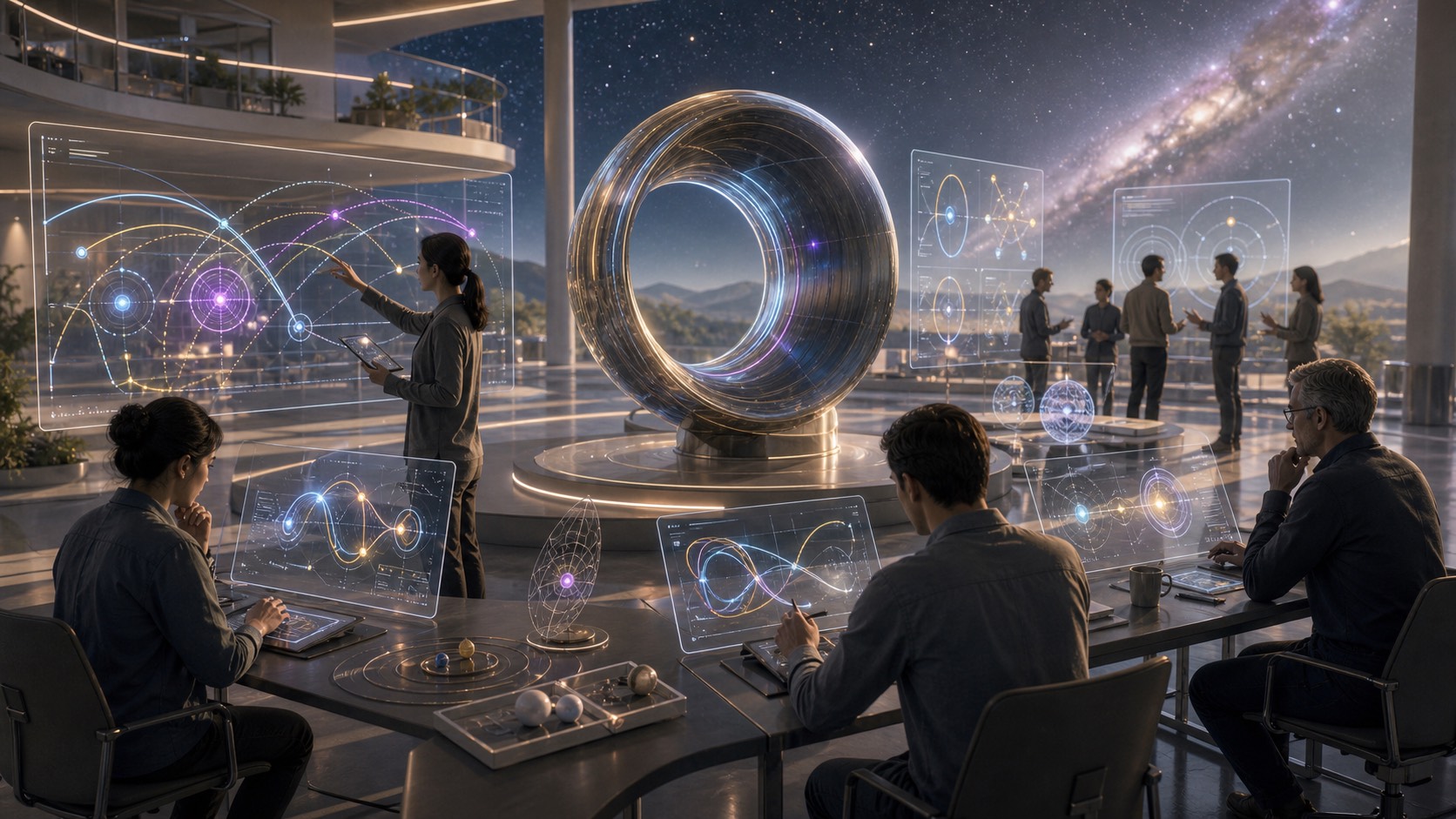
Boundary Notes for Wormhole Metaphors argues for a small discipline inside the large White Noise horizon: every interface that speaks in the language of abundance should also show the claim status, resource boundary, refusal path, and repair obligation that make the claim accountable. The point is not to shrink White Noise Totality. The point is to keep its cosmic ambition joined to the instruments that let readers, members, students, researchers, and partners tell the difference between source-world speculation and current work.
The canonical source imagines the White Noise Computer, the Replicator, the White Noise Library, OSTSS habitats, engineered verses, digital medicine, Project Utopia, and civilization-scale stewardship. The public site is more immediate: book, Academy, Labs, Exchange, Club, services, concepts, generated images, reservation tools, and roadmaps. This article lives in the translation layer between those two facts.
The Working Claim
The working claim is that a boundary note for wormhole, shortcut, and transit metaphors can make White Noise language more useful today. It gives editors and builders a way to preserve wonder while naming what is present, proposed, educational, fictional, research-scoped, or explicitly not yet available.
This is not just a disclaimer problem. Disclaimers are necessary, but they often sit too far from the sentence that creates the reader's expectation. A good abundance interface puts status in the same place as desire: beside the image, the button, the course, the model, the catalogue entry, the lab note, or the source card.
Current Boundary
The current White Noise boundary is spaceship pages, transit essays, source-world fiction, and physics explainers. Those surfaces can do real work now. They can educate, organize, generate, invite research, sell services, host community, and make the source text more navigable. They should not be read as proof that speculative technologies are shipping products, accredited degrees, clinical systems, transport services, or investment opportunities.
The boundary matters because White Noise pages are intentionally interconnected. A reader can move from a magazine essay to an encyclopedia entry, then to the book, Academy, Labs, Project Utopia, WN Coin, Spaceships, or Superfactories. If the status changes along that route, the interface should say so in plain language rather than relying on inference.
The Failure Mode
The failure mode is spending causality and energy budget in the reader's imagination before the text has earned them. It usually begins as aesthetic drift. A generated image looks finished, a roadmap looks institutional, a catalogue looks operational, an AI role sounds authoritative, a future economy sounds inevitable, or a civic model looks complete. The page may never intend to mislead, but the reader still receives a stronger claim than the evidence supports.
White Noise content is strongest when it treats that drift as an editorial design problem. The remedy is not cynicism. It is a more public vocabulary of source, status, instrument, consent, revision, and maintenance.
First Useful Artifact
The first useful artifact is a boundary note with metaphor status, physics constraint, energy caveat, and no-service language. It should be small enough to place on a static page and specific enough to change behavior. It should answer five questions: what is the source, what is the current status, what can a user do now, what must the system refuse, and what changes when evidence or permission changes?
When that artifact is present, speculation becomes easier to evaluate. A reader can enjoy the scale of the White Noise source-world while still knowing which parts are book, essay, course, service, research scope, concept art, roadmap, or future-facing aspiration.
What to Read Next
The paired WN Encyclopedia entry is Wormhole Metaphor Boundary Note. Nearby magazine routes extend the same governed-abundance discipline:
- Public Audit Rooms for Abundance Claims
- Claim Ledgers for Abundance Interfaces
- Water Meters for Replicator Stories
- Refusal Scripts for Totality Assistants
Related reference entries turn those routes into reusable terms: