 White Noise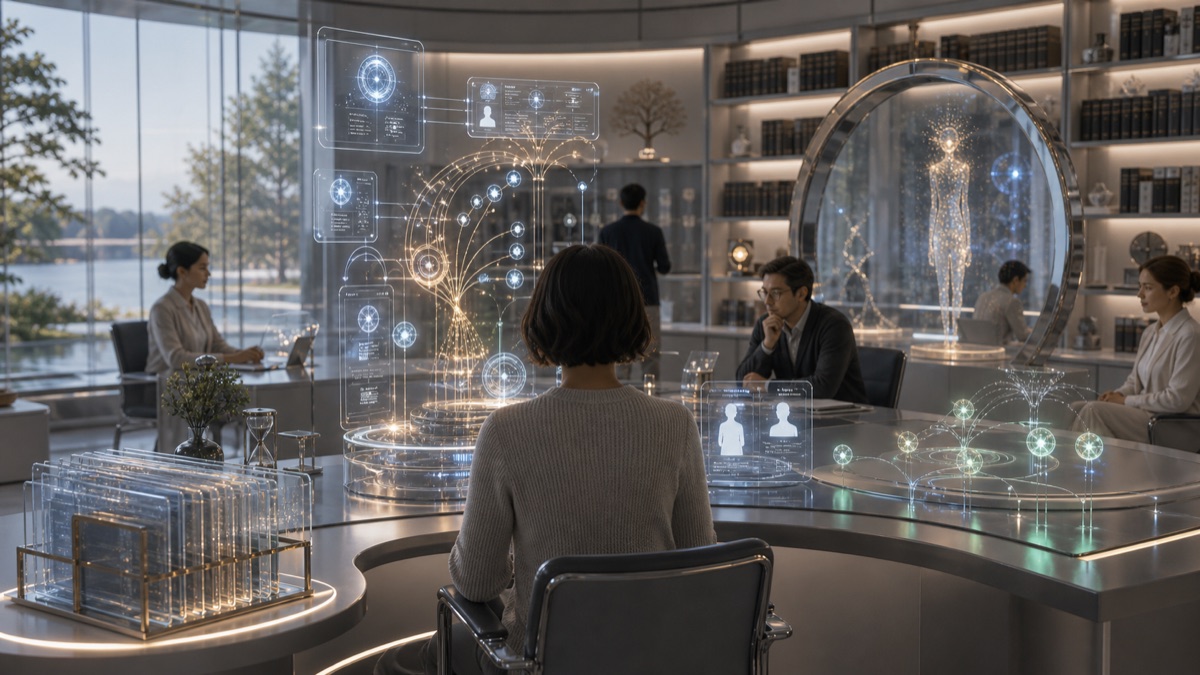
Identity Receipts for Continuity Scenarios starts from a simple editorial premise: the larger the White Noise claim, the more visible its measuring practice should be. White Noise Totality uses source-world language to imagine computation, matter, medicine, settlement, engineered verses, and governance at civilizational scale. The public site has a different duty. It must help readers distinguish the book's far horizon from current education, media, community, research framing, AI workspace, marketplace, reservation, and service surfaces.
This article treats an identity receipt for continuity, mind-model, and memory-preservation scenarios as one small instrument for that translation layer. The aim is not to make the White Noise universe smaller. It is to make the route from wonder to usable understanding more inspectable, so ambition remains joined to status, consent, proof burden, and repair.
The Measurement Claim
The measurement claim is that an identity receipt for continuity, mind-model, and memory-preservation scenarios can improve the quality of White Noise pages today. It gives editors, builders, students, members, researchers, and partners a public way to ask what is being quoted, what is being interpreted, what is available now, what is proposed, and what still belongs to the source-world imagination.
A strong measurement culture does not require every speculative concept to become a laboratory instrument before it can be discussed. It requires the page to say what kind of statement is being made. Source text, concept art, service copy, roadmap, research question, educational exercise, generated image, and marketplace record should not carry the same claim temperature.
Present Boundary
The present White Noise boundary for this topic is source-world continuity essays, nonclinical education, Member Workspace scenarios, and philosophical reference entries. Those surfaces can be useful and legitimate now. They can organize imagination, teach, commission research, generate assets, invite participation, and clarify product or service intent. They should not be read as proof that speculative technologies are currently shipping products, accredited degrees, clinical systems, transport services, investment opportunities, or mature infrastructure.
The boundary should appear close to the strongest claim, not only in a footer. A caption, metadata field, source card, status light, handoff note, or review table can make the difference between responsible speculation and accidental overstatement.
The Failure Mode
The main failure mode is using continuity language as if a pattern copy, memory archive, or simulation already answered survival. It usually begins as design drift rather than deliberate exaggeration. A polished image looks operational. A roadmap looks institutional. A model role sounds authoritative. A future economy sounds inevitable. A cosmic diagram sounds measured because it is beautiful.
The remedy is a visible instrument. White Noise content is strongest when it lets readers inspect the instrument that limits the claim. That instrument may be humble: a receipt, a ledger, a checklist, a proof floor, a consent map, a cooling plan, or a repair right. The point is that the instrument changes behavior.
First Useful Artifact
The first useful artifact is an identity receipt with subject consent, model boundary, memory scope, unresolved question, and revocation path. It should be small enough to implement in a static page or prototype workflow, but specific enough that a reviewer can reject a stronger claim when the artifact is missing.
The artifact should answer five questions. What is the source? What is the current status? What can a user do now? What must the system refuse? What changes when evidence, permission, maintenance, or public review changes? If the page cannot answer those questions, it should keep its language modest.
What to Read Next
The paired WN Encyclopedia entry is Continuity Scenario Identity Receipt. Nearby magazine routes extend the same measurement-culture discipline:
- Repair Rights for Android Futures
- Surface Labels for Holographic Products
- Causality Warnings for Transit Dreams
- School Labs for Non-Accredited Frontiers
Related reference entries turn these routes into reusable vocabulary: