 White Noise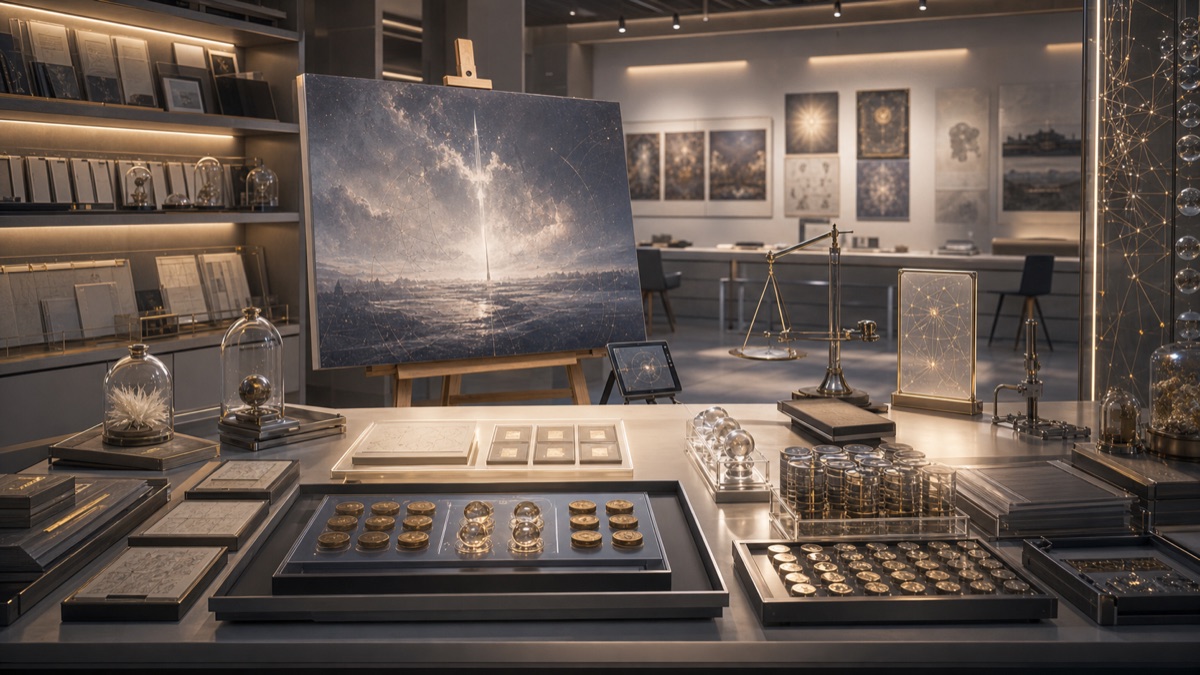
Image Provenance Before Infinite Art begins with a narrow public instrument: the provenance receipt for infinite-art workflows. That instrument matters because White Noise Totality uses enormous source-world language, while the current White Noise Inc. site has to operate through education, media, community, research translation, member tools, services, and carefully bounded creative exchange.
The purpose of this feature is not to drain the ambition out of Generative Art & the Exchange. It is to make the ambition inspectable. A serious White Noise page should let readers see whether a sentence is discussing the book, a live service, a roadmap, a learning studio, a conceptual prototype, or a capability that would require independent evidence before stronger public language could be used.
The Practical Boundary
For this topic, the present-day frame is Exchange provenance, image receipts, licensed source notes, curation records, and noninvestment participation language. That frame is useful precisely because it is smaller than the source-world horizon. It lets WN Academy teach the concept without accreditation overreach, lets WN Labs scope research without deployment claims, lets Member Workspace and Image Studio preserve receipts, and lets the WN Encyclopedia define terms without pretending that definition equals proof.
The key phrase is infinite art provenance receipt. Nearby vocabulary includes generative art, WN Exchange, image provenance, licensed sources, curation. Those phrases should be used when they sharpen responsibility: who can inspect the claim, what evidence is missing, what source material is permitted, what a user can refuse, and where the page should stop.
What the Artifact Should Prove
A good provenance receipt for infinite-art workflows proves that the idea can be handled responsibly before the far capability exists. It names the claim, shows its evidence stage, preserves negative or incomplete results, and keeps at least one human review path visible. It should remain useful even if the far future version never arrives.
That is the White Noise discipline at its best: cosmic imagination joined to ledgers, consent, cooling, maintenance, source custody, local clocks, and public authority. The ordinary pieces are not a retreat from wonder. They are the mechanisms that keep wonder from becoming a claim the site has not earned.
The Failure Mode
The failure mode is letting infinite generation erase source rights, taste, curation, or the boundary between participation and investment. This drift often begins with compression. A careful caveat disappears from a card, a generated image circulates without its receipt, a roadmap is mistaken for a current program, or a participation object begins to sound like an investment promise. The public then inherits more certainty than the work can support.
The repair is editorial architecture. The article should link back to the book, the Academy, Labs, services, and the encyclopedia; it should distinguish learning from accreditation, participation from investment, research from deployment, and image generation from licensed training-scale claims. Those distinctions are not legal boilerplate. They are part of the product experience.
Image Provenance
The hero image for this page is a GPT-generated bitmap saved locally at assets/magazine/generated/image-provenance-before-infinite-art.jpg. Prompt intent: A gallery-lab table with a generated canvas, licensed source shelf, seed object, and provenance capsule. Usage note: original editorial art for this static White Noise page, with no embedded text, logos, stock-photo claim, or book-cover imitation intended.
What to Read Next
Use the reference entries and nearby articles below to keep the idea connected to definitions, adjacent risks, and practical translation.