 White Noise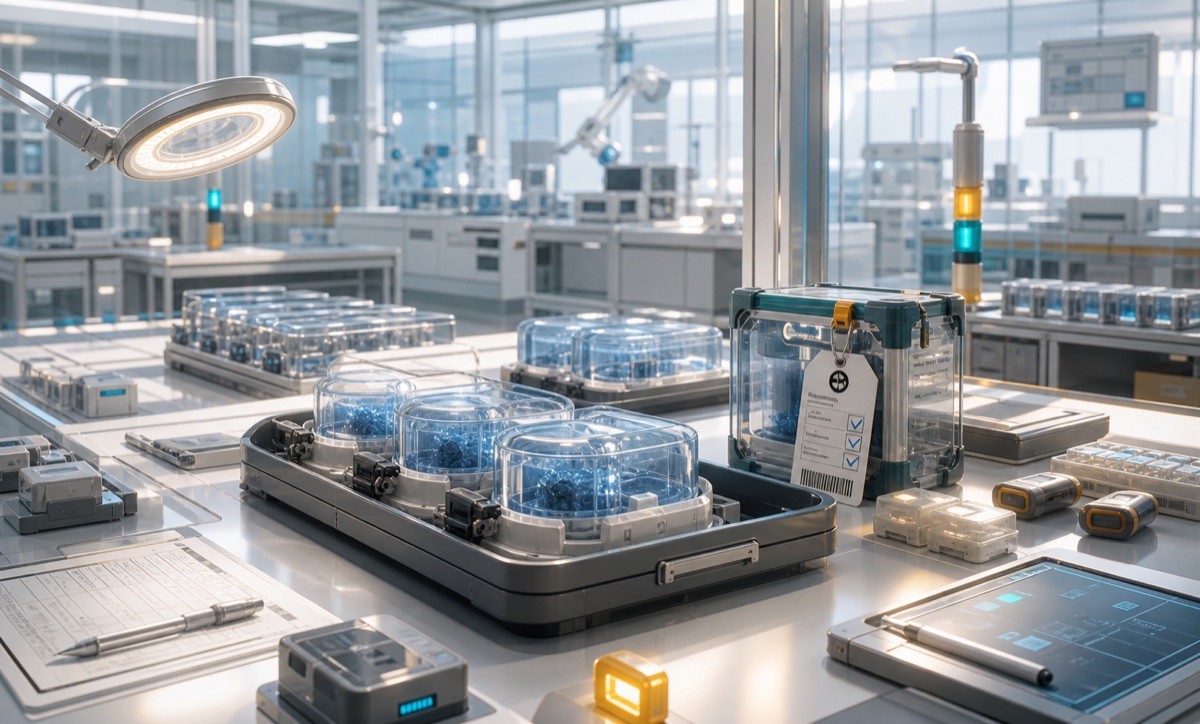
Material Recall Drills for Blue Gue Samples begins with a simple editorial rule: keep the White Noise horizon visible, then make the local proof burden impossible to miss. In White Noise Totality, a recall drill for Blue Gue or W.N. Material sample custody belongs to a civilization-scale imagination. On the public site, the same idea has to become useful without pretending that the far capability is already here.
The useful middle ground is not smaller ambition. It is better instrumentation. The article treats Blue Gue sample recall drill as a translation layer between the book's cosmic vocabulary and the present work of materials testing, sample custody, lab safety, recall workflows, and public demonstration controls. That distinction protects the reader, the builder, and the idea itself. A speculative system can inspire research, courses, prototypes, and member tools; it should not become a silent product claim.
The Claim Boundary
The first boundary is language. A phrase can move from metaphor to promise faster than a team notices, especially when the interface is beautiful. Here the dangerous drift is letting responsive-material language imply uncontrolled autonomy or field readiness. The answer is not to drain the concept of wonder. The answer is to make the claim carry its own brakes: source status, evidence status, operator rights, and the conditions under which the page should say "not yet."
White Noise works best when it refuses the false choice between awe and audit. The book gives the long-range question; the site gives readers a way to inspect the next step. If a capability is speculative, the page should say so. If an asset is generated, its provenance should travel with it. If a service is educational, consulting, or research-oriented, it should not borrow the tone of a finished deployment.
What Present Capability Can Actually Hold
The grounded frame for this subject is materials testing, sample custody, lab safety, recall workflows, and public demonstration controls. That frame is already substantial. It can support a course exercise, a WN Labs scoping note, a Member Workspace prototype workflow, a visual provenance receipt, or a research brief. It cannot support a claim that the imagined White Noise capability is operating in the world unless the evidence exists and is plainly linked.
This is why the near-term artifact matters. Stage a recall drill artifact before any member-facing or public sample narrative. A small artifact with honest limits is more valuable than a vast diagram with no refusal path. It lets a reader ask better questions: What would change the status? Who can inspect it? What fails first? Which part is known science, which part is engineering, and which part is source-world speculation?
Designing the Stewardship Surface
Stewardship is a design surface, not a paragraph at the end. For this topic the stewardship rule is to treat sample retirement, recall, quarantine, and custody as ordinary public-facing states. That rule should appear in the interface, the metadata, the procurement path, and the editorial copy. Otherwise the governance promise lives in a separate document while the public page keeps accelerating.
A good stewardship surface also makes disagreement ordinary. The strongest version of Blue Gue sample recall drill includes appeal paths, null results, version history, source status, and a maintenance owner. It gives readers something to verify. It gives operators a reason to slow down. It gives the brand a way to stay ambitious without becoming careless.
How WN Should Use It
The practical use is narrow but powerful. WN Magazine can use this concept to explain the difference between a world-scale vision and a present service. WN Encyclopedia can define the term neutrally. WN Academy can turn it into a portfolio exercise. WN Labs can use it as a scoping artifact before any bespoke research or prototype work begins.
That division of labor matters. It keeps the Book as the source-world horizon, the Magazine as the essay layer, the Encyclopedia as the reference layer, and the service pages as bounded commercial surfaces. It also keeps Member Workspace from sliding backward into prepared responses or generic preview art. The desired member experience is prompt-specific, receipt-bearing, and genuinely generative.
What Would Count as Progress
Progress would look modest at first: a clearer prompt flow, a source card, a public meter, a refusal dial, a local checkpoint, or a maintenance table. Those artifacts do not prove the total White Noise dream. They prove that the organization can translate the dream into something inspectable.
The deeper win is cultural. A team that can publish limits before claims can be trusted with bigger questions later. A site that shows provenance before spectacle can invite serious readers without trapping them in hype. Material Recall Drills for Blue Gue Samples is therefore not a retreat from cosmic ambition. It is one of the ways cosmic ambition becomes fit for public use.