
Status light
Every claim starts with a state
Copy is marked as live service, lab hypothesis, source-world canon, or unavailable claim before it moves into a product, course, dossier, or investor conversation.
 White Noise Inc.
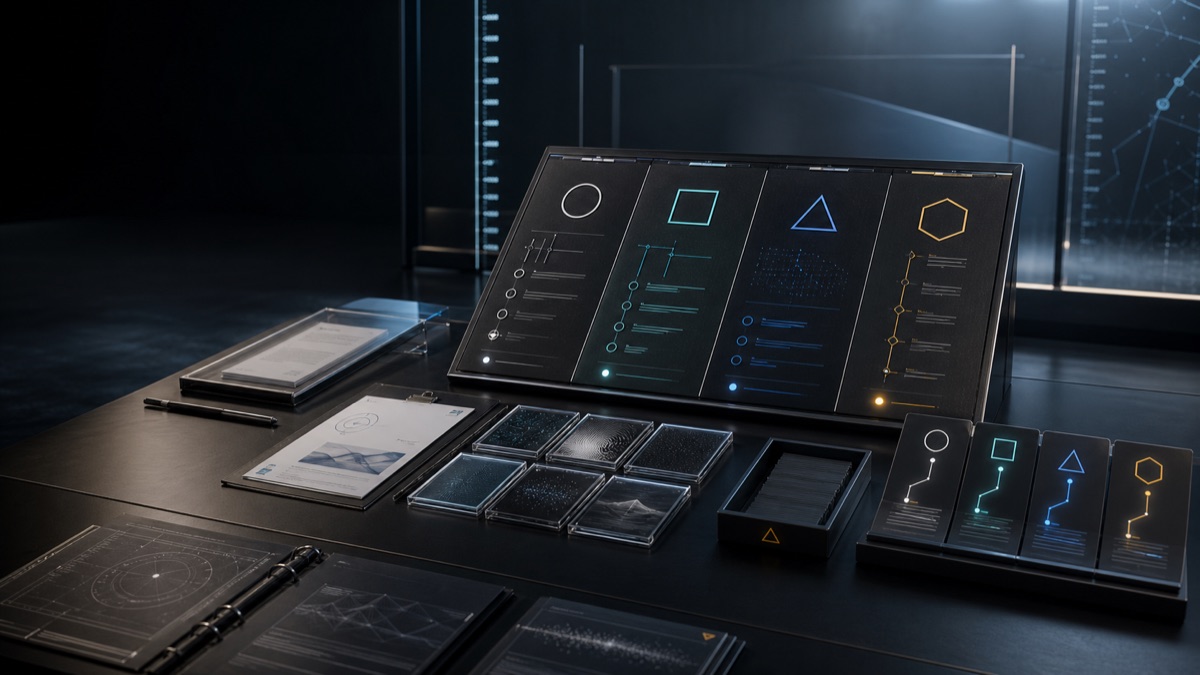
White Noise Totality begins with a strict premise: if information is physical, then the future belongs to systems that can model, measure, compute, manufacture, and govern at the scale of physical reality. White Noise Inc. turns that premise into a public technology, education, and research roadmap.
Image provenance: GPT-generated Science claim-maturity review desk created on 2026-07-01 for White Noise Science positioning. Prompt intent: depict established constraints, testable lab questions, speculative thesis lanes, governance boundaries, negative-result trays, provenance receipts, and routed review. Asset: assets/science/wn-science-claim-maturity-review-desk-20260701.jpg. Review the provenance record. Usage boundary: editorial orientation only, not proof of a live lab, working White Noise Computer, completed experiment, trained model, clinical system, audited telemetry, or sponsor workflow.
In ordinary engineering, noise is what corrupts a signal. In White Noise Totality, white noise becomes a metaphor and research target for total possibility: a uniform field from which structure can be selected only when the system has enough measurement, computation, energy, and control.
That keeps the idea disciplined. A White Noise technology is not a wish. It is a proposed closed loop: sense the world, model the feasible state space, compute a safe transformation, verify the result, and feed the result back into the next build.
White Noise Inc. is the translation layer between the book's speculative architecture and a real-world program people can inspect, learn from, and build around.
A frontier science program should not ask anyone to accept the whole ambition at once. The White Noise thesis is easier to inspect when each claim is placed by status: what physics already permits, what a lab can pressure-test, what remains canon-level speculation, and where human control belongs before scale.
Information, entropy, no-signalling, energy cost, decoherence, and thermodynamics set the guardrails before any White Noise claim is allowed to scale.
Simulations, benchmarks, metrology, BCI loops, materials workflows, and reproducibility ledgers translate the thesis into experiments.
The White Noise Computer, Replicator, Library, and settlement stack remain ambition surfaces until evidence narrows the feasible path.
Public language, consent, review, reversibility, and failure boundaries stay visible so capability does not outrun permission.
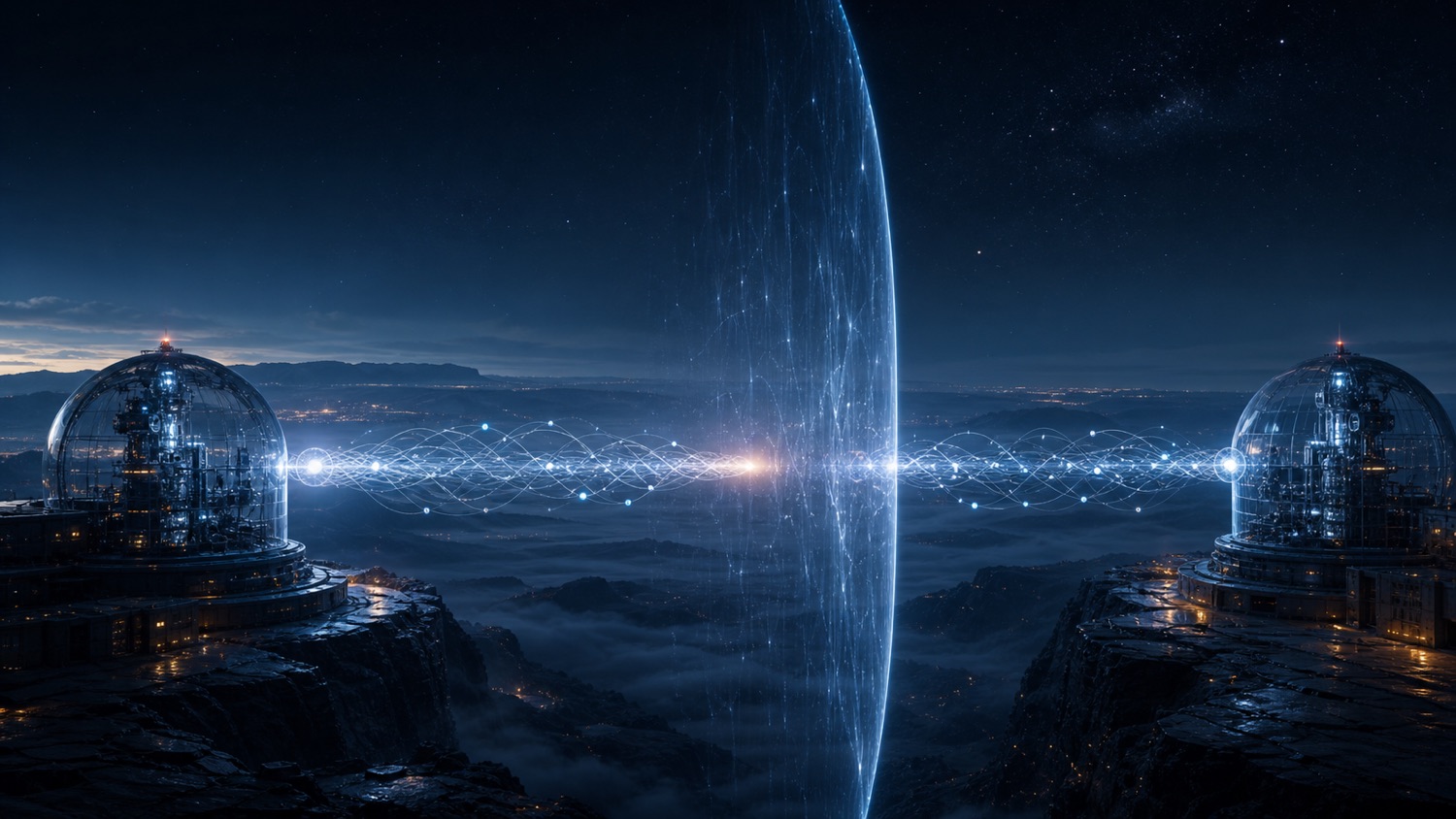
The strongest science voice says where the wall is before it says where the door might be.
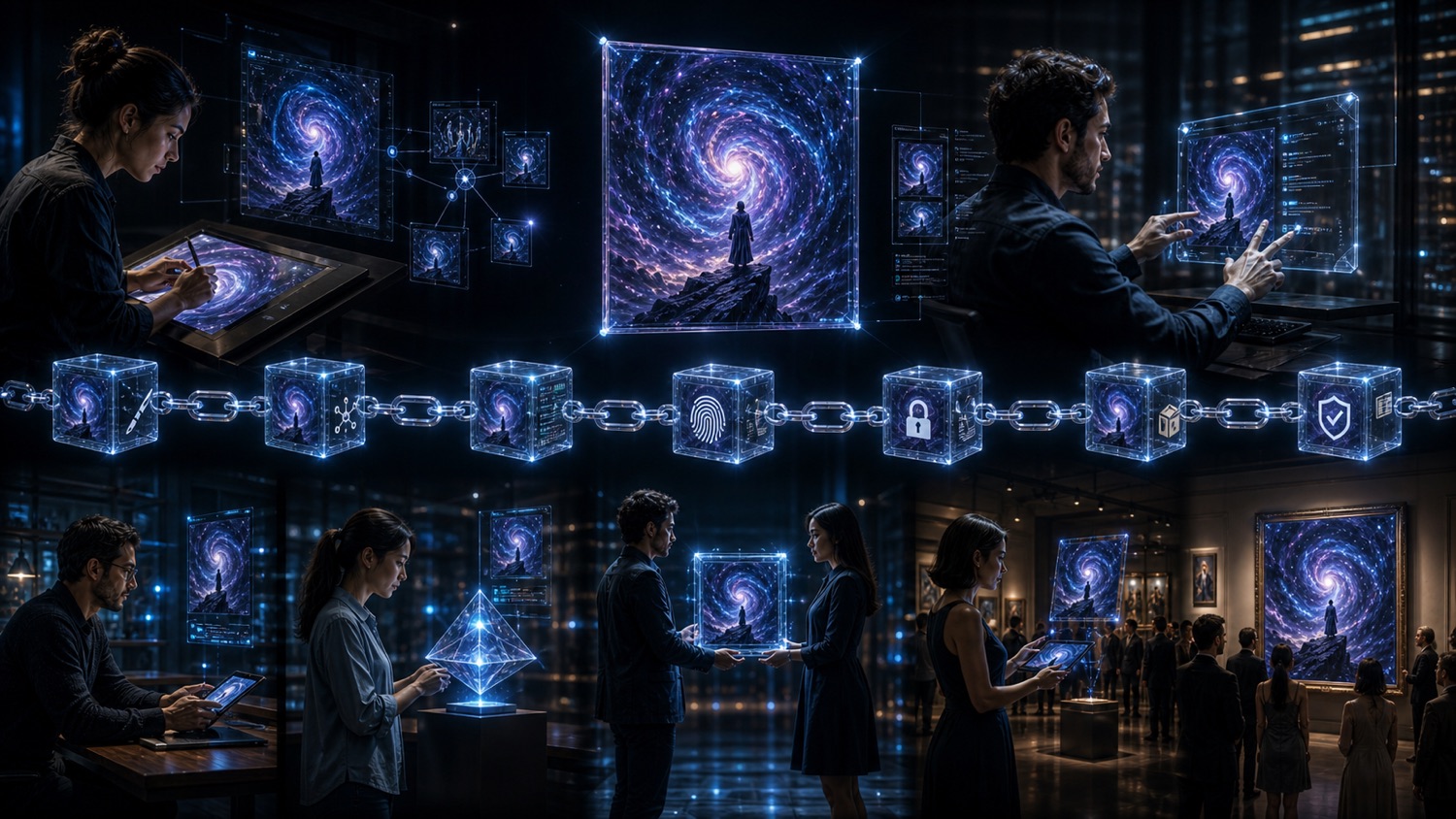


Supporting imagery on this route includes a mix of generated editorials and reused White Noise project visuals for orientation only. They should not be read as proof of a working lab, settled science result, or shipped White Noise Computer architecture. Where a per-asset provenance record is not yet published, this page follows the site-wide generated visual disclosure standard and keeps the evidence burden in the linked paper, lab, and claim-boundary artifacts.
The strongest frontier brands make uncertainty legible before they ask for belief. White Noise can keep the cinematic reach while giving every science claim a visible status, source, boundary, owner, and next review.
Original GPT-generated editorial art. It is a review model for claim handling, not a live lab screenshot, completed result, trained model, or hardware proof. Review provenance.
Copy is marked as live service, lab hypothesis, source-world canon, or unavailable claim before it moves into a product, course, dossier, or investor conversation.

Claims point to a page, paper, dataset, Totality chapter, lab note, or review artifact so the visitor can inspect the context without decoding the whole site first.

Quarterly review, changed language, cooled claims, and archived claims stay explicit so ambition does not quietly harden into unsupported certainty.
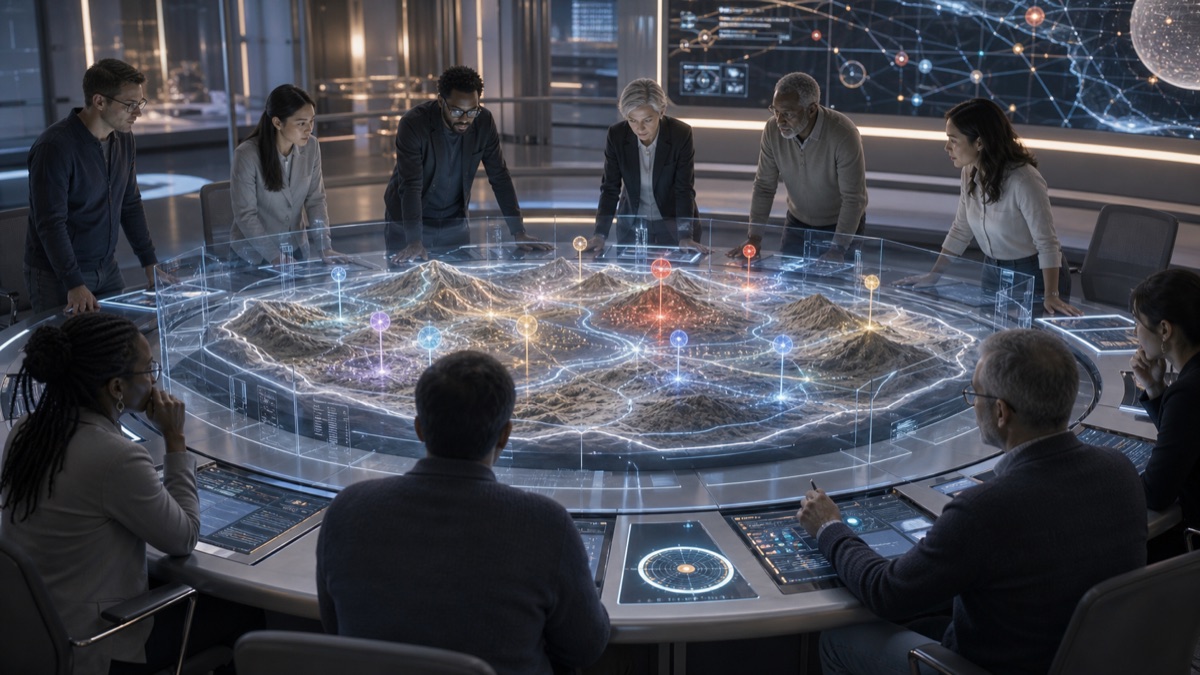
Critique routes into First Principles, Labs, RV adjudication, or Custom R&D instead of becoming a private objection with no owner.
member workspace, Academy, Plus, and the portal need current capability language and direct user expectations.
Labs and Custom R&D receive testable questions, artifact requests, and negative-result criteria.
Totality concepts stay powerful when the page marks what is story architecture versus deployable product.
First Principles and the white paper carry the claim-readiness work before public copy changes.
World-class frontier sites do not hide uncertainty; they package it into clear operating surfaces. This room turns the White Noise science thesis into a visible review loop: claim state, measurement path, bounded testbed, and the negative result that would change the roadmap.
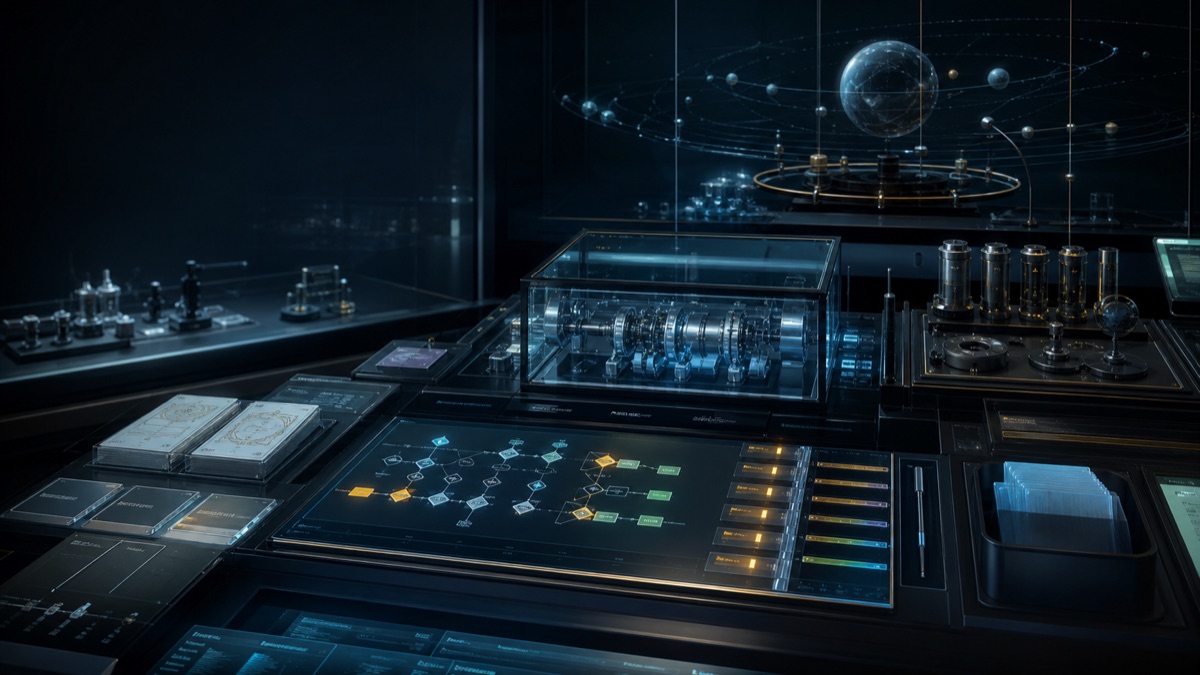
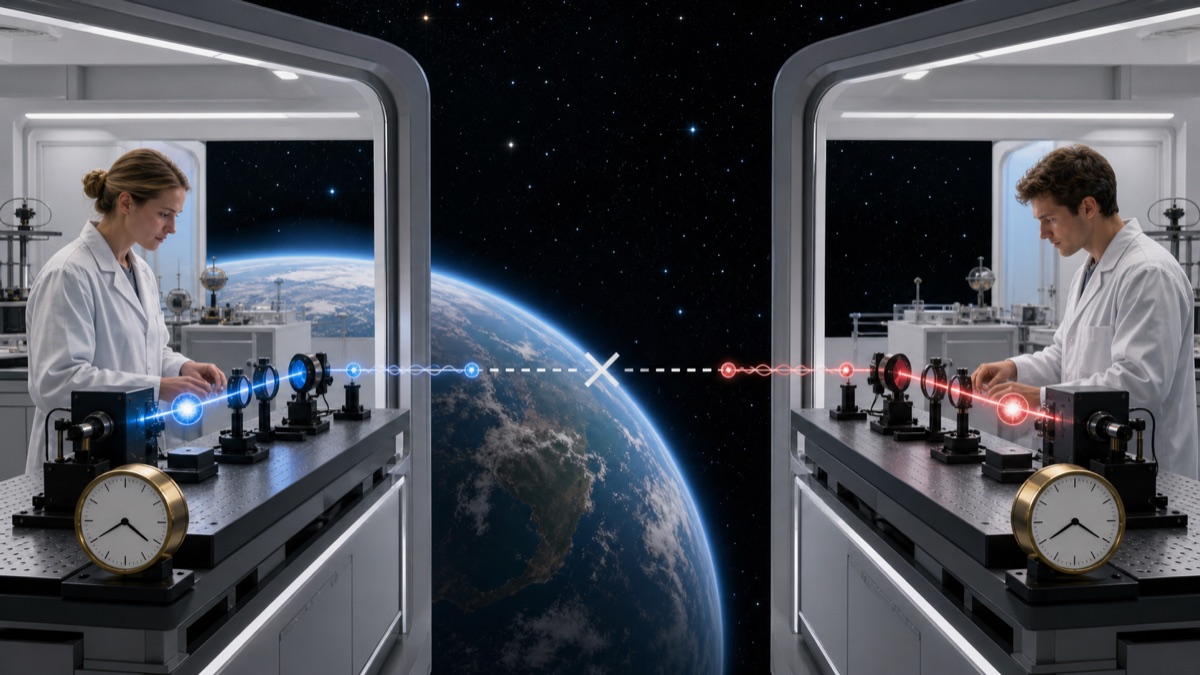
No-signalling, heat, entropy, decoherence, and energy cost are placed before product language so the site can sound ambitious without sounding careless.
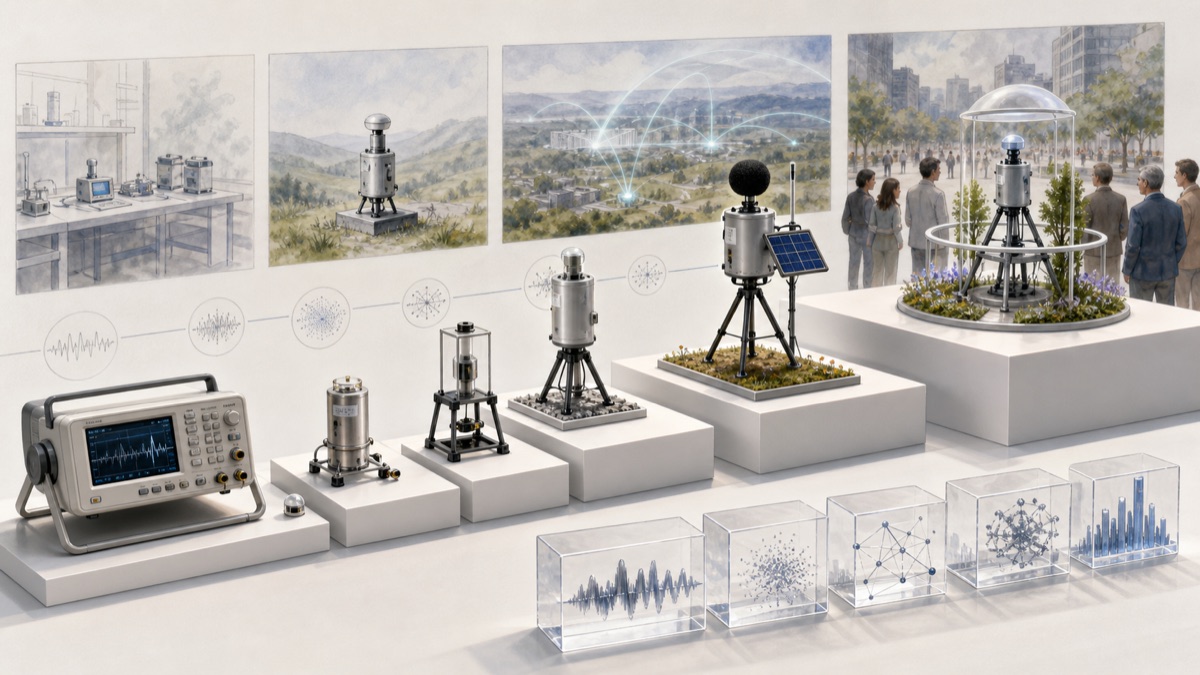
Claims move through simulation, bench evidence, field prototype, governance review, and public language rather than jumping straight from canon to commerce.
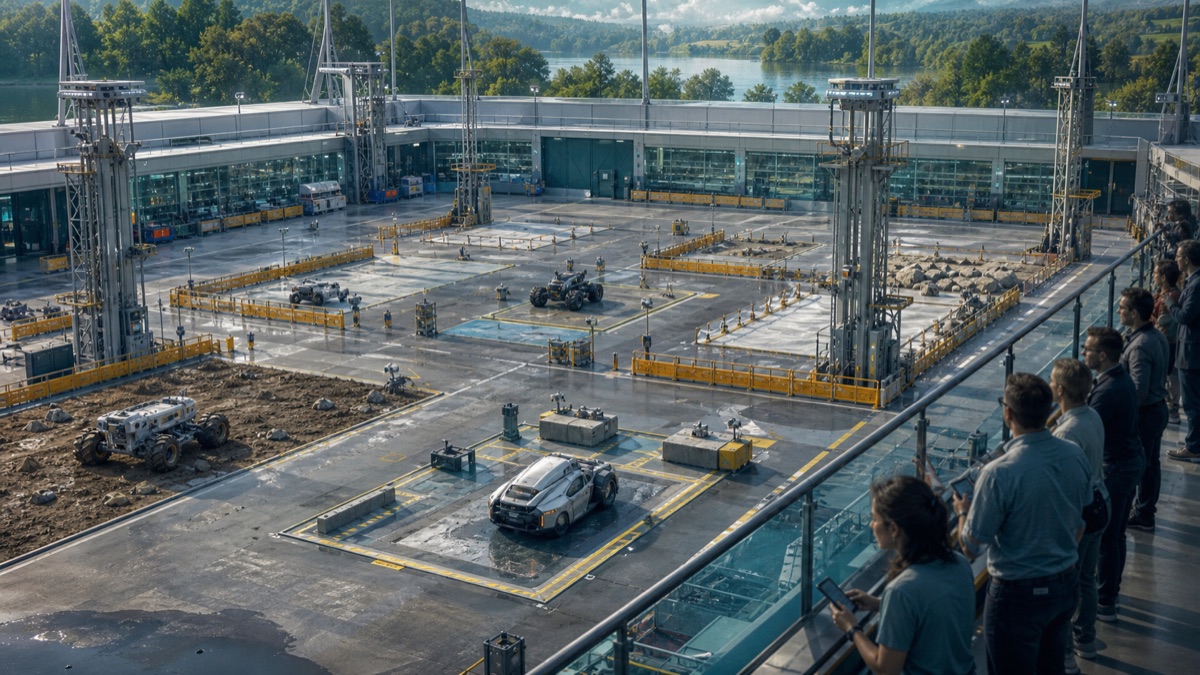
The first useful test is deliberately smaller than the dream: a bounded system with a visible input, output, failure mode, and stop condition.

A serious science page names the evidence that would cool a claim, narrow a route, or move an idea back into the archive.
Update the claim temperature, source status, and next experiment before promotional copy changes.
Publish what was learned, what failed, and what language changed.
Move only testable work into Labs; keep wonder readable in the canon.
Keep the difference between thesis, prototype, and product visible.
The White Noise program is strongest when it is explicit about what is established science, what is engineering extrapolation, and what remains speculative.
Every bit must be stored, moved, erased, protected, and paid for with energy, time, materials, and entropy. A civilization-scale computer must answer to those ledgers.
The "white noise" metaphor points to unbiased possibility. Intelligence enters by filtering that possibility into verified patterns, not by pretending every possibility is equally buildable.
Entanglement is real, but no-signalling constraints matter. Any White Noise Computer must respect what quantum theory permits rather than treating nonlocality as a shortcut.
Space settlement, computation, matter synthesis, and robotics all reduce to energy throughput, waste heat, reliability, and repair. The project lives or dies by those constraints.
A White Noise system must predict, act, measure the result, and preserve a provenance trail. Without verification, it is only a story about capability.
Technologies this large need human-legible interfaces, failure limits, public review, reversibility where possible, and social permission before deployment at scale.
The White Noise Computer is the project's most ambitious idea: a computer that treats reality itself as the substrate. Today that is a speculative research target, not shipping hardware. Its value is that it forces every other claim to answer one question: what would computation have to become to coordinate matter, life, settlement, and governance at cosmic scale?
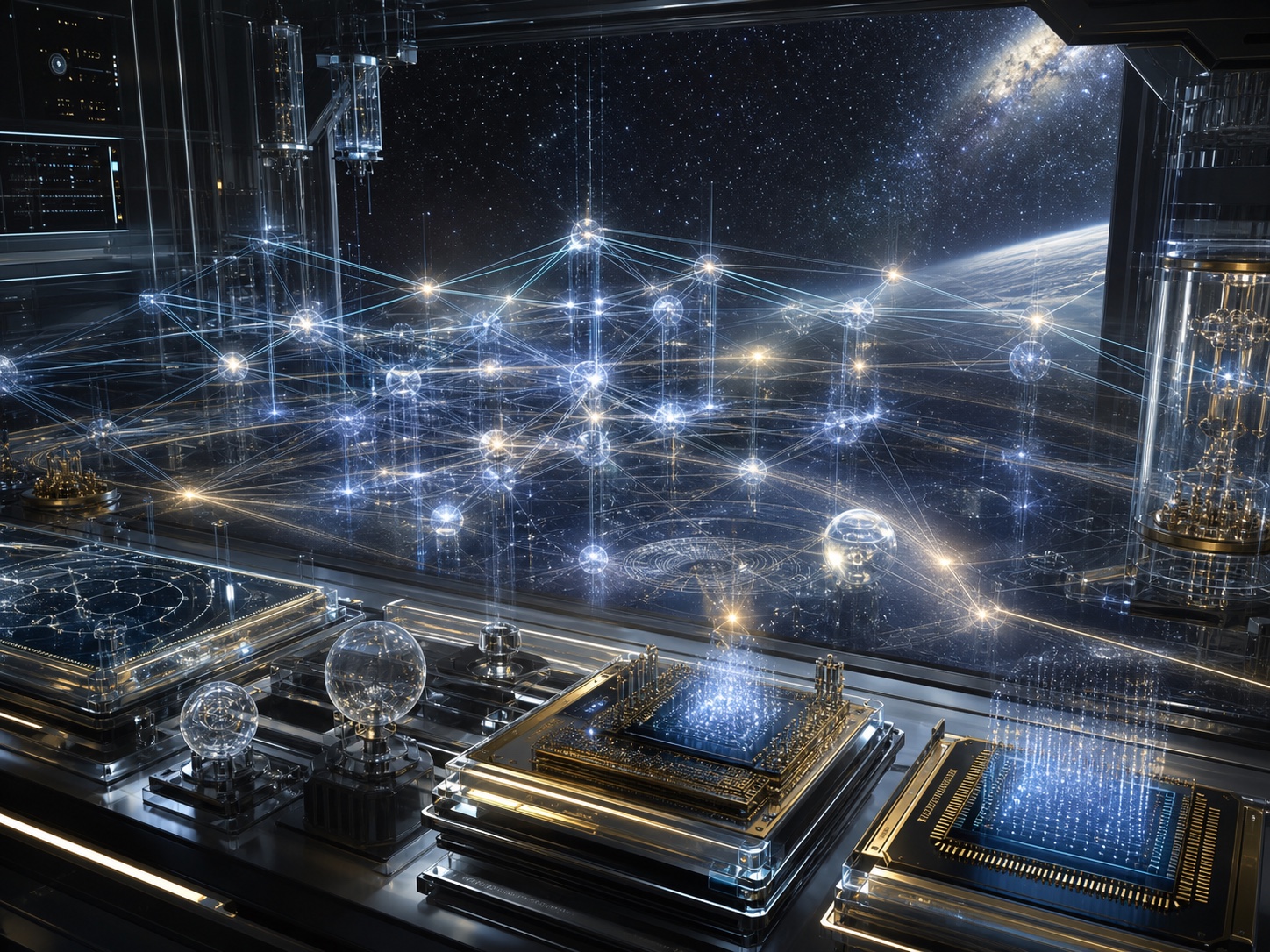
Visual note: this is editorial concept art for system orientation, not proof of a built White Noise Computer, verified hardware architecture, or completed benchmark stack.
The claim is not a financial promise. It is a civilizational leverage thesis: if a White Noise Computer could compress discovery, manufacturing, coordination, and settlement into one accelerating loop, its return would be measured in new worlds, new resilience, and new optionality.
Better models find better experiments, which create better instruments, which expand what can be modeled next.
Replicators, superfactories, and robotics turn local feedstock into infrastructure instead of importing every kilogram.
Orbital, lunar, asteroid, and planetary habitats multiply civilization's safe operating surface.
The highest return comes only if capability is paired with failure boundaries, transparency, and repair.
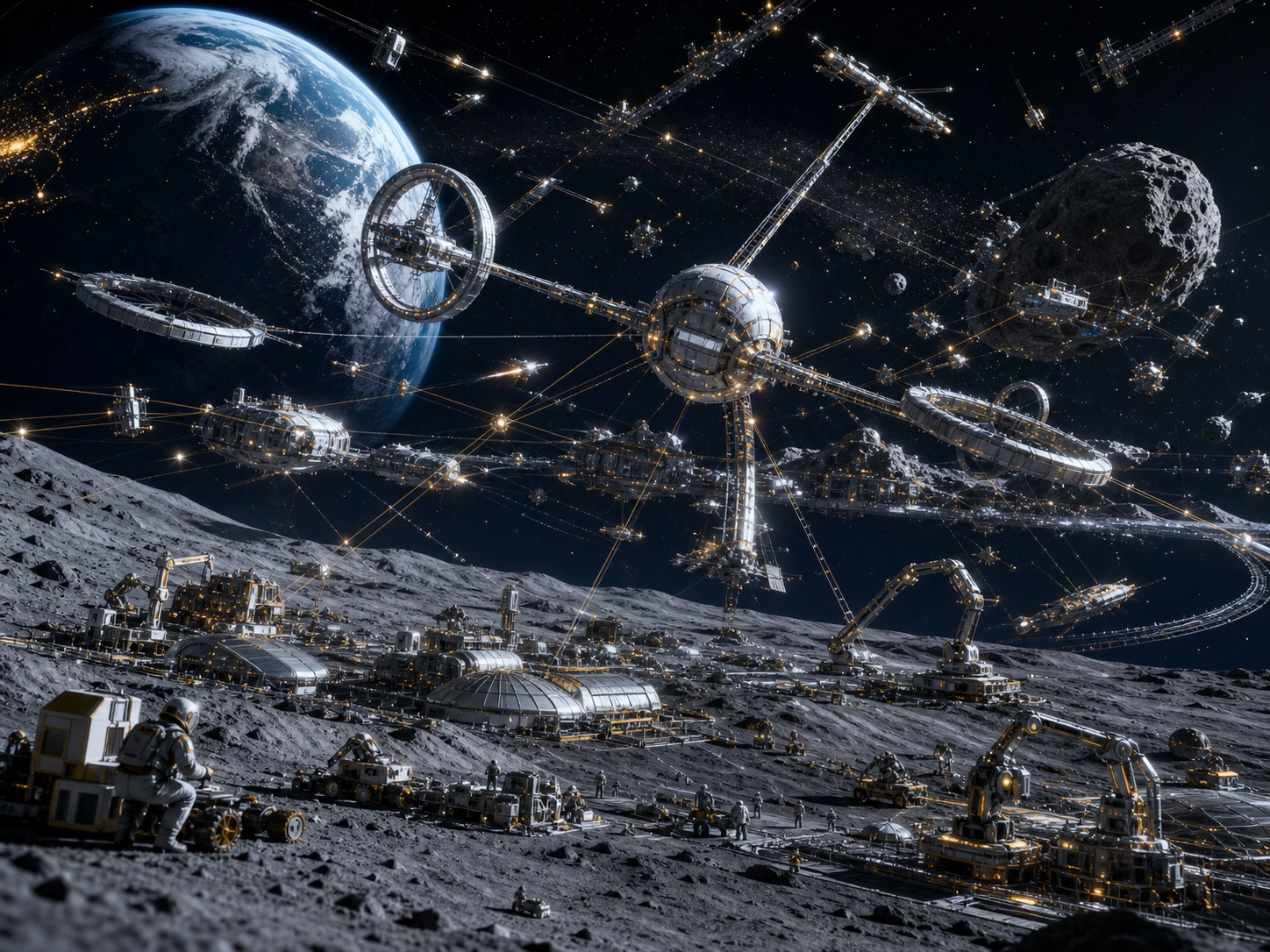
Visual note: this settlement artwork illustrates the long-horizon thesis only. It is not evidence of built habitats, operational off-world infrastructure, or a deployed White Noise settlement stack.
The White Noise Computer matters because settlement is coordination at the edge of every constraint: energy, radiation, closed-loop ecology, autonomy, manufacturing, propulsion, medicine, and governance. If those layers can be modeled and built as one loop, exploration stops being a series of heroic missions and becomes a distributed industrial ecology.
That is the bridge from White Noise Totality to White Noise Inc.: a speculative north star converted into courses, product pages, lab programs, community memory, and reviewable research.
The practical route is not to declare the impossible solved. It is to decompose the stack into measurable programs where each step teaches the next.
Separate metaphor, established physics, and speculative architecture.
Build models for computation, manufacturing, settlement, and failure modes.
Test instrumentation, error correction, autonomous fabrication, and materials workflows.
Prototype self-extending resource loops before human dependency.
Integrate energy, matter, compute, governance, medicine, and habitat operations.
The White Paper turns the same thesis into a more formal technology stack, with references, constraints, and a proposed research program.