 White Noise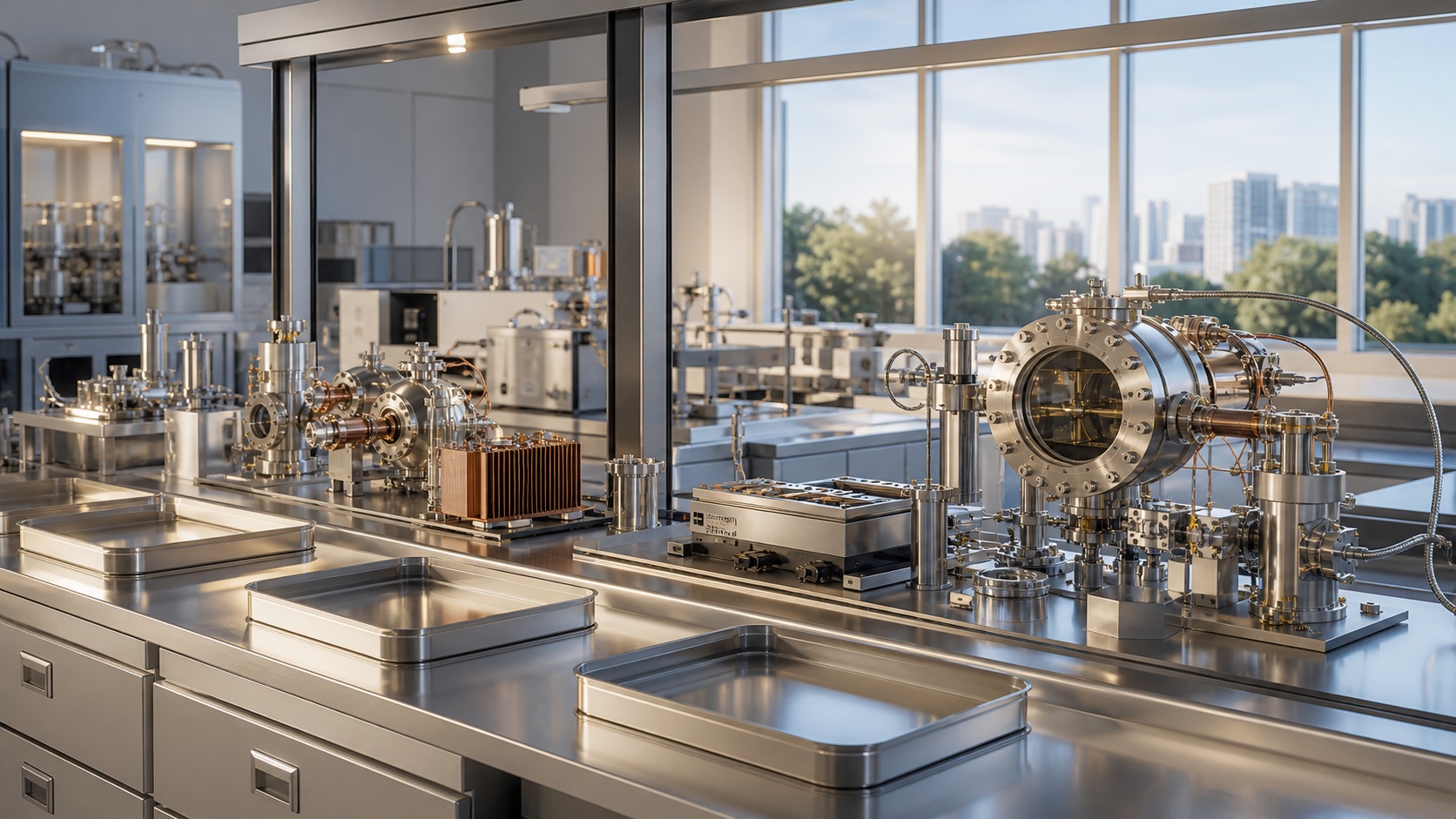
Vacuum-Effect Instrument Null Cabinets starts with a modest editorial rule: Zero-point language needs a place where null instruments can stay visible. White Noise Totality can imagine civilization-scale systems, but the public site has to tell readers what is current service, what is education, what is Member Workspace or Labs workflow, and what remains speculative source-world language.
The working object here is a null cabinet with calibration date, effect-size floor, heat path, comparison standard, and failed-run notes. It is intentionally smaller than the far-horizon concept. A smaller object can be inspected, versioned, refused, retired, and linked to a person or review body. That is how White Noise keeps cosmic ambition joined to measurement instead of letting image, metaphor, or enthusiasm do the work of evidence.
The Claim Worth Keeping
The claim worth keeping is not that White Noise Inc. has shipped the full future described in the book. The useful claim is that vacuum-effect instrument null cabinet can translate a difficult frontier idea into a public practice. It gives a reader a handle: what is being proposed, what is not being claimed, who can challenge it, and what record would have to change before the language could become stronger.
That distinction matters for Zero-Point Energy because the field can sound inevitable long before it becomes operational. A polished diagram, cinematic image, or confident assistant answer is not a measurement. The article's primary keyword is vacuum effect null cabinet; nearby search language includes zero-point energy, vacuum effects, null result, instrument baseline, thermodynamics, measurement caveat. Those phrases are useful only if they lead back to boundaries, not hype.
Present Capability Boundary
The present capability boundary is practical: source records, consent language, review procedures, interface states, comparison tests, and publication discipline. White Noise has live reading, Academy, member, Member Workspace, Magazine, Encyclopedia, Exchange, Labs, and institutional review surfaces. The long-range systems remain research tracks or source-world concepts unless a page explicitly says otherwise.
For this topic, the first useful implementation would be a null cabinet with calibration date, effect-size floor, heat path, comparison standard, and failed-run notes. It should be boring enough to audit. It should carry dates, owners, caveats, and refusal paths. It should distinguish generated visual support from proof, and it should make negative results easy to preserve.
The Failure Mode
The central failure mode is letting a vacuum diagram imply usable power when the measurement only shows uncertainty, background, or nothing. In White Noise language, this usually happens through compression: source-world imagination becomes a roadmap, the roadmap becomes a capability, and the capability becomes a promise while the evidence has not moved.
The repair is not to abandon ambition. The repair is to put the claim temperature on the surface. Readers should know when they are looking at a speculative design horizon, a current prototype workflow, a bounded Labs engagement, a generated image, a public reference entry, or a verified result. That friction protects skeptics from overclaiming and protects believers from disappointment.
A First Useful Artifact
A first artifact should be small, inspectable, and consequential. It should answer five questions: what source-world claim is being translated, what present capability exists, what limit is known, who can appeal, and what would trigger retirement or revision. If the answer is no, the no should remain visible.
This is also the right standard for Member Image Studio and Member Workspace. Generated scenes can clarify a concept, but they should keep prompt intent, source/provenance notes, and nonproof language attached. A strong White Noise image helps a reader think; it does not prove that a machine, course authority, investment outcome, or scientific breakthrough exists.
Where to Continue
Use this feature as a route into the surrounding public corpus: the book for source-world ambition, the Magazine for editorial translation, the Encyclopedia for definitions, and the proof-oriented site pages for current capability boundaries.
- Neural Interface Fatigue Checkpoints
- Continuity Archive Expiry Rooms
- Planetary Clock Disagreement Maps
- Vacuum-Effect Instrument Null Cabinet
- Neural Interface Fatigue Checkpoint
- Continuity Archive Expiry Room
- Planetary Clock Disagreement Map
Image Provenance
Hero image provenance: GPT-generated editorial bitmap created for this article in the 2026-07-01 automation batch. Prompt intent: Bright cinematic physics lab cabinet with small vacuum chambers, heat sinks, blank result trays, daylight, clean surfaces; no text, no logos, no dramatic dark energy beams. The image is visual support only; it is not evidence of an operational White Noise system, shipped product, accredited program, investment result, or verified scientific result.