What material supports this?
Point the user to an encyclopedia entry, book passage, member shelf, or public material before summarizing.
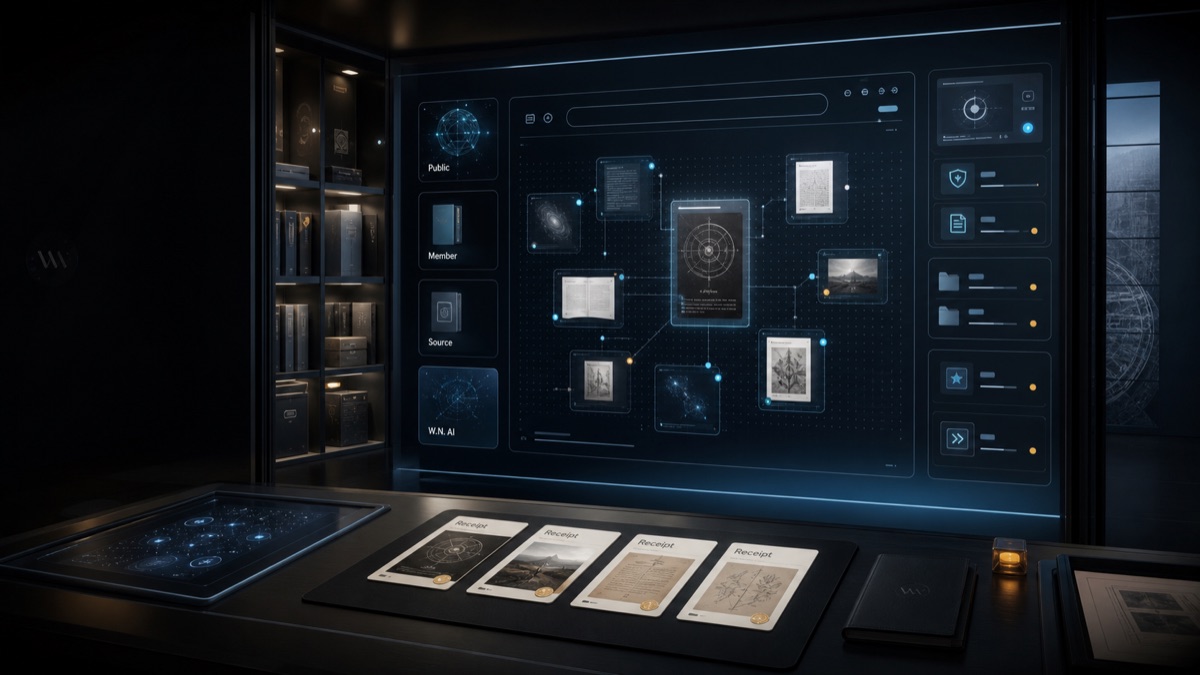
A routed research surface for White Noise material: public reference, canon reading, member corpus access, member workspace sessions, and source-provenance review in one honest entry point.
Image provenance: GPT-generated White Noise Library retrieval workspace created on 2026-06-29. Prompt intent: show source retrieval, public/member lanes, member workspace assistance, receipt trails, and route handoffs. Review the provenance record. Usage boundary: editorial product-direction only, not proof of a shipped archive dashboard, audited corpus, customer workflow, trained model, or web-scale ingestion.
The Library should not behave like a magic search box. It should route each question to the smallest trustworthy surface: public reference, canon reading, member material, member workspace, or a source-rights review.
Generated for this page as editorial product-direction art. It avoids book-cover targeting and does not represent production entitlement, audited usage, or a trained image model.
Use the public reference layer for orientation, named concepts, speculative-system entries, and links into deeper material.
First action: inspect the public entry. Canon routeUse the book route when the question depends on the actual White Noise Totality text rather than a summary.
First action: read the relevant source section. Member routeUse W.N. Plus for the broader member library, saved reading sessions, receipt trails, and member-only corpus surfaces.
First action: browse member shelves. Assistant routeUse the member workspace when the next step needs a prompt-specific answer, generated visual direction, saved redraws, or exportable provenance.
First action: start a bounded prompt.Point the user to an encyclopedia entry, book passage, member shelf, or public material before summarizing.
Separate evergreen canon from dated governance notes, launch status, market notes, and evolving member workspace behavior.
Use the source-rights register before publication, model-training claims, external datasets, or commercial derivative work.
Route serious requests into member workspace export, Custom R&D scope, Trust Center, or contact intake instead of broad claims.
Visitors can now land on this route and immediately decide whether they need public reading, member access, member workspace assistance, source-rights review, or a scoped services handoff.
The new image is original GPT output with a local provenance file and sitemap entry; it does not imply a live system screenshot.
The best product and studio references reduce cognitive load by putting the object, workflow, proof boundary, and next action in one scan. This Library index applies that pattern to White Noise: each reader should know whether they need a definition, a source passage, member material, rights review, or a scoped handoff.
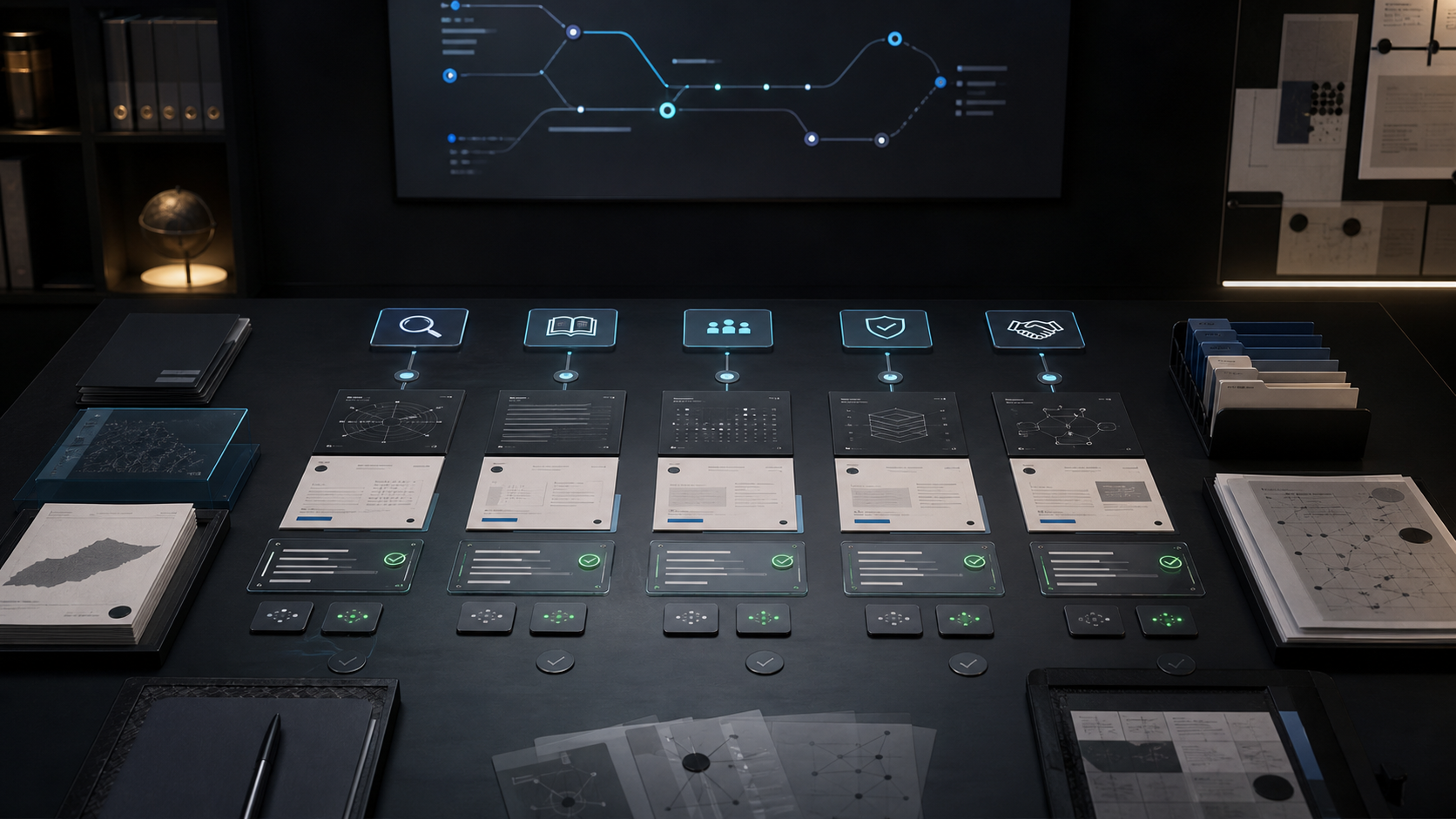
Created for the Library route as original editorial concept art. It is not a live archive screenshot, audited corpus interface, customer workflow, trained model, or proof of web-scale source ingestion. Review provenance.
Use this when the visitor needs concept orientation, field context, or a cross-link before asking for deeper interpretation.
First useful artifact: one public entry or field note.Use the canon route when the answer depends on an actual passage, not a generalized summary or promotional paraphrase.
First useful artifact: a cited source-text read.Use the member shelf when the visitor needs structured reading depth, saved sessions, or a richer working corpus after the public route.
First useful artifact: a member reading path.Use provenance and source-rights routes before publication, partner handoff, dataset work, derivative content, or external commercial reuse.
First useful artifact: a rights or provenance read.The Library should not imply unlimited answering capacity. When a visitor needs a custom synthesis, research plan, or commercial decision, the next route should be member access, Custom R&D scoping, or public contact intake with one named boundary.
Use the Library to move from curiosity to a grounded next step: read the public reference, inspect the canon, open the member shelf, use the member workspace, or check the source-rights boundary before reusing material.