Identify the decision.
Choose whether the real question is company posture, current blocker, first artifact, broad readiness, or full inventory.
 White Noise Inc.
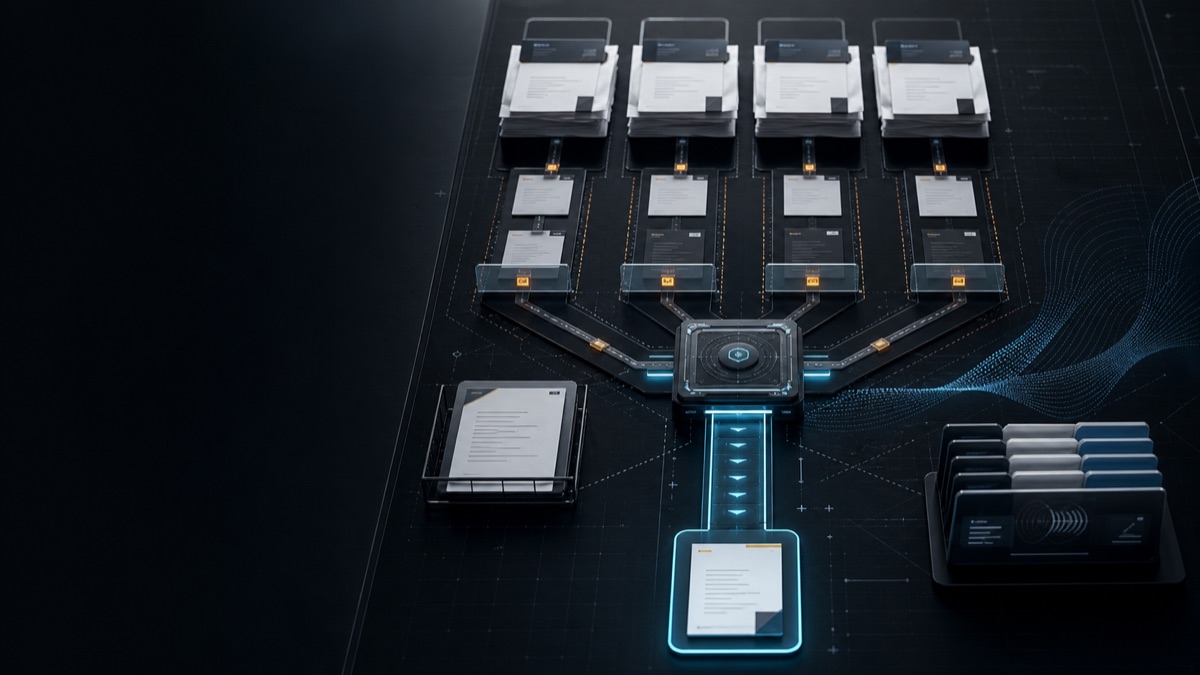
This route gives serious reviewers a short first-session path: choose one decision, open one public artifact, name the proof boundary, and stop before an unsupported claim gets warmer than the current evidence.
The cockpit does not replace the materials index or the board request router. It prevents them from being used too early, before the reviewer has named the actual decision being made.
Choose whether the real question is company posture, current blocker, first artifact, broad readiness, or full inventory.
Do not send every material first. Open the route that matches the decision and keep the proof boundary visible.
Call out whether the blocked family is audited financials, production CRM, security certification, customer traction, formal financing, live Exchange operations, or generated visuals as proof.
Ask for one bounded follow-up only if the current public artifact supports it; otherwise stop and record that the requested proof is not represented as ready.
Boundary: not audited reporting, not a dataroom, not formal financing material, not production CRM proof, not enterprise workflow proof, and not proof that speculative White Noise technologies are commercially deployed.
Next: move to the board action snapshot only if the reviewer needs the current blocker and evidence unlocks. Open company snapshot Current blockerBoundary: not audited reporting, legal advice, investment advice, KPI report, CRM proof packet, customer proof, Exchange launch proof, or production proof.
Next: use the source-record evidence sprint if the reviewer asks what must happen next. Open board snapshot First artifactBoundary: not investment advice, audited reporting, legal advice, a secure diligence room, a CRM proof packet, customer evidence, or formal financing documentation.
Next: send one bounded artifact and the matching proof boundary; do not send a broad packet first. Open request router Readiness comparisonBoundary: not a claim that source-backed proof exists, not a procurement packet, not audited reporting, not customer proof, and not launch readiness.
Next: route to the source-record priority queue only if a warmer claim depends on a specific accepted source record. Open readiness matrix Full inventoryBoundary: not proof that every listed artifact is complete, current beyond its review cadence, legally reviewed, audited, production-backed, or ready for formal diligence.
Next: use the index to deepen the chosen route, not to flood the first review. Open materials indexIf the requested proof family is listed as cold or absent, say it is not represented as ready and route to the closest current gate or review artifact. This is the central board discipline behind the cockpit.