The book supplies the canon: a speculative map of computation, matter, knowledge, settlement, intelligence, and stewardship.

White Noise Totality company snapshot
The company built from one future architecture.
White Noise Inc. is the educational, creative, research, and services ecosystem built on Valentin Perlov's White Noise Totality: Engine of Infinite Possibilities. The company turns the manuscript's civilization-scale ideas into public learning paths, frontier product maps, scoped research services, community spaces, and proof-conscious routes for serious readers.
Read boundary
This page explains the company through the book. It does not claim that the White Noise Computer, OSTSS, Replicator, infinite Library, immortality systems, or other frontier technologies are commercially deployed. Today, the live company is the translation layer: publishing, education, research framing, services, community, and bounded partner or investor routes.
White Noise Inc. makes the canon explorable through learning, public artifacts, services, and research doors.
Readers can inspect the book, courses, product maps, articles, consulting paths, Custom R&D, Labs, and contact routes.
The site separates the present public ecosystem from the far-horizon technologies imagined in the manuscript.
What White Noise is
A company organized around a canon, not a single product.
The old snapshot treated White Noise mainly as a public diligence route. This version starts closer to the source: the company exists to translate a vast speculative book into pathways people can actually read, study, question, scope, and build from.
White Noise Totality imagines reality as an informational fabric and asks what a sufficiently advanced civilization could build if computation, intelligence, matter, and governance were pushed to their outer limits.
The product catalog, encyclopedia, magazine, Academy, Labs, and services turn the book's themes into navigable public surfaces instead of leaving them as one enormous manuscript.
White Noise can sell learning access, memberships, consulting, scoped R&D, artifacts, and partner programs now. Those offers are different from claiming the far-horizon technologies already exist.
The company should be understood as ambitious, public, and careful: visionary enough to map impossible engineering, disciplined enough to label what is speculative, prototype-level, or commercially live.
The Totality spine
One manuscript, several linked frontiers.
The source document moves from the White Noise Computer into a larger civilization stack: libraries of knowledge, replicators, nanobots and macrobots, space settlement, digital medicine, superintelligence, and public stewardship. The site should make that map easier to enter.
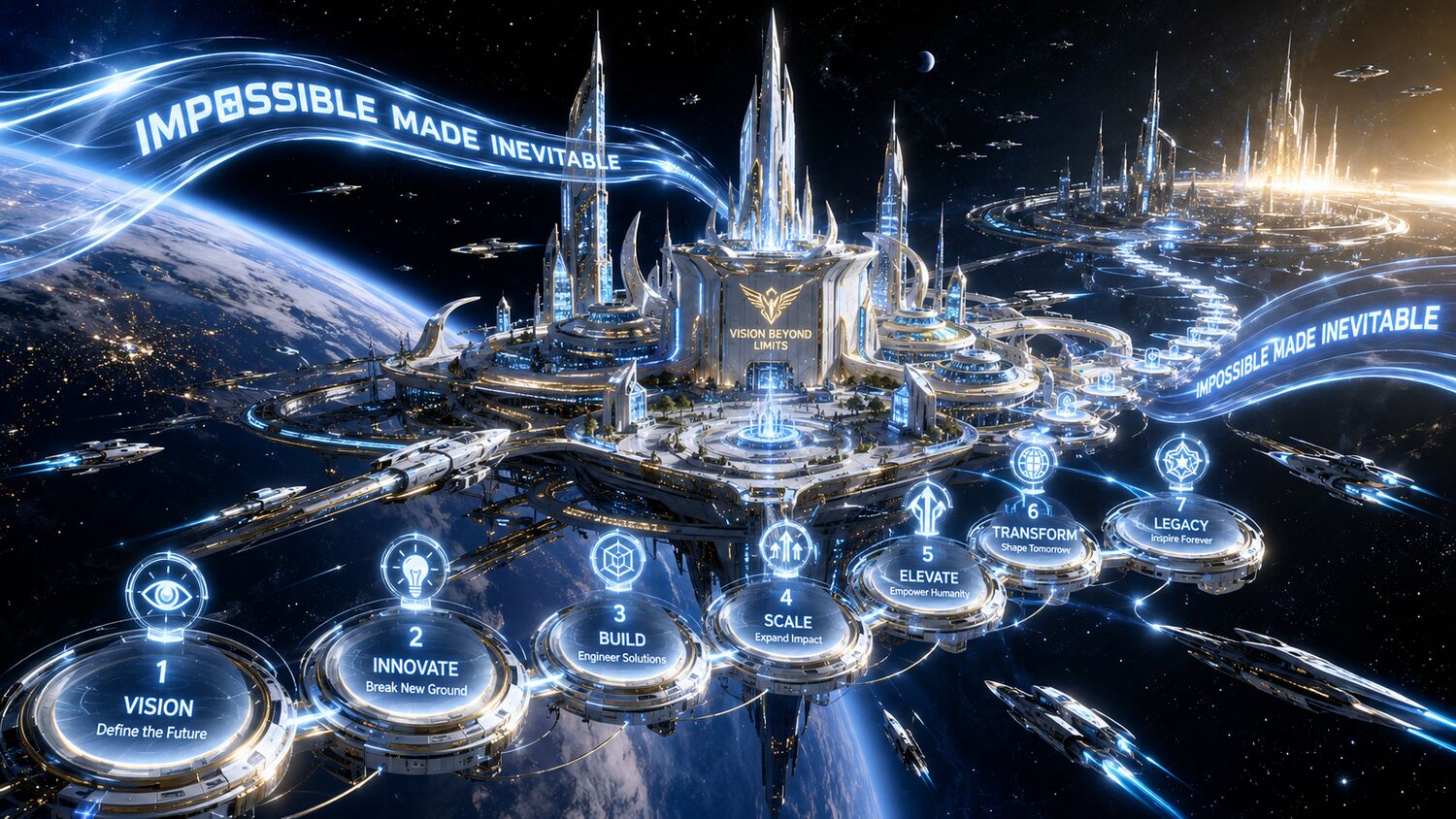
White Noise Computer
The foundational thesis: computation imagined as an interface with the informational structure of reality. On the site, it becomes a research language for quantum, AI, cognition, and systems architecture.
Open ComputerWhite Noise Library
The archive idea becomes more useful when read as query design, provenance, retrieval, simulation, and source boundaries rather than unsupported omniscience.
Open LibraryReplicator and materials
The matter-synthesis vision becomes a practical research door for fabrication logic, feedstock, safety, materials, and artifact design.
Open ReplicatorOSTSS and Project Utopia
Space settlement, self-building infrastructure, and utopian civic design become questions of habitat, maintenance, legitimacy, governance, and public pilots.
Open OSTSSWhite Noise is best understood as a serious imagination company: it takes impossible-scale ideas and gives them a public grammar, a learning path, a research boundary, and a first practical artifact.
Company interpretationLive public ecosystem
What someone can actually do here today.
The Totality vision becomes concrete when a reader can choose a door: read, learn, explore products, scope a research artifact, join a community, or contact the company with a bounded question.
Book, Encyclopedia, Academy
Start with the manuscript, then use structured learning surfaces to move from awe into comprehension.
- Full book route and related book pages
- Encyclopedia and magazine entries
- Academy course paths across the canon
Products, Labs, Custom R&D
Turn a broad frontier theme into a narrower artifact, brief, research question, or design path.
- Product catalog across the Totality stack
- Labs and Custom R&D intake
- Consulting for strategy, research, and worldbuilding
Community, partners, diligence
Use the company routes when the next question is fit, collaboration, capital posture, trust, or a specific first return.
- WN Club and member routes
- Partner and institutional first-meeting materials
- Investor and trust pages with explicit boundaries
How to read the bold claims
Vision language and operating claims are kept separate.
White Noise Totality is intentionally vast. A good company snapshot should honor that scale without turning theoretical or fictional-engineering language into present-tense commercial proof.
White Noise Computer, OSTSS, replicators, nanobots, macrobots, infinite libraries, digital medicine, immortality, superintelligence, and post-scarcity systems belong to the far-horizon canon.
The public company work is to make those ideas legible through courses, essays, product maps, research briefs, scoped services, galleries, and proof-aware public pages.
This snapshot does not imply audited financials, named-customer traction, enterprise-grade controls, formal financing documents, live market operations, or commercially deployed speculative systems.
Operating rule
When a claim sounds like a technology that would change civilization, treat it as a research or worldbuilding horizon until a separate page supplies measured evidence. When a claim describes a page, course, service, publication, community, or intake path, treat it as part of the current public company surface.
Start here
Choose the right first door into Totality.
The company is easier to understand when the first click matches the reader's intent. Use the book for the vision, Products for the system map, Academy for learning, Services for scoped work, and trust routes for serious review.
Start with the source canon and the book pages before moving into individual technologies.
Open bookUse Products to see how Computer, Library, Replicator, OSTSS, and Utopia connect.
Open productsUse course paths to convert the manuscript into organized study and repeatable concepts.
Open AcademyAsk for a scoped research artifact, service path, partnership fit check, or diligence note.
Contact White NoiseForwardable summary
The short version to send.
White Noise Inc. is the company form of White Noise Totality: a public ecosystem for turning a civilization-scale speculative manuscript into learning, research, products, services, community, and carefully bounded opportunities.
Summary
White Noise Inc. is built on Valentin Perlov's White Noise Totality: Engine of Infinite Possibilities. The book supplies the long-horizon vision: the White Noise Computer, infinite libraries, replicators, OSTSS, nanobots and macrobots, superintelligence, digital medicine, Project Utopia, and the governance questions that come with them. The company translates that vision into what exists publicly now: publishing, Academy learning, product maps, essays, memberships, consulting, Custom R&D, Labs, community, and bounded partner or investor routes. The far-horizon technologies should be read as research and imagination targets unless separate evidence says otherwise.