 White Noise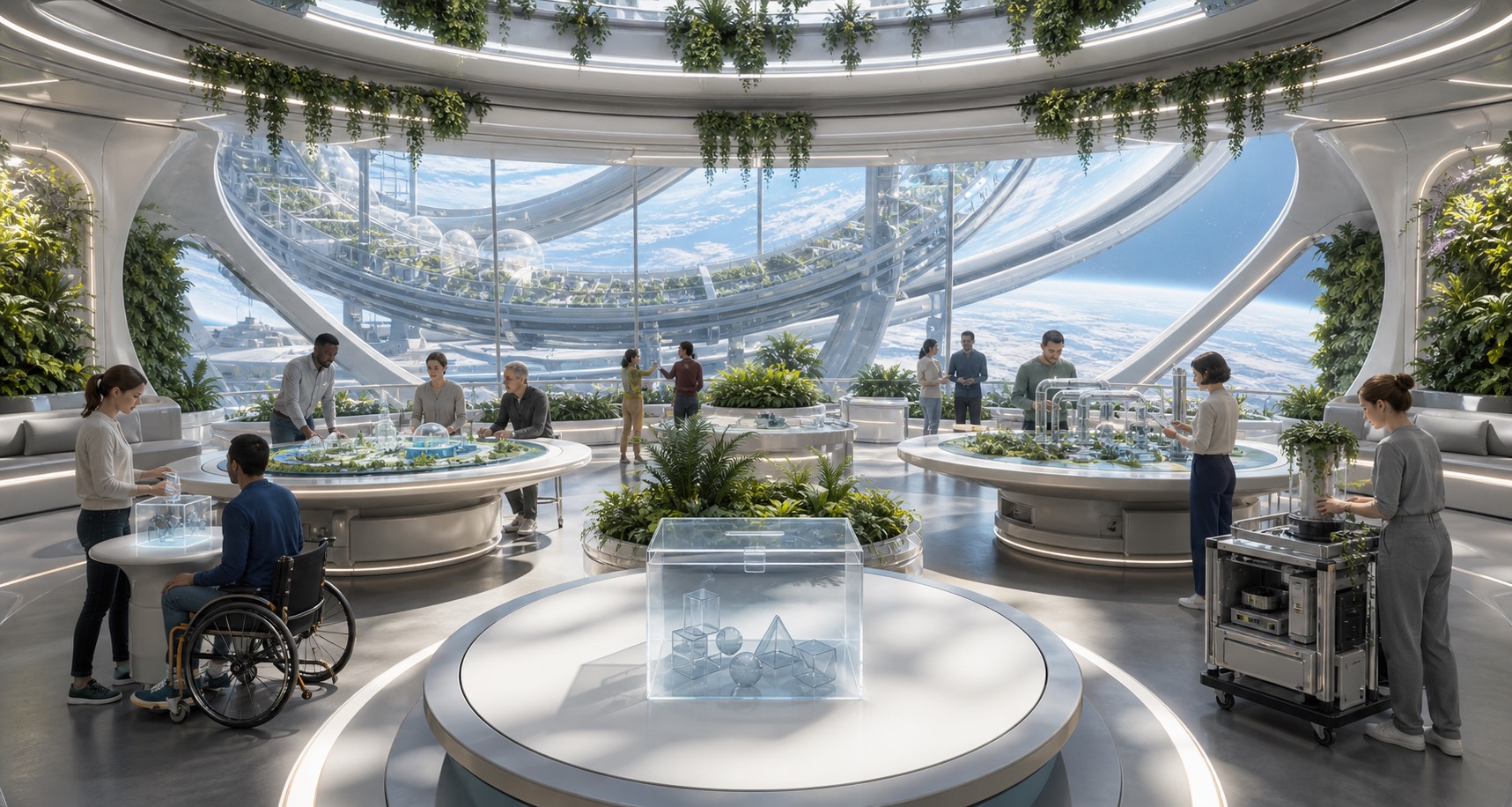
OSTSS Maintenance Vote Days begins with a practical editorial demand: A habitat becomes a polity when maintenance priorities are publicly contestable. The White Noise source text is allowed to remain cosmic; the public site has to be more exact. Current White Noise surfaces are education, media, community, marketplace, consulting, custom R&D scoping, member tools, and roadmap work. The largest White Noise technologies remain speculative design horizons unless a page clearly says otherwise.
The working object in this essay is the maintenance vote day. It is deliberately smaller than the book's full horizon. That is the point. A smaller object can be inspected, argued with, versioned, retired, and linked to an actual operating habit. In the White Noise tone, ambition is not reduced by measurement; ambition earns its public life through measurement.
The Claim Worth Keeping
The useful claim is not that White Noise Inc. has already shipped the future described in White Noise Totality. The useful claim is that maintenance vote day can translate a far-horizon idea into something readers, builders, and reviewers can test now. It gives the sentence a handle. It says where the concept enters the room, who can question it, and what would make the next stronger version legitimate.
That distinction protects the reader from product confusion, investment implication, accreditation drift, and false scientific certainty. It also protects the idea from becoming decorative. A White Noise concept that cannot name its boundary will eventually be read as mood rather than method.
Present Capability Boundary
The present capability boundary is ordinary but important: source records, review procedures, consent language, interface design, publication discipline, and working prototypes that do not claim more than they can show. For this topic, the near-term work is the a maintenance vote packet with repair backlog, risk level, resident options, appeal route, and renewal date. It would be useful even if the grander White Noise premise never becomes technically possible.
This is the standard that should govern Member Workspace, Academy lessons, Labs roadmaps, Exchange artifacts, and Project Utopia material. A member-facing generated image needs prompt intent and provenance. A course needs nonaccredited language unless accreditation actually exists. A speculative product needs a refusal sentence. A research page needs negative controls and a place to put failed results.
The Failure Mode
The failure mode is treating closed-loop settlement life as a solved machine problem while resident consent and repair priorities remain hidden. It usually arrives through grammar before it arrives through technology. A concept becomes a roadmap, a roadmap becomes a capability, and a capability becomes a promise while the evidence has not moved. The repair is not to make the writing smaller. The repair is to make the claim temperature visible.
A strong White Noise page therefore says what is source-world imagination, what is present service, what is scoped research, what is generated visual support, and what is not being claimed. It gives skeptical readers enough structure to keep reading and enthusiastic readers enough friction to avoid overreading.
A First Useful Artifact
The first artifact should be boring enough to audit and useful enough to change behavior. In this case, the artifact is a maintenance vote packet with repair backlog, risk level, resident options, appeal route, and renewal date. It should have an owner, a date, a revision path, and a public consequence when the answer is no. It should make the invisible cost of the concept easier to see.
That is how the White Noise ecosystem can keep its cosmic ambition without fake shipping claims. The article's primary keyword is OSTSS maintenance vote; nearby search language includes OSTSS, space habitat governance, maintenance vote, resident rights, closed-loop settlement. The nearby reading path should move through live site pages, related magazine essays, and WN Encyclopedia entries rather than leaving the concept alone.
Where to Continue
Use this feature as a route map. The strongest next step is to compare the article against the site's public boundaries, then move into related essays and entries that treat the same claim from another side.
- Wn Ostss
- Project Utopia
- Wn Risk Register
- Ostss Resident Air Sample Rights
- Ostss Air Water Compact Renewals
- Spin Gravity Feedback Commons
- Ostss Maintenance Vote Day
- Ostss Air Sample Right
- Ostss Air Water Compact
Image Provenance
Hero image provenance: GPT-generated editorial bitmap created for this article in the 2026-06-30 automation batch. Prompt intent: OSTSS maintenance vote day in rotating habitat commons, resident assembly tables, air and water loop models, no text or logos. The image is visual support only; it is not evidence of an operational White Noise system, shipped product, accredited program, or verified scientific result.