01 · Scenario lab
Policy without prophecy
Prototype civic choices as scenario maps with assumptions, confidence bands, and disagreement left visible.
Inspect the lab posture →
A utopian movement for the conscious engineering of society — applying the White Noise Computer to the oldest ambition of every civilization: a world in which everyone can flourish. Its premise is the book's thesis turned outward — if utopia is an engineering problem, then social engineering, done in the open and by consent, is the work of building it.

Project Utopia keeps ambition close to proof: mission, current surface, audience route, responsibility boundary, and next action. The movement is framed as a public protocol rather than a slogan.
A serious utopian program needs more than belief. It needs small public artifacts that make values, risks, consent, evidence, revision rights, and decision boundaries visible before any claim scales into institution.
Each pilot starts as a readable civic object: what it changes, who it affects, what evidence is missing, and how the community can stop, alter, or route it.
Prototype civic choices as scenario maps with assumptions, confidence bands, and disagreement left visible.
Inspect the lab posture →
Name the rights to understand, refuse, exit, challenge, and preserve private mental space before participation.
Review terms →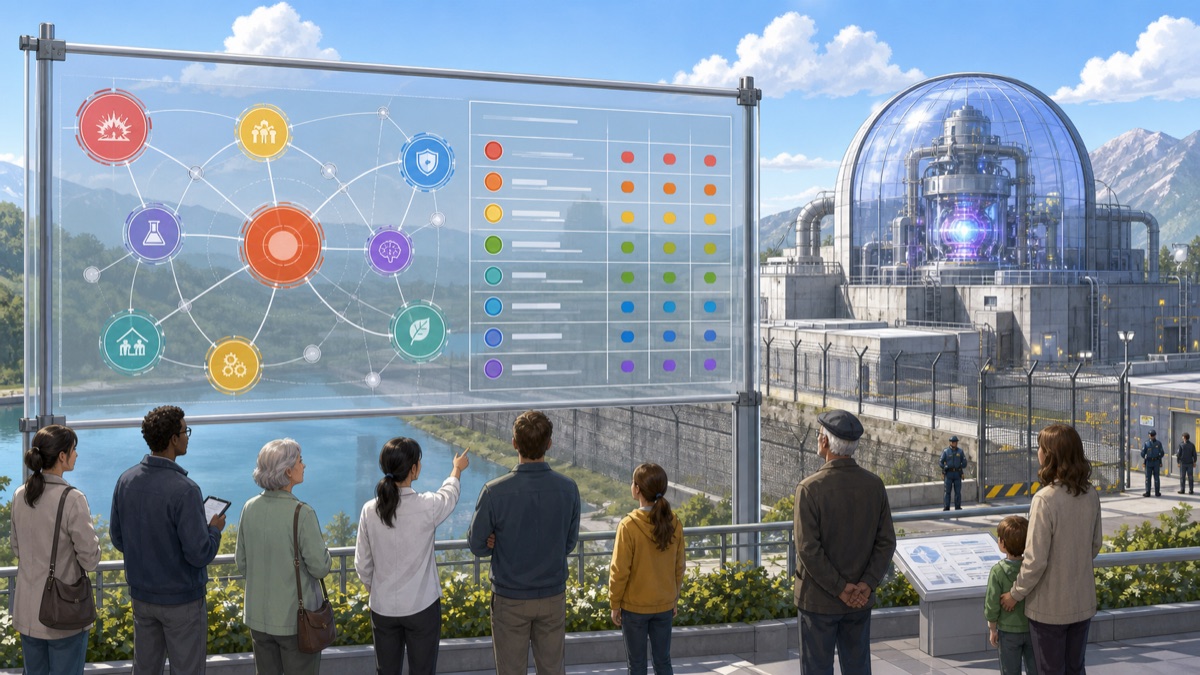
List harms, misuse paths, affected groups, rollback triggers, and open questions beside the vision.
Read the evidence stance →
Move from manifesto to witness: consent records, utility baselines, visible revision, and accountable handoff.
Read the witness essay →Once scarcity loosens, society still has to decide what abundance is for. Project Utopia carries the book's governance chapters into social design: open assumptions, consent, reversibility, visible models, and a refusal to hide power behind inevitability.

Project Utopia is not a product on the constellation — it is a movement. Where the rest of the vision engineers matter, energy, and computation, Project Utopia engineers the social order itself: the institutions, incentives, and shared norms by which a people lives.
It treats utopia the way this whole project treats everything else — as an engineering problem, decomposed into systems, phases, and feedback loops, and held answerable at every step.


"Social engineering" has carried two meanings. In the security world it names manipulation and deceit. In the older civic tradition it names something nobler: the conscious, evidence-guided design of institutions and norms so a society produces well-being rather than suffering.
Project Utopia adopts the second meaning without apology — and disarms the first by inverting its method. Manipulation hides its aims and exploits ignorance. We make aims public, distribute the power to model and decide, and treat every citizen as a co-author. Social engineering, here, is not something done to people. It is something a people does to itself, with its eyes open.
The White Noise Computer — omnipresent, limitless in modeling power, entangled with the structure of reality itself — can simulate the consequences of a policy before a single life is spent testing it.
Proposed laws are run forward across millions of modeled futures; their effects on equity, freedom, health, and happiness are made visible to everyone; and the paths that maximize collective well-being while preserving individual liberty are surfaced for open deliberation. Governance becomes anticipatory rather than reactive — a society that can see the downstream of its own choices, and choose accordingly.

The same disciplined spirit as the stewardship architecture of the book — turned into working rules that keep the method honest.
Every model, objective, and assumption guiding a social decision is open to inspection — never hidden in a black box.
The Computer advises and illuminates but never compels. Like navigation software, it shows the road and leaves the driving to the citizen.
Not one enforced way of living, but a garden of compatible ways — the widest possible space for difference.
Every social experiment is built to be undone, so no generation can lock the next into its mistakes.
Private mental space is absolutely protected. Persuasion is replaced by clarity — true information and full models, never a hidden nudge.
Each principle is a check on the others, so capability can never outrun consent, and ambition never outruns accountability.

Most social conflict is downstream of scarcity — the zero-sum arithmetic that pits group against group over too few resources. As the wider White Noise ecosystem dissolves scarcity through replication, zero-point energy, and OSTSS settlement, the ground beneath that conflict shifts.
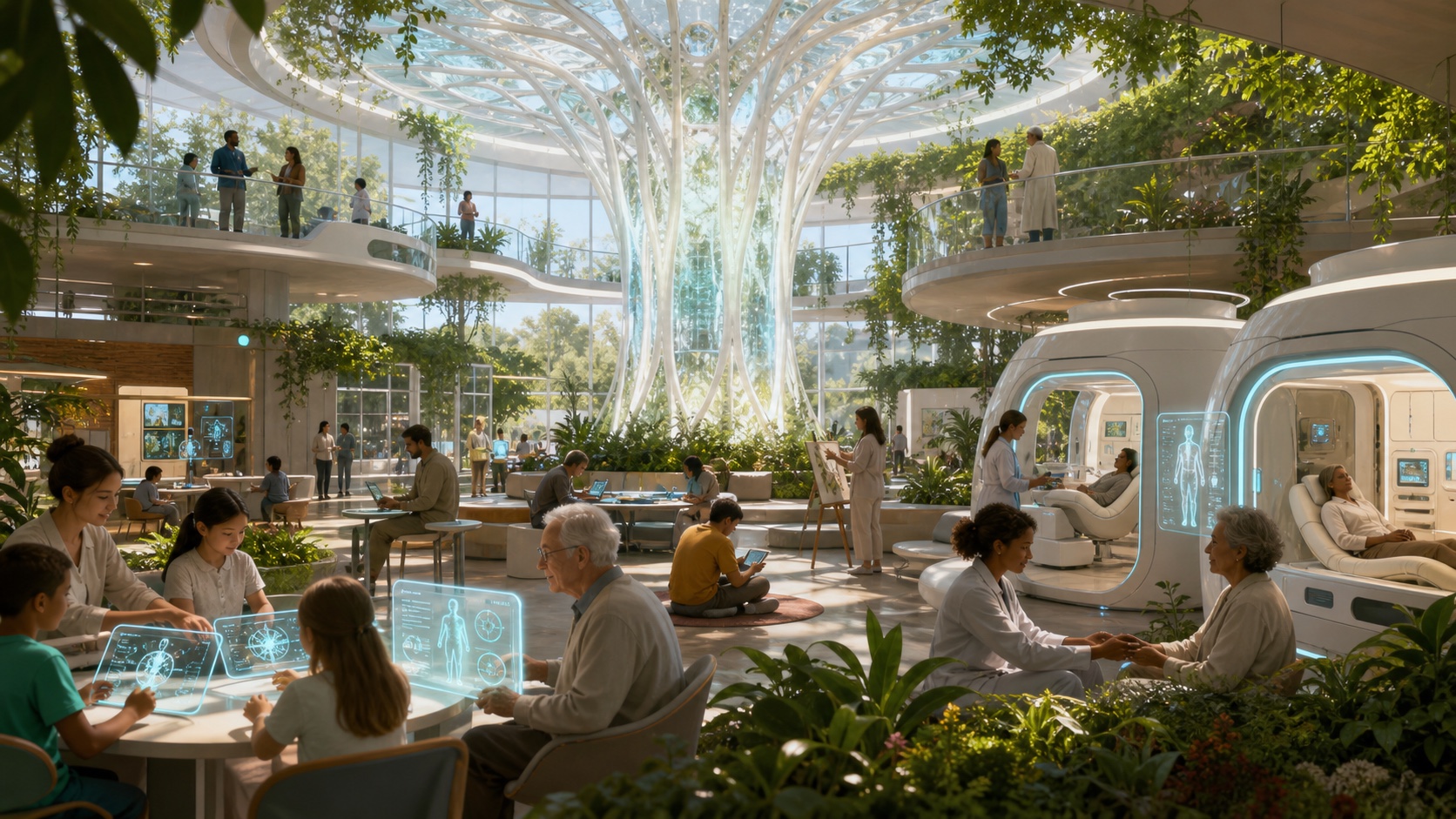
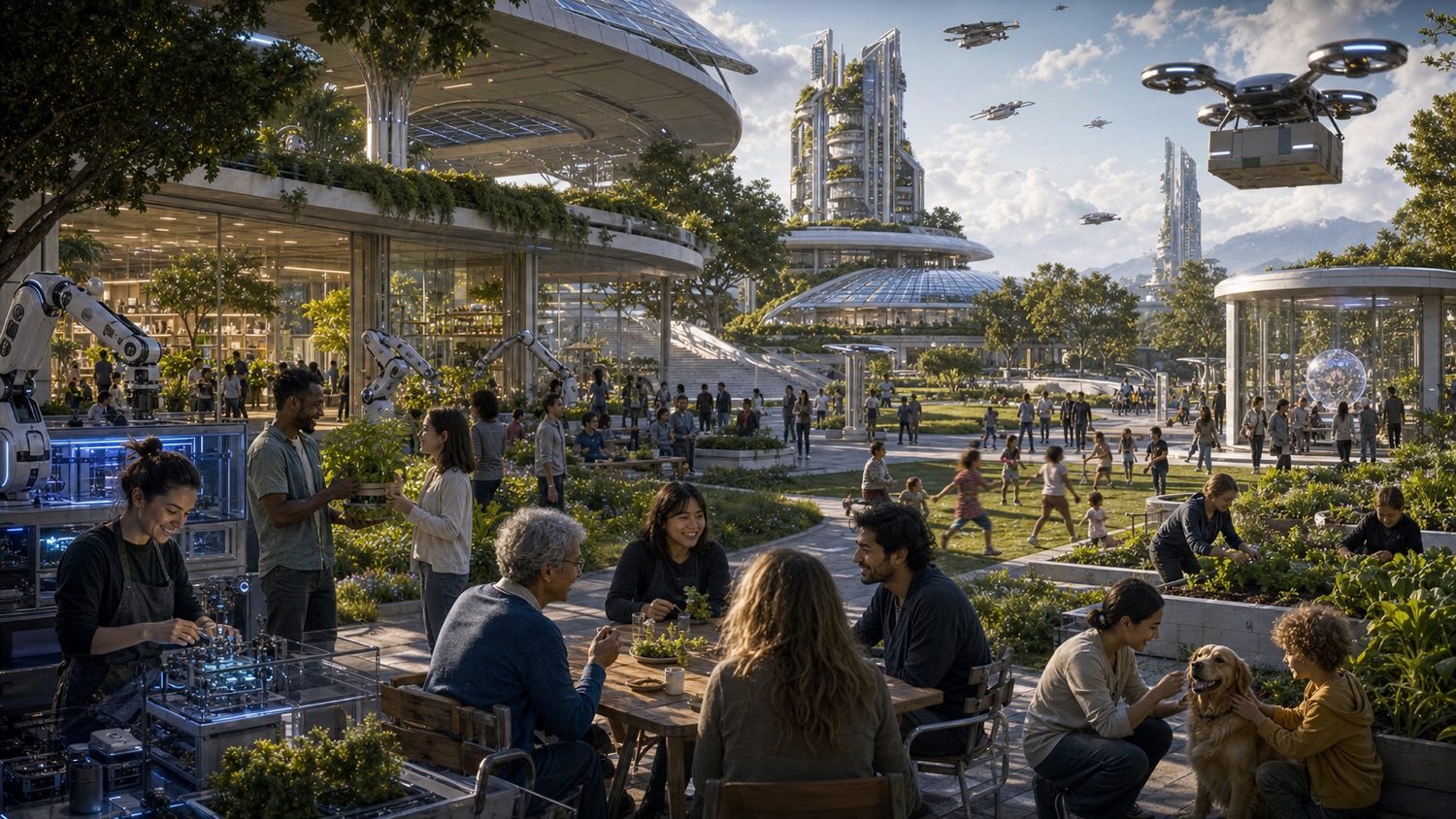
Project Utopia is the cultural project of living in the world abundance makes possible: a reputation economy where status flows from contribution; education that makes every person a genius; healthcare that conquers disease, aging, and despair; and an Earth restored to a garden. The task is to ensure that material abundance becomes social flourishing rather than mere comfort — that the end of scarcity becomes the beginning of meaning.
The book imagines a stack that moves from reality-scale computation to matter synthesis, medicine, settlement, and stewardship. Project Utopia asks what kind of society becomes possible when those powers are treated as public instruments rather than private miracles.

The strongest civic and frontier experiences do not convert everyone through the same door. Project Utopia now separates curiosity, participation, build work, and stewardship so each visitor sees the artifact, boundary, and next step that fits their level of commitment.

A serious utopian movement should make its invitation legible: what you are entering, what gets produced, what rights remain yours, and when the system must pause.

Best for visitors who need the thesis, ethics, and human promise before touching a form or project brief.
Read the position ->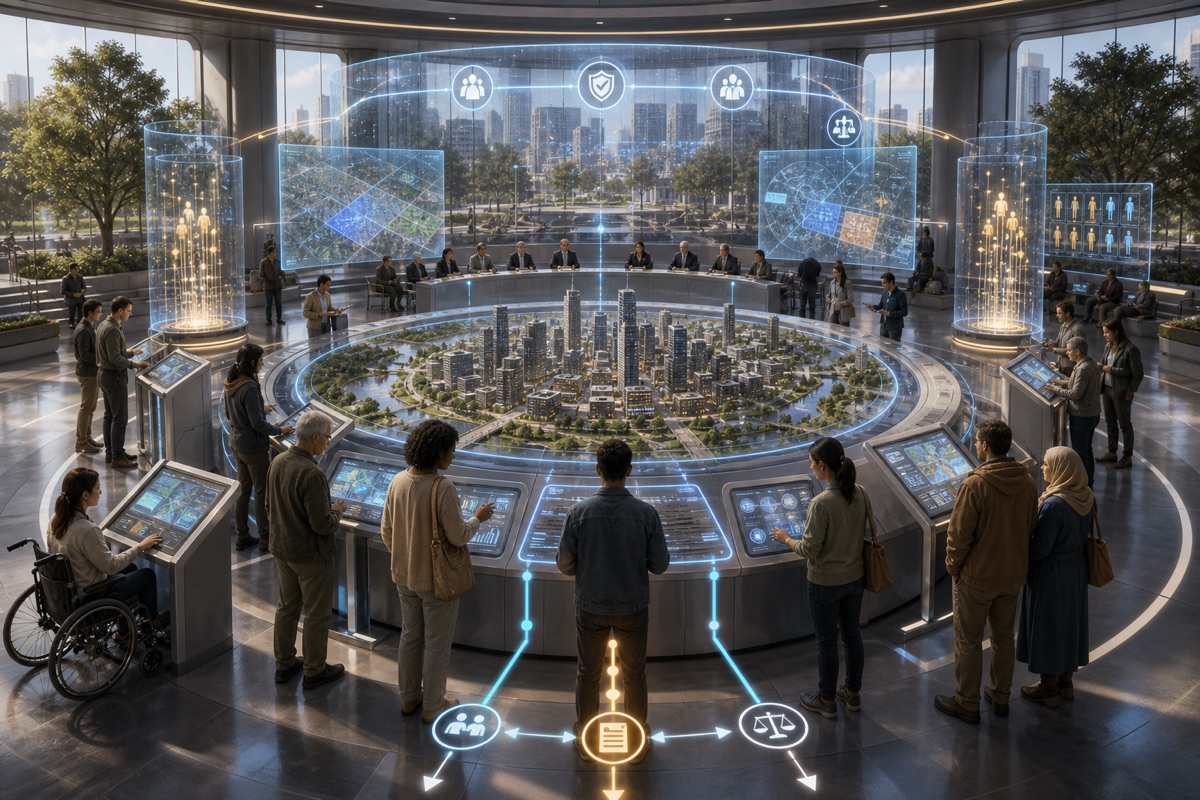
Best for people who want to understand rights, refusal, public risk, and revision before joining a civic experiment.
Review the pilot board ->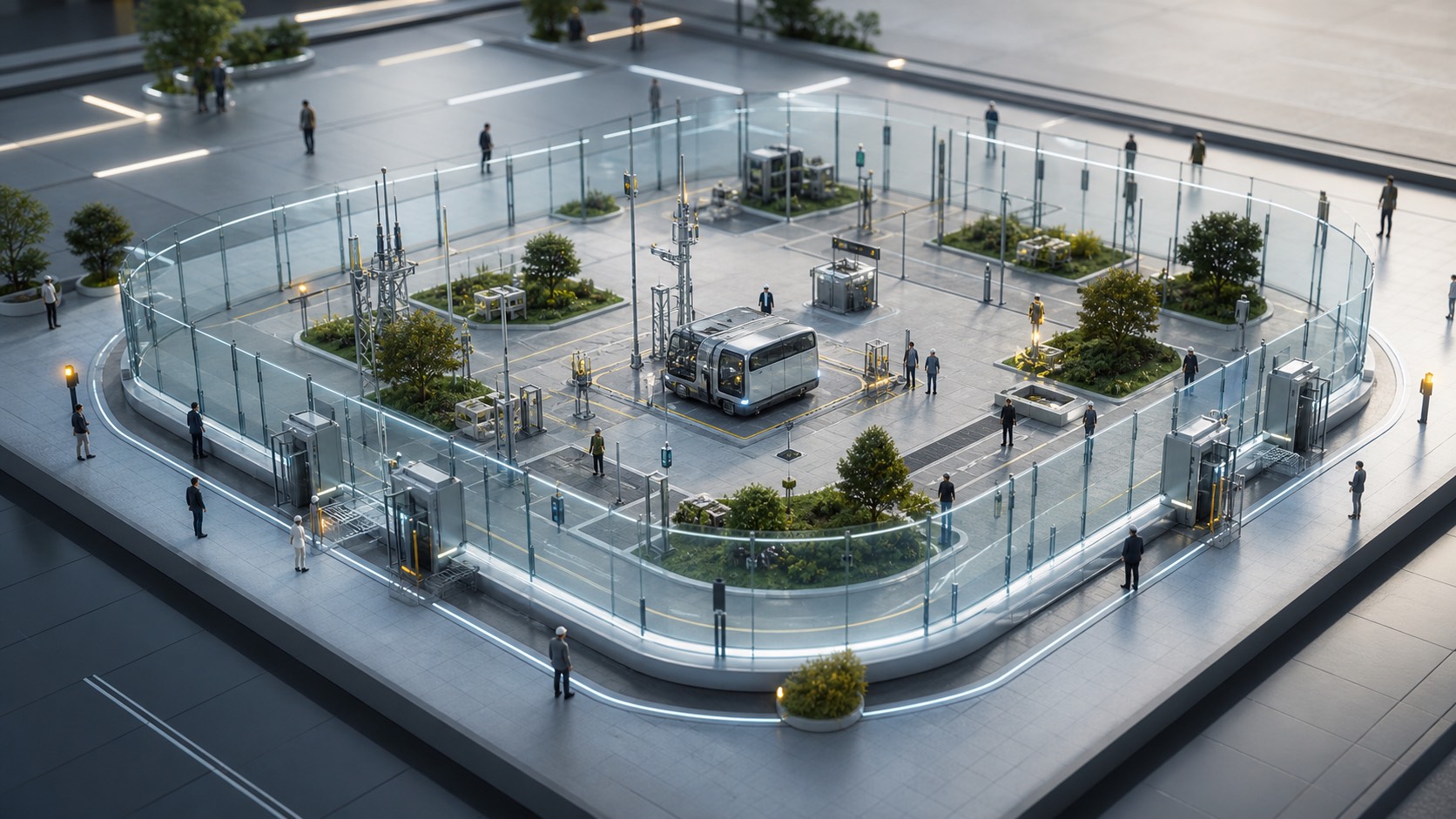
Best for founders, researchers, educators, and civic teams who want a concrete model, scenario, or governance artifact.
Start a scoped request ->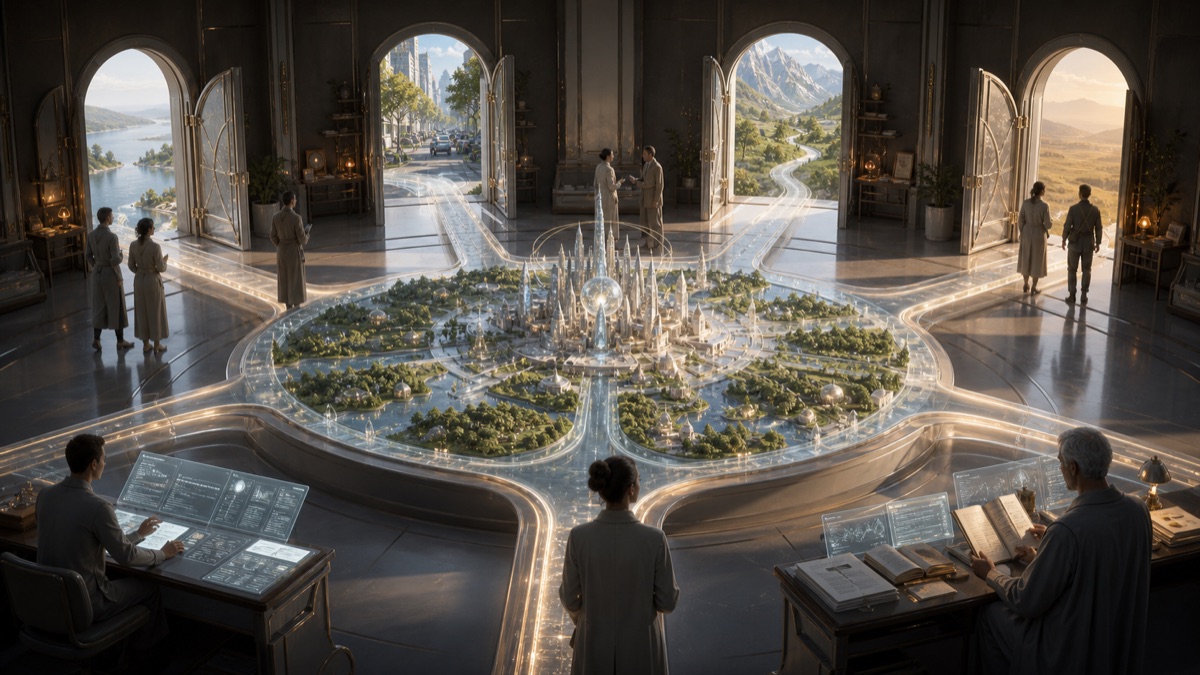
Best for members who want to track drafts, comment on handoffs, and keep power answerable after the first pledge.
Open member governance ->Project Utopia draws on the editorial atlas of the wider project — wonder beside constraint, abundance beside responsibility. These are the questions a consciously engineered society has to keep answering, out loud.

Shared abundance still needs rules we choose together.

Build incentives that work, instead of predicting the future.
When value flows to contribution and creativity.

Capability can grow faster than judgment unless we design otherwise.
A movement, joined freely: open membership, open models, open governance, and the freedom to leave.
Read the editorial work →
Project Utopia grows by invitation. Its participants are bound not by command but by a shared wager — that a civilization which can finally see itself clearly will choose, more often than not, to be good.
Use this lightweight form for updates on Project Utopia. It is not a private application or member intake route.