White Noise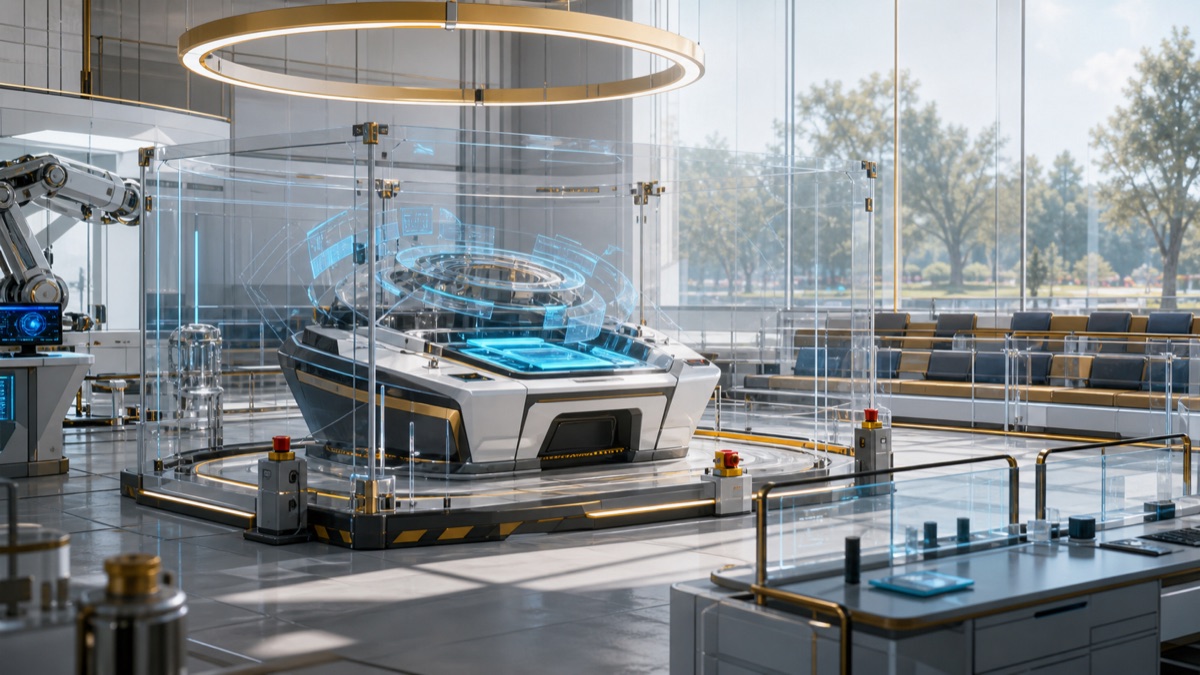
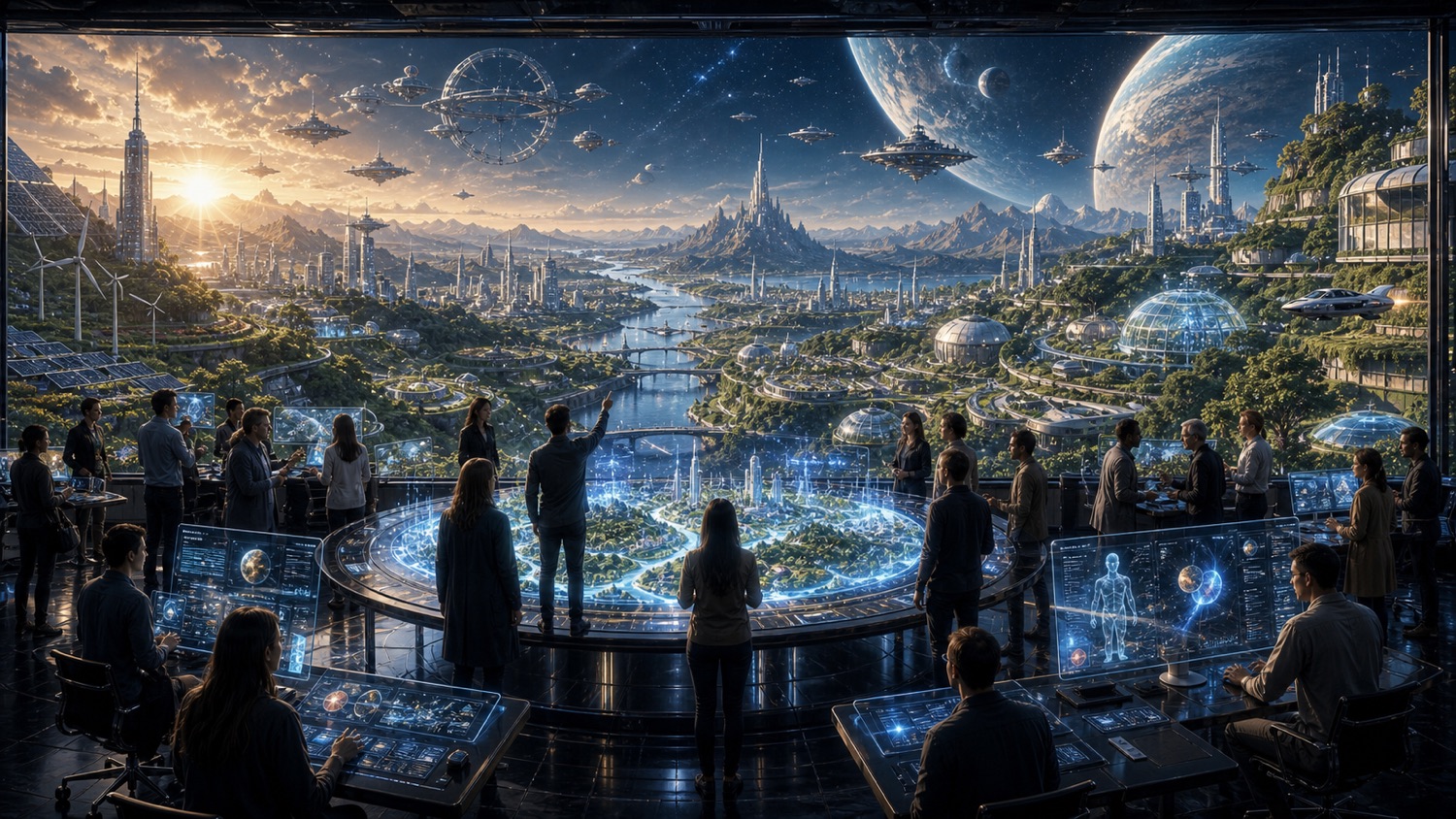
Public Sandboxes for Impossible Interfaces begins with a rule that makes White Noise useful rather than merely grand: every large claim needs a smaller room where it can be measured, refused, revised, or retired. The source text gives the horizon, from the White Noise Computer and Replicator to engineered worlds, digital medicine, Project Utopia, and civilization-scale stewardship. The public site gives the present boundary: education, media, community, marketplace, consulting, custom R&D, reservation tooling, and roadmap work are current surfaces; the largest technologies remain speculative unless a page explicitly says otherwise.
The working object for this feature is public sandbox for impossible interfaces. It matters because it forces the idea to become inspectable. Instead of asking readers to accept the full White Noise horizon at once, it asks what would have to be seen, measured, limited, and documented before the stronger language could be earned.
The Editorial Claim
The claim is not that White Noise Inc. is shipping this system today. The claim is that a public interface sandbox that makes the stop points as legible as the controls. That distinction lets the article keep ambition alive without converting a speculative concept into a product, regulated service, accredited credential, medical outcome, or investment opportunity.
The practical move is to build the sandbox and observation rail before demonstrating the interface. White Noise writing should be able to inspire a reader and still make the status of the claim unmistakable. Measurement is not an apology for imagination; it is the condition that lets imagination remain useful under scrutiny.
Present Capability Boundary
The present boundary is user testing, safety rails, accessibility review, visible stop controls, audit logs, and concept-status disclosure. These constraints are not side notes. They are the real materials of translation, because every public surface needs a way to distinguish source-world ambition, present service, scoped research, concept art, and future roadmap.
This matters across the ecosystem. Academy modules can teach a frontier idea without claiming accreditation. Labs work can scope a question without guaranteeing discovery. Exchange works can carry provenance without promising financial return. Syndicates can coordinate creative R&D without becoming investment language. A product page can name a horizon without pretending the horizon has arrived.
The Failure Mode
The risk is letting a beautiful interface make a speculative system feel operational before the boundary is visible. In frontier communication, that risk often appears as grammar drift. A possibility becomes a plan, a plan becomes a capability, and a capability becomes a promise before the proof burden has changed.
For that reason, the refusal sentence belongs near the center of the page: do not imply operational omnipresent interfaces, holographic matter, or shipping control systems. A refusal sentence is not a legal afterthought. It is editorial infrastructure. It tells enthusiastic readers where to stop and skeptical readers where the article is being precise.
A First Useful Artifact
The first useful artifact should be valuable even if the largest White Noise premise never becomes buildable. It might be a checklist, interface pattern, witness protocol, maintenance ledger, consent map, charter, or review room. The artifact should help a reader ask a better question tomorrow.
That is the practical translation of White Noise Totality: not proof that everything is possible, but a disciplined way to connect imagination to instruments, governance, and responsibility. The article's primary keyword is public interface sandbox; nearby search language includes Holographic Systems, interface governance, refusal path, audit rail, White Noise Totality.