White Noise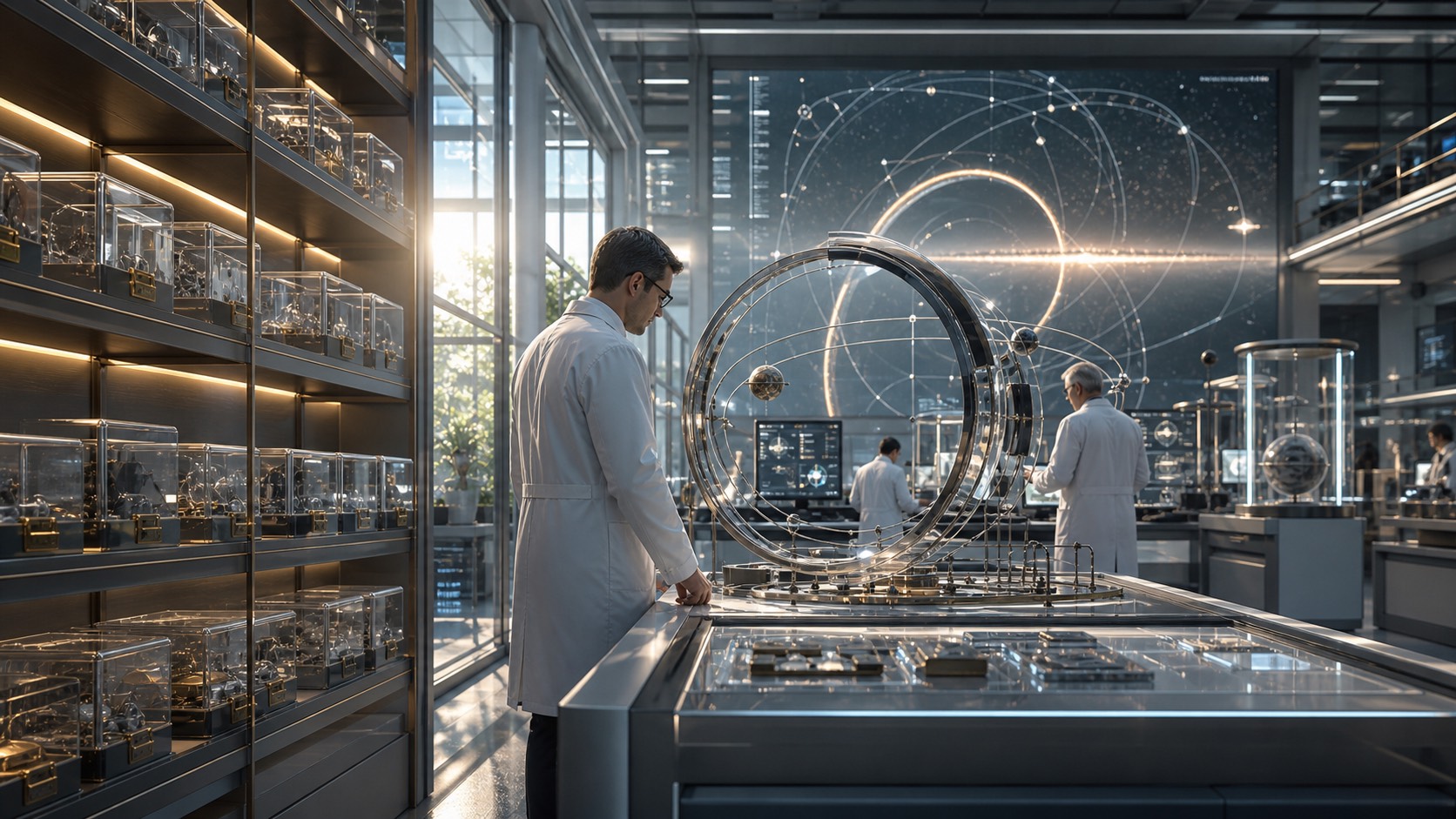
The Causality Shelf in Transit Research begins with a source-world promise and a present-day discipline. White Noise Totality imagines computation, matter, medicine, settlement, creative markets, education, governance, and civilization design as one linked architecture. The public White Noise Inc. site translates that horizon into media, education, community, Exchange culture, consulting, Custom R&D, Labs-facing work, reservation tooling, roadmap language, and reference pages. Those surfaces are real; the largest technologies remain speculative unless a page explicitly proves otherwise.
The working object here is archived transit research shelf. It should not be read as evidence that a finished White Noise capability exists. It is a disciplined artifact for asking what can be measured, who is affected, which words should be refused, and what a useful first version could do even if the grand horizon never arrives. The thesis is practical: a causality shelf that preserves every constraint a transit concept must not rhetorically outrun.
The Editorial Boundary
A White Noise feature has to hold two truths together. The first is that large speculative frameworks can help people ask better questions than ordinary product language allows. The second is that scale can seduce a reader into mistaking coherence for delivery. The boundary is the set of sentences, links, images, and metadata that keep the reader oriented: this is the source text, this is present capability, this is a service, this is a roadmap, this is a research question, and this is not currently a shipping technology.
For Wormhole & Transit Engineering, that distinction matters because the vocabulary touches power, rights, health, public infrastructure, climate, markets, education, or identity. A careful page can still be cinematic. It can still invite serious participation. But it should never borrow authority from medicine, finance, university language, spaceflight, or public engineering without showing the proof burden required for that stronger reading.
The Present Materials
The present materials are relativity, propulsion studies, light-speed communication limits, energy estimates, causality analysis, and negative-result archiving. These are not lesser substitutes for the imagined future. They are the only honest starting point. They also make the future more interesting because they give resistance to the idea. A concept that survives contact with timing, budgets, consent, thermal limits, repair labor, local context, public objection, and negative results becomes sharper than a concept that only survives in a rendering.
A shelf is humble enough to matter. It holds the old mistake, the unclosed equation, the impossible energy term, and the scenario that would break records of cause and effect. Transit research needs that furniture because forgetting limits is how speculation becomes theater.
That is the kind of detail that turns White Noise language into a method. It also protects the site's current offerings. WN Academy can teach disciplined imagination without implying accreditation beyond the published University roadmap. WN Labs and Custom R&D can scope research without implying solved frontier technologies. WN Exchange can discuss provenance and culture without implying investment returns. Product pages can name speculative concepts while keeping present services and reservations in their own lanes.
The Failure Mode
The main failure mode is letting spectacular travel language spend causal permission that physics has not granted. It can happen quietly. A metaphor begins to sound like a mechanism. A mockup begins to sound like a deployed interface. A roadmap begins to sound like authorization. A community repeats a beautiful phrase until the phrase carries more certainty than the evidence underneath it. The failure is not ambition. The failure is unmarked ambition.
Every article in this series should therefore ask what the skeptical reader and the enthusiastic reader can agree on. Both should be able to find the same boundary. Both should see the same current services. Both should understand that the source-world imagination is being used to organize inquiry, not to make unsupported claims about capabilities, credentials, financial outcomes, medical results, or products already in the field.
The First Useful Artifact
The first useful artifact should be small enough to inspect and durable enough to matter. It might be a protocol, receipt, permit gate, review card, scope document, privacy floor, exit ledger, maintenance proof, scenario map, or course exercise. The test is whether it improves judgment before it improves capability. If the artifact helps a member ask a sharper question, a student reject a weak claim, a client inspect a scope, or a researcher publish a negative result, it has already done White Noise work.
Good artifacts answer five questions. What exact claim is being made? What present discipline constrains it? What would count as negative evidence? Who can inspect, refuse, appeal, or maintain the next step? Which words should stay off the page until stronger proof exists? These questions are not a brake on imagination. They are the steering system that lets imagination move without becoming hype.
Governance as Design
At White Noise scale, governance is not a wrapper around the object. It is part of the object. The interface, course, market record, service scope, lab note, encyclopedia definition, and public link path decide what readers can see and what a project is allowed to imply. They also decide how the work remembers corrections.
The best internal links are therefore clarifying links. A feature should route the reader toward the book, services, Labs, Academy, relevant product pages, and the nearest WN Encyclopedia terms that make the claim more accountable. Links are not just SEO structure. They are a public reasoning path.
What to Read Next
The primary search phrase is causality shelf. Related vocabulary includes wormhole engineering, transit research, causal order, energy budget, relativity. The nearby articles below continue the same editorial discipline from adjacent parts of the White Noise system.