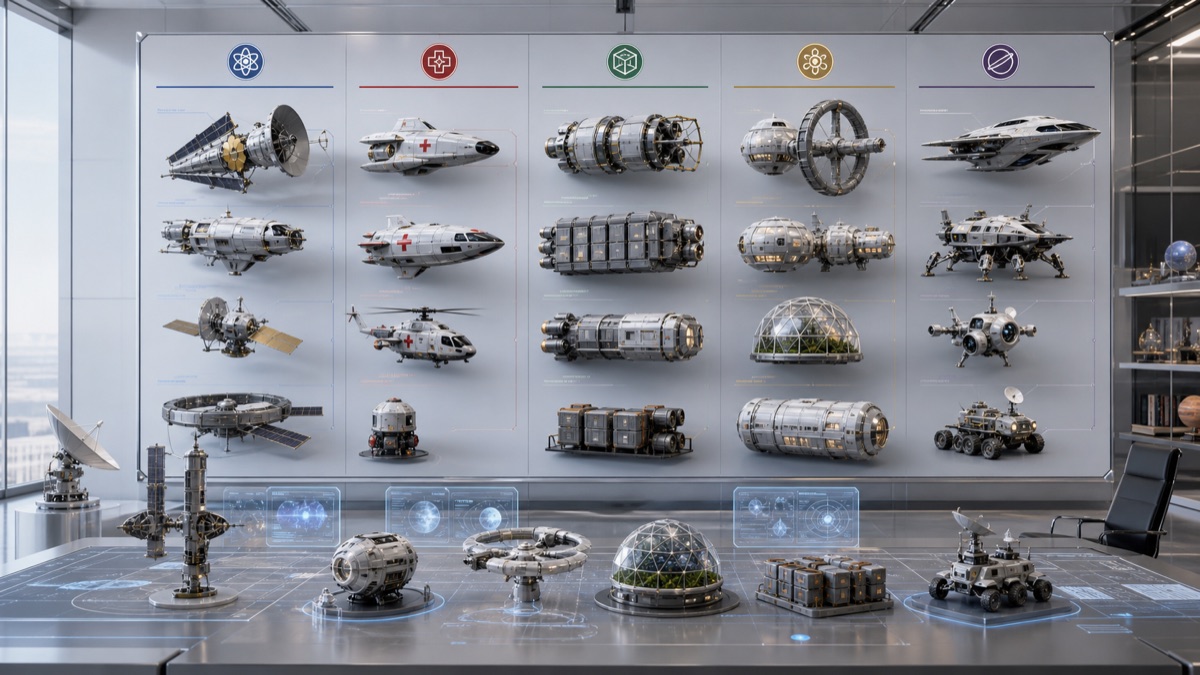
01 · Boundary
Classify by civil mission.
Each class should start from research, rescue, construction, habitat, education, or logistics value before any aesthetic or power fantasy takes over.
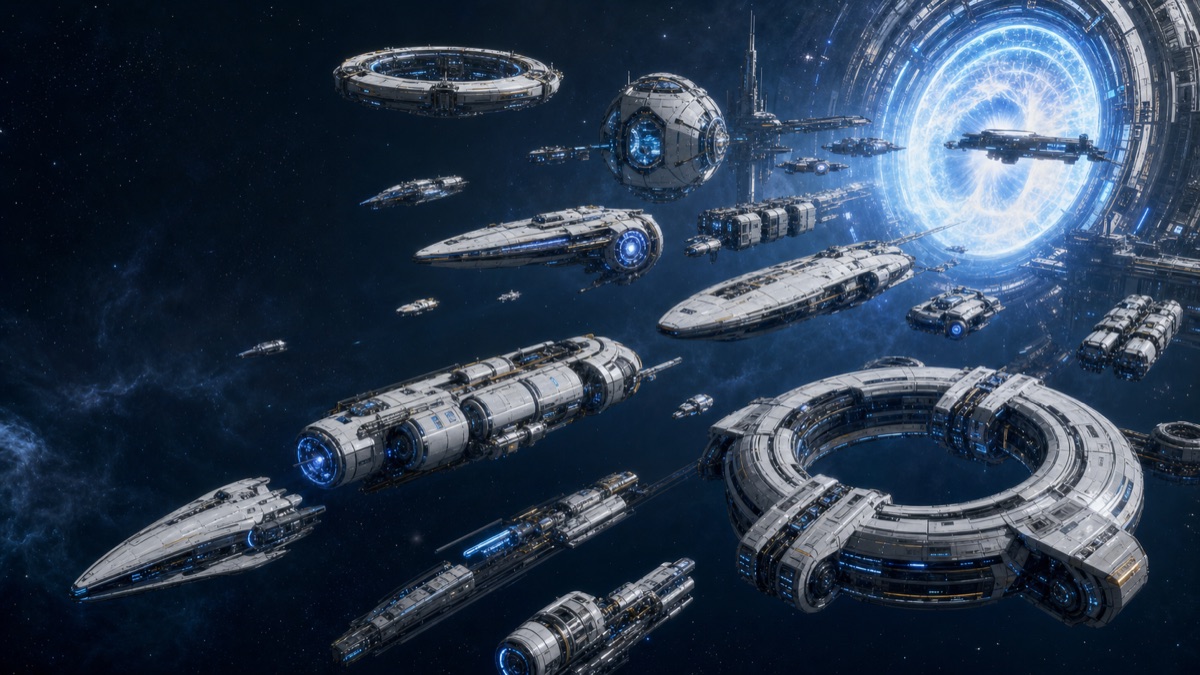
A speculative White Noise fleet catalog covering 40 spacecraft concepts and WN Prime as research, transit, construction, civic-support, and frontier-study briefs. The current site presents design language and bounded R&D directions, not finished flight hardware or exotic travel proof.
Custom R&D can be scoped to examine how a spaceship concept might be studied through White Noise Computer methods. Each engagement starts by turning a ship concept into a bounded research question, a physics-assumption ledger, a subsystem roadmap, and a build-path brief.
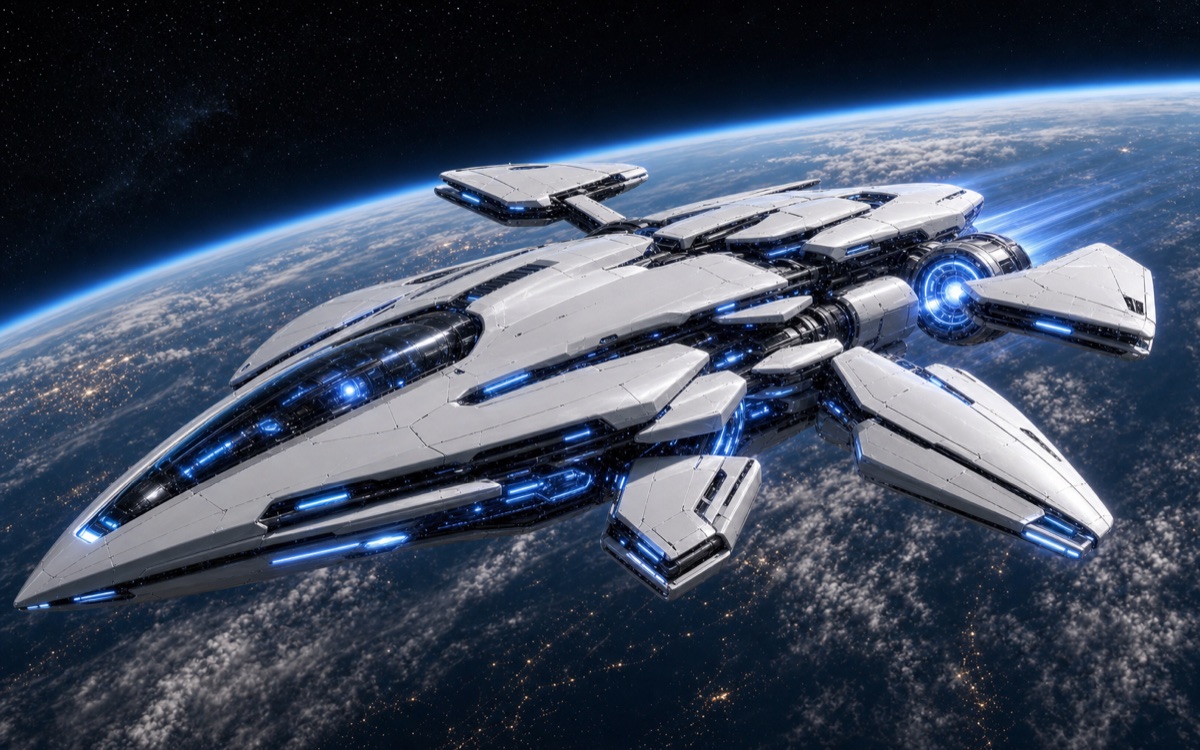
WN Prime is presented as a concept that could organize navigation, propulsion, shielding, and fabrication questions inside one research frame. On this site, zero-point drives, forcefields, time-travel, and interuniversal travel remain speculative study targets rather than demonstrated capabilities.
WN Prime is described as a reconfigurable flagship concept that could be studied across vehicle, habitat, repair, swarm, and other mission-specific forms if a serious research case existed.
The concept stretches from macro-scale craft down to nanobot-adjacent thought experiments, but those scale transitions are part of the speculative design language, not a proven engineering stack.
Omnipresence and superposition appear here as White Noise research language for linked or branching mission states, not as claims that such spacecraft behavior has been achieved.
The current near-term offer is concept scoping and research planning. There is no sale-ready spacecraft offer on this page.
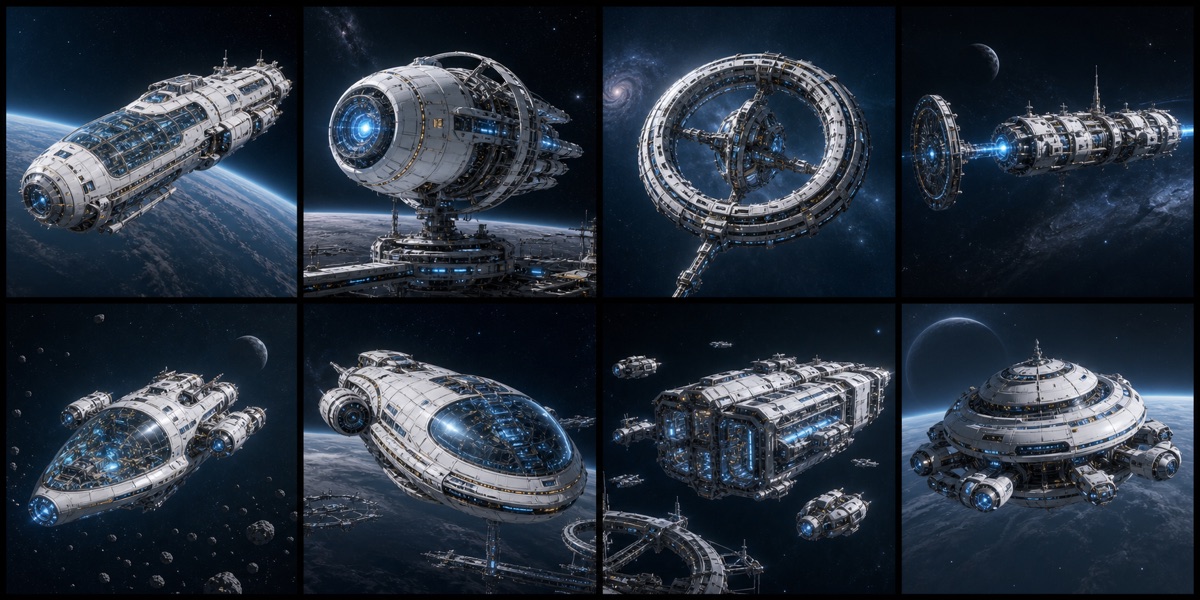
The catalog works best when a visitor can tell whether they are inspecting a visual direction, a physics boundary, a subsystem roadmap, or an R&D handoff. This matrix turns the 40-ship fleet into a clear path for readers, members, sponsors, and builders.
White hulls, graphite structure, cyan instrumentation, and non-military research utility keep the ships coherent across all divisions.
Concept art and research questions are live; flight hardware, exotic propulsion, and stargate operations remain speculative until a scoped study earns evidence.
Each class can be decomposed into propulsion, power, autonomy, materials, life support, fabrication, safety, and governance workstreams.
The near-term product is a brief: assumptions ledger, subsystem map, candidate experiments, risk register, and next-stage budget.
World-class frontier sites make the speculative object credible by showing the factory, test stand, safety case, update trail, and support obligation around it. WN Spaceships should be read the same way: not as finished vehicles, but as research packets with a visible preflight discipline.
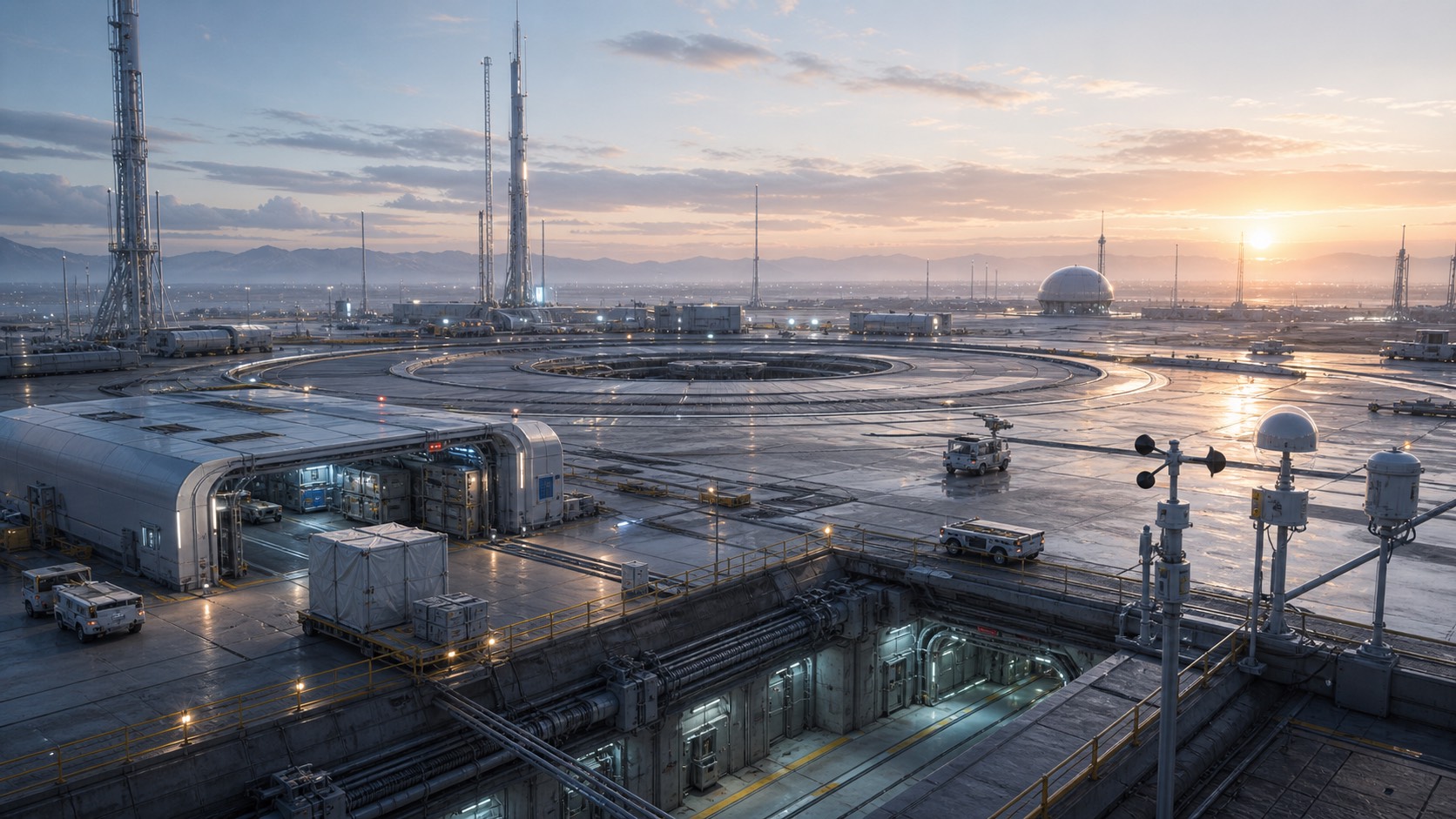
The visual fleet stays aspirational; the packet makes the next research artifact concrete enough for a member, partner, or reviewer to scope.
Each class should start from research, rescue, construction, habitat, education, or logistics value before any aesthetic or power fantasy takes over.
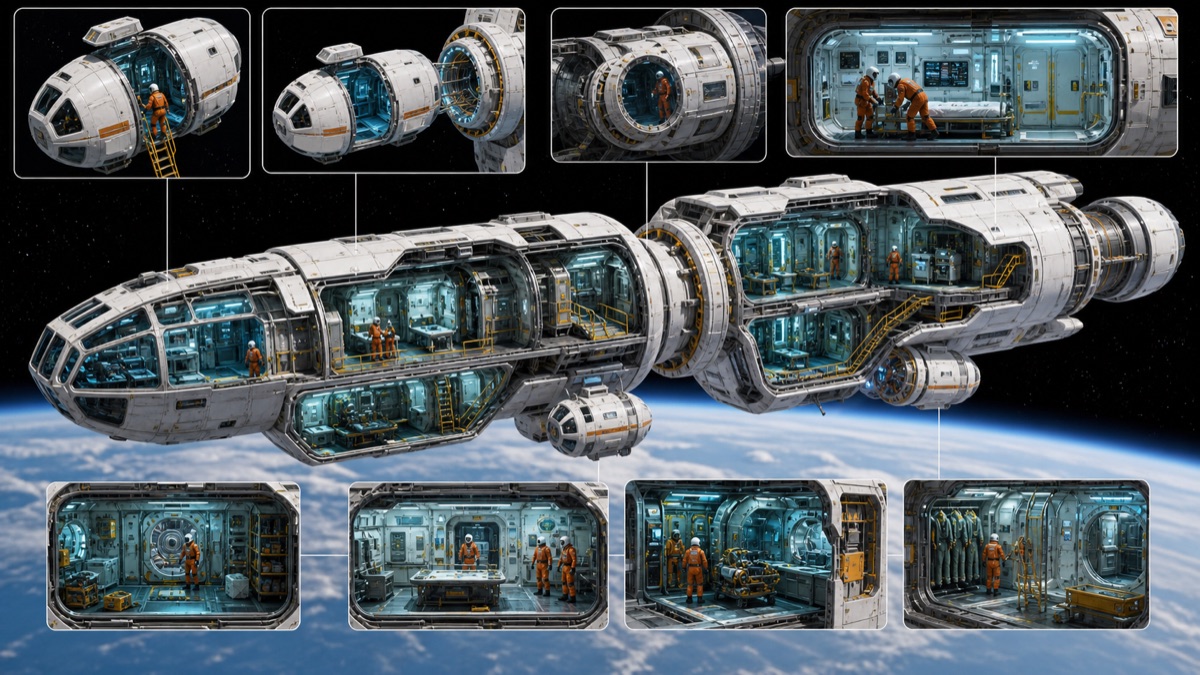
Mission language should name evacuation, triage, repair access, fallback shelter, crew care, and who has authority to stop the run.
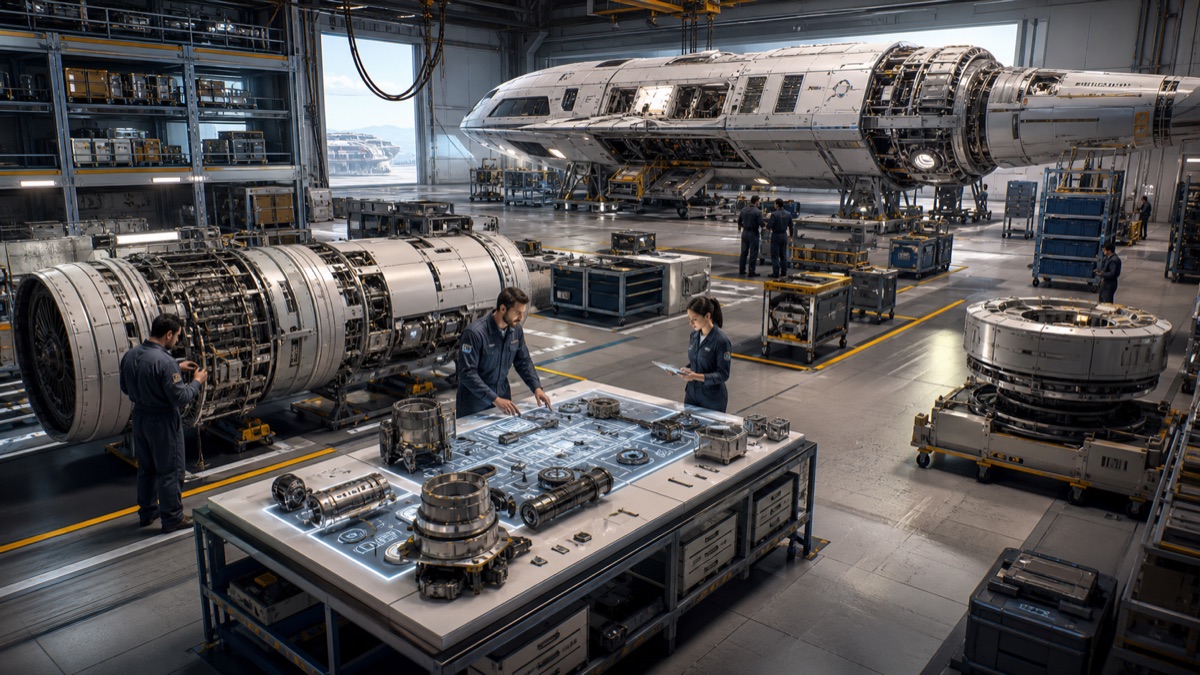
Every ship class carries spares, inspection cadence, energy cost, training load, and lifecycle obligations before it deserves a build-path brief.
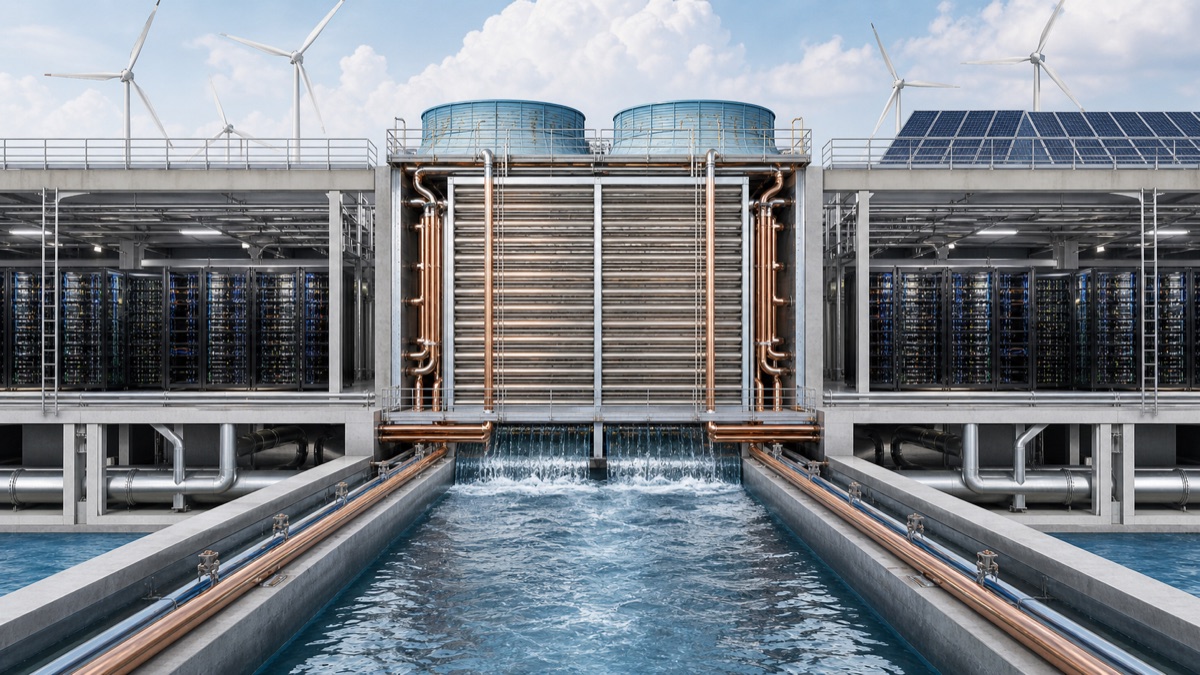
Each render, route, subsystem, and exotic capability needs a living claim record: source, status, test, constraint, and next reduction.
These AI-generated concepts map a visual design direction for speculative fleet research: white composite hulls, graphite structure, cyan White Noise instrumentation, routing interfaces, Superfactory yards, and non-military mission profiles.
Image provenance: the fleet gallery uses generated concept art for product-language development and R&D scoping. Prompt intent emphasized non-military research craft, support infrastructure, and orbital logistics. Key local assets include assets/wn-spaceships/wn-spaceships-fleet-hero.jpg, assets/wn-spaceships/wn-spaceships-research-wing.jpg, and assets/wn-spaceships/wn-spaceships-transit-wing.jpg. Review the provenance record.
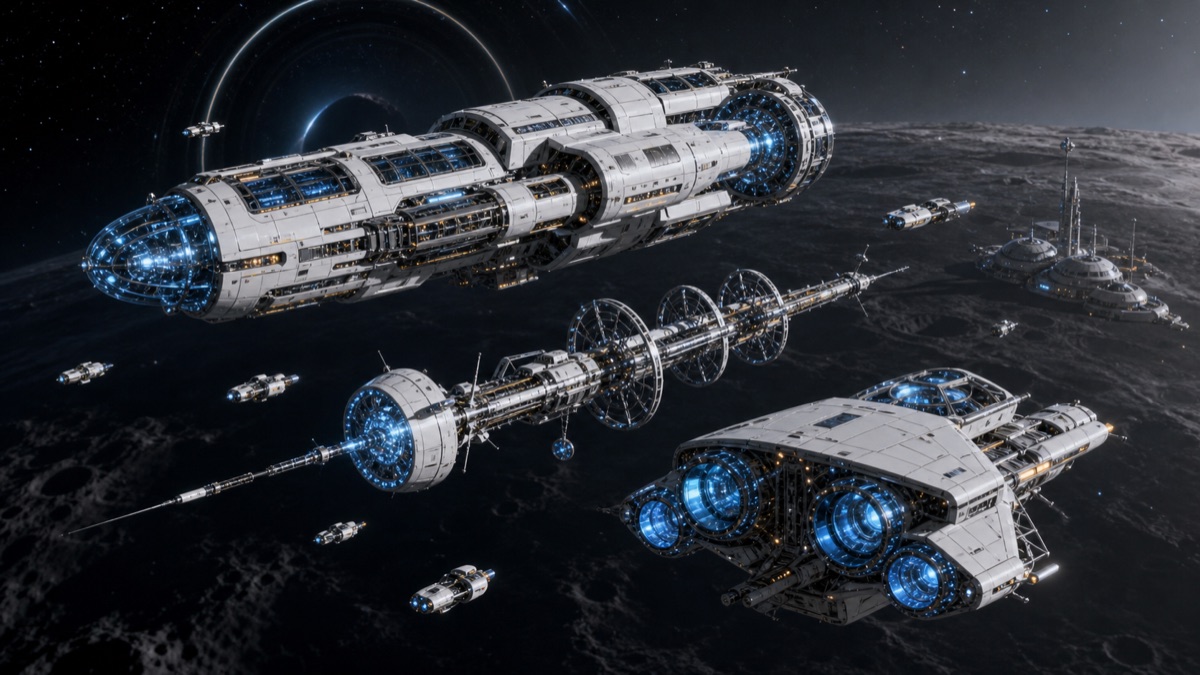
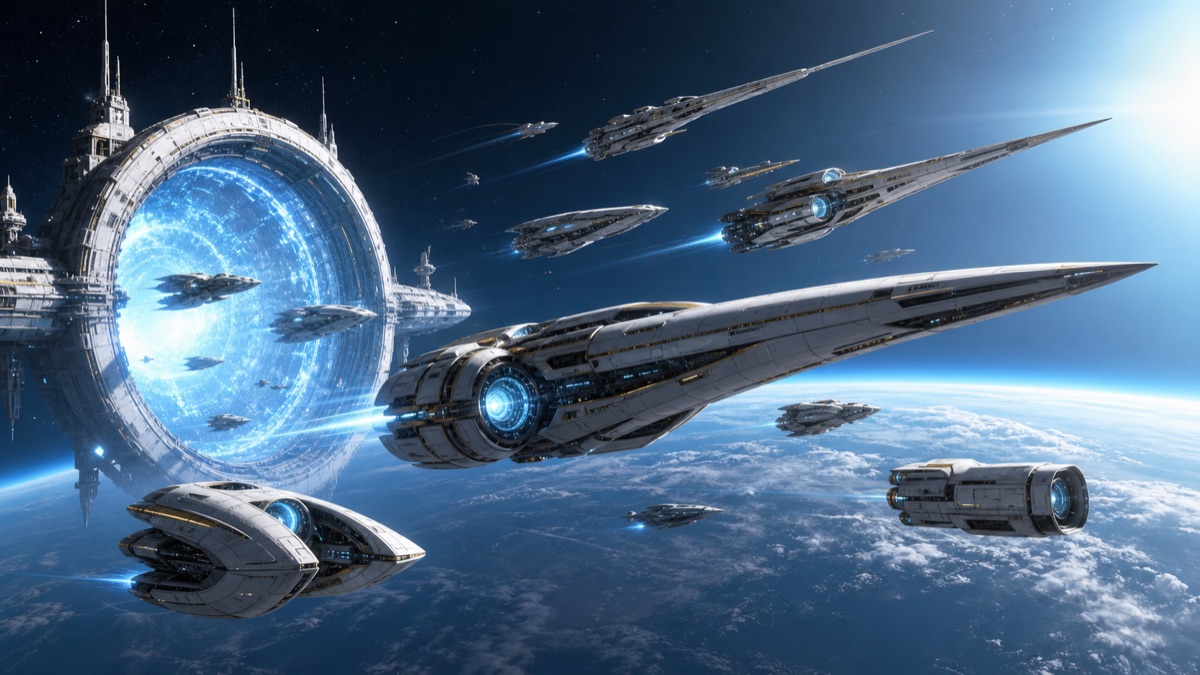
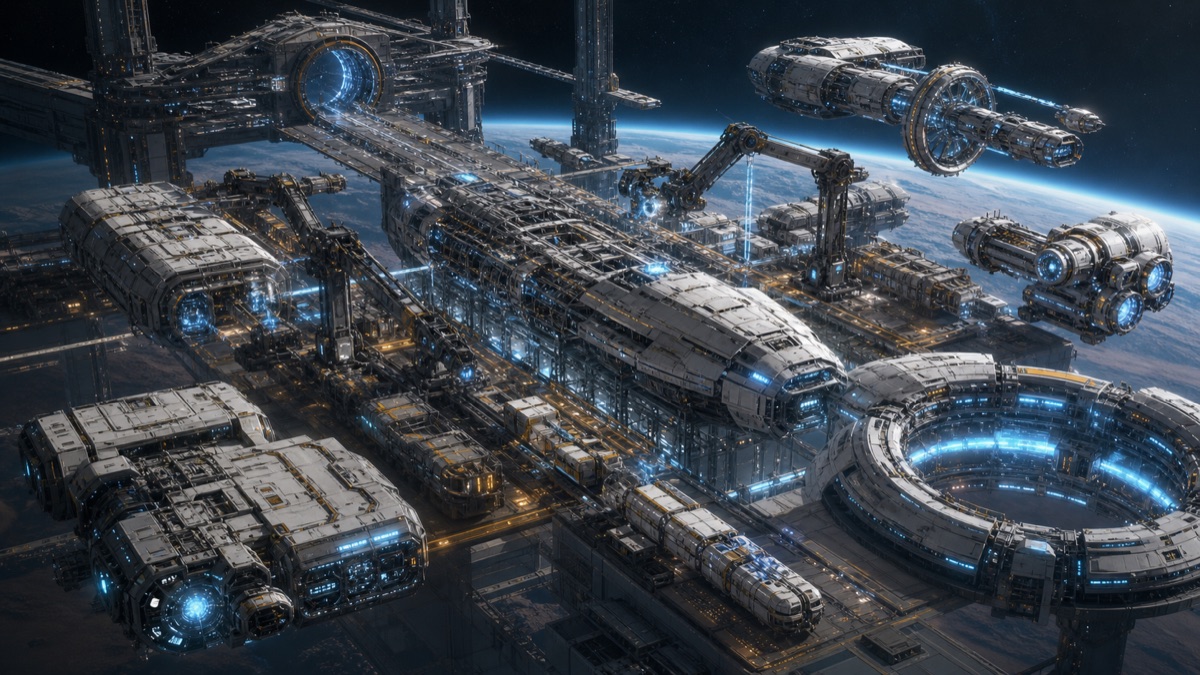
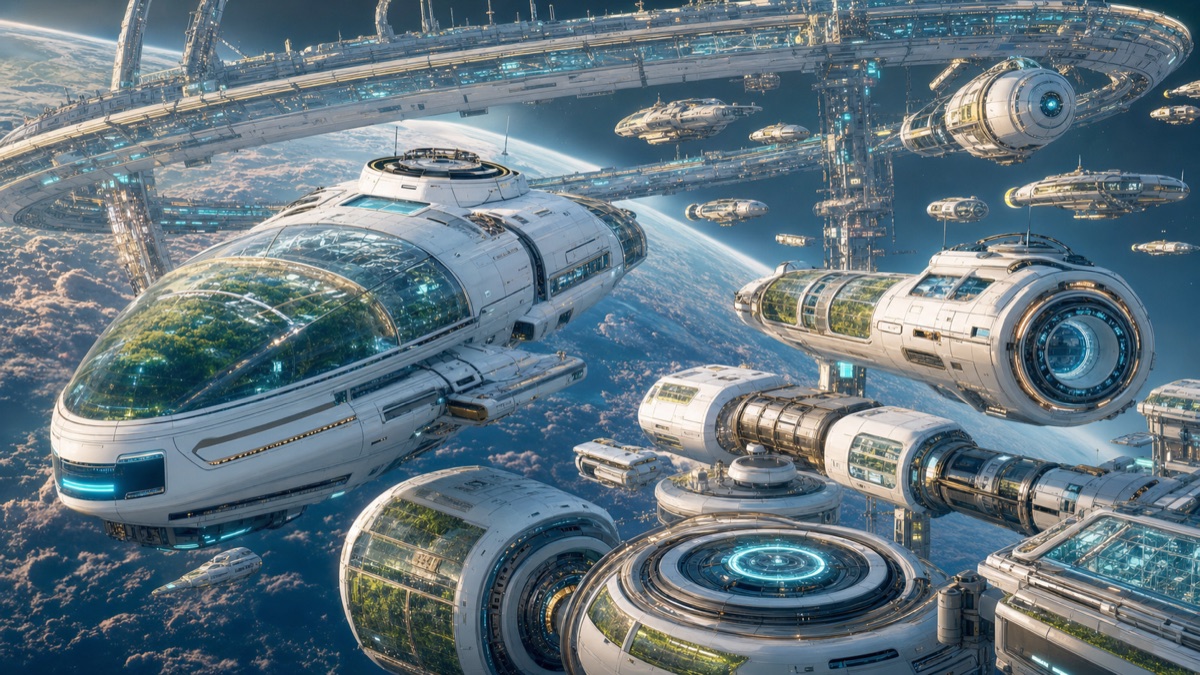
The WN Spaceships fleet is organized around research value instead of military force: learn, measure, transport, build, repair, heal, seed settlements, and expand the White Noise infrastructure stack.
Scouts, surveyors, cartographers, and field instruments for turning unknown space into modeled space.
White Noise Computer laboratories, observatories, relays, probes, and safety-case research ships.
Replicator barges, construction tugs, haulers, and Supernanobot carriers for producing the fleet itself.
Medical, biosphere, education, rescue, and settlement support ships built for people and ecosystems.
Large carriers, passenger arcs, verse-interface craft, cargo spines, and long-horizon arkships.
Each class has a research role and a White Noise build question ready for Custom R&D scoping.
Pick one ship class or combine several. White Noise Computers are positioned here as the modeling layer: they define assumptions, run route and subsystem simulations, compare candidate materials, identify impossible claims, and produce a practical research plan.
Use WN Prime as the final transformer spaceship target, or use the 40-type catalog as a menu of research directions. Then arrange Custom R&D to study how White Noise Computers could model and eventually help build the selected spacecraft.