 White Noise
 Library Retrieval Boundary
The access, provenance, refusal, and safety boundary around retrieval from a total or near-total White Noise Library. It keeps current services, future.
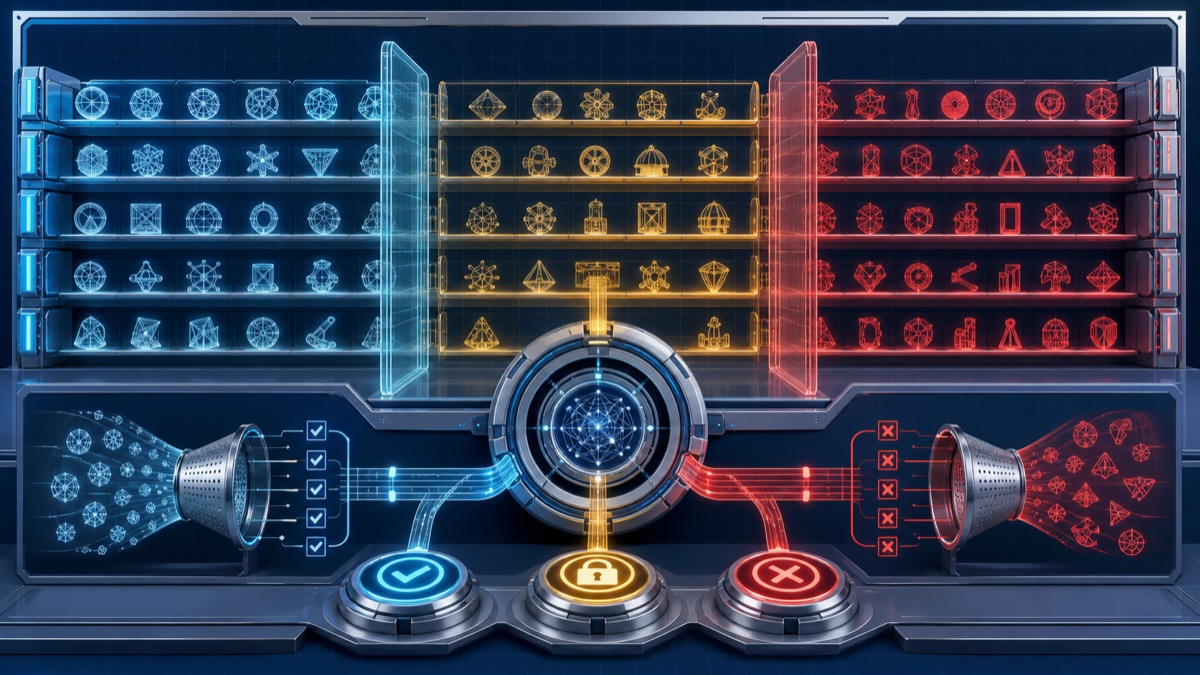
Library Retrieval Boundary is a WN Encyclopedia term in the White Noise Library Sciences domain. It names the access, provenance, refusal, and safety boundary around retrieval from a total or near-total White Noise Library. It keeps current services, future. This is the site's own WN Encyclopedia, not external Wikipedia, and it should be read with the source text White Noise Totality plus the public White Noise Inc. pages and disclaimers.
Definition and Scope
The boundary keeps total retrieval from becoming total entitlement. The term is meant to keep speculative White Noise language useful without letting it imply a finished technology, regulated service, accredited credential, medical outcome, or financial return.
The primary keyword is library retrieval boundary. Secondary search terms include White Noise Library, safe retrieval, provenance, access control, knowledge governance. The search intent is informational, so the entry focuses on definition, boundary language, and internal navigation.
Position in White Noise Totality
White Noise Totality links computation, matter, medicine, settlement, education, economics, art, and governance into a single civilizational vocabulary. Library Retrieval Boundary marks one point where that vocabulary needs a stable reference term before it appears in a magazine feature, lab note, course module, product page, or service scope.
The public site currently presents the book, WN Academy, WN Labs, WN Exchange, WN Club, WN Syndicates, WN Coin reservation tooling, consulting, product concepts, Spaceships, Superfactories, Project Utopia, and the White Noise University roadmap. The entry helps those surfaces preserve the difference between current service, research question, roadmap, concept image, and source-world technology.
Practical Frame
It should decide who can query, what can be withheld, how provenance is displayed, and when a request should be refused or narrowed. In practice, a page should make this frame visible before the term is used to persuade a reader, invite a member, scope a client project, or describe a future product.
A practical page answers five questions. What is being claimed? Which present discipline constrains it? What would count as a negative result? Who can inspect, appeal, or refuse the next step? What language would overstate current status?
Failure Modes
The failure mode is confusing possible knowledge with legitimate access. A second failure mode is premature dismissal, where a speculative term is treated as useless because it is not yet buildable. The encyclopedia holds the middle ground: useful imagination, explicit limits.
Any page using this term should be revised if a reader cannot tell whether the subject is definition, course material, concept art, client research, public roadmap, reservation tooling, or working capability.
Related Entries
References
- Perlov, V. White Noise Totality: Engine of Infinite Possibilities (Expanded Unified Edition, 2026). Primary source. Book page
- White Noise Inc. public site pages documenting products, services, Academy, Labs, Exchange, Project Utopia, WN Coin, Spaceships, Superfactories, and disclaimers. Site overview