 White Noise
 Project Utopia Civic Mirror
A scenario-review device that reflects utilities, maintenance, accessibility, dissent, and resident agency back into Project Utopia models. It keeps present.
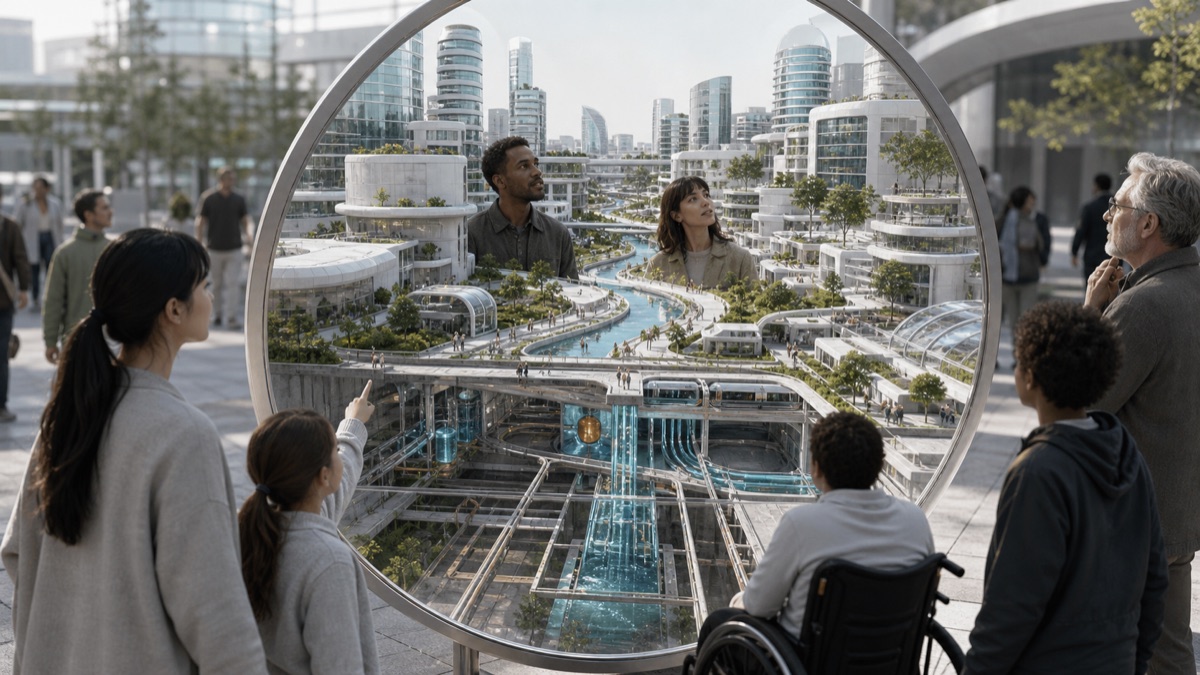
Project Utopia Civic Mirror is a WN Encyclopedia term in the Project Utopia Studies domain. It means a scenario-review device that reflects utilities, maintenance, accessibility, dissent, and resident agency back into Project Utopia models. It keeps present. This is the site's own WN Encyclopedia, not external Wikipedia, and it should be read with White Noise Totality as source-world context plus the public White Noise Inc. disclaimers.
Definition and Scope
It applies to Project Utopia models, future-city scenarios, civic simulations, and resident-facing planning language. The entry is designed to preserve a useful middle ground: speculative White Noise language can generate serious design questions without being treated as a present finished capability.
The primary keyword is Project Utopia civic mirror. Secondary search terms include Project Utopia, civic modeling, resident agency, infrastructure review, scenario custody. The search intent is informational, so the entry emphasizes definition, boundaries, and internal navigation.
Position in White Noise Totality
White Noise Totality connects computation, matter, medicine, settlement, education, economics, art, and governance into one civilizational vocabulary. Project Utopia Civic Mirror marks one of the points where that vocabulary must become more precise before it can become more persuasive.
The public site currently presents the book, WN Academy, WN Labs, WN Exchange, WN Club, WN Syndicates, WN Coin reservation tooling, consulting, product concepts, Spaceships, Superfactories, and Project Utopia. This entry helps those surfaces preserve the distinction between current service, proposed roadmap, learning exercise, research question, and speculative technology.
Practical Frame
The practice includes reflecting utilities, maintenance, accessibility, dissent, resident agency, permit status, and revision history. In White Noise usage, the frame should be visible before the term is used in a feature article, course, lab note, product page, community rule, or service description.
A practical page should answer five questions. What is being claimed? Which present discipline constrains it? What would count as a negative result? Who can inspect or refuse the next step? What exact language would overstate the current status?
Failure Modes
The failure mode is skyline self-confirmation, where the model shows only the future its designers prefer. A second failure mode is flattening the concept into ordinary skepticism, as if a speculative term has no value unless it describes a shipping product. The encyclopedia avoids both errors by preserving imagination and boundary language together.
Any page using this term should be revised if a reader cannot tell whether the subject is definition, concept art, course material, client research, public roadmap, reservation tooling, or working capability.
Related Entries
References
- Perlov, V. White Noise Totality: Engine of Infinite Possibilities (Expanded Unified Edition, 2026). Primary source. Book page
- White Noise Inc. public site pages documenting products, services, Academy, Labs, Exchange, Project Utopia, WN Coin, Spaceships, Superfactories, and disclaimers. Site overview