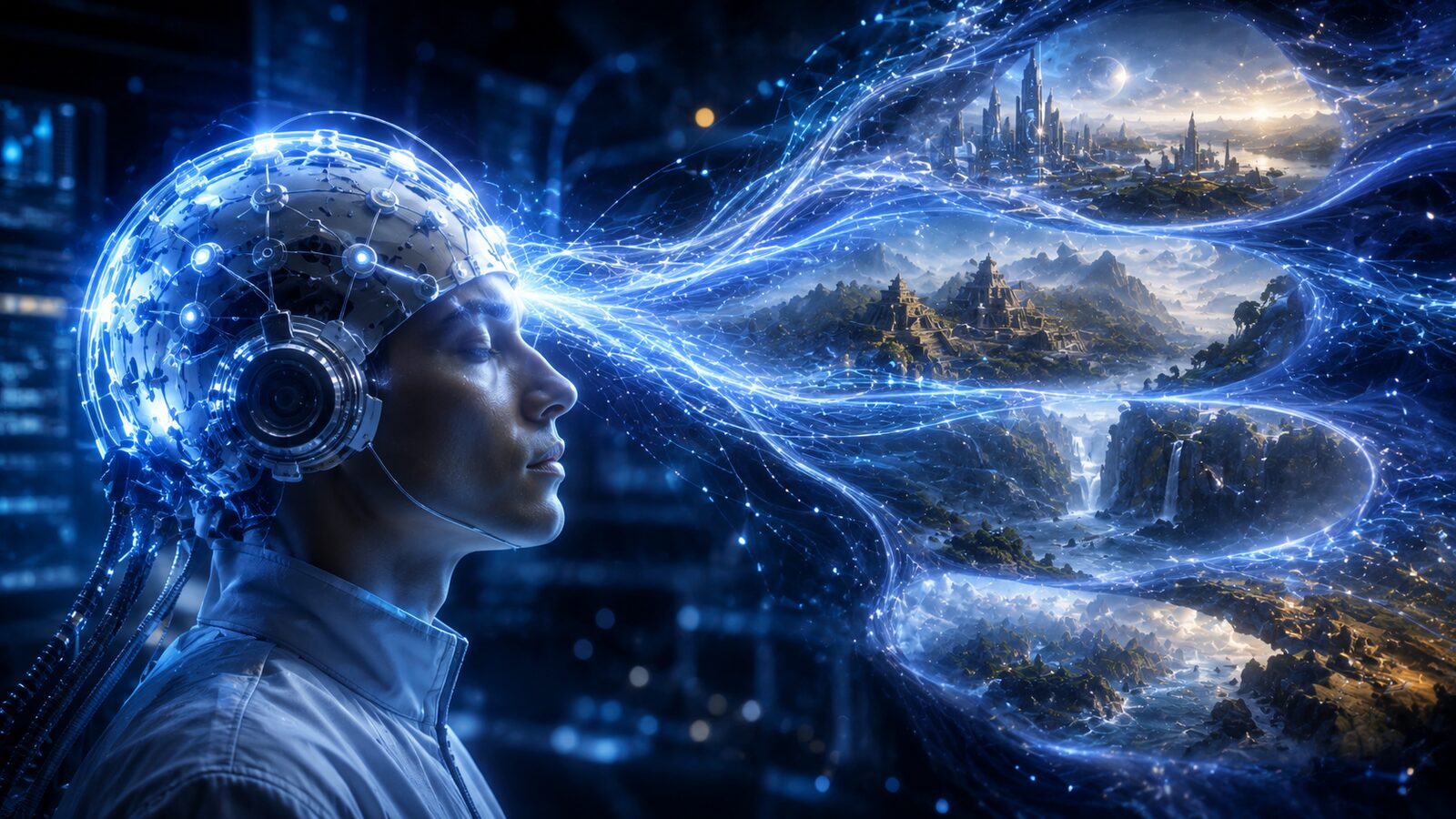
The metaverse network of the White Noise ecosystem — an infinite, immersive virtual cosmos where the community gathers, virtual land is owned and built upon, and the physical future is rehearsed before it is constructed.
Metaland is the White Noise ecosystem's expression of the White Noise Metaverse — envisioned in the book as a transformative virtual cosmos, a boundless digital expanse where the physical and virtual realms are seamlessly interwoven. Within it, the laws of reality itself are reimagined, powered by the convergence of the White Noise Computer, omnipresent quantum networking, and conscious nanobot infrastructures.
At its core, the metaverse is theorized to be an immersive, self-evolving environment — one that adapts and responds to each user in real time. Decentralization, radical user empowerment, and continuous open-source innovation are foundational principles, ensuring that no single entity controls the experience and that creative evolution is driven by the collective will of its global and interstellar communities.
Metaland is also where the ecosystem already lives. Around the White Noise pillars has grown a community of more than one hundred thousand members — researchers, engineers, entrepreneurs, and visionaries — collaborating through the Metaland Network on research papers, academy courses, and a catalog of over one hundred thousand blueprints. Before the first OSTSS ring is raised in orbit, it is walked, stress-tested, and argued over in Metaland.
Metaland is organized as persistent virtual territory: districts for research, commerce, art, and governance, parceled into land that members own, develop, and link — the gentle, reversible rehearsal for the verse ownership described in W.N. Verses.
A catalog of over one hundred thousand blueprints — settlements, vehicles, habitats, machines — published, forked, and refined by the community, with attribution and reputation woven into the land registry itself.
The Academy teaches here; research groups convene here; community governance is debated in open halls where every proposal and vote is transparent by construction.
Digital twins of planned physical projects — OSTSS interiors, spaceship decks, Utopian districts — explorable at full scale, so that design errors are discovered by visitors rather than residents.
The book grounds the metaverse in a suite of theoretical systems, each one a chapter of the larger vision.
Quantum computing provides secure, distributed, ultra-fast processing — large-scale simulations that can host realistic universes and underpin the emergent behavior of infinite digital societies.
Self-improving AI agents act as guides, collaborators, and creative partners — anticipating needs, personalizing experience, and evolving alongside their users. The W.N. Assistant →
Direct brain-computer interfaces dissolve the final barrier between user and environment: thought, intention, and emotion shape digital realities directly. W.N. BCI →
Future generations of VR and AR construct multisensory realities — worlds of one's own creation, or shared domains for education, socialization, and exploration at previously unimaginable scale.
"The metaverse becomes a living reflection of its users' evolving values, visions, and dreams. Here, the frontiers of reality are limited only by the imagination, and every user is both an explorer and a creator of worlds yet to be discovered."
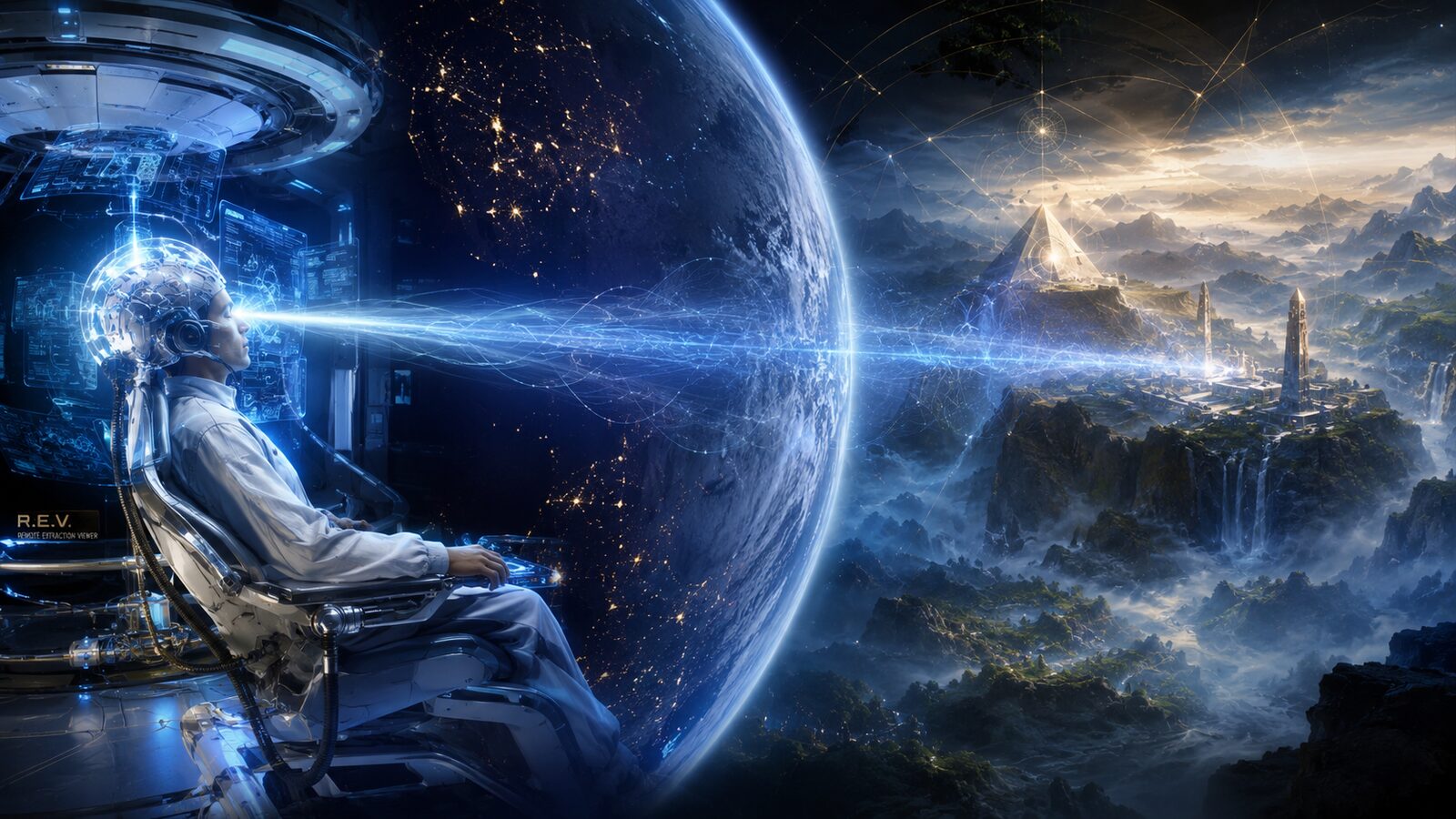
Metaland is theoretically governed by community-driven protocols — dynamic rules and structures continuously shaped and refined by its participants. Through consensus, collective intelligence, and open innovation, the metaverse remains a commons rather than a company town: no single entity controls the experience.
That principle matters more as the stakes rise. A world where thought shapes reality is a world where privacy of thought is the first civil right; Metaland's charter inherits the book's insistence on absolute protection of private mental space, voluntary participation, and exit as a guaranteed option — the same commitments scaled up in the Singleton framework.
Immersive, consciousness-paced learning environments — the delivery layer for elite courses and the broader education revolution of Project Utopia.
A working laboratory for post-scarcity economics: reputation, contribution, and creativity as currency, tested in a world where duplication costs nothing.
As the physical ecosystem matures, Metaland becomes its nervous system — the shared interior of a civilization that spans settlements, ships, and eventually verses. The W.N. Internet →