
This W.N. Expert blueprint treats Quantum-Classical A.I. Control Stack as a staged research objective, not as a finished technology. The achievement target is to make the concept inspectable: define the White Noise Totality claim, build a remote-viewing A.I. and brain-to-computer interface research loop around it, test the loop against quantum-computing models, and decide what a serious White Noise Inc. service engagement could responsibly attempt next.
Target Outcome
The desired outcome is a research-grade route toward Quantum-Classical A.I. Control Stack, where the phrase names a measurable capability, a source corpus, a prototype boundary, and a decision gate. The blueprint begins by translating the Totality horizon into a current research surface: what can be modeled, what can be instrumented, what can be simulated, and what must remain speculative until evidence changes. This prevents the article from treating ambition as deployment.
A practical team would state the target in three layers. The first layer is conceptual: how Quantum-Classical A.I. Control Stack fits the White Noise Computer, OSTSS, W.N. Library, and Project Utopia stack. The second layer is experimental: what a remote-viewing session, A.I. decoder, BCI readout, or quantum simulation can actually measure. The third layer is commercial: what White Noise Inc. can offer as research, not as a guarantee that the technology already works.
The success condition is not instant mastery. It is a cleaner pathway: a shared vocabulary, a null baseline, a control protocol, a simulator, a risk ledger, and a first artifact that can be reviewed by a sponsor, partner, member, or lab team. That is how omega-level language becomes a disciplined ladder instead of a floating claim.
Totality Translation
White Noise Totality repeatedly moves from entanglement to computation, from computation to matter, from matter to settlement, and from settlement to governance. Quantum-Classical A.I. Control Stack belongs inside that chain. The blueprint therefore asks where the idea depends on the White Noise Computer, where it depends on human cognition, where it depends on robotics or material systems, and where it depends on a civic decision.
The translation rule is simple: keep the wonder, but assign every wonder a proof burden. If Quantum-Classical A.I. Control Stack requires nonlocal information, the blueprint routes the claim through blinded remote-viewing trials and source-grounded A.I. analysis. If it requires direct neural coupling, it routes the claim through BCI consent, signal quality, feedback design, and human override. If it requires quantum computation, it routes the claim through error, heat, coherence, and simulation limits.
This makes the concept usable for a cool magazine reader and for a serious research sponsor. The reader gets the cinematic map; the sponsor gets the assumptions, tests, and first deliverables. The point is to make White Noise ambition legible without draining it of scale.
Remote Viewing Signal Work
The remote-viewing layer starts with humility. A session should be blinded, time-stamped, target-locked, and scored before anyone lets narrative momentum rewrite the result. The blueprint for Quantum-Classical A.I. Control Stack treats remote viewing as a candidate signal source, not as an oracle. That difference matters because unsupported certainty is the fastest way to ruin an otherwise interesting research path.
A working protocol would include target pools, decoy targets, session notes, independent scoring, negative controls, and repeatability thresholds. A.I. can help cluster language, image fragments, confidence ratings, and physiological state, but it should not be allowed to grade its own magic. The system needs a null shelf where misses are preserved with the same dignity as hits.
For Quantum-Classical A.I. Control Stack, the remote-viewing question is not simply whether someone can describe something distant. It is whether a repeatable pattern appears when target design, neural state, A.I. interpretation, and quantum-model prompts are held still. The blueprint becomes stronger when it can say, with precision, what failed.
A.I. Interpretation Layer
The A.I. layer turns raw reports into structured research objects. It extracts claims, uncertainty, imagery, coordinates, categories, implied mechanisms, and contradictions. For Quantum-Classical A.I. Control Stack, the A.I. should separate a poetic impression from a testable assertion, then attach each assertion to the relevant White Noise route: computer, replicator, spaceship, OSTSS, superintelligence, governance, or service handoff.
The system should use retrieval before generation. It should pull from White Noise Totality, the website corpus, W.N. Plus source memory, product pages, Academy categories, and lab boundaries before drafting a response. A generated explanation is useful only when the reader can inspect what source lane it came from and what it is not allowed to imply.
A strong A.I. interpretation layer also keeps a refusal mode. If the evidence for Quantum-Classical A.I. Control Stack is weak, the interface should say so. If a request confuses speculative design with clinical, legal, financial, or operational certainty, the interface should reroute into scope language. Expert status is not omniscience; expert status is disciplined uncertainty.

Brain-to-Computer Interface Loop
The BCI loop is the bridge between subjective report and instrumented state. In this blueprint, brain-to-computer interfaces measure attention, imagery, arousal, error awareness, confidence, and possibly task-specific neural signatures during a Quantum-Classical A.I. Control Stack research session. The BCI does not prove nonlocal access by itself; it gives the lab a clock, a signal stream, and a way to compare conditions.
A responsible loop would begin noninvasively, with explicit consent, clear data-retention rules, and the right to stop. The system would record the target protocol, the A.I. prompt, the neural readout, the participant's subjective notes, and the scoring result as one packet. That packet becomes the smallest credible unit of evidence.
The purpose is feedback, not domination. If the participant receives real-time cues, the interface should disclose what the cues mean and what they do not mean. For Quantum-Classical A.I. Control Stack, a useful BCI would help researchers understand when a session is noisy, when confidence is misplaced, and when a pattern deserves a second pass under stricter controls.
Quantum Computing Model
The quantum-computing layer does not pretend that entanglement lets messages outrun physics. It models correlations, uncertainty, search spaces, optimization paths, and possible architectures that might one day inform a White Noise Computer. For Quantum-Classical A.I. Control Stack, the quantum model should be described as a simulator and hypothesis engine unless a real hardware experiment exists.
A near-term version could use quantum-inspired algorithms, tensor networks, probabilistic models, and hybrid quantum-classical workflows to search for patterns in remote-viewing and BCI data. It can ask whether a proposed mechanism is internally coherent, where it breaks against known physics, and which lower-rung experiment is worth funding first.
The model should always publish its costs: qubits or simulated qubits, noise assumptions, runtime, cooling, error correction, and the gap between metaphor and device. That cost ledger is what keeps Quantum-Classical A.I. Control Stack from becoming a slogan. A White Noise blueprint earns power by showing the invoice.
White Noise Computer Dependency
Many W.N. Expert articles point toward a White Noise Computer as the mature dependency. The blueprint asks what Quantum-Classical A.I. Control Stack would require if a universal entanglement substrate were available, and then it walks backward toward today's weakest useful approximation. This reverse path makes the article practical even if the summit remains hypothetical.
The first dependency is retrieval: what information would the system need to access? The second is transformation: what must be computed, edited, synthesized, navigated, or governed? The third is embodiment: where does the result enter a brain, ship, settlement, material, policy, or market? The fourth is accountability: who can audit, pause, or reject the result?
For Quantum-Classical A.I. Control Stack, the mature White Noise Computer is a horizon marker. The current work is a route map: build a source-grounded A.I. desk, design a BCI data packet, test remote-viewing claims against controls, simulate the physics, and label the unsolved dependency instead of hiding it.
Build Sequence
The build sequence starts with language control. Name the claim, define the status, assign a proof burden, and decide which part belongs to White Noise Inc. services. Next, assemble the source packet: Totality excerpts, website product routes, relevant Academy topics, existing article links, and the visual assets that help readers orient without mistaking art for evidence.
The second stage is a prototype of process. For Quantum-Classical A.I. Control Stack, that means a research worksheet, a blinded session design, an A.I. interpretation template, a BCI data schema, a quantum-model notebook, and a service-scope receipt. None of those objects prove the final technology. They prove that the research can be handled without losing its boundaries.
The third stage is a sponsor-facing dossier. It should contain the objective, assumptions, controls, negative-result plan, timeline, deliverables, image/disclosure status, budget class, and escalation rules. The deliverable can be a literature map, simulation plan, prototype specification, experiment design, or feasibility brief.
Evidence Gates
Evidence gates keep Quantum-Classical A.I. Control Stack honest. Gate one is source alignment: does the concept actually appear in the White Noise Totality or site ecosystem? Gate two is current science: what does established physics, neuroscience, computing, or engineering allow? Gate three is experimental design: what would a fair test look like? Gate four is public language: what can be said without overclaiming?
Each gate should have a pass, fail, and hold state. A pass means the article can move to a stronger claim. A fail means the result becomes part of the negative-results archive. A hold means the claim remains a speculative blueprint, suitable for research planning but not for product promises. This is how the page can stay cinematic and still behave like a serious magazine.
For W.N. Expert, the strongest evidence artifact is often not a spectacular result. It is a clean boundary. Readers should know whether Quantum-Classical A.I. Control Stack is a metaphor, a research hypothesis, a simulation route, a design proposal, a service topic, or a future technology claim waiting for evidence.
Safety and Stewardship
A Quantum-Classical A.I. Control Stack blueprint needs safety before scale. The first duty is consent: participants, readers, sponsors, and affected communities should understand what is being attempted. The second duty is reversibility: a system that cannot be paused should not be romanticized. The third duty is provenance: every image, source, and generated claim should carry a trail.
Remote viewing, A.I., BCI, and quantum-computing language can create an aura of inevitability. Stewardship breaks that spell by asking who benefits, who bears risk, who can appeal, and who can say no. A serious White Noise research route should make refusal visible.
The governance layer also protects imagination. When boundaries are clear, the page can talk about travel anywhere in creation, final Kardashev stages, supermacrobots, and OSTSS systems without pretending that today's company is selling finished cosmic machinery. A good boundary keeps the future open.
Service Handoff
White Noise Inc is offering services for researching and attempting to develop technologies listed in W.N. Expert. In practical terms, that means scoped research briefs, literature maps, prompt systems, simulation plans, prototype specifications, evidence ledgers, image/provenance packets, and partner-readiness documents for Quantum-Classical A.I. Control Stack.
The service handoff begins with a bounded question. Instead of asking for the entire future, a sponsor can ask for a feasibility map, a methods plan, a claim-temperature audit, a BCI protocol draft, a quantum-model roadmap, or a settlement/ship design dossier. The first useful artifact should make the next decision easier.
This notice does not claim that White Noise Inc has completed or commercialized Quantum-Classical A.I. Control Stack. It states that the company can research, model, design, and attempt development pathways around the topic with the right boundaries. That is exactly the bridge W.N. Expert is meant to provide.
Magazine Blueprint
The magazine form matters. A W.N. Expert article should look exciting enough to pull a reader into the rail, then structured enough to help them leave with a plan. Each article therefore includes a target, stack, images, gates, service notice, and related articles. The design should feel like an expert catalog, not a loose blog.
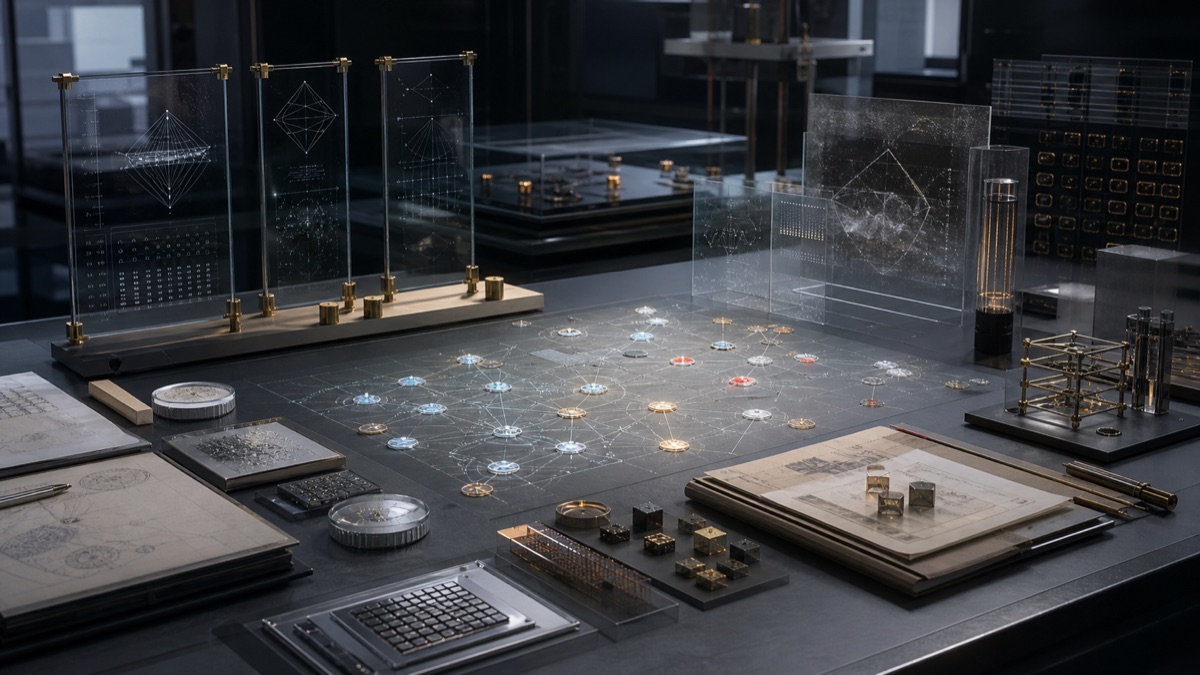
For Quantum-Classical A.I. Control Stack, the three-image packet is part of the reading system. The hero image gives cinematic orientation. The second image shows the lab, interface, ship, settlement, or proof room. The third image reminds the reader of the boundary: evidence, consent, heat, recall, or governance. Images are not evidence by themselves; they are maps for attention.
The blueprint closes by returning to the same question every time: what can be responsibly attempted next? That question turns a far-future idea into a catalog entry, a service route, a research note, and a living bridge from White Noise Totality into public-facing work.
Work Packet 1: Source Collection
In the source collection packet for Quantum-Classical A.I. Control Stack, the team writes down the exact question, the strongest reason to believe it, the strongest reason to doubt it, and the next observable artifact. Remote viewing contributes candidate impressions, A.I. translates those impressions into structured claims, the brain-to-computer interface records state and consent, and the quantum-computing layer tests whether the proposed mechanism is even coherent enough to model.
The packet should end with a decision: continue, narrow, pause, or archive. Continue means the evidence improved. Narrow means the claim was useful but too broad. Pause means the risk, cost, or ambiguity is too high. Archive means the result becomes part of the negative-results shelf so future W.N. Expert work does not repeat the same mistake. This is how Quantum-Classical A.I. Control Stack stays connected to mastery without pretending mastery has already arrived.
Work Packet 2: Claim-Temperature Review
In the claim-temperature review packet for Quantum-Classical A.I. Control Stack, the team writes down the exact question, the strongest reason to believe it, the strongest reason to doubt it, and the next observable artifact. Remote viewing contributes candidate impressions, A.I. translates those impressions into structured claims, the brain-to-computer interface records state and consent, and the quantum-computing layer tests whether the proposed mechanism is even coherent enough to model.
The packet should end with a decision: continue, narrow, pause, or archive. Continue means the evidence improved. Narrow means the claim was useful but too broad. Pause means the risk, cost, or ambiguity is too high. Archive means the result becomes part of the negative-results shelf so future W.N. Expert work does not repeat the same mistake. This is how Quantum-Classical A.I. Control Stack stays connected to mastery without pretending mastery has already arrived.
Work Packet 3: Remote-Viewing Session Design
In the remote-viewing session design packet for Quantum-Classical A.I. Control Stack, the team writes down the exact question, the strongest reason to believe it, the strongest reason to doubt it, and the next observable artifact. Remote viewing contributes candidate impressions, A.I. translates those impressions into structured claims, the brain-to-computer interface records state and consent, and the quantum-computing layer tests whether the proposed mechanism is even coherent enough to model.
The packet should end with a decision: continue, narrow, pause, or archive. Continue means the evidence improved. Narrow means the claim was useful but too broad. Pause means the risk, cost, or ambiguity is too high. Archive means the result becomes part of the negative-results shelf so future W.N. Expert work does not repeat the same mistake. This is how Quantum-Classical A.I. Control Stack stays connected to mastery without pretending mastery has already arrived.
Work Packet 4: A.I. Extraction
In the A.I. extraction packet for Quantum-Classical A.I. Control Stack, the team writes down the exact question, the strongest reason to believe it, the strongest reason to doubt it, and the next observable artifact. Remote viewing contributes candidate impressions, A.I. translates those impressions into structured claims, the brain-to-computer interface records state and consent, and the quantum-computing layer tests whether the proposed mechanism is even coherent enough to model.
The packet should end with a decision: continue, narrow, pause, or archive. Continue means the evidence improved. Narrow means the claim was useful but too broad. Pause means the risk, cost, or ambiguity is too high. Archive means the result becomes part of the negative-results shelf so future W.N. Expert work does not repeat the same mistake. This is how Quantum-Classical A.I. Control Stack stays connected to mastery without pretending mastery has already arrived.
Work Packet 5: Bci Signal Capture
In the BCI signal capture packet for Quantum-Classical A.I. Control Stack, the team writes down the exact question, the strongest reason to believe it, the strongest reason to doubt it, and the next observable artifact. Remote viewing contributes candidate impressions, A.I. translates those impressions into structured claims, the brain-to-computer interface records state and consent, and the quantum-computing layer tests whether the proposed mechanism is even coherent enough to model.
The packet should end with a decision: continue, narrow, pause, or archive. Continue means the evidence improved. Narrow means the claim was useful but too broad. Pause means the risk, cost, or ambiguity is too high. Archive means the result becomes part of the negative-results shelf so future W.N. Expert work does not repeat the same mistake. This is how Quantum-Classical A.I. Control Stack stays connected to mastery without pretending mastery has already arrived.
Work Packet 6: Quantum-Model Simulation
In the quantum-model simulation packet for Quantum-Classical A.I. Control Stack, the team writes down the exact question, the strongest reason to believe it, the strongest reason to doubt it, and the next observable artifact. Remote viewing contributes candidate impressions, A.I. translates those impressions into structured claims, the brain-to-computer interface records state and consent, and the quantum-computing layer tests whether the proposed mechanism is even coherent enough to model.
The packet should end with a decision: continue, narrow, pause, or archive. Continue means the evidence improved. Narrow means the claim was useful but too broad. Pause means the risk, cost, or ambiguity is too high. Archive means the result becomes part of the negative-results shelf so future W.N. Expert work does not repeat the same mistake. This is how Quantum-Classical A.I. Control Stack stays connected to mastery without pretending mastery has already arrived.
Work Packet 7: Negative-Control Scoring
In the negative-control scoring packet for Quantum-Classical A.I. Control Stack, the team writes down the exact question, the strongest reason to believe it, the strongest reason to doubt it, and the next observable artifact. Remote viewing contributes candidate impressions, A.I. translates those impressions into structured claims, the brain-to-computer interface records state and consent, and the quantum-computing layer tests whether the proposed mechanism is even coherent enough to model.
The packet should end with a decision: continue, narrow, pause, or archive. Continue means the evidence improved. Narrow means the claim was useful but too broad. Pause means the risk, cost, or ambiguity is too high. Archive means the result becomes part of the negative-results shelf so future W.N. Expert work does not repeat the same mistake. This is how Quantum-Classical A.I. Control Stack stays connected to mastery without pretending mastery has already arrived.
Work Packet 8: Prototype Specification
In the prototype specification packet for Quantum-Classical A.I. Control Stack, the team writes down the exact question, the strongest reason to believe it, the strongest reason to doubt it, and the next observable artifact. Remote viewing contributes candidate impressions, A.I. translates those impressions into structured claims, the brain-to-computer interface records state and consent, and the quantum-computing layer tests whether the proposed mechanism is even coherent enough to model.
The packet should end with a decision: continue, narrow, pause, or archive. Continue means the evidence improved. Narrow means the claim was useful but too broad. Pause means the risk, cost, or ambiguity is too high. Archive means the result becomes part of the negative-results shelf so future W.N. Expert work does not repeat the same mistake. This is how Quantum-Classical A.I. Control Stack stays connected to mastery without pretending mastery has already arrived.
Work Packet 9: Service-Scope Receipt
In the service-scope receipt packet for Quantum-Classical A.I. Control Stack, the team writes down the exact question, the strongest reason to believe it, the strongest reason to doubt it, and the next observable artifact. Remote viewing contributes candidate impressions, A.I. translates those impressions into structured claims, the brain-to-computer interface records state and consent, and the quantum-computing layer tests whether the proposed mechanism is even coherent enough to model.
The packet should end with a decision: continue, narrow, pause, or archive. Continue means the evidence improved. Narrow means the claim was useful but too broad. Pause means the risk, cost, or ambiguity is too high. Archive means the result becomes part of the negative-results shelf so future W.N. Expert work does not repeat the same mistake. This is how Quantum-Classical A.I. Control Stack stays connected to mastery without pretending mastery has already arrived.
Work Packet 10: Public-Language Release
In the public-language release packet for Quantum-Classical A.I. Control Stack, the team writes down the exact question, the strongest reason to believe it, the strongest reason to doubt it, and the next observable artifact. Remote viewing contributes candidate impressions, A.I. translates those impressions into structured claims, the brain-to-computer interface records state and consent, and the quantum-computing layer tests whether the proposed mechanism is even coherent enough to model.
The packet should end with a decision: continue, narrow, pause, or archive. Continue means the evidence improved. Narrow means the claim was useful but too broad. Pause means the risk, cost, or ambiguity is too high. Archive means the result becomes part of the negative-results shelf so future W.N. Expert work does not repeat the same mistake. This is how Quantum-Classical A.I. Control Stack stays connected to mastery without pretending mastery has already arrived.
Work Packet 11: Source Collection
In the source collection packet for Quantum-Classical A.I. Control Stack, the team writes down the exact question, the strongest reason to believe it, the strongest reason to doubt it, and the next observable artifact. Remote viewing contributes candidate impressions, A.I. translates those impressions into structured claims, the brain-to-computer interface records state and consent, and the quantum-computing layer tests whether the proposed mechanism is even coherent enough to model.
The packet should end with a decision: continue, narrow, pause, or archive. Continue means the evidence improved. Narrow means the claim was useful but too broad. Pause means the risk, cost, or ambiguity is too high. Archive means the result becomes part of the negative-results shelf so future W.N. Expert work does not repeat the same mistake. This is how Quantum-Classical A.I. Control Stack stays connected to mastery without pretending mastery has already arrived.
Work Packet 12: Claim-Temperature Review
In the claim-temperature review packet for Quantum-Classical A.I. Control Stack, the team writes down the exact question, the strongest reason to believe it, the strongest reason to doubt it, and the next observable artifact. Remote viewing contributes candidate impressions, A.I. translates those impressions into structured claims, the brain-to-computer interface records state and consent, and the quantum-computing layer tests whether the proposed mechanism is even coherent enough to model.
The packet should end with a decision: continue, narrow, pause, or archive. Continue means the evidence improved. Narrow means the claim was useful but too broad. Pause means the risk, cost, or ambiguity is too high. Archive means the result becomes part of the negative-results shelf so future W.N. Expert work does not repeat the same mistake. This is how Quantum-Classical A.I. Control Stack stays connected to mastery without pretending mastery has already arrived.
Work Packet 13: Remote-Viewing Session Design
In the remote-viewing session design packet for Quantum-Classical A.I. Control Stack, the team writes down the exact question, the strongest reason to believe it, the strongest reason to doubt it, and the next observable artifact. Remote viewing contributes candidate impressions, A.I. translates those impressions into structured claims, the brain-to-computer interface records state and consent, and the quantum-computing layer tests whether the proposed mechanism is even coherent enough to model.
The packet should end with a decision: continue, narrow, pause, or archive. Continue means the evidence improved. Narrow means the claim was useful but too broad. Pause means the risk, cost, or ambiguity is too high. Archive means the result becomes part of the negative-results shelf so future W.N. Expert work does not repeat the same mistake. This is how Quantum-Classical A.I. Control Stack stays connected to mastery without pretending mastery has already arrived.
Work Packet 14: A.I. Extraction
In the A.I. extraction packet for Quantum-Classical A.I. Control Stack, the team writes down the exact question, the strongest reason to believe it, the strongest reason to doubt it, and the next observable artifact. Remote viewing contributes candidate impressions, A.I. translates those impressions into structured claims, the brain-to-computer interface records state and consent, and the quantum-computing layer tests whether the proposed mechanism is even coherent enough to model.
The packet should end with a decision: continue, narrow, pause, or archive. Continue means the evidence improved. Narrow means the claim was useful but too broad. Pause means the risk, cost, or ambiguity is too high. Archive means the result becomes part of the negative-results shelf so future W.N. Expert work does not repeat the same mistake. This is how Quantum-Classical A.I. Control Stack stays connected to mastery without pretending mastery has already arrived.
Work Packet 15: Bci Signal Capture
In the BCI signal capture packet for Quantum-Classical A.I. Control Stack, the team writes down the exact question, the strongest reason to believe it, the strongest reason to doubt it, and the next observable artifact. Remote viewing contributes candidate impressions, A.I. translates those impressions into structured claims, the brain-to-computer interface records state and consent, and the quantum-computing layer tests whether the proposed mechanism is even coherent enough to model.
The packet should end with a decision: continue, narrow, pause, or archive. Continue means the evidence improved. Narrow means the claim was useful but too broad. Pause means the risk, cost, or ambiguity is too high. Archive means the result becomes part of the negative-results shelf so future W.N. Expert work does not repeat the same mistake. This is how Quantum-Classical A.I. Control Stack stays connected to mastery without pretending mastery has already arrived.
Work Packet 16: Quantum-Model Simulation
In the quantum-model simulation packet for Quantum-Classical A.I. Control Stack, the team writes down the exact question, the strongest reason to believe it, the strongest reason to doubt it, and the next observable artifact. Remote viewing contributes candidate impressions, A.I. translates those impressions into structured claims, the brain-to-computer interface records state and consent, and the quantum-computing layer tests whether the proposed mechanism is even coherent enough to model.
The packet should end with a decision: continue, narrow, pause, or archive. Continue means the evidence improved. Narrow means the claim was useful but too broad. Pause means the risk, cost, or ambiguity is too high. Archive means the result becomes part of the negative-results shelf so future W.N. Expert work does not repeat the same mistake. This is how Quantum-Classical A.I. Control Stack stays connected to mastery without pretending mastery has already arrived.
Work Packet 17: Negative-Control Scoring
In the negative-control scoring packet for Quantum-Classical A.I. Control Stack, the team writes down the exact question, the strongest reason to believe it, the strongest reason to doubt it, and the next observable artifact. Remote viewing contributes candidate impressions, A.I. translates those impressions into structured claims, the brain-to-computer interface records state and consent, and the quantum-computing layer tests whether the proposed mechanism is even coherent enough to model.
The packet should end with a decision: continue, narrow, pause, or archive. Continue means the evidence improved. Narrow means the claim was useful but too broad. Pause means the risk, cost, or ambiguity is too high. Archive means the result becomes part of the negative-results shelf so future W.N. Expert work does not repeat the same mistake. This is how Quantum-Classical A.I. Control Stack stays connected to mastery without pretending mastery has already arrived.
Work Packet 18: Prototype Specification
In the prototype specification packet for Quantum-Classical A.I. Control Stack, the team writes down the exact question, the strongest reason to believe it, the strongest reason to doubt it, and the next observable artifact. Remote viewing contributes candidate impressions, A.I. translates those impressions into structured claims, the brain-to-computer interface records state and consent, and the quantum-computing layer tests whether the proposed mechanism is even coherent enough to model.
The packet should end with a decision: continue, narrow, pause, or archive. Continue means the evidence improved. Narrow means the claim was useful but too broad. Pause means the risk, cost, or ambiguity is too high. Archive means the result becomes part of the negative-results shelf so future W.N. Expert work does not repeat the same mistake. This is how Quantum-Classical A.I. Control Stack stays connected to mastery without pretending mastery has already arrived.
Work Packet 19: Service-Scope Receipt
In the service-scope receipt packet for Quantum-Classical A.I. Control Stack, the team writes down the exact question, the strongest reason to believe it, the strongest reason to doubt it, and the next observable artifact. Remote viewing contributes candidate impressions, A.I. translates those impressions into structured claims, the brain-to-computer interface records state and consent, and the quantum-computing layer tests whether the proposed mechanism is even coherent enough to model.
The packet should end with a decision: continue, narrow, pause, or archive. Continue means the evidence improved. Narrow means the claim was useful but too broad. Pause means the risk, cost, or ambiguity is too high. Archive means the result becomes part of the negative-results shelf so future W.N. Expert work does not repeat the same mistake. This is how Quantum-Classical A.I. Control Stack stays connected to mastery without pretending mastery has already arrived.
Sources and Routes
- White Noise Totality - Primary White Noise Totality source route.
- White Noise Computer - Flagship entanglement-computing research track.
- R.V.I.S. - Remote Viewing Imaging System development route.
- Custom R&D - Scoped research and attempt-to-develop service route.
- WN Labs - Lab protocol and research translation route.
Continue Reading
Blueprint: Achieving White Noise Computer Architecture
A long-form W.N. Expert blueprint for White Noise Computer Architecture, using remote viewing, A.I., brain-to-computer interfaces, quantum computing, and White Noise Computer research boundaries.
5,051 wordsBlueprint: Achieving Remote Viewing Reverse Engineering Path
A long-form W.N. Expert blueprint for Remote Viewing Reverse Engineering Path, using remote viewing, A.I., brain-to-computer interfaces, quantum computing, and White Noise Computer research boundaries.
5,112 words
Blueprint: Achieving Universal Entanglement Retrieval
A long-form W.N. Expert blueprint for Universal Entanglement Retrieval, using remote viewing, A.I., brain-to-computer interfaces, quantum computing, and White Noise Computer research boundaries.
5,138 words