Blind target custody protects the session.
The target holder, participant, AI operator, and evaluator are separated so ordinary information leakage cannot masquerade as nonlocal signal.
Output: custody receipt, timing record, and blind packet White Noise Inc.
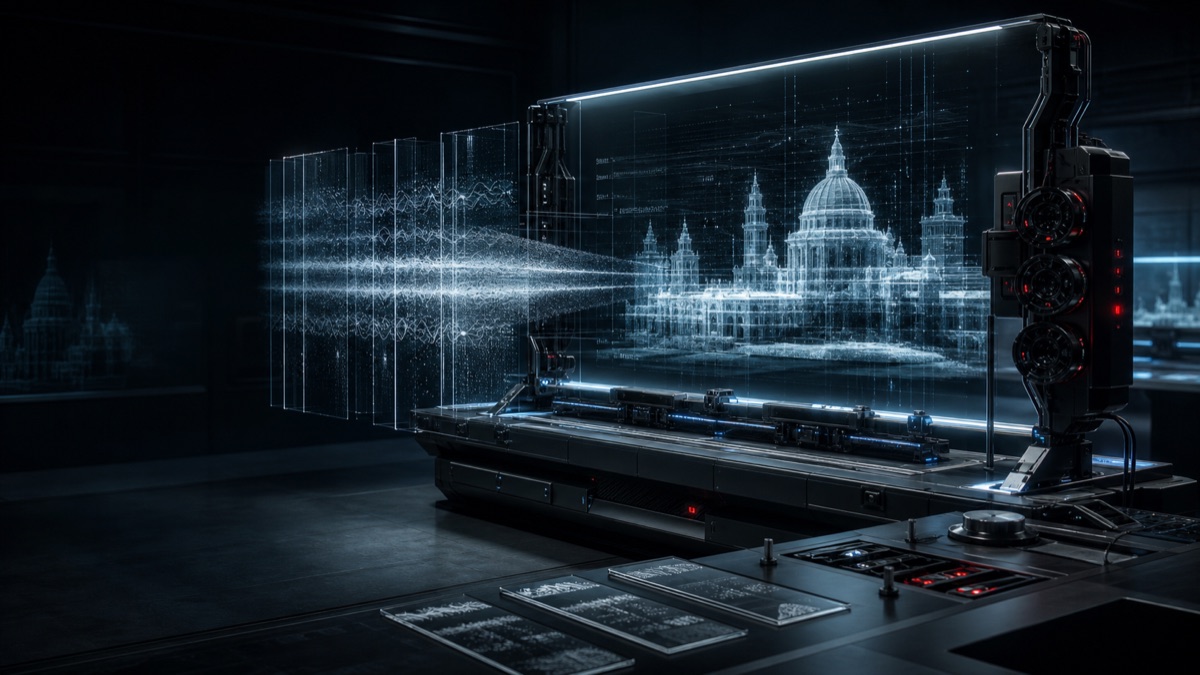
R.V.I.S. is White Noise Inc.'s remote viewing imaging system concept: a way to turn opt-in remote viewing sessions into visual hypotheses, then use those hypotheses to study omnipresent entanglement as a disciplined research model for future White Noise Computers.
Research boundaryView image provenance Entanglement language is a hypothesis map, not proof of controllable nonlocal signaling.
Translate drawings, impressions, timing, confidence, and optional BCI-adjacent notes into traceable image hypotheses.
Turn anomalous-cognition questions into benchmarkable primitives: channel, noise, correlation, rejection, and review.
Use entanglement as a serious boundary-aware vocabulary, while respecting no-signaling and ordinary leakage controls.
Every beautiful render remains provisional until blind scoring, miss ledgers, and reviewer separation support it.
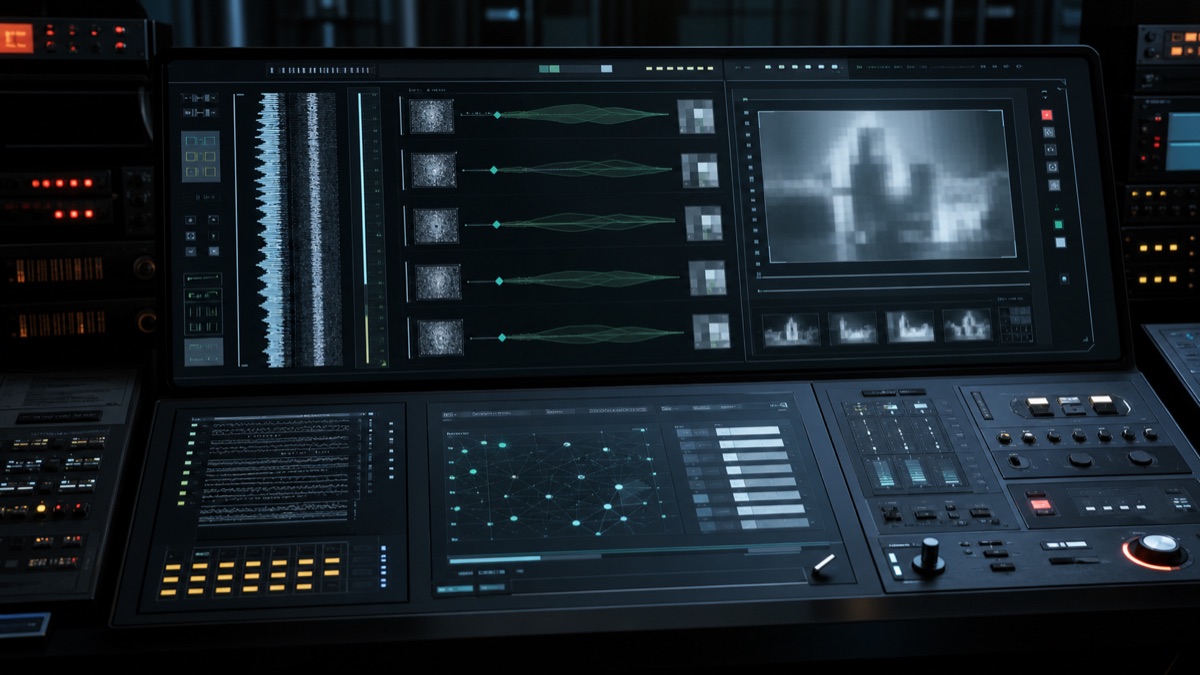
GPT-generated editorial concept art. It is not a live dashboard, validated model, customer workflow, or completed prototype.
The target holder, participant, AI operator, and evaluator are separated so ordinary information leakage cannot masquerade as nonlocal signal.
Output: custody receipt, timing record, and blind packetSketches, sensory fragments, motion impressions, emotional tone, confidence, pauses, and optional session-state notes become a preserved record.
Output: perception transcript and feature mapR.V.I.S. can use prompt recipes and constraints to produce image hypotheses that remain tied to the original session material.
Output: versioned image candidates and prompt receiptsThe system records where correlation is claimed, where noise dominates, and where no-signaling or leakage controls limit interpretation.
Output: entanglement hypothesis map and rejection notesThe value of R.V.I.S. is not only the generated image. It is the translation layer: remote viewing sessions become test material for correlation, noise recovery, error control, signal interpretation, and human-AI review.
R.V.I.S. gives the White Noise Computer program a way to classify hits, misses, false positives, leakage risks, and ambiguous matches.
A future White Noise Computer must treat white noise as something to interrogate carefully, not as permission to see patterns everywhere.
R.V.I.S. can help build language for omnipresent entanglement while still rejecting claims that require faster-than-light command signaling.
The bridge becomes useful when it produces benchmark sets: target classes, scoring rubrics, blind repeats, and ordinary-computation baselines.
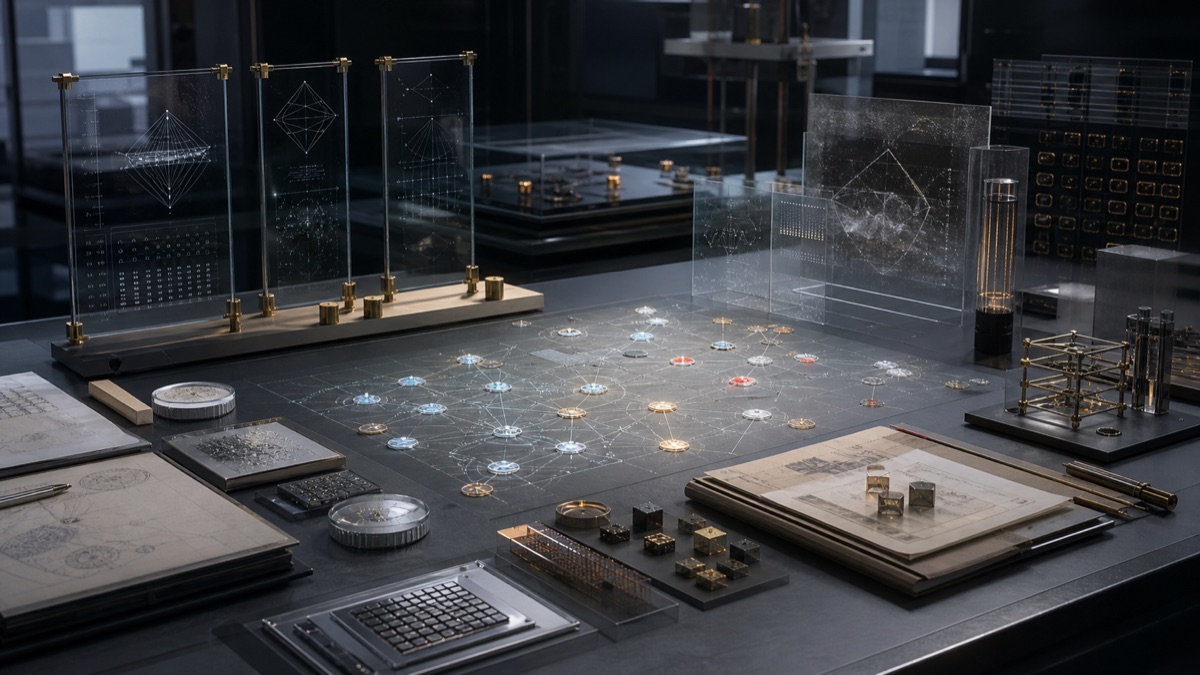
GPT-generated editorial concept art. It is not proof of working omnipresent computation or a deployed White Noise Computer.
R.V.I.S. can serve as the first interpretive instrument: not a final proof machine, but a way to compare perception, image generation, target structure, and physics constraints in the same record.
Record target custody, viewer output, timing, sensory categories, and confidence without letting target knowledge leak back into the session.
Foundation: a clean session recordConvert sketches and descriptions into structured fields that can be scored across target types, misses, and repeated trials.
Foundation: a feature schemaUse AI imaging to create candidates that expose assumptions: shape, light, material, layout, scale, and implied target relationships.
Foundation: image provenanceRun review that can reward, reject, or downgrade resemblance while preserving null results and failed image hypotheses.
Foundation: adversarial reviewTurn the trial into design constraints for signal recovery, error correction, nonlocal-correlation language, and human authority.
Foundation: computable questionsA convincing render can clarify a hypothesis, but it cannot establish remote viewing accuracy or entanglement access by itself.
Any BCI-adjacent or session-state workflow needs opt-in participation, pause authority, data minimization, and explicit use boundaries.
The page can explore omnipresent entanglement as a research model while refusing claims that require controllable faster-than-light messaging.
Every R.V.I.S. image on this page is AI-generated editorial concept art. The provenance records name the prompt intent, usage boundary, and file path so the visuals support the research story without replacing evidence.
Conceptual R.V.I.S. hero scene showing signal fields becoming an image hypothesis.
View provenanceConceptual interface for session material, AI image candidates, confidence bands, and review state.
View provenanceConceptual White Noise Computer research bench for evidence panels, quantum-information boundaries, and protocol objects.
View provenanceThe useful first artifact is a bounded scope memo: remote viewing protocol, image-generation workflow, entanglement hypothesis map, White Noise Computer benchmark translation, consent layer, and evidence ladder.