 White Noise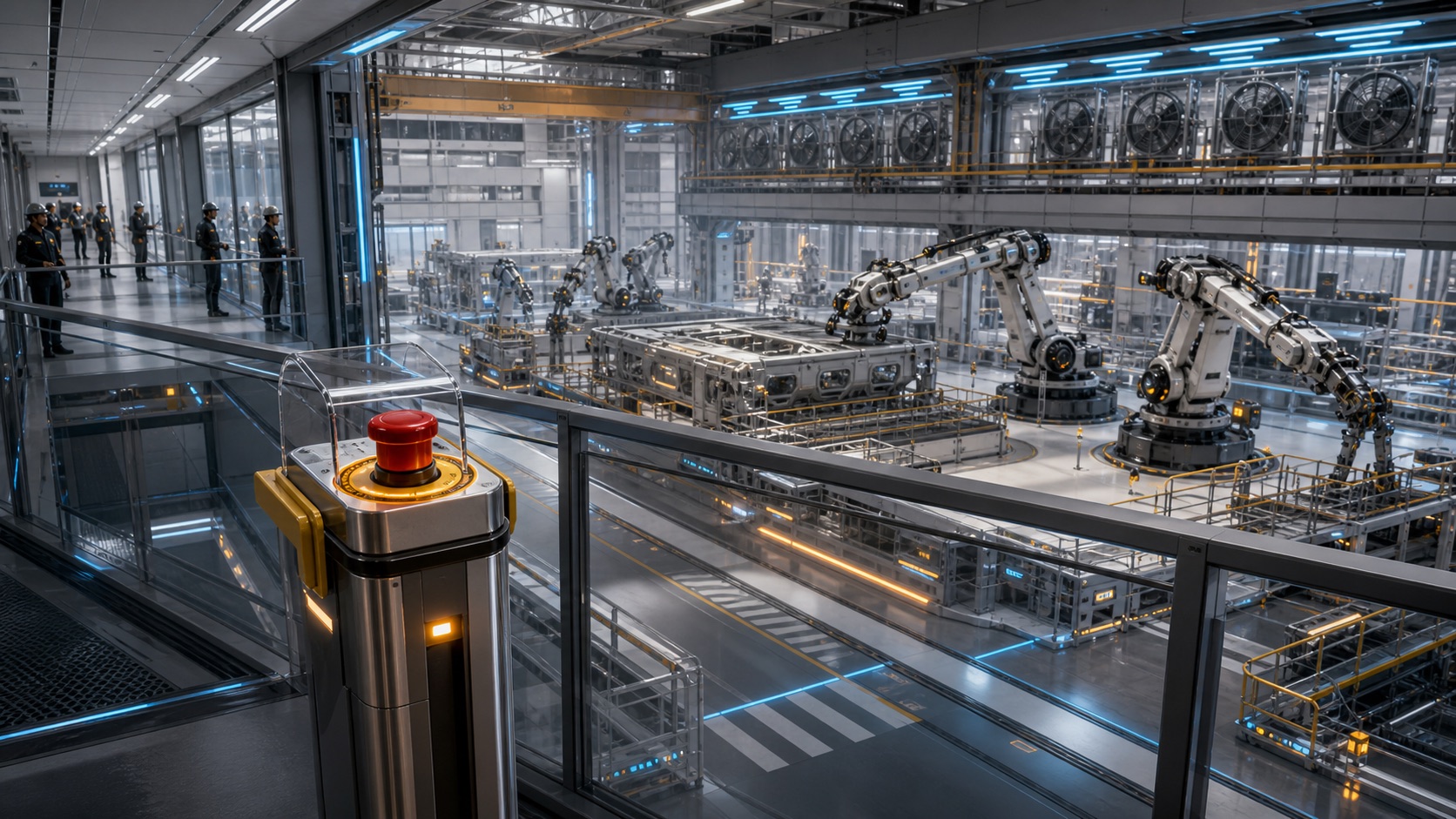
Public Shutdown Drills for Superfactories starts with a discipline that runs through the best White Noise work: keep the horizon large, then make the first accountable artifact ordinary enough to inspect. White Noise Totality imagines capabilities at a civilization scale, but a public page has a different obligation. It must tell the reader what is source-world speculation, what present fields can actually support, and what proof would have to exist before stronger language would be fair.
For this subject, the useful artifact is a public shutdown drill for autonomous macro-construction systems. It does not shrink the ambition. It gives the ambition a surface where measurement, refusal, consent, and maintenance can be seen. That is why the primary keyword, superfactory shutdown drill, is not decorative SEO language. It names the bridge between wonder and practical translation.
The Claim Boundary
The strongest White Noise articles do not ask readers to choose between imagination and evidence. They let both remain visible. The risk here is making production speed feel more important than human stop rights, heat limits, or repair access. Once that drift begins, a metaphor can acquire the tone of a service, a rendering can acquire the authority of a prototype, and a roadmap can sound more complete than it is.
The antidote is a clear claim boundary. A page should say when a concept is educational, speculative, research-scoping, or commercially available. It should also say what the concept is not. The public site already presents books, Academy pathways, Labs and research framing, product pages, services, creative markets, membership, and Project Utopia as distinct surfaces. This article keeps those surfaces distinct by treating the idea as a method for sharper review, not as a claim that a speculative capability is already deployed.
The Present Frame
The grounded frame is industrial safety, robotics, construction automation, worker authority, public review, and maintenance practice. Those fields can do serious work today: they can produce lesson plans, checklists, lab notes, visual receipts, prototype criteria, review meetings, and source-status records. They cannot magically supply the missing physics, clinical authorization, mass balance, ecological permission, or institutional legitimacy that a far-future system would require.
That distinction matters because present usefulness is still valuable. A student can use the concept to critique a claim. A Labs team can use it to scope a bounded research question. A member can use it to ask for better provenance. A service buyer can use it to understand what a deliverable can and cannot promise. In each case, the near-term value is not the fantasy that the whole White Noise stack exists; it is the sharper behavior the concept produces now.
The Stewardship Surface
The stewardship rule is direct: give workers, neighbors, and operators clear pause, escalation, and restart authority with visible drill records. At White Noise scale, governance is not a separate policy note added after invention. It belongs in the interface, the metadata, the page copy, the handoff artifact, and the review ritual. If the control is not visible at the moment of use, the control is weaker than the story surrounding it.
A good stewardship surface also makes disagreement normal. It lets a reviewer pause a claim, a resident object, a student cite uncertainty, a buyer see exclusions, or a maintainer mark the system as not ready. That kind of friction is not a retreat from ambition. It is how ambition survives public contact without turning into overstatement.
The First Useful Artifact
Run a public stop test before celebrating any automated construction loop. The artifact should be useful even if the grander capability remains theoretical forever. It should have a place for assumptions, evidence status, responsible owner, failure mode, and renewal date. It should also carry its own refusal path, because speculative systems become more credible when they can say no without drama.
There is an editorial reason to begin there. White Noise language is unusually expansive: computation, matter, medicine, habitats, engineered worlds, public governance, and civilizational design all appear in the same source-world. Without small artifacts, the vocabulary can become atmospheric. With small artifacts, the vocabulary becomes a set of obligations.
What Progress Would Look Like
Progress would look modest at first. It might be a public meter, a sealed custody tray, a maintenance council table, a nonclinical intake page, a light-cone badge, a recall path, or a visible uncertainty bay. The point is not that the artifact proves the far horizon. The point is that it trains the organization to publish boundaries before claims.
That training is the real infrastructure. A team that can show its limits can invite serious collaborators. A site that makes provenance and proof burden visible can keep readers oriented. A concept that names its own failure modes can remain imaginative without becoming careless. Public Shutdown Drills for Superfactories therefore belongs to the White Noise tone at its best: cosmic ambition joined to measurement, limits, stewardship, governance, and practical translation.