We need services clarity before a meeting.
Best when the live question is delivery shape, scope fit, security posture, or whether White Noise belongs in a services or advisory process.
Recommended route: Consulting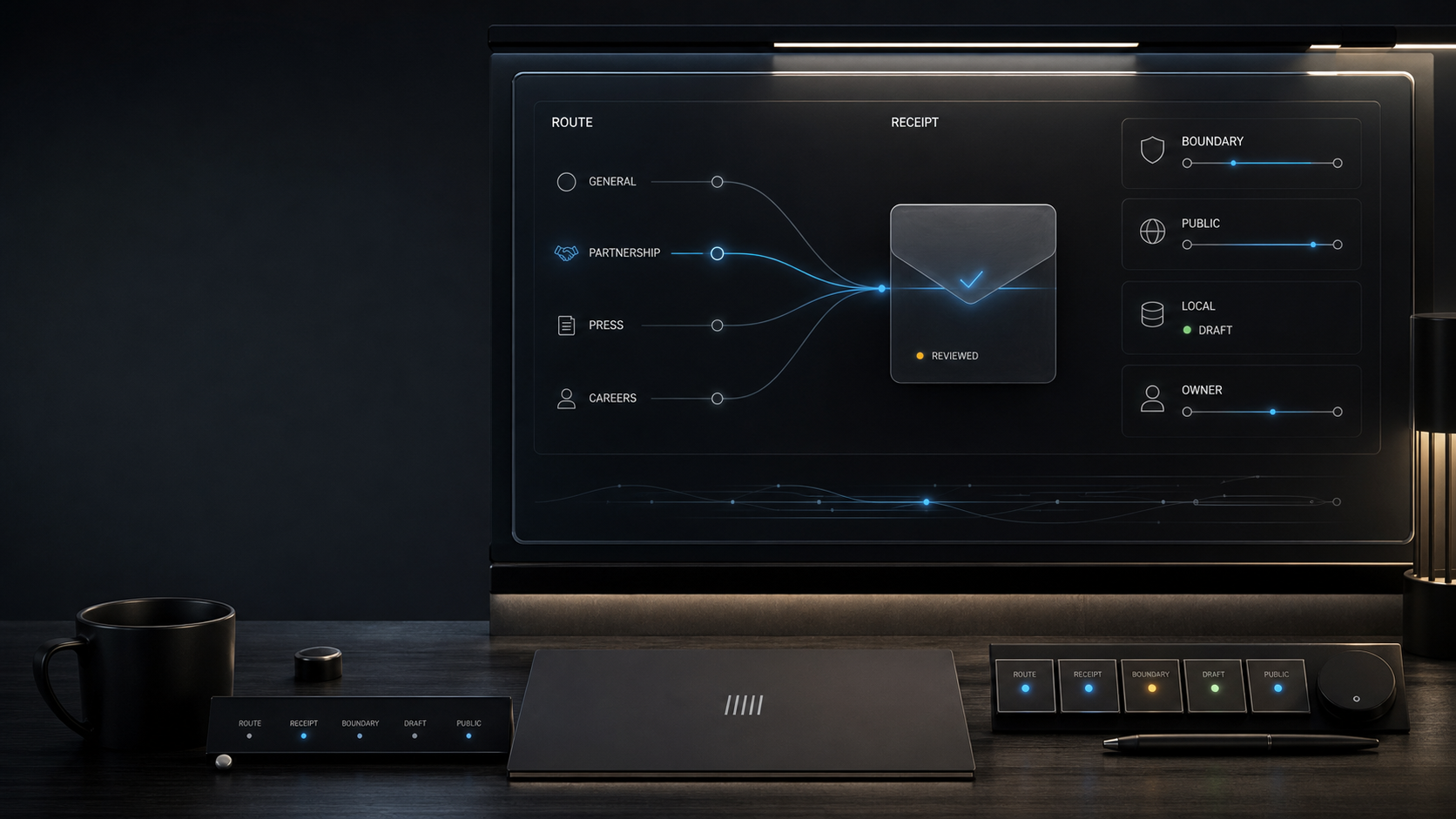
Use this page to choose the right desk, attach the right boundary, preserve a local draft, and send one bounded ask that can return a real artifact instead of a vague handoff.
When configured delivery is live, the target is a routed first reply within a few business days. Demo fallback should preserve a local receipt and point you to the safer next step instead of implying a staffed desk.
This public page is for first-pass routing only. Do not submit sensitive records that require a secure diligence room.
Consulting and Custom R&D routes begin with scoped discussion or a written plan, not an implied shipped capability.
The highest-friction part of this page is choosing a route when the question is still vague. This qualifier turns that into one concrete recommendation, one expected first artifact, and one boundary to keep the note commercially useful.
Choose the role that best matches the decision-maker on your side. The page will preload the strongest route and the smallest useful first-return artifact before you send the note.
Best when the live question is delivery shape, scope fit, security posture, or whether White Noise belongs in a services or advisory process.
Recommended route: ConsultingBest when the decision is partnership, distribution, sponsorship, or institutional collaboration rather than a paid project quote.
Recommended route: General companyBest when the question is evidence depth, governance, commercial readiness, material availability, or what the public build does not yet prove.
Recommended route: Investor diligenceBest when the question should resolve into a scoped brief, benchmark, methods path, or budget band instead of broad company discussion.
Recommended route: Custom R&DThe page will set the route, draft subject, first-return artifact, and main boundary so the form below starts from a defensible ask instead of an empty box.
This restores context from older site links that already include a route, subject line, or bounded message draft.
Review the matching route card below, then use the copied draft in your preferred outbound channel.
Subject: White Noise inquiry
Use one bounded ask so the first reply can return a real next artifact.
Public contact routing is still first-pass only. Keep the note limited to the decision, surface, evidence request, or risk boundary you want addressed first.
Start here if you need orientation, public trust materials, leadership context, or the broad company story before asking a narrower question.
Open About and trust routesUse the live consulting intake when you need category design, roadmap pressure-testing, or a structured decision before committing budget.
Contact the Consulting PracticeUse the current R&D route for a written scope, success criteria, budget band, and a methods path that does not imply a shipped capability.
Open the Custom R&D scope formUse the investor page when your question is about governance, evidence ledgers, commercial readiness, or diligence review sequence.
Open investor relationsThis packet turns the contact page into a cleaner enterprise, partnership, and capital gateway. Each lane points to the smallest public artifact that should be inspected before anyone asks White Noise for a meeting, dataroom, or undefined follow-up.
Use one bounded ask, one named risk boundary, and one expected first-return artifact. Treat this page as public routing only, not a secure diligence room or proof of enterprise workflow.
Use this path when you need to understand current services posture, delivery shape, data-handling language, and what still is not represented as enterprise-ready.
Best next ask: public-surface walkthrough or scoped services route.Use this path when the decision is sponsorship, institutional collaboration, distribution, or ecosystem fit rather than a generic company introduction.
Best next ask: partner-fit walkthrough or boundary memo.Use this path when the real question is proof depth, current delivery maturity, missing formal-process materials, or what the public stack can verify today.
Best next ask: capital-readiness response or claim-boundary memo.Use this path when you need the broad company picture first and want to separate public trust artifacts from speculative product language before narrowing the inquiry.
Best next ask: trust-surface walkthrough or one named follow-up route.That produces a better first note and forces White Noise to answer with one real artifact or one explicit non-claim.
Send one bounded request instead of an undefined diligence ask.
Sample artifactInspect the first-return exampleSee the public shape of a bounded delivery packet before asking for a meeting.
Reply ruleInspect the first-response standardSee what the first serious reply should contain before you contact the team.
Guided briefOpen the routed investor draftUse a prefilled route if you already know the role, packet, and boundary.
Visual note: the hero image is a dedicated GPT-generated contact-route receipt asset. It supports orientation only and does not represent a staffed CRM, live diligence desk, legal workflow, secure dataroom, or guaranteed response state. Asset: assets/contact/white-noise-contact-route-receipt-console-20260629.png. Review the provenance record.
Serverless routing supports production providers, but warmer public routing claims still require the dated source record defined in the contact-routing evidence pack. Static demos still keep a CMS-visible local copy. Investor and WN Coin inquiries remain public first-pass routing only, not an offer of securities, investment advice, or proof of a formal financing process. Contact-route submissions should stay limited to route context, not private diligence records.
This intake turns the route chooser into an actual first-pass handoff. It keeps the note bounded to one route, one decision, one artifact need, and one risk boundary, then gives the sender a receipt-shaped packet instead of an empty contact form.
Use this form for orientation, routing, and first-return artifact requests. Do not send confidential, personal, credential, or regulated records through this public intake.
The page is checking whether this environment reports configured delivery or should stay in demo fallback mode. When delivery is live, the target is a routed first reply within a few business days. That route-state check is not the same as source-backed proof of staffed workflow or response metrics.
Subject: White Noise inquiry
Use one bounded ask so the first reply can return a real next artifact.
Name the route, the surface being reviewed, the main risk, and the smallest acceptable first return.
Do not paste decks, credentials, customer data, contracts, or anything that assumes a secure diligence room already exists.
The right reply is a concrete note, memo, walkthrough, redirect, or explicit statement that the requested material is not ready, ideally returned within a few business days when live routing is configured.