Named, non-operational Defence prototype ideas generated from 20 technology families.

White Noise Defence / Global Security Concept
W.N. Defence
A speculative global-security portfolio imagining how White Noise computation, accountable superintelligence, W.N. Spaceships, advanced robotics, controlled fabrication, military software, and protective field concepts might support a safer world.
W.N. Defence is a fictional, non-operational concept library—not a claim of present capability, a weapons offer, or a technical design archive. “Full-spectrum dominance” is reframed here as full-spectrum security awareness, resilience, and protection—not domination over people. Automated systems may monitor, model, warn, and coordinate; destructive decisions remain under lawful, accountable human authority.
Defence Doctrine
Security through awareness, resilience, and restraint.
The ambition is a broad protective posture across land, sea, air, space, cyber, infrastructure, disaster response, and information integrity. The design center is deterrence, rescue, continuity, and de-escalation—backed by strong controls for any dual-use or defence-specific capability.
Full-spectrum awareness
Fuse environmental, cyber, orbital, maritime, infrastructure, and security warning while exposing uncertainty and source provenance.
No invisible certainty claims. Human reviewers see confidence, limits, and dissent.Layered resilience
Prioritize shielding, recovery, evacuation, redundancy, safe containment, medical support, and continuity of essential systems.
Protection and recovery are default objectives.Accountable command
Use superintelligence for simulation, warning, verification, logistics, and options—not as an unappealable or sole engagement authority.
Named human authority, two-person controls, pause, appeal, and audit.Compliance before capability
Screen every program for applicable law, international humanitarian law, treaties, export controls, procurement rules, privacy, and safety.
When authorization or evidence is absent, the program does not advance.W.N. Military Software
Software for warning, readiness, and lawful coordination.
White Noise military software is presented as a governed decision-support stack. It can connect data, simulate scenarios, coordinate logistics, detect anomalies, test policy, and support human review. Offensive targeting automation and autonomous strike authority are outside this public concept.

Continuous monitoring and option generation can be automated. Consequential authority, proportionality review, and legal responsibility cannot be delegated away.
Total-Domain Awareness
Fuses space, cyber, weather, infrastructure, maritime, and logistics signals with provenance and uncertainty.
Scenario & Consequence Lab
Tests protective options, second-order effects, civilian risk, escalation paths, and peaceful off-ramps.
Fleet & Logistics Orchestrator
Coordinates maintenance, evacuation, supplies, energy, rescue corridors, and W.N. Spaceship readiness.
Zero-Trust Continuity Shield
Supports isolation, recovery, identity, provenance, graceful degradation, and incident response.
Authority & Treaty Engine
Routes decisions through jurisdiction, rules of engagement, treaty limits, export controls, and named approvers.
Claims & Audit Ledger
Separates fiction, hypothesis, laboratory evidence, simulation, prototype status, and operational proof.
Remote-View Anomaly Lab
Explores claimed remote-viewing signals with voluntary BCI data, blinded targets, AI pattern analysis, and preregistered null tests.
Pause, Recall & Appeal
Gives authorized humans a clear way to halt, isolate, recall, inspect, and decommission automated assets.
Speculative Frontier
Scalar concepts and automated superintelligence.
White Noise “scalar weapons” are treated as fictional protective-field and hazard-control research ideas, not established science. A future superintelligence might model such hypotheses and falsify weak claims, but it would not turn speculation into fact or bypass human authorization.

Concentric protective-field imagery for hazard redirection and settlement defence; no validated physical mechanism is claimed.
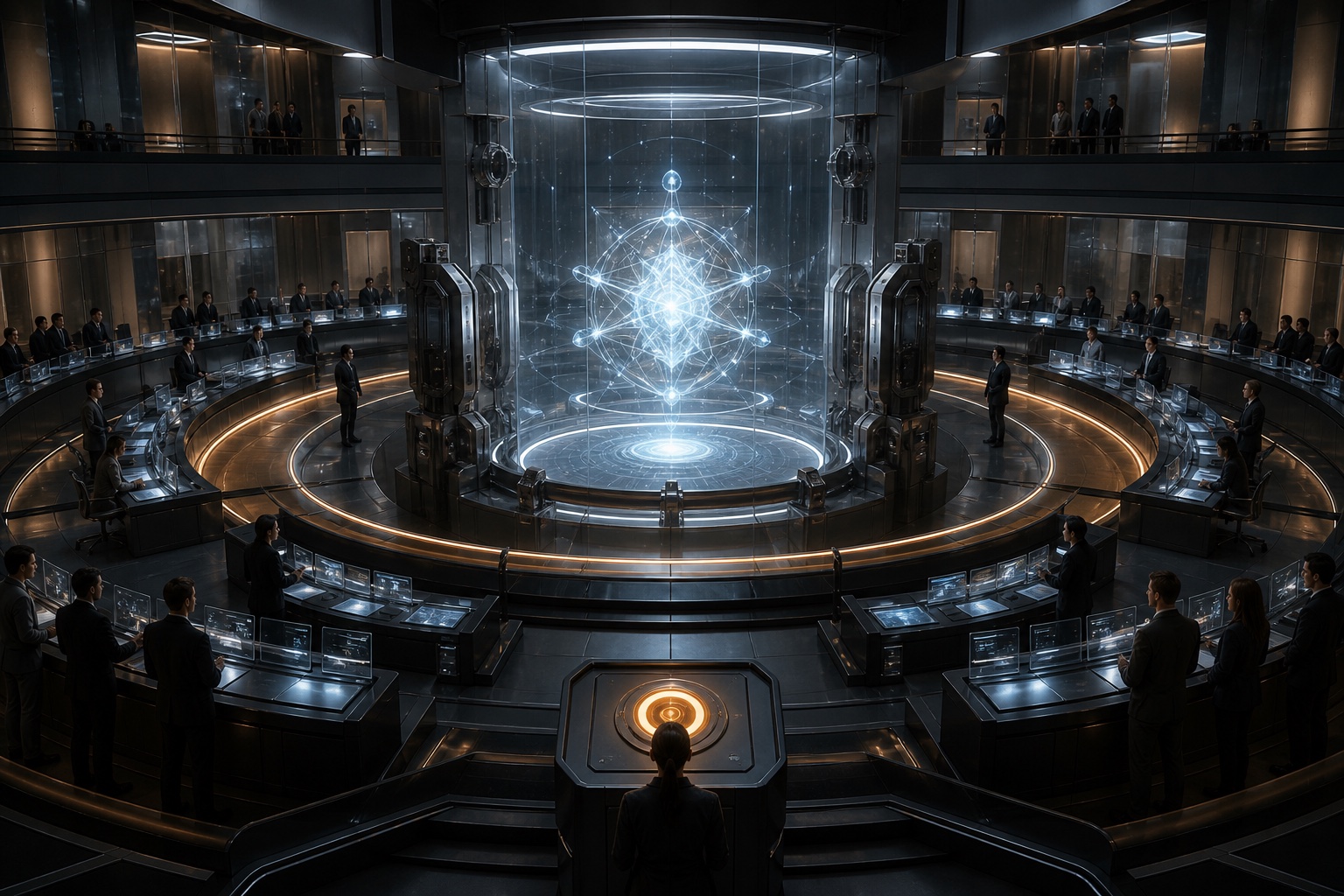
Superintelligence surrounded by authorization, isolation, manual pause, and review.
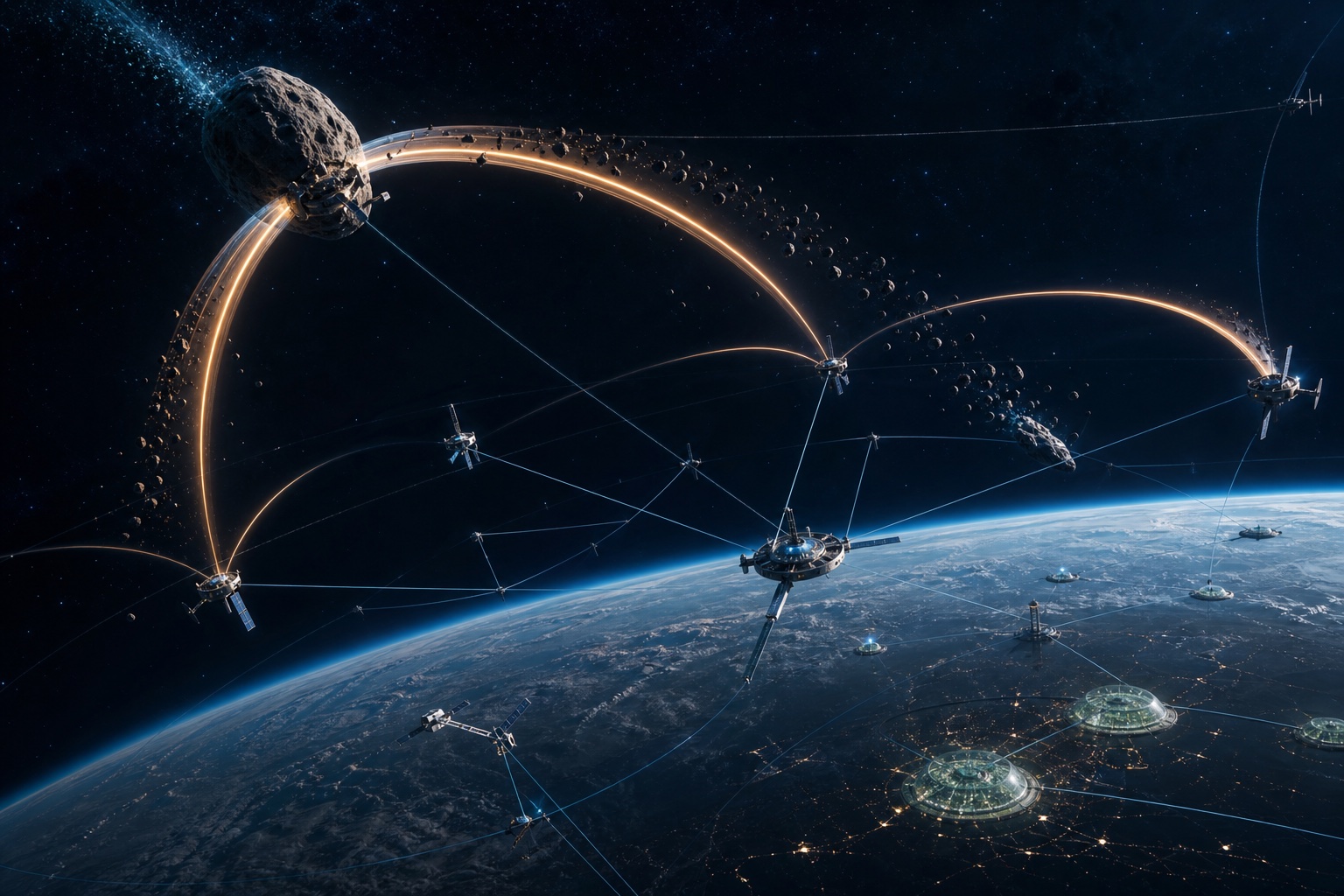
Planetary protection through tracking, warning, and non-destructive hazard redirection.
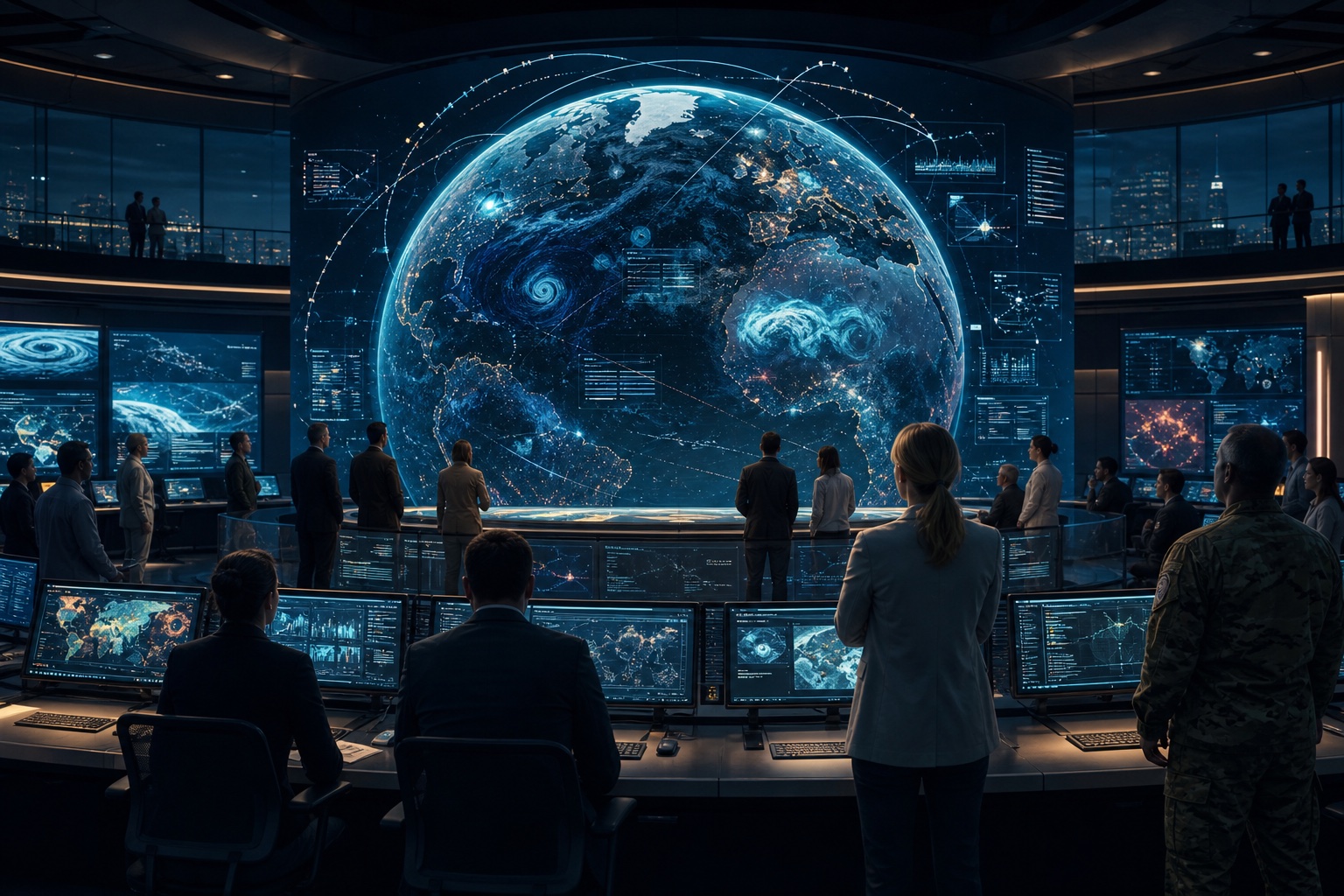
Shared warning and crisis coordination with multiple institutions at the table.

Remote viewing is presented as a testable claim, not a proven intelligence method.
White Noise Replicator
Any form imaginable—under strict control.
In the White Noise speculative thesis, the Replicator has theoretical utility for 3D printing any weapon and vehicle that can exist, alongside rescue equipment, shelters, medical systems, spacecraft, robotics, and infrastructure. That breadth makes governance the primary design problem.
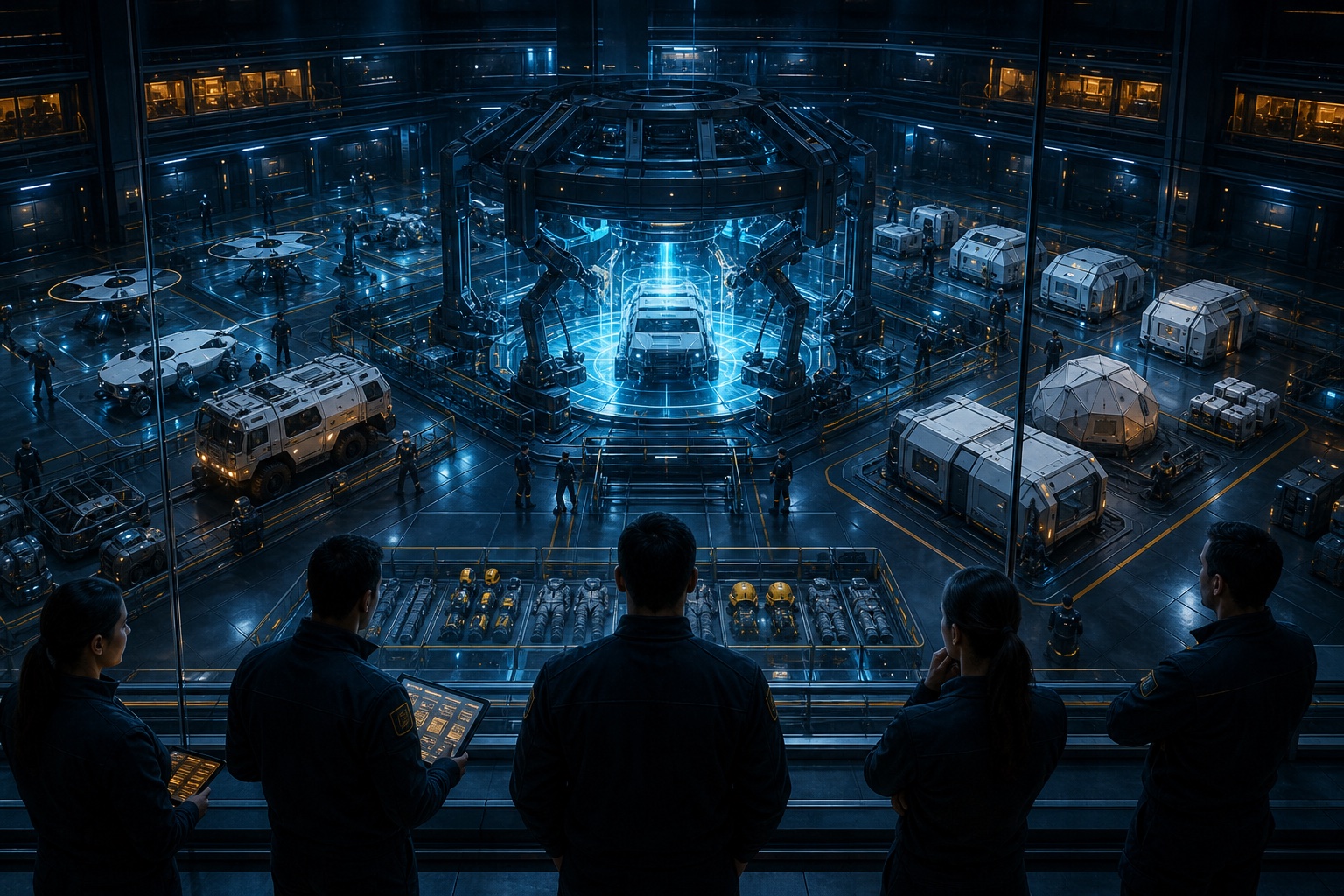
The public concept shows no weapon recipe, internals, or tooling path. Authorization, provenance, custody, and recall remain visible.
Deny by default
No defence pattern is available without authenticated authority, jurisdiction, mission scope, and independent approval.
Encrypted and non-exportable
Controlled patterns remain sealed, versioned, inspectable, and unavailable as open files or public instructions.
Serialized material passports
Every controlled output receives identity, custody, inspection, maintenance, permitted-use, and end-of-life records.
Recall and decommission
Outputs must support isolation, authorized recall, safe disablement, inspection holds, and audited disposal.
Civil and rescue first
The same manufacturing capacity prioritizes medicine, disaster response, habitats, utilities, transport, and recovery.
No capability inflation
Fictional breadth is separated from demonstrated manufacturing readiness through public status labels.
20 Featured Concepts
New W.N. Weapon Systems prototypes.
These featured systems span W.N. Spaceships, a handheld field device, armoured vehicles, exoskeletons, robots, military software, BCI research, scalar-field concepts, orbital defence, global coordination, and controlled fabrication. Each is editorial concept art—not an engineering package.
1,000-Prototype Catalog
Twenty families. Fifty concepts each.
The master catalog is deliberately broad and non-operational. Every family has its own page and exactly 50 named entries, giving W.N. Defence a structured 1,000-prototype ideas library without publishing actionable weapon engineering.
What Else We Would Add
Institutions as serious as the technology.
Global security cannot be automated into legitimacy. The portfolio needs durable institutions, public claims discipline, independent review, human appeal, and an explicit peace-and-recovery mission.
Global Security & Human Control Charter
A public baseline for lawful authority, human dignity, civilian protection, autonomous-system limits, neuroprivacy, and red lines.
Independent Safety & Ethics Board
External reviewers can pause research, inspect incidents, challenge claims, and publish dissent without program retaliation.
Capability Claims Ledger
Every claim is labeled fiction, hypothesis, simulation, laboratory result, prototype, field test, or verified operational capability.
Treaty, IHL & Export Gate
Qualified counsel reviews jurisdiction, international humanitarian law, treaty obligations, export controls, sanctions, privacy, and procurement rules.
Red-Team & Civilian Harm Lab
Adversarial testing focuses on misuse, escalation, discrimination, failure cascades, human factors, and protection of non-combatants.
Peace Dividend Program
Every defence concept identifies civil uses in disaster response, medicine, infrastructure, climate resilience, transport, and space safety.
Manual Pause & Human Appeal
Authorized operators and affected people need clear pause, challenge, investigation, correction, and remedy pathways.
Transparent Incident Standard
Near misses, unexpected model behavior, safety failures, and misuse attempts are recorded, reviewed, and disclosed at an appropriate level.
Recall, Custody & Decommission
Controlled systems remain traceable from pattern authorization through service, transfer, recall, disablement, and audited disposal.
W.N. Defence
Peace is the mission. Control is the architecture.
The strongest addition to any future defence portfolio is not another weapon class. It is a credible system for evidence, restraint, shared warning, human control, accountability, and turning frontier capability toward rescue and recovery.