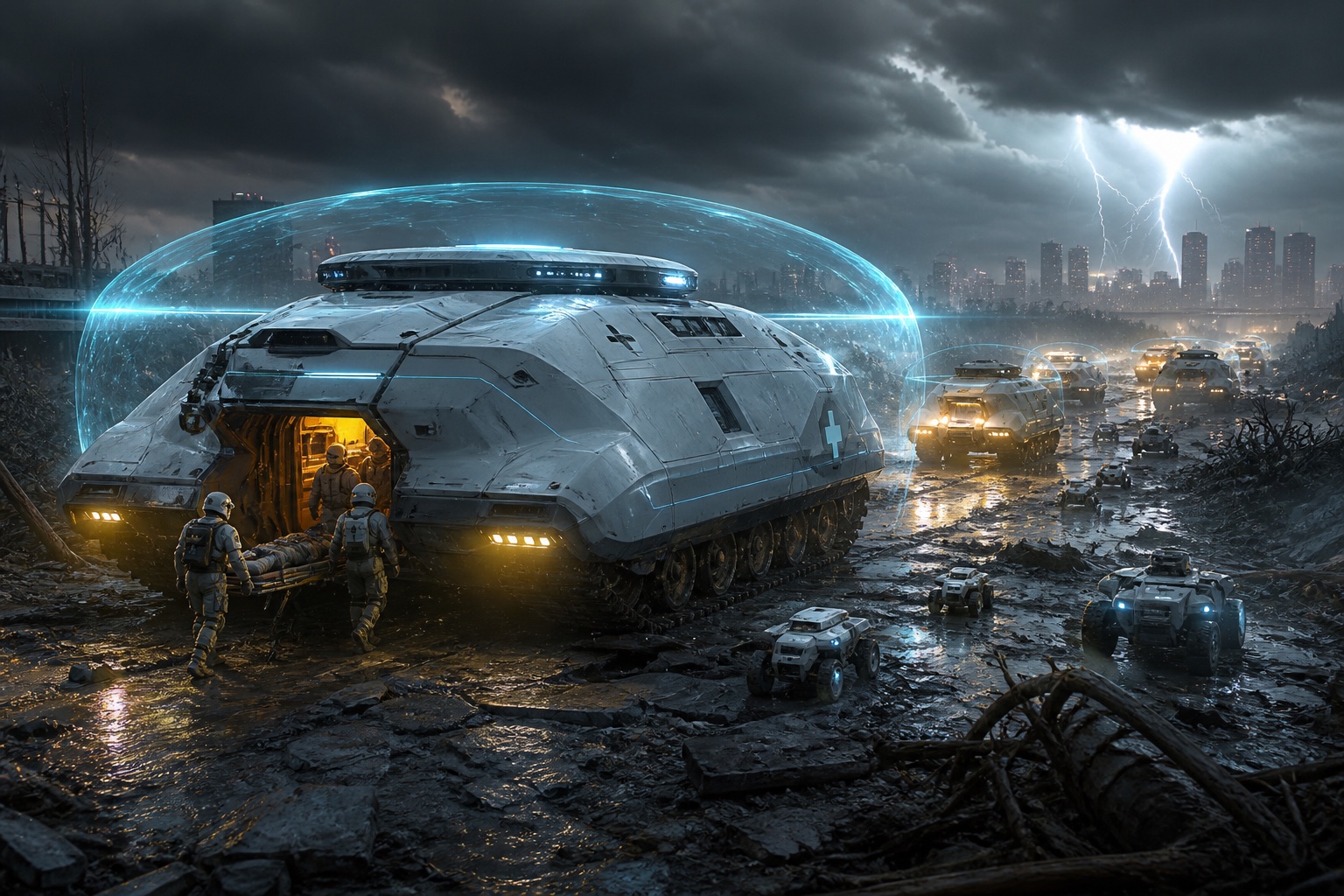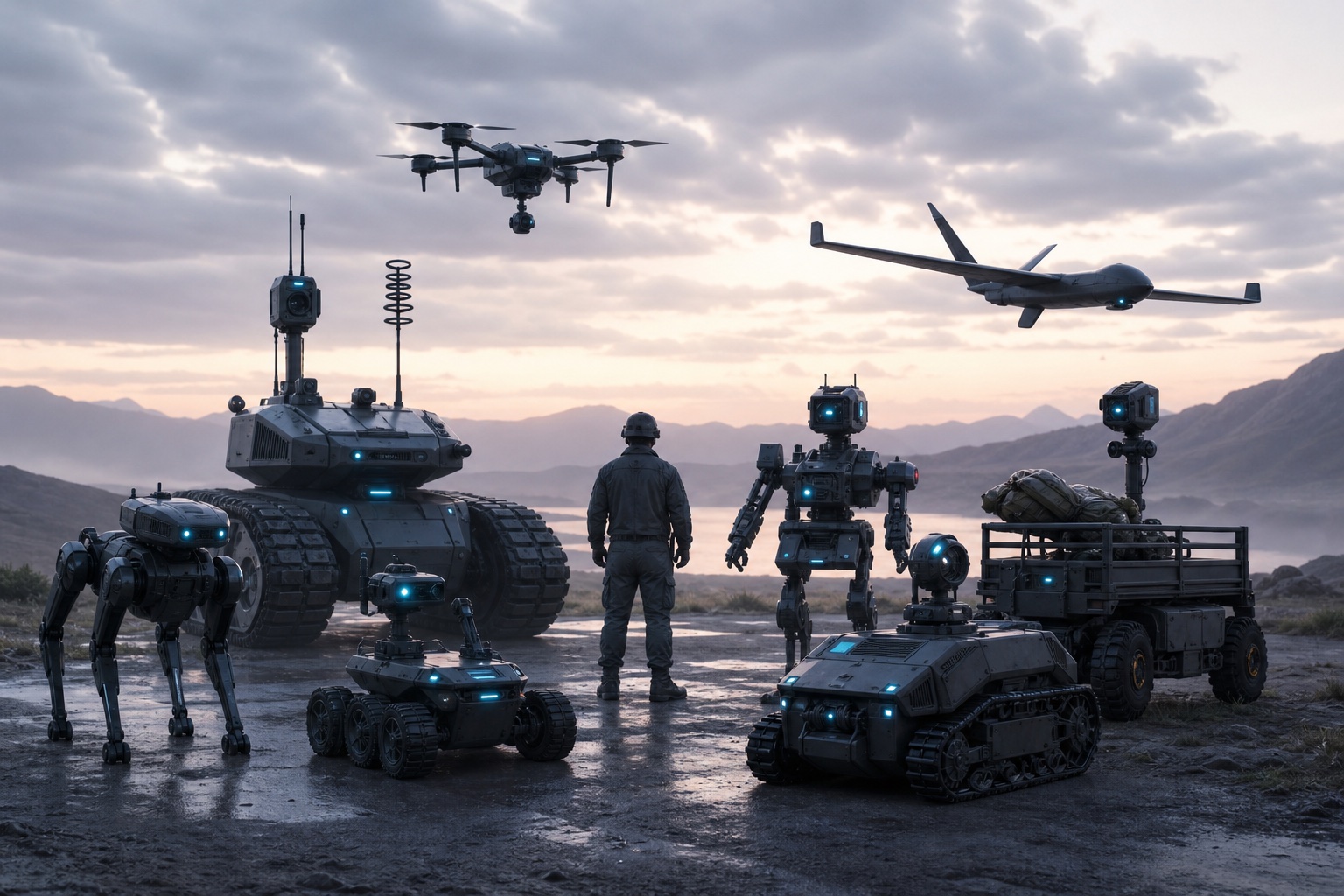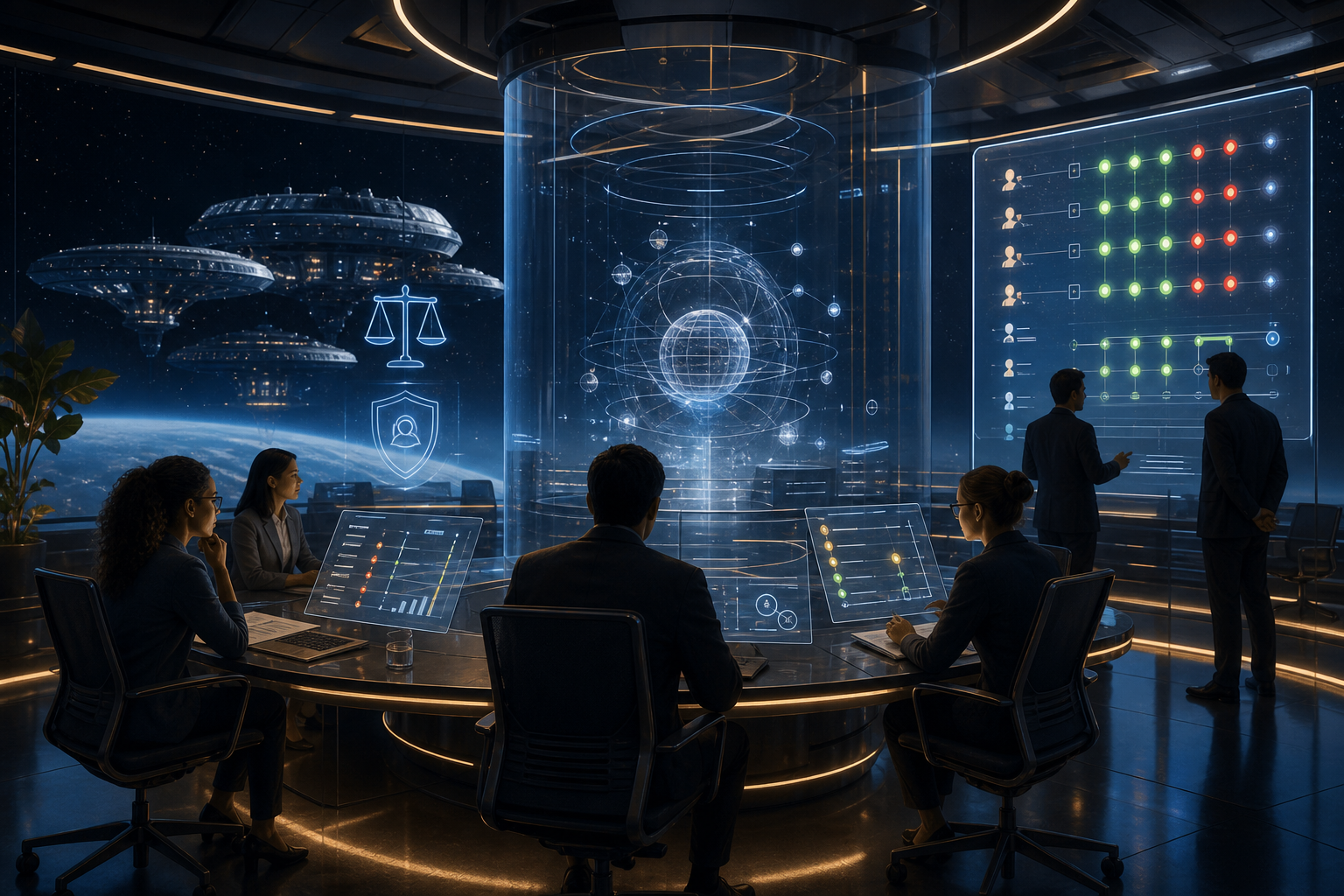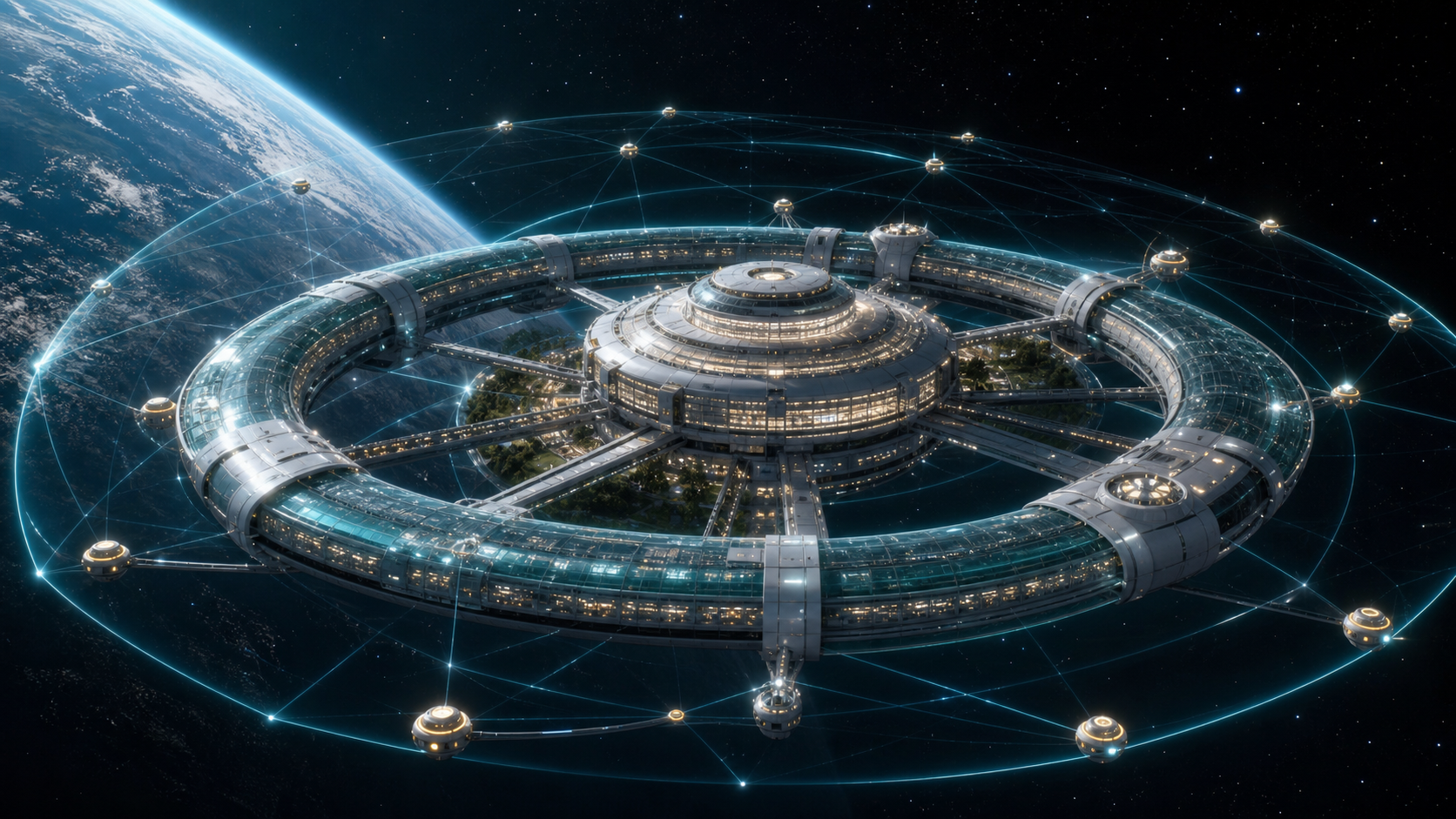
AI-generated conceptual orbital security architecture for W.N. Weapon Systems
Home / W.N. Defence / W.N. Weapon Systems
White Noise O.S.T.S.S. - Conceptual Space Security

W.N. Weapon Systems

A speculative White Noise O.S.T.S.S. Weapon Systems project for secure settlements and global resilience. The premise combines the White Noise Computer, accountable superintelligence, White Noise Chip equipment, Supernanobots, scalar-field hypotheses, governed military software, the White Noise Library of all Things, teleportation object relocation, W.N. Spaceship integration, and fully automated monitoring as a future R&D thesis.

Conceptual project Could be developed with appropriate capitalization White Noise Computer dependent White Noise Chip equipped Supernanobot generated Vehicle and spaceship integration concepts Full-spectrum security awareness Scalar-field concepts Automated monitoring, human authority
This page is a speculative concept dossier, not a design, instruction set, export, offer to sell weapons, or claim of present capability. Any real R&D would require lawful authorization, export-control review, treaty compliance, qualified counsel, and government or enterprise contracting controls.
System statusConcept only

Presented as an investable frontier thesis that could advance only with capitalization, authorization, and lawful program controls.

Security goalFull-spectrum resilience

“Full-spectrum dominance” is reframed as awareness, protection, recovery, and deterrence across threat domains—not domination over people or an operational guarantee.

AutomationAutomated support layer

Monitoring, simulation, and response-readiness could be automated under policy locks and audit trails; destructive authority is not delegated to AI.

IntegrationVehicles and spaceships

Future versions could be carried as modular payloads on settlement vehicles, spacecraft, fleet platforms, and W.N. Spaceships.

20-System Prototype Atlas

From W.N. Spaceships to governed handheld systems.

The W.N. Defence hub now contains 20 illustrated Weapon Systems concepts and a 1,000-prototype master catalog. It includes spacecraft equipment, handheld protective systems, tank-class vehicles, exoskeletons, military-support robots, scalar-field hypotheses, controlled Replicator systems, and BCI/AI research software—without build specifications or operational instructions.

Capability Thesis

An omnipresent settlement security layer.

W.N. O.S.T.S.S. Weapon Systems imagines defensive systems that could perceive, generate, relocate, and neutralize space hazards or lawful hostile threats at settlement scale. The language here is intentionally non-operational: it describes what the project would study, not how to build or deploy a weapon.

AI-generated asteroid relocation field concept for space hazard mitigation
Teleportation object movementSpace weapons can move objects via teleportation in the concept model.

The premise treats object relocation as a White Noise Computer governed field effect for moving asteroids, debris, hostile craft, or other lawful space targets away from protected settlements.

01 - Library generation

Supernanobots generate compliant weapon patterns.

The conceptual system says Supernanobots could generate any compliant weapon pattern from the White Noise Library of all Things. In practical R&D terms, that becomes a study of controlled fabrication, auditability, custody, and lawful-use constraints.

No fabrication recipes, component specifications, or operational instructions are provided.
02 - Hazard resolution

Asteroids, debris, and unknown space hazards.

The concept prioritizes detection, warning, verification, evacuation, shielding, and relocation of natural or unknown space hazards. It intentionally provides no target-selection logic or rules of engagement.

Any real threat-response work would require lawful authority and qualified legal review.
03 - Governed automation

Automated operation under accountable controls.

Monitoring, simulation, readiness checks, cyber defence, maintenance, and emergency routing can be fully automated in the concept. Lethal or destructive decisions are excluded from sole AI authority and require accountable command.

Automation remains bounded by audit, manual pause, human appeal, treaty obligations, and recall.
04 - Full-spectrum security

Resilience across the full threat spectrum.

The intended posture is full-spectrum awareness and protection against natural hazards, cyber incidents, infrastructure failures, hostile spaceborne actors, and unknown frontier risks. It is aspirational, not a present capability or promise of dominance.

No present deployment, performance guarantee, or procurement-ready system is claimed.
05 - Replicator fabrication

Theoretical utility for any weapon or vehicle form.

In the White Noise speculative thesis, the Replicator could 3D print any lawfully authorized weapon or vehicle that can exist, as well as rescue equipment, spacecraft, shelters, medical systems, and infrastructure.

Controlled patterns stay encrypted, permissioned, serialized, audited, recallable, and unavailable as public build files.
06 - Scalar systems

Protective-field concepts powered by governed intelligence.

“Scalar weapons” are framed as fictional field-control hypotheses for shielding, detection, and hazard redirection. Superintelligence may test or falsify the premise; it cannot convert speculation into evidence.

No validated physical mechanism, device architecture, or present capability is claimed.
Vehicles, Ships, and Settlement Platforms

Designed as a modular security stack.

The concept can be studied across fixed settlement infrastructure and mobile platforms. Integration language remains architectural, not mechanical: no hardpoints, interface details, firing geometry, power envelopes, or tactical deployment guidance are provided.

Fixed OSTSS layer

Settlement shell and orbital lattice

Protective fields, hazard monitoring, and lawful response queues could be distributed across settlement rings, service docks, and orbital infrastructure.

Ground and surface vehicles

Mobile security vehicles

Vehicles could conceptually carry compact defensive modules for settlement perimeter patrol, construction-zone safety, rescue escort, and hazard relocation support.

Spaceships

Fleet-carried capability

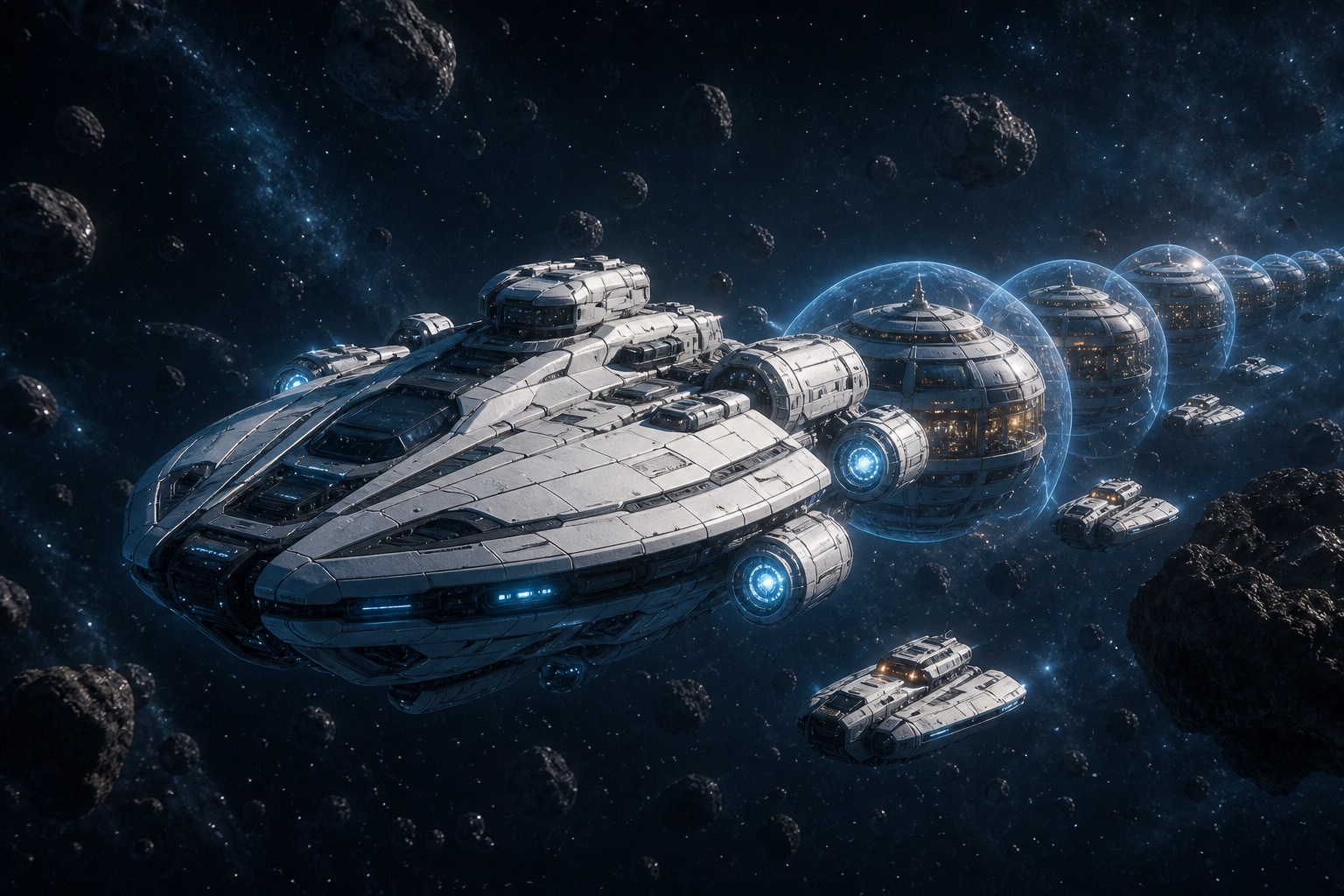
W.N. Spaceships, W.N. Prime, and support craft could be equipped with governed weapon-system payloads for convoy protection, asteroid response, debris clearing, and frontier security.

Automated nodes

Distributed readiness network

Autonomous sensor and response nodes could share a White Noise Computer supervision layer with authorization gates, red-team testing, and recall protocols.

White Noise Computer + White Noise Chip

Equipped as the control and trust layer.

W.N. Weapon Systems can be described as a governed equipment stack: the White Noise Computer supplies the supervision, simulation, policy gates, and audit memory, while the White Noise Chip acts as the sealed trust module that lets a vehicle, spaceship, settlement node, or fabrication bay join the authorized system.

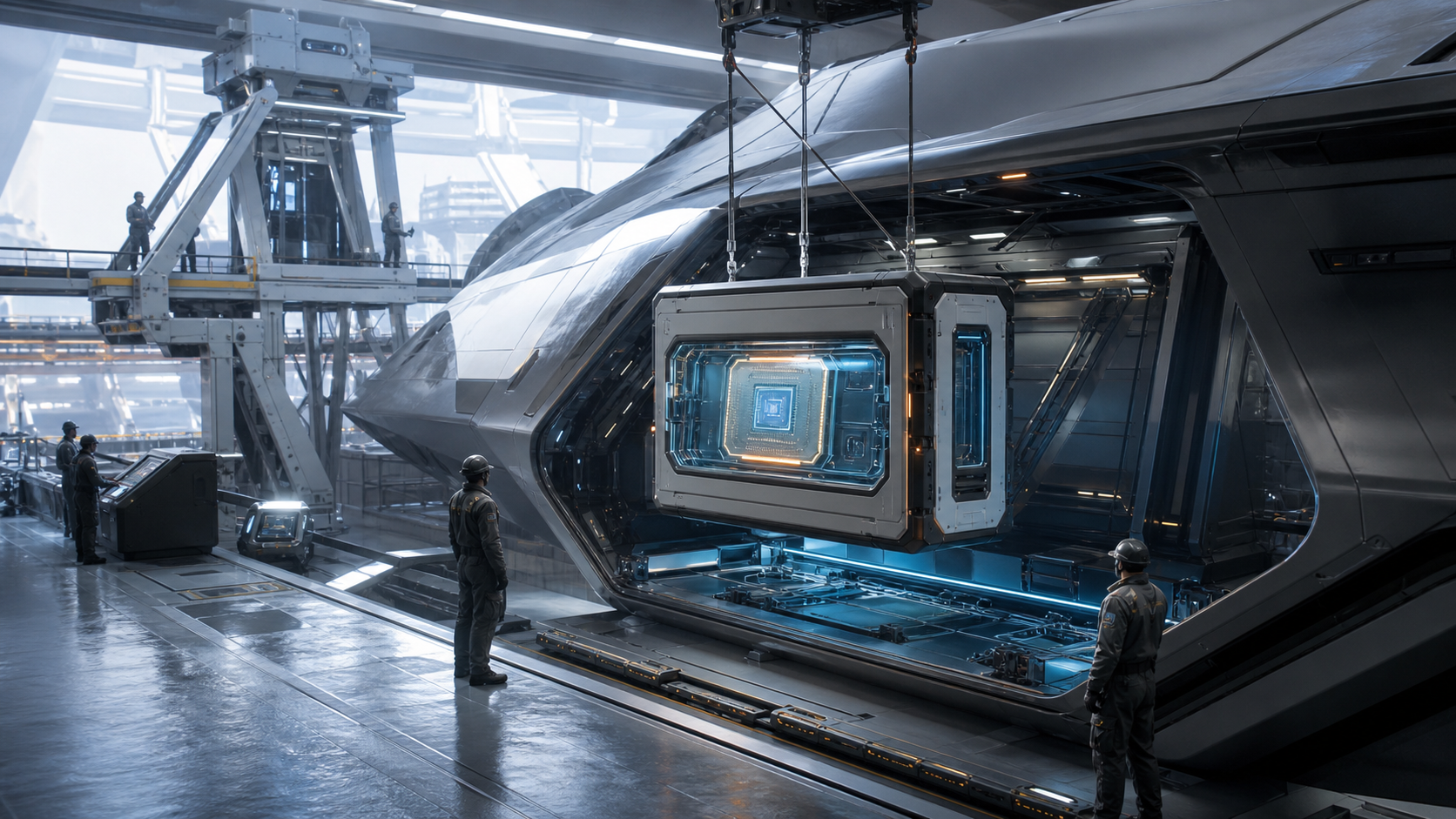
AI-generated White Noise Computer core with a White Noise Chip equipped in a protected interface cradle
Equipment coreComputer supervision, chip authentication, and policy gates in one protected stack.

The visual shows the White Noise Computer and White Noise Chip as a sealed command-and-trust layer, not as a weapon blueprint or component specification.

Computer role

The White Noise Computer is the governed supervisor.

In the concept model, the White Noise Computer would evaluate requests, run simulations, check legal and policy constraints, maintain audit records, and keep autonomous behavior inside authorized boundaries.

It is framed as the accountable decision layer, not an invitation to build operational targeting logic.
Chip role

The White Noise Chip is the equipment passport.

The White Noise Chip can be described as the sealed authentication and capability token for a W.N. Weapon Systems module. A platform would not be trusted by the system unless its chip state, custody record, and authorization scope pass review.

The chip language is conceptual and does not include chip design, cryptographic implementation, or bypass detail.
Vehicle equipment

Vehicles carry bounded security packs.

Surface vehicles could be equipped with a compact White Noise Computer supervision pack and White Noise Chip trust module for perimeter safety, rescue escort, debris response, and settlement hazard management.

No hardpoints, firing geometry, payload specifications, or tactical deployment guidance are provided.
Spaceship equipment

Spaceships carry governed fleet modules.

W.N. Spaceships, W.N. Prime, support craft, and settlement tenders could carry chip-authenticated modules that report to the White Noise Computer before any defensive, relocation, or readiness function is considered active.

The page treats equipping as authorization, custody, and governance architecture first.
Equipped means governed

For W.N. Weapon Systems, "equipped" means a platform is enrolled into a lawful control chain: identity checked, authority verified, scope limited, logs retained, manual pause available, and compliance review completed before any real-world program could advance.

AI-Generated Visual Atlas

Concept art for a governed security thesis.

These AI-generated images visualize settlement protection, White Noise Computer governance, White Noise Chip equipment, supernanobot library fabrication, automation, and object relocation. They are editorial images, not technical diagrams.

Regulatory Posture

Adhere to all regulations before content becomes work.

White Noise treats weapon-system R&D as controlled work. The page invites authorized inquiries, but it does not solicit classified information, export-controlled technical data, procurement-sensitive details, target lists, or operational plans.

Space law

Outer Space Treaty awareness

Any real program would be reviewed against international space law, including the Outer Space Treaty framework maintained by the United Nations Office for Outer Space Affairs.

Review UNOOSA treaty text

Export controls

ITAR/EAR screening

Defense articles, defense services, technical data, dual-use items, foreign-person access, and end-use restrictions would require qualified export-control review before any engagement.

Review ITAR definitions and EAR framework

Intake boundary

Authorized R&D only

Viewers may request custom R&D only for a government they are employed by, an agency they are authorized to represent, or a company with lawful authority to commission the work.

Start an authorization-screened request

Custom R&D Intake

Request a government or company research brief.

Use this intake to request a lawful, conceptual R&D scoping conversation for your government employer, agency, prime contractor, aerospace company, defense company, settlement operator, or frontier infrastructure organization.

Do not submit controlled details

Do not include classified information, export-controlled technical data, weapon specifications, target lists, vulnerabilities, procurement-sensitive information, or instructions for harm. Submit only high-level business, governance, and research-scope context.

Capitalization route

Developable with appropriate funding.

The concept could be developed with capitalization, licensed contracting, institutional partners, and staged review boards.

First deliverable: lawful concept brief and risk register.
Program route

Custom R&D for authorized entities.

Requests can focus on compliance, autonomy governance, vehicle/spaceship integration concepts, settlement security doctrine, or non-operational simulation.

First boundary: no technical weapon designs in intake.
AI-generated orbital settlement security concept
Security-Problem-Free Settlements

Protection as the invisible infrastructure of peace.

W.N. O.S.T.S.S. Weapon Systems belongs in the same frame as habitat safety, rescue, debris avoidance, asteroid defense, legal authority, and public accountability. It is a concept for keeping omnipresent settlements secure without turning the settlement into a battlefield.