
An envisioned second immune system — engineered, anticipatory, and universal — standing watch at the atomic scale where biology's own defenses cannot see.
Biological immunity is a magnificent improvisation: it learns each threat by surviving it. The cost of that education — illness, epidemics, the arms race with mutation — is written across human history. W.N. Immunity, as catalogued in the product constellation of White Noise Totality, is the book's proposal to retire that bargain. The framework pairs it explicitly with W.N. Immortality Tech under a single banner: "quantum cellular repair, temporal disease reversal, optional death."
The mechanism is inherited from the Digital Medical System. In the envisioned architecture, swarms of medical nanobots would act — in the book's own phrase — as "internal physicians and guardians, detecting and neutralizing pathogens, toxins, and anomalies at the atomic level before they manifest." Where the biological immune system recognizes shapes it has seen, this engineered layer would recognize deviations from a continuously updated molecular model of the healthy self — making it, in principle, universal: effective against pathogens that do not yet exist, because it never needed to meet them.
Above the individual, the same logic would scale outward. The book describes predictive quantum modeling that identifies threats "before they manifest in a specific timeline," and conscious macro-scale systems intervening in pandemics and planetary imbalances as "self-aware global physicians and biotopical guardians." Immunity, in this framework, stops being a property of one body and becomes a property of civilization.
Nanobot sentinels resident in tissue would monitor every cell's molecular state, neutralizing pathogens, correcting mutations, and clearing toxins at first contact — before replication, before symptom, before awareness.
The body's own immune machinery would not be replaced but perfected: in the framework of the Omega Human Genome, every gene is "optimized for resilience, regeneration, and perfect function," conferring what the book calls immunity to degenerative and hereditary disease.
Environmental surveillance — air, water, soil, atmosphere, monitored in real time by distributed swarms — would catch emerging threats at their source, closing the loop the book opens with its pandemic scenarios in Cures & Solutions.
A molecular deviation — viral protein, toxin, malignant transcription — would be flagged against the individual's living baseline within moments of its appearance.
The threat would be modeled in silico across millions of trajectories: how it spreads, how it mutates, what neutralizes it cleanly with zero collateral effect.
Nanobots would execute the chosen counter-pattern — binding, dismantling, or reprogramming the threat at the atomic level, the way the book imagines all intervention: surgical and minimal.
The solution would propagate instantly across the entangled health lattice, so a pathogen defeated once, anywhere, would be defeated everywhere — permanently.
"Nanobot swarms act as internal physicians and guardians, detecting and neutralizing pathogens, toxins, and anomalies at the atomic level before they manifest."
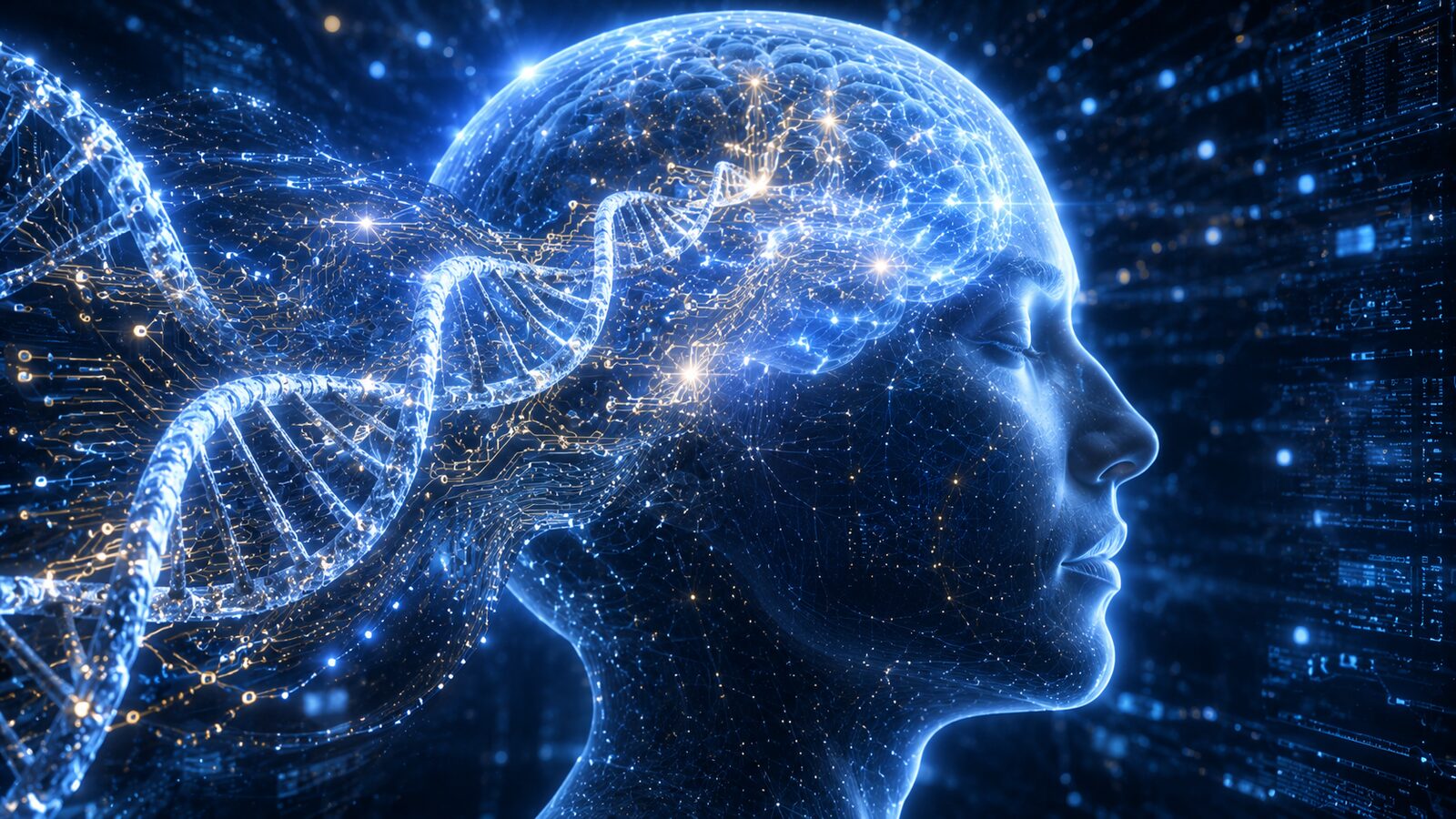
The book pushes the concept past disease entirely. Among the biological upgrades the White Noise Computer would engineer for an expanding humanity, it lists "adaptive physiology, environmental immunity, enhanced perception" — bodies tuned, automatically and reversibly, to thrive in any ecosystem or dimensional context the framework's settlers might enter.
In that reading, W.N. Immunity is less a vaccine than a passport: the biological precondition for the OSTSS era of space settlement, where the environments waiting for humanity have never hosted human life.
A defense that operates below the threshold of awareness demands trust at a depth no medicine has ever asked for. Who defines the "healthy baseline" a guardian swarm enforces? The book's answer runs through all its health chapters: medical sovereignty — the individual's inviolable authority over their own biology — plus ethical action protocols binding every autonomous intervention, and full transparency of the system's decisions. W.N. Immunity is envisioned as a shield each person holds, never one held over them. Without that distinction, the book concedes, the same architecture would be something else entirely.