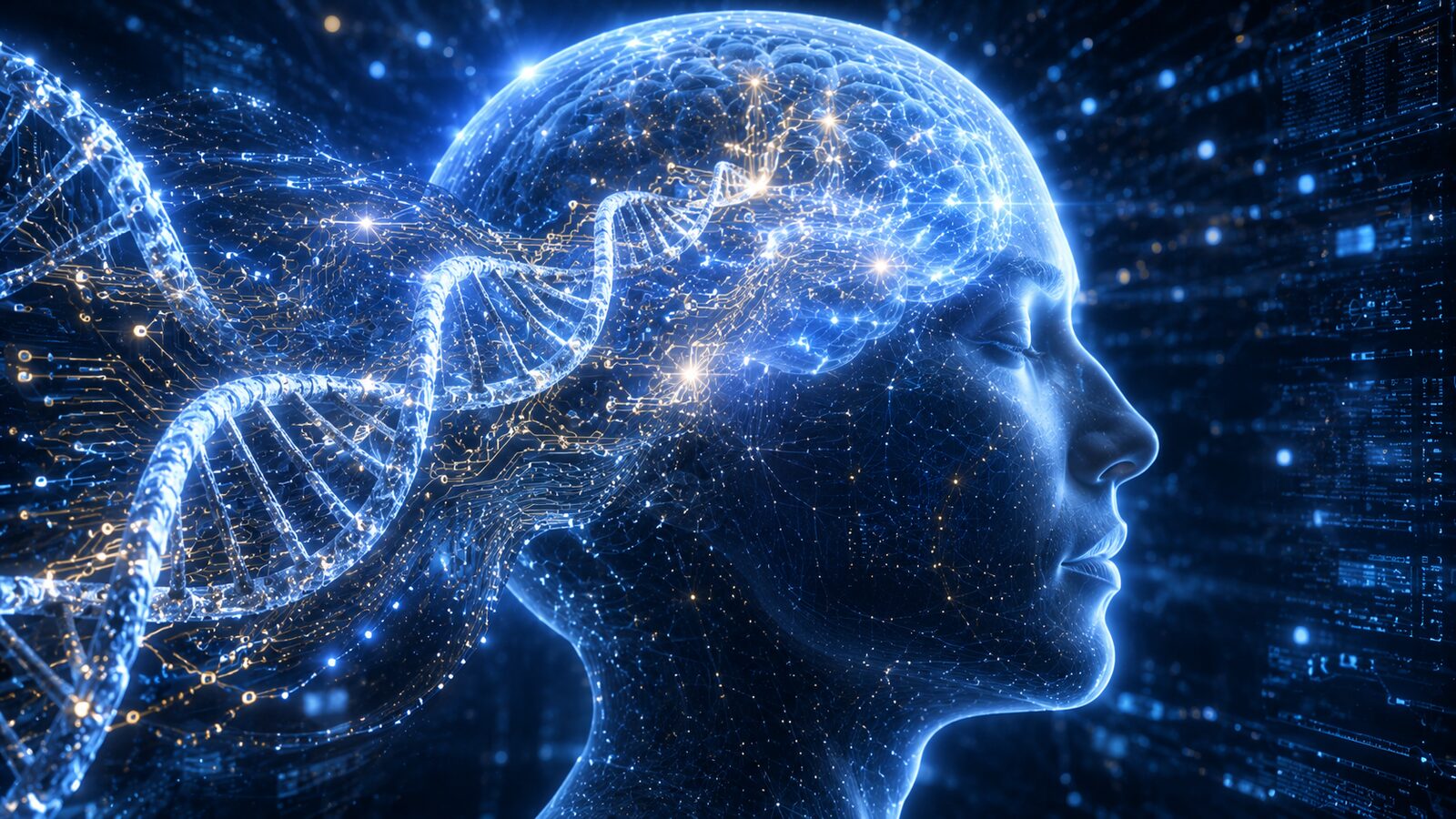
The book's furthest medical claim: that aging is an engineering defect, death an unforced error — and that lifespan could be governed by intent, not entropy.
Of all the propositions in White Noise Totality, none is stated with less hedging than this one: in the mature framework, "the subject becomes biologically immortal, as each subatomic component of their body is continuously monitored, repaired, and regenerated. Aging, cellular degradation, and genetic mutation are eliminated, replaced by a dynamic state of perpetual optimal function."
The reasoning is characteristic of the book. Aging, it argues, is not a mystical sentence but accumulated damage — mutation, misfolding, entropic drift — at scales no surgeon can reach. The Digital Medical System already envisions molecular monitoring and repair; immortality technology is simply that loop run perfectly and forever. Nanobot swarms would maintain "structural and informational coherence at the smallest scales," locking the body into what the book calls "a regenerative, error-correcting biological-quantum equilibrium." When repair is total and continuous, nothing is ever permanently broken; when nothing is permanently broken, nothing dies.
The product constellation names the program plainly — W.N. Immortality Tech: "quantum cellular repair, temporal disease reversal, optional death." That last phrase carries the book's whole position. Immortality is not imposed; mortality becomes elective. "Death becomes a reversible or opt-out phenomenon," and the choice belongs, permanently, to the individual.
Continuous regeneration of every biological structure — "cellular and tissue rejuvenation: every biological structure can be repaired or regrown" — so damage never accumulates faster than it is reversed.
The book's Omega Human Genome concept: a genetic architecture with "every gene optimized for resilience, regeneration, and perfect function," theoretically conferring immunity to aging itself and to hereditary disease.
Topological chipping would maintain a "quantum-invariant personal blueprint" — an informational copy of the self precise enough that, in the book's most extreme passage, "emergency self-reconstruction is possible even after complete destruction."
"Memory continuity across bodies and realities: consciousness remains intact even as physical forms are altered or upgraded" — identity preserved as information, independent of any one arrangement of matter.
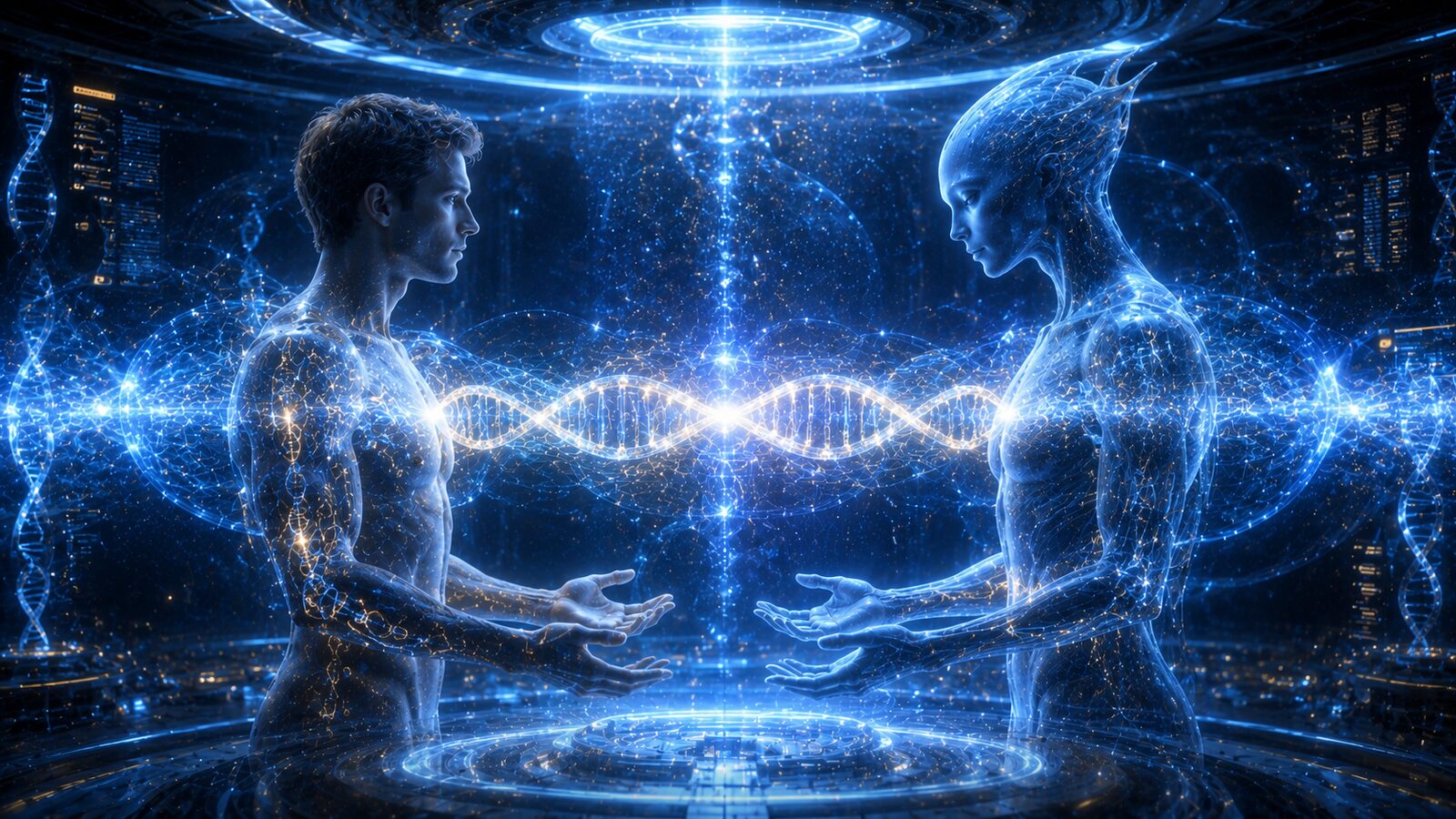
What the book describes is not life extension in the actuarial sense — a few more years appended to the same decline — but a change of state: "individuals will exist in a perpetual state of health equilibrium, automatically modulated by nanomedical systems," with lifespan "no longer measured in years but in epochs and cosmic cycles."
The framework treats W.N. Immunity as the shield and immortality technology as the engine: one prevents insult, the other repairs everything the shield was never designed to stop — including time.
"Lifespan is no longer tethered to time-based decay; it is governed by intent, not entropy. Death becomes a reversible or opt-out phenomenon."
The Digital Medical System would first eliminate disease as a cause of death — prevention and molecular repair closing every pathway that pathology now takes.
Regenerative protocols would then run backward against accumulated damage — the "age reversal" and "temporal disease reversal" of the Project Utopia healthcare pillar.
Continuous subatomic maintenance would hold the body at its optimum indefinitely — the "immortality initialization" the book describes as a stable, error-correcting equilibrium.
Finally, consciousness backup and the quantum blueprint would decouple identity from any single body — survival, in the framework, of even catastrophic loss.
The book is most interesting where it follows the consequences. A society in which death is optional, it argues, "evolves beyond mortality-based psychology, politics, and culture" — beyond inheritance, beyond succession, beyond the scarcity of time that quietly prices everything we do. Marriage, ambition, risk, memory: all of it renegotiated against an open-ended horizon. The OSTSS settlements of the book's later parts assume this condition; their Project Utopia charter lists "disease, aging, and death conquered" as one engineering pillar among several, as casually as a budget line.
And yet the book does not flinch from the hard questions it raises. Who chooses, and who is pressured to choose? What does consent mean across a thousand-year life? Does a person whose every particle is curated remain the author of themselves? These questions are not footnotes to the framework — in the book's telling, they are the real engineering problem, harder than the nanobots.