
A theoretical health architecture in which medicine stops being an event and becomes an environment — continuous, molecular, and quietly everywhere.
Every medical system humanity has ever built shares one structural flaw: it begins after something has gone wrong. The White Noise Digital Medical System — the D.M.S., as White Noise Totality names it — is the book's answer to that flaw. In its framework, the entire body would be monitored continuously at molecular resolution, every physiological event evaluated in real time, and every deviation corrected before it could ever become a disease.
The instruments of this vision are the same ones that run through the whole White Noise ecosystem. Swarms of neurological and somatic nanobots — envisioned as constructs between one and one hundred nanometers, small enough to cross the blood–brain barrier without disruption or immune response — would act as hyper-local diagnostic units, capturing health data at the molecular and atomic scale. The White Noise Computer would evaluate that torrent of signals holistically, and a topological chipping matrix would keep an individual's physiological state synchronized and recoverable at all times.
The book describes the result as "a continuously active, omniversal health lattice capable of real-time biointelligence, quantum diagnostics, and multiverse-level care delivery." Stripped of its cosmic register, the core claim is simple and radical: healthcare would shift from hospital-centric to omnipresent — personalized, predictive, preventive, and sovereign — and indefinite health would become the baseline state of a human life rather than its lucky exception.
In the book's framework, treatment would be synthesized in real time from an individual's genomic, epigenetic, psychological, and environmental data — remapping DNA, restoring epigenetic health, re-optimizing protein synthesis. No average patients; no average doses.
Probabilistic simulation across vast solution spaces would identify health threats before they manifest — environmental, pathogenic, traumatic, or systemic — so that intervention precedes symptom by design.
Nanobot swarms, governed by strict ethical action protocols, would perform micro-interventions on demand: repairing tissue, neutralizing toxins, recalibrating hormonal balances, halting degenerative processes at the first molecular signature.
The book is insistent on this point: individuals would hold autonomous control over their own health data and care, aided by AI medical companions — "no entity can deny another access to life, wellness, or health autonomy."
The theoretical cycle the D.M.S. would run continuously, for every person, for an entire lifetime.
Embedded nanoscale sensors would stream molecular-level physiological data — cellular states, biochemical gradients, neural signals — without interrupting a single moment of ordinary life.
The White Noise Computer would simulate the body's trajectories across millions of scenarios, flagging risks long before any conventional diagnostic could detect them.
Nanobots would construct or deliver therapeutics intracellularly — bypassing, in the book's phrase, "outdated pharmaceutical delivery methods" — with molecular targeting and minimal systemic load.
Morphogenic healing programs would regrow tissue, organs, even limbs via atomically controlled synthesis, drawing on templates archived in the White Noise Library.
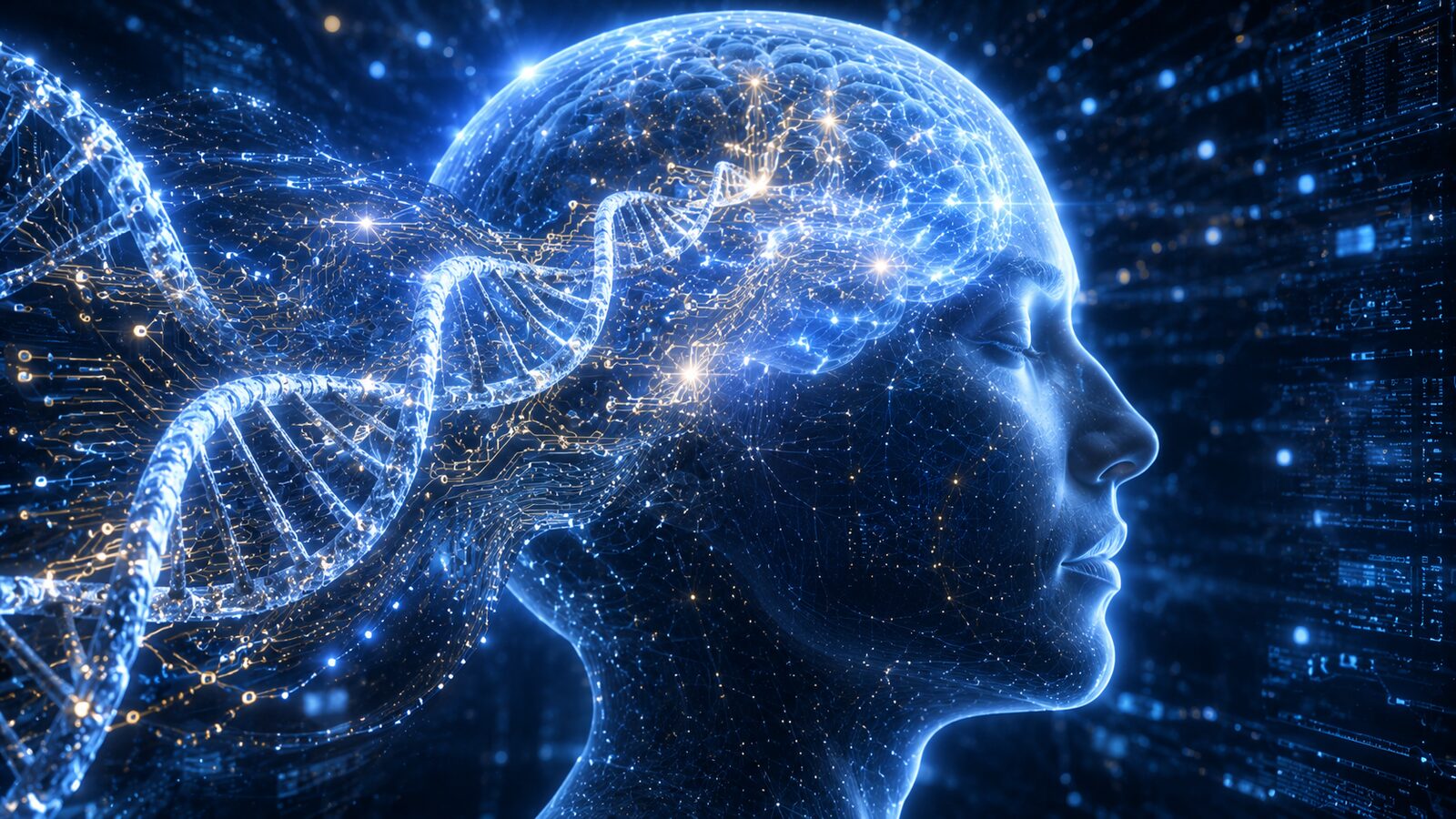
The D.M.S.'s most audacious envisioned procedure is what the book calls the neurogenomic operation: encoding a bio-organic White Noise Computer directly within the human brain. Through precise genomic editing and neuroengineering, neural pathways would be restructured to support quantum-level information processing — effectively, in the book's words, "transforming the brain into a living supercomputer."
This is where medicine and cognition merge. The same system that maintains the body would extend the mind — the bridge explored further in the Brain–Computer Interface and W.N. Superpowers frameworks.
"Global healthcare shifts from hospital-centric to omnipresent, self-governing, and post-scarcity. Diseases are no longer treated — they are prevented or never allowed to emerge."
The core enabler: effectively infinite computing power, entanglement-based processing, and omnipresent data storage to evaluate trillions of physiological events simultaneously.
The W.N. Computer →A network of interconnected, self-replicating chips maintaining persistent synchronization of identity, health state, and memory — the informational backbone of continuity of care.
The W.N. Chip →Self-replicating agents able to manipulate matter at the molecular and atomic level — the hands of the system, performing the actual repair, synthesis, and protection.
The OSTSS →White Noise Totality does not pretend a body-wide surveillance lattice is ethically neutral. A system that reads every molecule of every person raises the deepest questions of consent, cognitive liberty, and data sovereignty ever posed by medicine — which is precisely why the book pairs the D.M.S. with hard guarantees of medical sovereignty, ethical action protocols for every autonomous intervention, and distributed governance over the system itself. The framework's promise of universal bio-security is conditional on those safeguards, not separable from them. Its derived programs — Cures & Solutions, W.N. Immunity, and Immortality Technology — inherit both the power and the obligation.