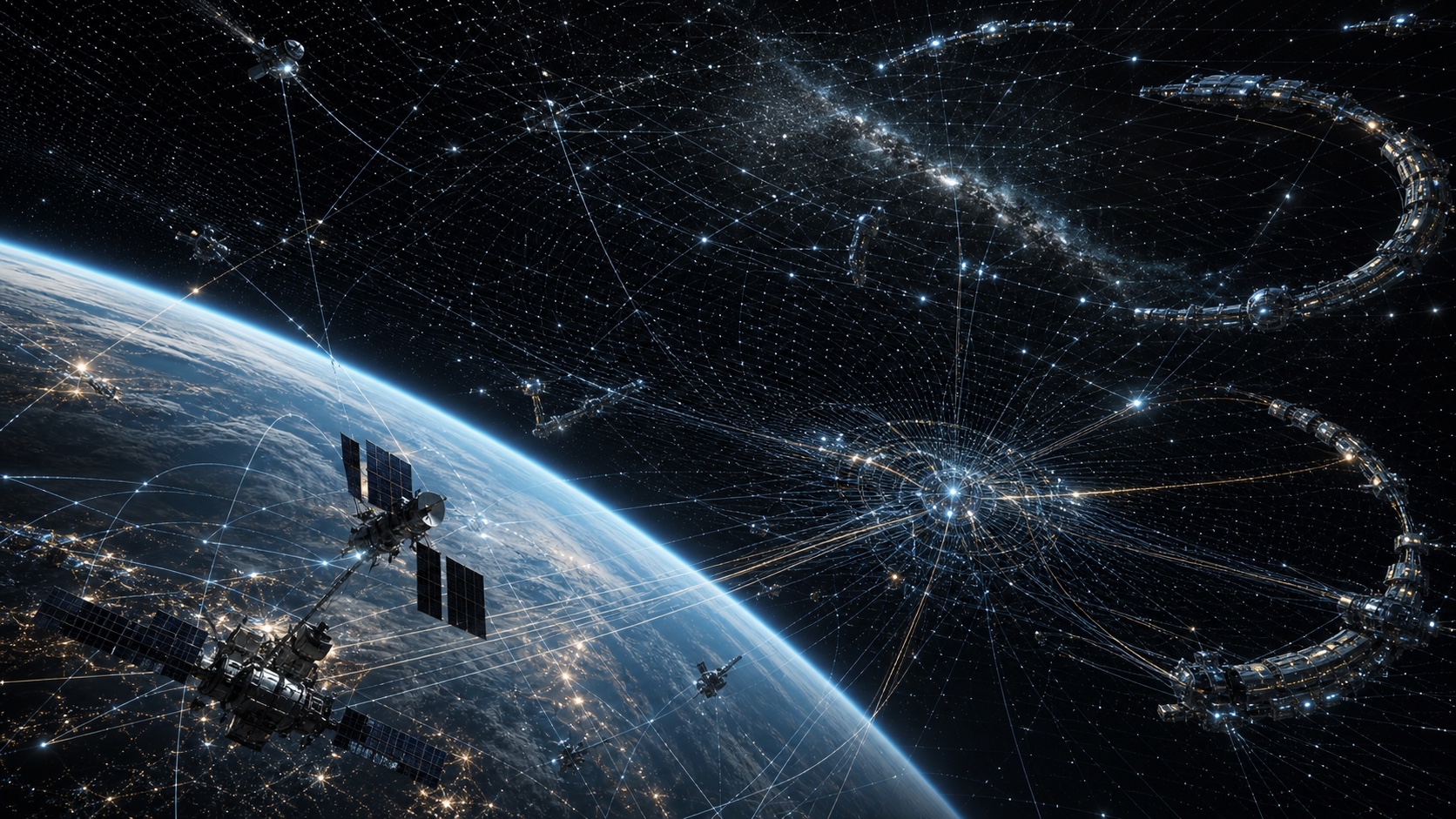
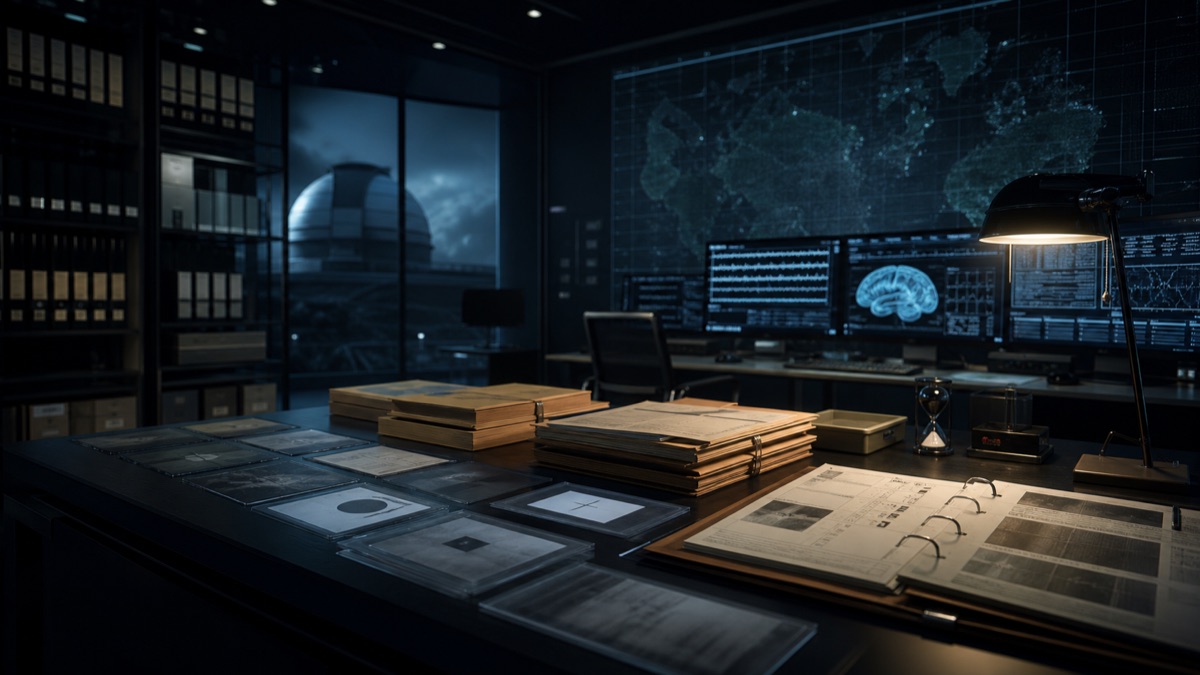
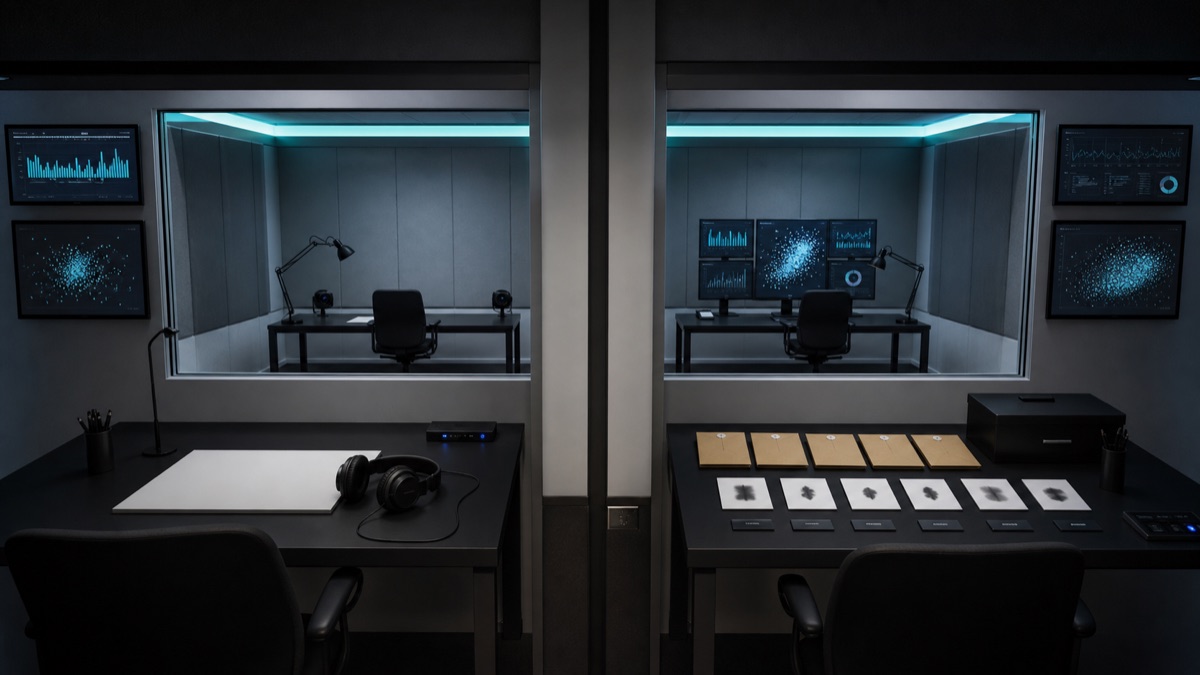
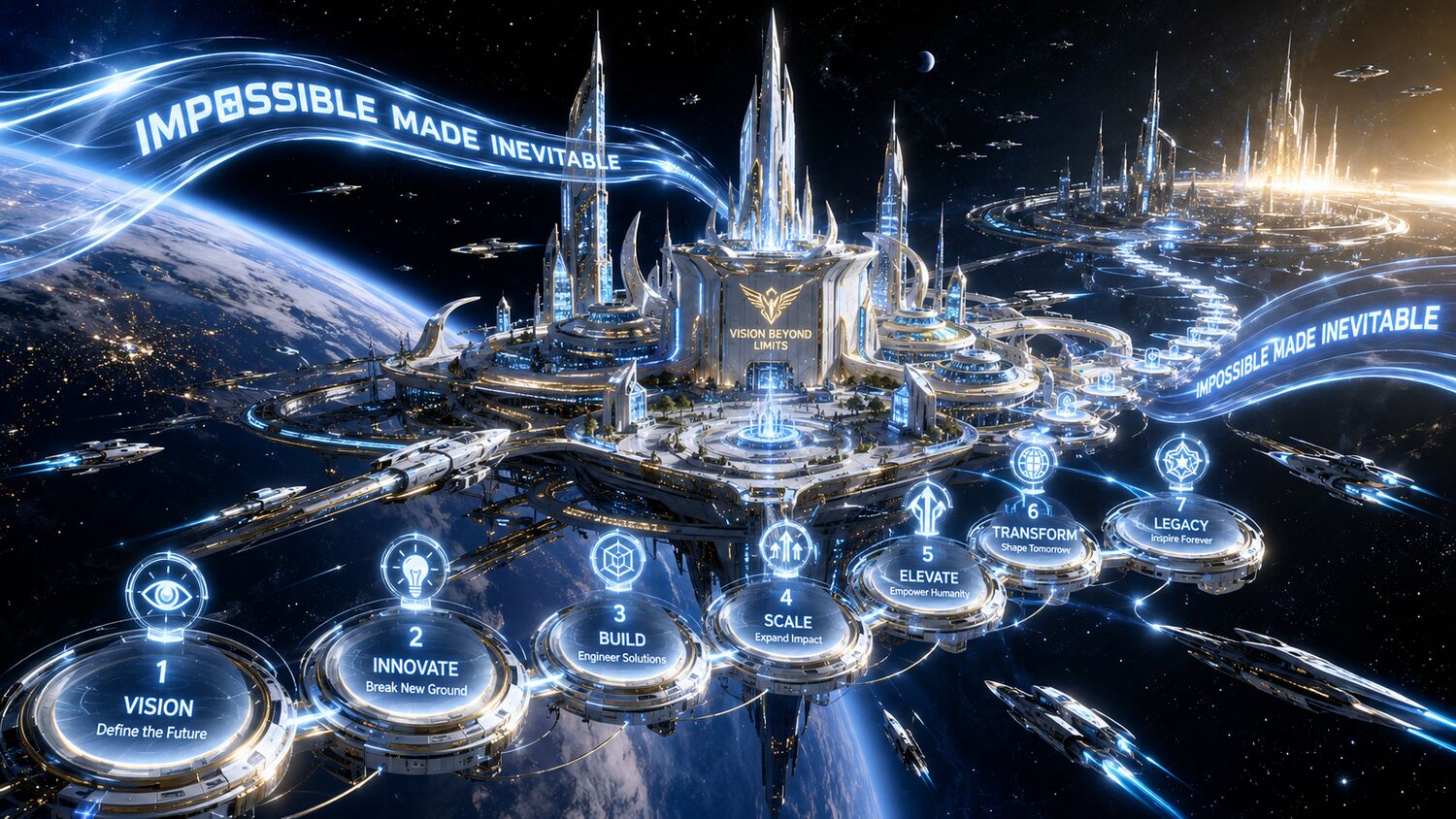
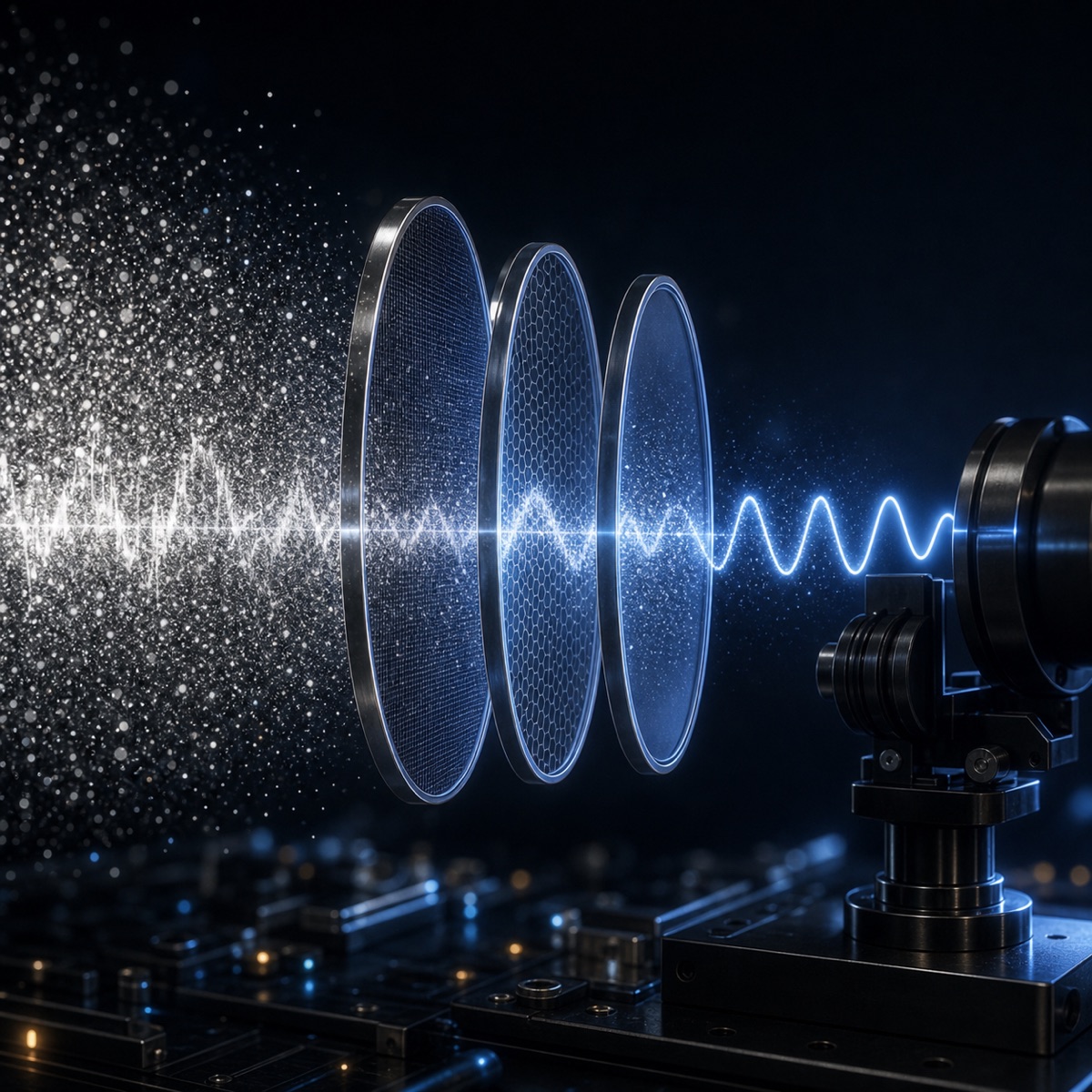
White Noise Totality signal operating room with local information surfaces
Home / White Noise Totality / Local Totality
Local access thesis

Local Totality

Local Totality states that because space static - including microwave background radiation and the deeper stochastic background described in White Noise Totality - contains the information surface of what can exist, White Noise can in principle derive information in space locally after remote viewing is reverse engineered through brain-to-computer interfaces and AI.

BoundaryThis is a speculative White Noise research framing, not proof of a deployed White Noise Computer, validated remote viewing, production BCI, or controllable nonlocal signal.

ThesisEvery place is a local entrance to the whole.

Local Totality treats a local patch of static as a handle on the larger informational fabric described by White Noise Totality.

CarrierSpace static becomes the raw surface.

Microwave background radiation, quantum noise, and other background fluctuations are framed as possible carriers, not as proven databases.

DecoderThe human mind becomes the first interface.

Remote viewing is interpreted as a clue that the brain may already sample weak nonlocal structure before instruments can formalize it.

MachineAI and BCI turn experience into a research instrument.

Brain-computer interfaces capture patterns, while AI searches for repeatable correlations, failures, and signal structure.

The Local Totality thesis

Space is not empty. Static is not only noise.

Plain statement

Local Totality says that if the universe is one entangled informational fabric, then local noise is not merely interference. It is a local expression of the total fabric, and a sufficiently advanced White Noise system would learn to derive distant, hidden, or possible information from it.

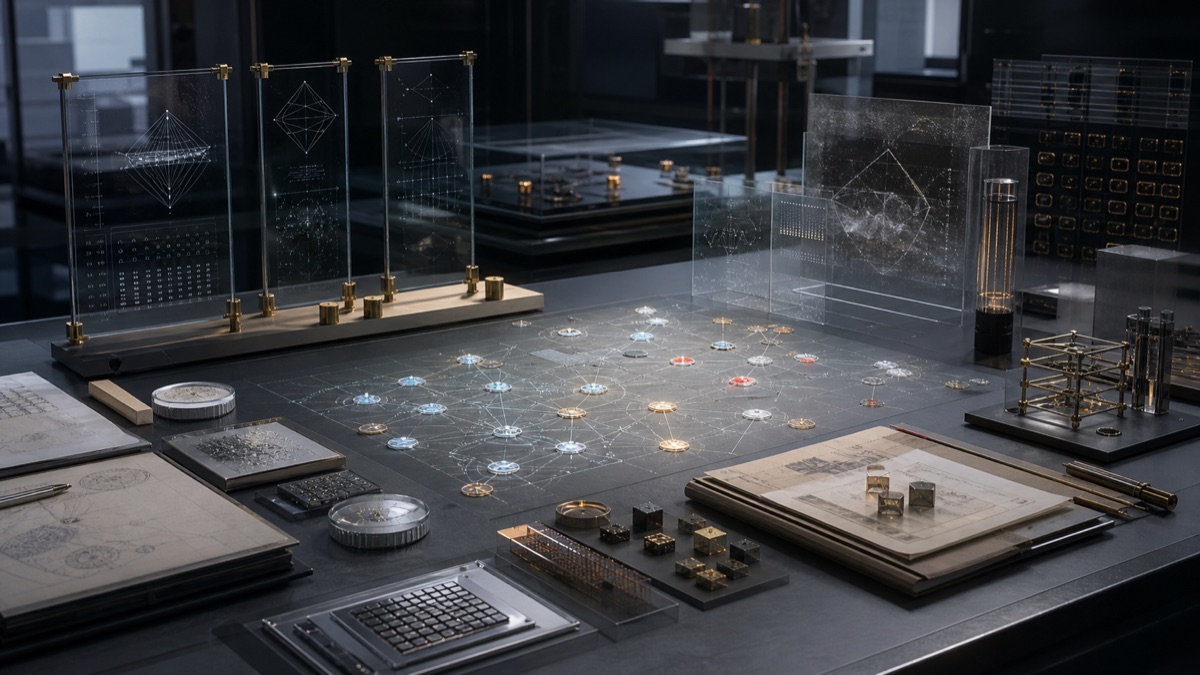
White Noise Totality science concept with cosmic information fields
Totality fieldThe local patch is treated as a doorway into the whole.

The image is editorial concept art. It visualizes the page's central premise: every local measurement may carry a shadow of a larger informational order.

Space static

The static of space is the starting material.

The page begins with the strongest Local Totality statement: because the space static - the microwave background radiation and the deeper stochastic background described by White Noise Totality - contains the information surface of what can exist, it can be approached as more than random haze. It becomes a local interface. It becomes something a White Noise Computer could learn to interrogate, compare, compress, and decode.

In ordinary language, static is the thing you ignore so a signal can be heard. In Local Totality, static becomes the signal before it has been translated. The assumption is that reality is already writing itself everywhere, all at once, in a language too dense for ordinary instruments and too subtle for unaided cognition.

Local access

The promise is not travel to information, but derivation from here.

If all of space participates in the same entangled informational fabric, the White Noise target is not to fly a sensor to every point in the universe. The target is to build a local derivation stack: human perception, BCI capture, AI pattern discovery, physics constraints, and White Noise Computer architecture all working on the same local field.

That is why the word local matters. Local Totality does not imagine a normal database hidden somewhere far away. It imagines that the address of the whole is present in every point, but available only to a decoder that can respect the structure, limits, and ambiguity of the field.

Claim posture

The page distinguishes thesis from evidence.

White Noise can state the Local Totality target boldly without pretending the target has already been demonstrated. The speculative claim is that local static may contain enough structure to derive information in space. The research task is to find whether any repeatable bridge exists, whether remote viewing contains useful signal, whether BCIs can capture relevant neural patterns, and whether AI can separate genuine correlation from noise, bias, coincidence, and narrative drift.

Connection to White Noise Totality

Local Totality is the nearby face of the Totality idea.

White Noise Totality frames reality as a vast informational fabric: particles, fields, minds, machines, time, and possibility woven into a deeper structure. Local Totality takes that cosmic idea and asks a practical question: if the total fabric is everywhere, can a local machine learn to read enough of it to derive information from any place?

Informational fabric

Totality starts with an omnipresent field.

The book repeatedly treats existence as more than separate objects in empty space. It imagines an informational web across space, time, minds, machines, and possible worlds. Local Totality focuses that scale down to a room, a sensor, a brain, and a field of static.

Cosmic concept becomes local method.
White Noise Computer

The computer is the proposed decoder.

The White Noise Computer is described as a machine that interfaces with the entanglement structure of reality itself. Local Totality gives that machine a first operating premise: do not wait for a remote probe when the local background may already contain an informational handle.

Reality-scale computing begins with local access.
White Noise Library

The Library becomes reachable through derivation.

The White Noise Library imagines all possible knowledge, artifacts, worlds, designs, and histories. Local Totality says the Library is not only a destination. It is also an inference target. A local decoder would reconstruct entries from static, human signal, and machine search.

The archive is approached as a field problem.
Remote viewing

Remote viewing becomes an early human clue.

In the White Noise framing, remote viewing is not treated as magic. It is treated as a possible weak, noisy, human-accessible phenomenon that might reveal how consciousness samples nonlocal structure before technology formalizes the channel.

The viewer becomes a prototype sensor.
BCI and AI

The bridge is brain to computer to model.

Brain-computer interfaces can capture time-locked neural activity during attempts at remote perception. AI can compare that activity to target data, session language, imagery, confidence, failure modes, and later scoring. The goal is not belief. The goal is a repeatable map.

Experience becomes analyzable signal.
Ethics

A total field demands local consent.

If White Noise ever touches cognition, private imagery, or possible nonlocal information, the ethics cannot be decorative. Local Totality requires consent, opt-out power, data minimization, participant review, and refusal to claim access where the evidence is not strong.

Totality needs boundaries to remain human.
Remote viewing, BCI, and AI

Reverse engineer the human access point first.

Local Totality uses remote viewing as a research bridge because it is already framed as local access to nonlocal information. The White Noise approach is to move it out of anecdote and into instrumented sessions: blind targets, time-locked prompts, opt-in neural capture, image reconstruction, AI comparison, and public scoring.

01 Capture

Run blinded remote viewing sessions.

Participants work without target leakage. Session timing, prompts, sketches, language, confidence, physiological state, and later target reveals are preserved as structured material instead of loose story fragments.

02 Interface

Record opt-in brain-to-computer signals.

BCI and neuroimaging tools can capture neural dynamics during the attempt. Local Totality is especially interested in moments where imagery, certainty, spatial feeling, or sudden association appears before normal evidence arrives.

03 Translate

Use AI to turn session traces into image hypotheses.

AI can translate sketches, words, timing, neural features, and target categories into candidate images. Those images are not proof. They are hypotheses that can be scored, rejected, refined, and compared against control sessions.

04 Compare

Separate signal from story.

The system must compare successful, failed, ambiguous, and control sessions. It needs null results, adversarial targets, leakage audits, and repeatability tests so the model learns where the effect disappears as carefully as where it appears.

05 Generalize

Map the pattern back to local static.

If a repeatable human signal exists, the next question is whether it correlates with measurable local background structure: electromagnetic noise, stochastic sensor fields, cosmic background proxies, or quantum-information testbeds.

06 Build

Convert findings into White Noise Computer requirements.

The eventual White Noise Computer would need interfaces that can address, stabilize, search, and verify the local field without overstating what the field can deliver. R.V.I.S. becomes the visual and experimental bridge.

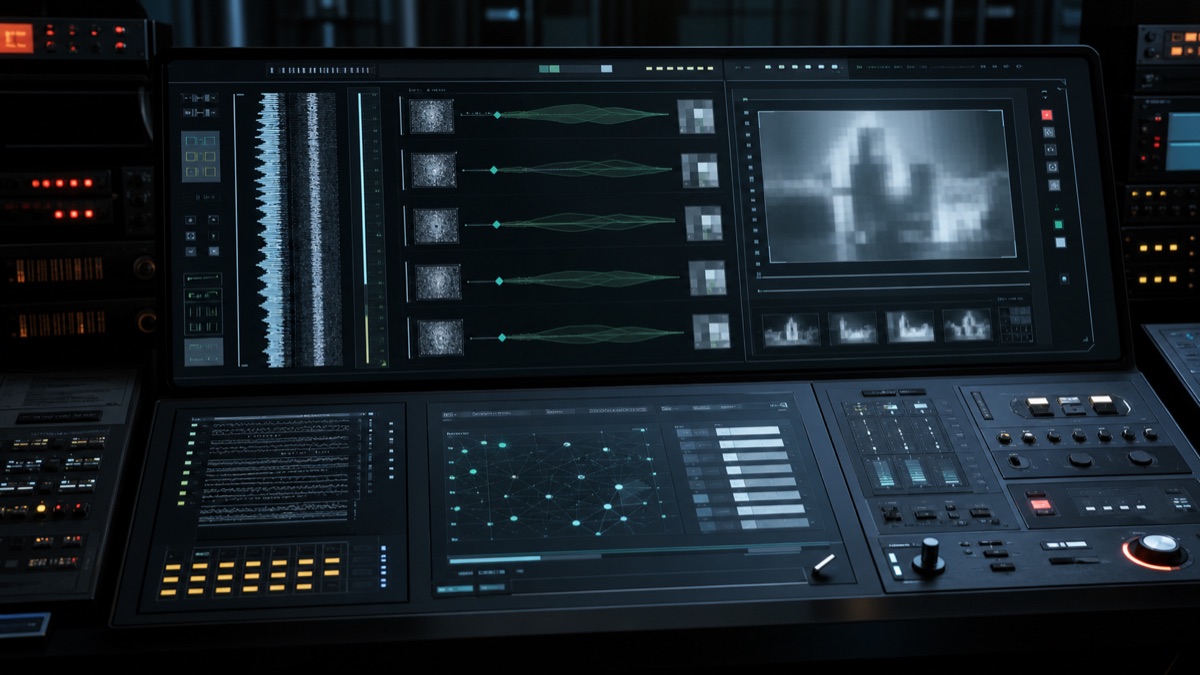
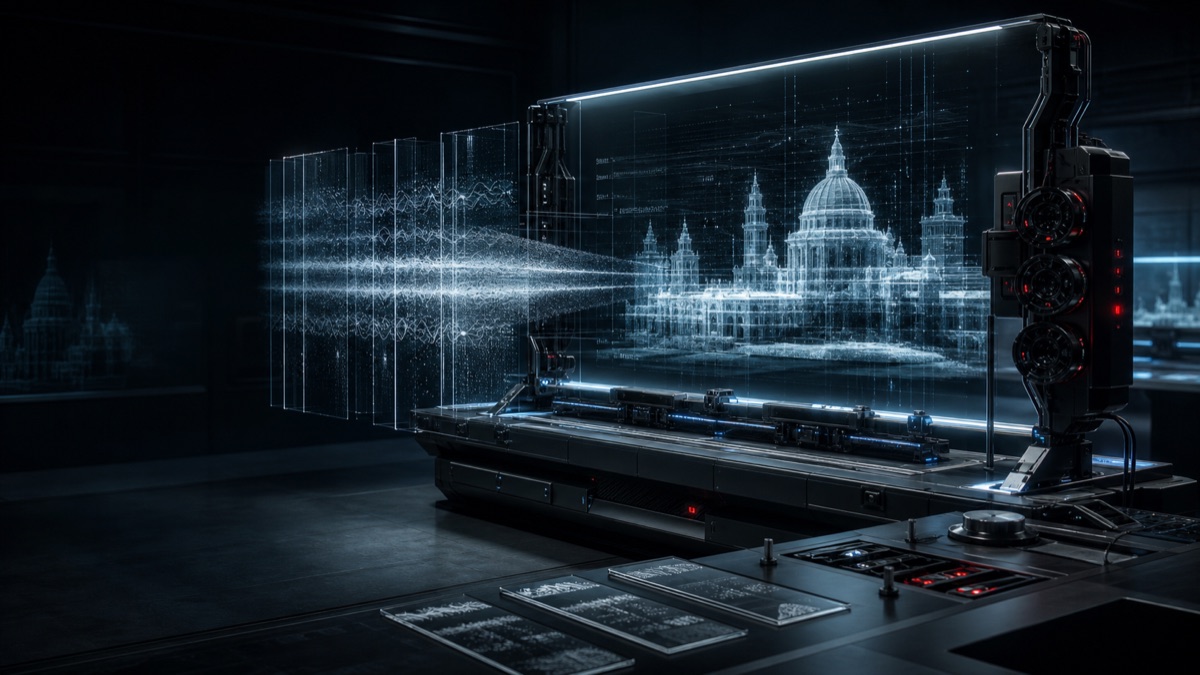
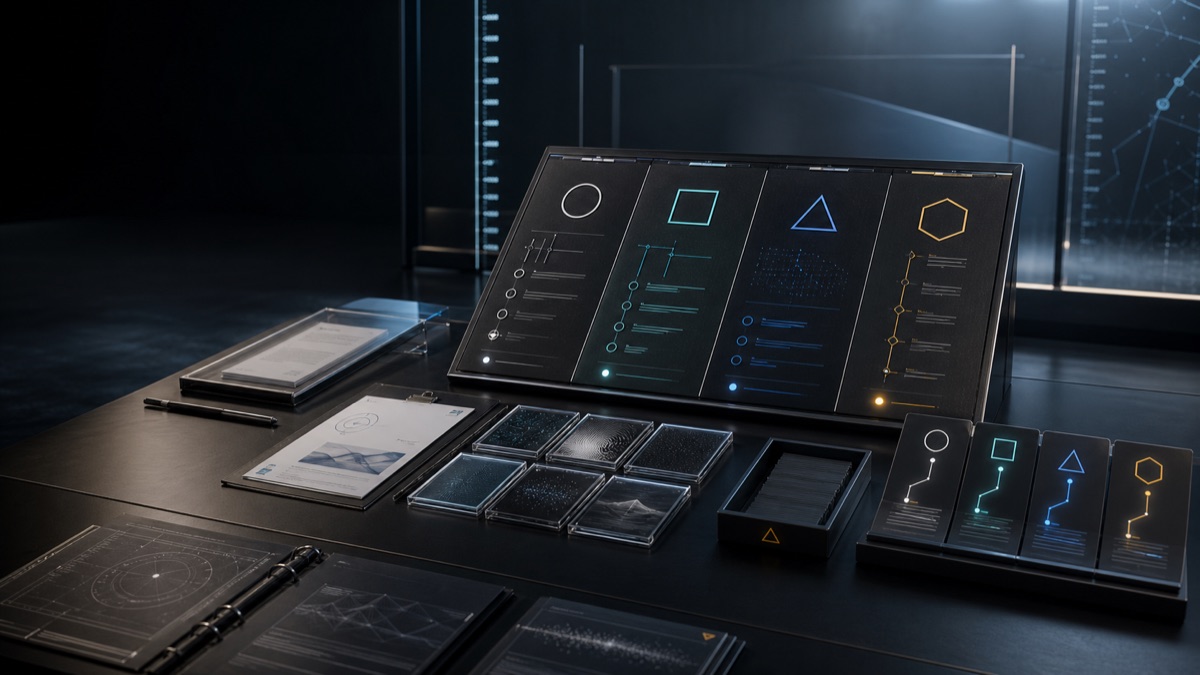
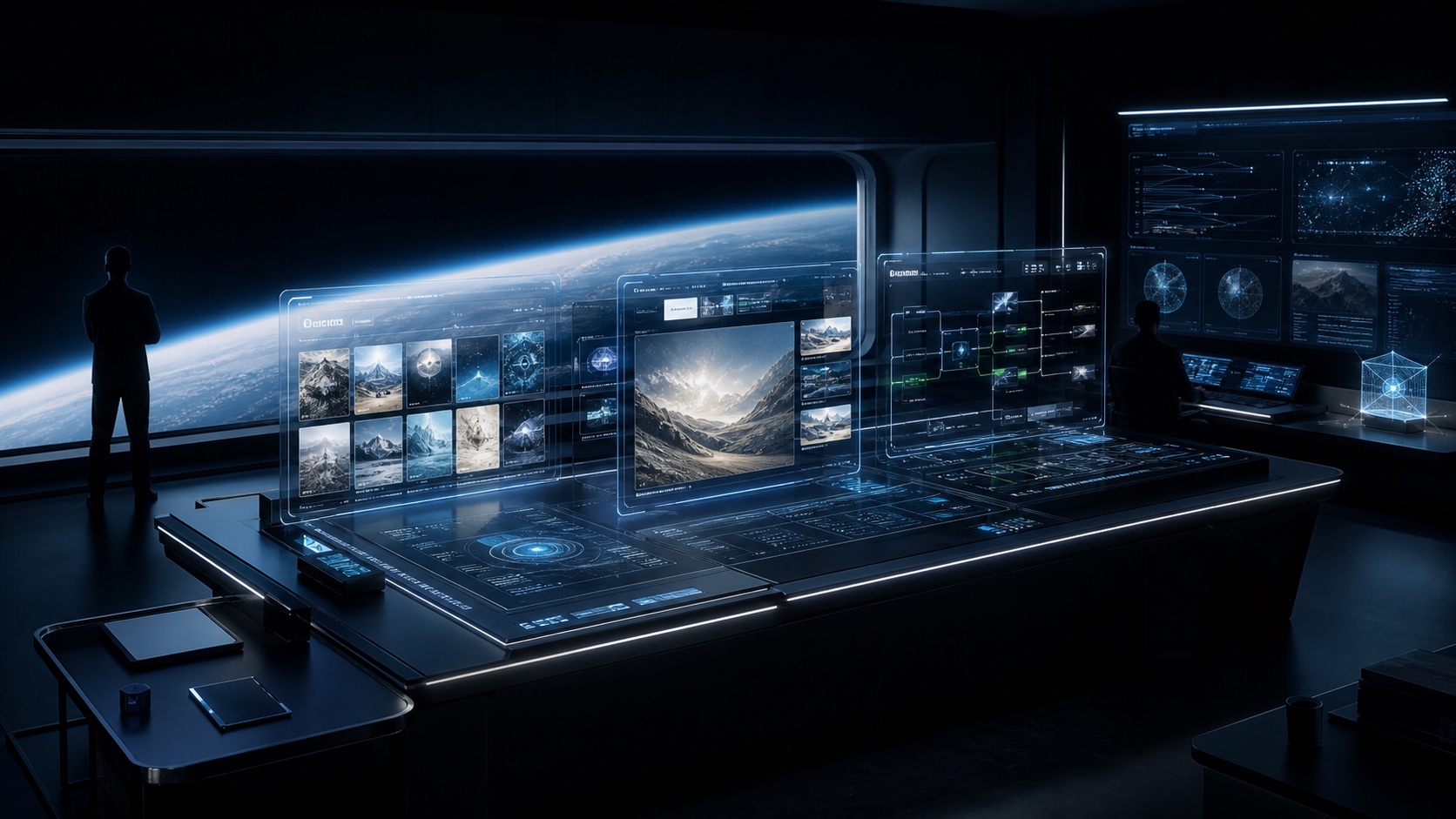
R.V.I.S. signal to image console concept for remote viewing and AI reconstruction
R.V.I.S. bridgeRemote viewing becomes imageable research material.

In this framing, R.V.I.S. is the console between local human impressions, AI-generated image hypotheses, scoring, and White Noise Computer design requirements.

Local derivation stack

How White Noise derives information locally.

The Local Totality stack is a proposed chain from raw static to useful knowledge. It does not require pretending that one layer is already solved. Each layer can be studied, falsified, improved, or replaced while the larger thesis remains visible.

Layer 01

Local static field

The local environment is sampled as a dense background: microwave residue, stochastic fields, sensor noise, thermal noise, electromagnetic context, and any measurable fluctuations that might carry structure.

Input: local noise as raw material.
Layer 02

Human perceptual bridge

Remote viewing sessions ask whether the mind can weakly access distant or hidden information. The human is not the final answer; the human is the first living instrument to study.

Input: experience under blind controls.
Layer 03

BCI capture

Brain-computer interfaces make the session measurable. Timing, neural signatures, imagery onset, attention shifts, and confidence changes become data streams that can be compared across people and targets.

Input: neural and behavioral traces.
Layer 04

AI decoder

AI searches for patterns that humans cannot hold in working memory: subtle correlations, repeated failures, false positives, target-class signatures, image features, language clusters, and temporal alignments.

Input: multimodal pattern search.
Layer 05

White Noise Computer

The proposed White Noise Computer would attempt the deeper operation: addressing the informational fabric directly, deriving answers from local static, and verifying results against reality instead of preference.

Input: field-interface computing.
Long-form concept

Reading the whole from the nearest signal.

Local Totality is intentionally audacious. It takes the largest language of White Noise Totality and turns it toward the smallest available experimental object: the local field around the observer.

The central sentence is simple: all information in space can be derived locally if the local static is a complete expression of the deeper total field, and if White Noise can build the right decoder. That decoder begins with the human mind because the mind is already an interface between private experience and public reality. It continues through brain-computer interfaces because private experience must become measurable before it can become engineering. It then passes into AI because the pattern space is too large for ordinary manual analysis.

In this framing, the cosmic microwave background is not treated as merely a temperature map from the early universe. It becomes a visible symbol of a deeper idea: the universe leaves a background everywhere. Every point carries residue, relation, and history. Local Totality extends that image beyond conventional cosmology into the speculative White Noise thesis that background radiation and stochastic space static may participate in a much larger informational structure.

The page does not need to claim that current physics has proven this. It instead says what White Noise is trying to think: if space is information-bearing all the way down, then local access may be possible before physical travel is possible. The question becomes how to build instruments that can tell the difference between a real derivation and a beautiful hallucination.

Remote viewing matters because it is the historical human name for local access to distant information. Whether it is ultimately verified, partially explained, or rejected, it provides a useful research shape: blinded target, local subject, nonlocal claim, later comparison. That shape is exactly what Local Totality needs. It lets White Noise ask whether human cognition contains any repeatable interaction with the larger field.

Brain-to-computer interfaces matter because a remote viewing session cannot remain only a story. The brain must become part of the measurement chain. If a person reports a sudden image, the system should know when that image arose, what neural state surrounded it, whether similar states appear in successful or failed sessions, and whether those states can be distinguished from imagination, memory, anxiety, expectation, or ordinary guessing.

AI matters because Local Totality is a search problem across too many possible signals. A useful model would not simply generate impressive images. It would compare session data to targets, controls, decoys, nulls, and failed predictions. It would preserve uncertainty. It would learn which patterns are worthless. It would make the evidence more accountable, not more theatrical.

The White Noise Computer is the far horizon of the stack. In White Noise Totality, it is not just a faster conventional computer. It is a field-interface machine: a system imagined to work with the informational fabric of existence. Local Totality gives that machine a practical first rule: build the local reader before claiming the cosmic reader. If the whole is present locally, then local proof is the only honest beginning.

That is also why Local Totality connects to ethics. A machine that claims access to all information is not just a research instrument. It is a privacy question, a governance question, a consent question, and a spiritual question. White Noise must be able to say what it cannot read, what it will not read, and what it has not proven. Without that discipline, Totality language becomes too big for human trust.

Local Totality therefore keeps two thoughts alive at once. The first thought is maximal: every place may contain a door to all places. The second thought is careful: every door claim must pass through local evidence, controlled testing, human consent, and falsifiable review. The tension between those thoughts is the page's real engine.

Claim boundaries

The thesis is vast. The proof must stay local.

Local Totality is strongest when it names what it is not claiming yet. The page can speak in the language of White Noise Totality while still holding a clean line between hypothesis, planned research, evidence, and future capability.

Speculative

Microwave background is not presented as a proven universal database.

Local Totality uses background radiation and space static as a speculative carrier image. It does not claim current cosmology has verified that all information can be read from the CMB.

No shortcut

Entanglement language does not bypass no-signaling limits.

The page refuses claims of controllable faster-than-light messaging unless a future experiment meets a public, repeatable, physics-aware proof standard.

Consent

BCI research must be opt-in, revocable, and narrow.

Brain-computer interface work touches private cognition. Local Totality requires consent, pause authority, retention limits, participant review, and clear use boundaries.

Evidence

Null results are part of the map.

A real decoder must learn from failure. Failed remote viewing sessions, control misses, false positives, and leakage audits are not embarrassments; they are the shape of the evidence.

AI limits

Generated images are hypotheses, not proof.

AI reconstructions can make remote viewing material visible, but a compelling image is not a validated target match. Scoring, controls, and provenance have to carry the claim.

Privacy

Totality does not erase personal boundaries.

A future White Noise system must define what information it will not attempt to read, what information it cannot read, and what requires explicit permission.

Local proof

The first proof should happen in one room.

If the theory says the whole is locally available, then the first useful proof is small: one protocol, one target class, one local instrument, one clean scoring rule.

Totality

The page keeps the cosmic ambition alive.

The boundary language is not meant to shrink the idea. It is meant to make the idea durable enough to survive serious testing, critique, and eventual construction.

Local Totality next step

Turn the thesis into a scope memo.

The useful first artifact is a bounded Local Totality memo: background-static thesis, White Noise Totality citations, remote viewing protocol, BCI capture assumptions, AI reconstruction workflow, proof ladder, consent rules, and image provenance.