
No public dependency class should be read as completed vendor review or procurement readiness.
Home / Service-Level Dependency Source Record Gate
Priority 7 source record
Vendor readiness needs service-level records.
This public gate defines the evidence White Noise must retain before dependency-class awareness can become vendor maturity, procurement readiness, service-level assurance, continuity, security, or audited dependency-control language.
Use boundary
This gate is not a vendor audit, procurement policy, SOC 2 or ISO 27001 evidence, PCI evidence, legal advice, data-processing agreement, service-level agreement, completed vendor security review, continuity proof, or audited dependency-control proof.
Visual boundary
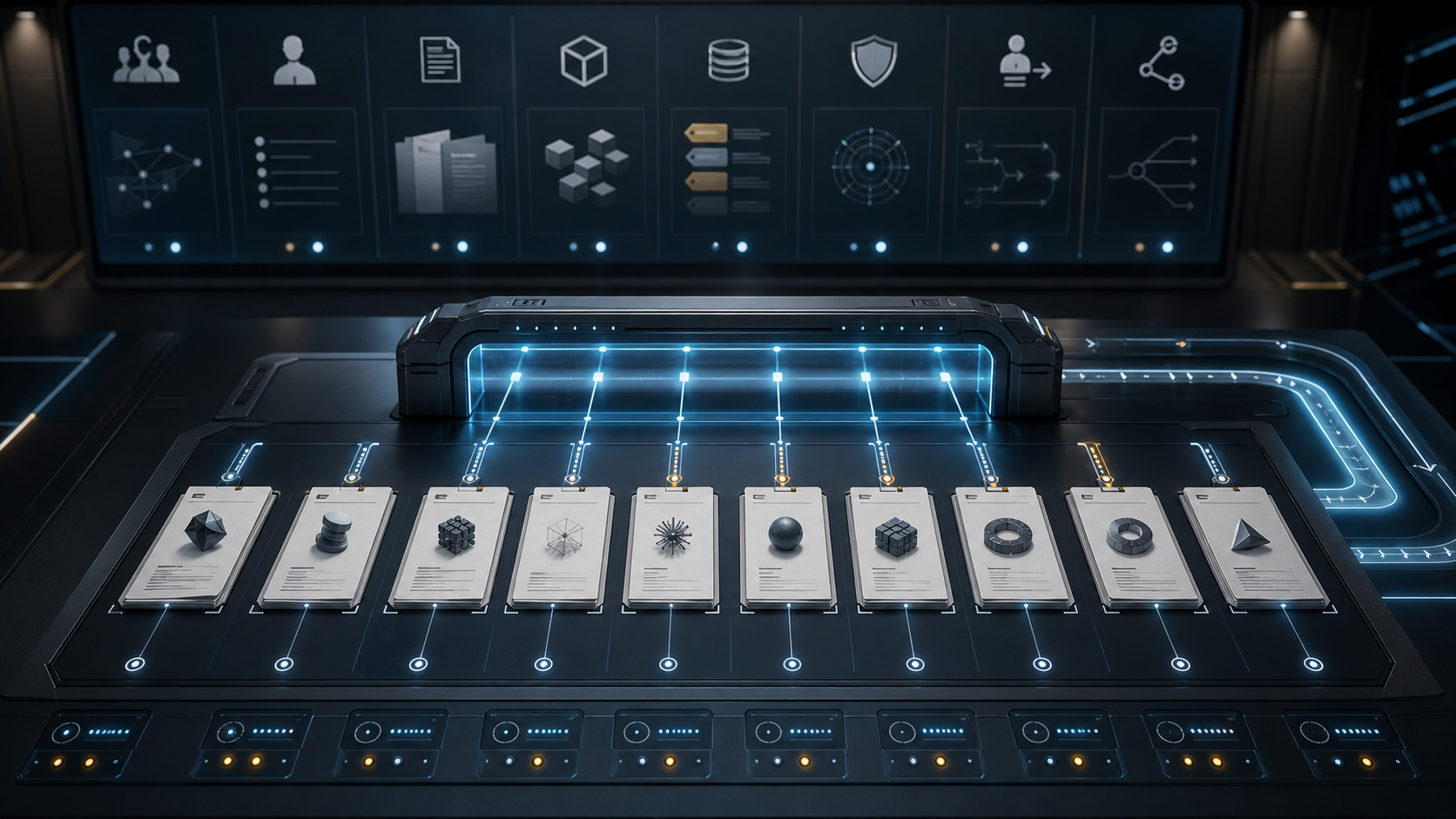
This GPT-generated image is conceptual governance art only. It is not proof of completed vendor review, procurement readiness, service-level assurance, SOC 2 or ISO evidence, PCI evidence, legal review, signed vendor terms, continuity testing, access review, security controls, production CRM, audited dependency controls, formal financing process, live dataroom, operational speculative technology, trained W.N. image model, or web-scale source ingestion. Review the image provenance record.
Evidence floor
One service record, one dependency claim boundary.
The current dependency register is class-level. This gate tells operators what must exist privately before a public summary can say anything stronger about a material service, vendor, platform, or dependency.
Private records should name the service class, owner, data class, terms source, continuity state, risk, and review trigger.
Vendor names, account IDs, endpoints, credentials, contracts, security architecture, and private terms stay out unless cleared.
A working dependency does not prove uptime, SLA, continuity, audit evidence, legal review, or enterprise vendor management.
Service identity and purpose
Retain the service or vendor privately, publish only the cleared class, and state the business purpose without implying production workflow maturity.
Data, assets, and access owner
Record data or asset classes, credential-storage rule, admin-review state, and escalation route without publishing secrets or private access details.
Terms source
Attach the terms, contract, DPA, acceptable-use, privacy, payment, AI-provider, or marketplace policy review state without implying legal acceptance.
Continuity and offboarding
Separate planned, untested, tested, unavailable, backup/export, replacement, and failure-impact states before any reliability or continuity language.
Security relevance
Name security, privacy, compliance, payment, AI, source-rights, customer-evidence, or operational risk relevance and unresolved gaps.
Claim boundary and trigger
Define the allowed public summary, blocked claim family, companion source records, reviewer role, review date, and next event trigger.
Acceptance gates
Nine gates before dependency language gets warmer.
A private service-level dependency record can support a bounded public summary only when the evidence is complete, reviewed, and explicit about what it does not prove.
Source, identity, data class
Same dated window, cleared public service class, and data or asset class alignment without exposing sensitive records.
Owner, terms, continuity
Access-owner review, terms-source boundary, and continuity/offboarding state with planned, untested, and tested states separated.
Security, claim, trigger
Security relevance without certification claims, exact public claim boundary, reviewer role, event triggers, and next review trigger.
Publish only the bounded summary.
- Dated review window, dependency class, and service purpose class.
- Data or asset class summary, owner role, terms-source review state, and continuity/offboarding state.
- Security relevance summary, unresolved gaps, next review trigger, and bounded claim boundary.
Keep private evidence private.
- No vendor names unless cleared, account IDs, endpoints, credentials, admin paths, contract terms, DPA details, or security architecture details.
- No SOC 2, ISO 27001, PCI, audit, uptime, SLA, disaster recovery, or completed vendor-review claims unless formal evidence exists.
- No production CRM, analytics, AI-provider, payment, account, publishing, Exchange, custody, marketplace, legal, or financing maturity inference.
Start with one material dependency.
Pick the service class that blocks a real counterparty decision, complete the private source record, then publish only a bounded summary if it passes this gate.