
Starter brief, materials index, proof pack, security/data baseline, dependency register, and risk register.
Home / Enterprise Procurement Readiness Boundary
Procurement boundary
Procurement is a gate, not a vibe.
This public route gives enterprise buyers and board reviewers a colder first answer: what White Noise can show now, what is not represented as ready, and which first procurement ask is appropriate before anyone infers mature enterprise controls.
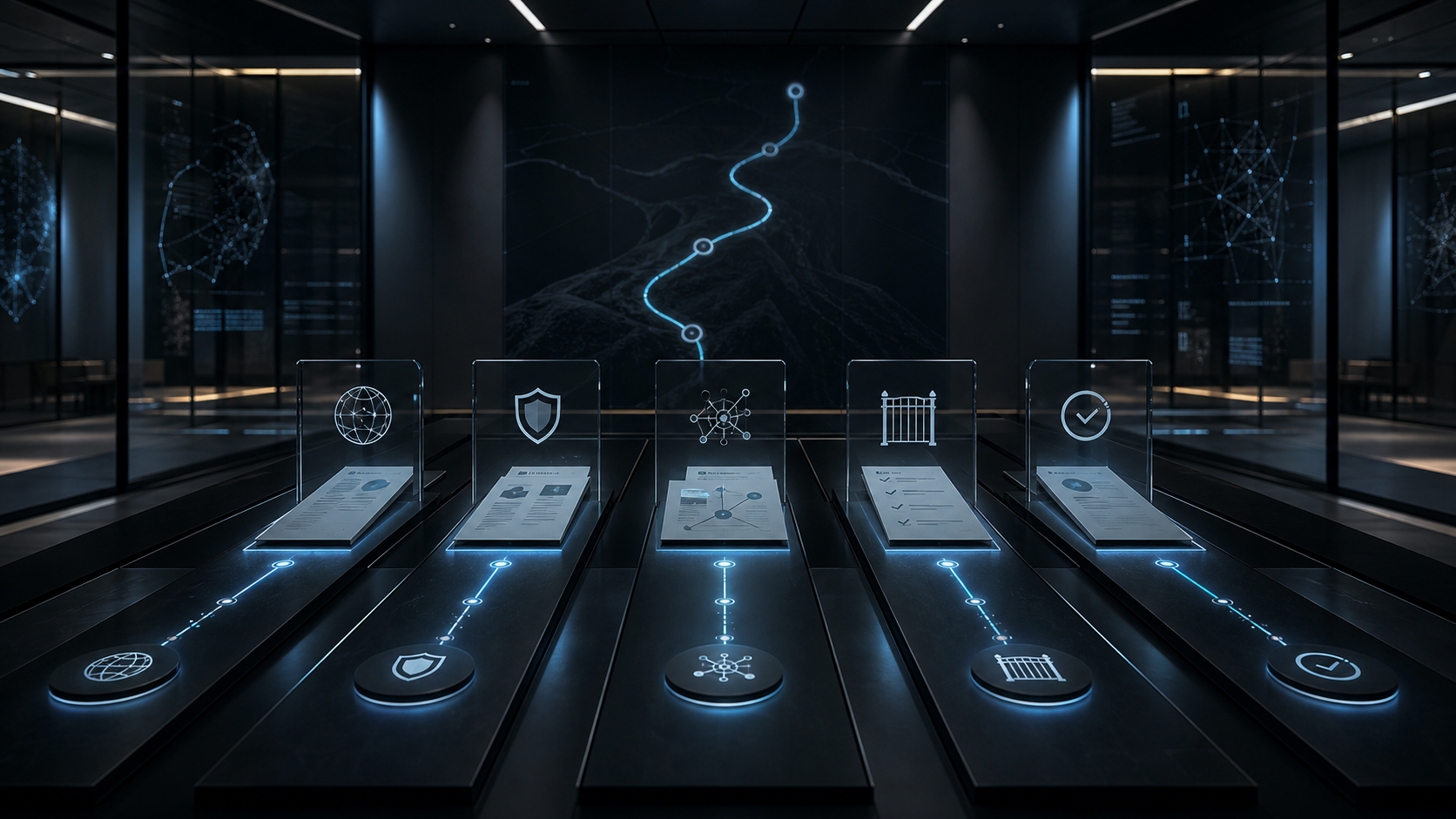
Visual boundary
The hero image is GPT-generated editorial material. It is not proof of procurement readiness, staffed procurement operations, audited controls, SOC 2 or ISO 27001 certification, legal review, vendor audit, production CRM, monitored enterprise workflow, or operational speculative technology. Review the image provenance record.
Publicly answerable now
A buyer can review the boundary before a call.
The current value is disciplined routing. White Noise can show public trust materials, current claim gates, dependency and security baselines, and a first-ask shape. That is useful, but it is not a procurement packet.
Name the buying decision and the security, data, dependency, legal, support, or source-rights concern.
The route does not imply security certification, legal review, customer proof, CRM proof, or support commitments.
Warmer language waits for source-record acceptance, owner review, and appropriate private process.
Question
What can a buyer inspect before a meeting?
Use the Enterprise Starter Brief, Public Materials Index, Proof Pack, Commercial Surface Register, Security/Data Baseline, Dependency Register, and Risk Register.
Question
Is the data posture public?
Yes, as a plain-language baseline and privacy route. It is not a security audit, compliance certification, legal opinion, or enterprise controls packet.
Question
Are dependencies visible?
Dependency classes and stronger-use gates are public. Completed vendor due diligence, procurement audit, service-level records, and security review are not implied.
Question
How does language get stronger?
Through accepted source records, decision ownership, review cadence, and risk controls. Claims should stay cold until those gates are satisfied.
Not represented as ready
Do not let procurement infer missing proof.
This page improves credibility by making absences visible. A buyer should not have to discover late that a requested artifact is not public, not accepted, or not yet created.
Not public and not implied. The baseline is not SOC 2 evidence, ISO 27001 evidence, penetration-test evidence, or access-control audit.
Not public and not implied. Dependency records name classes and gates, not completed vendor due diligence.
Not yet accepted as a public source record. Contact-routing artifacts define the evidence needed first.
Not public and not implied. Public policy and source-rights materials are not legal advice or contract-ready documents.
Not public and not implied. Any commitment requires a service-specific scope and accepted operating record.
Not public unless accepted under the customer-evidence permission standard with approved usage and review triggers.
Ask for one artifact tied to one buying decision.
A procurement-stage note should identify the decision and the risk boundary. It should not ask for an undefined dataroom or assume a mature enterprise packet exists.
We are an enterprise buyer reviewing [surface or service]. Our immediate decision is [buying decision]. The main procurement boundary is [security, data, dependency, legal, support, or source-rights concern]. Please return the first appropriate artifact: a public-surface walkthrough, scoped services path, boundary memo, or plain not-ready answer.