Name the asset before money moves.
The store should tell the reader whether they are opening the flagship source text, buying one uploaded PDF, or entering the recurring library route.
Benchmark pattern: keep the artifact in frame.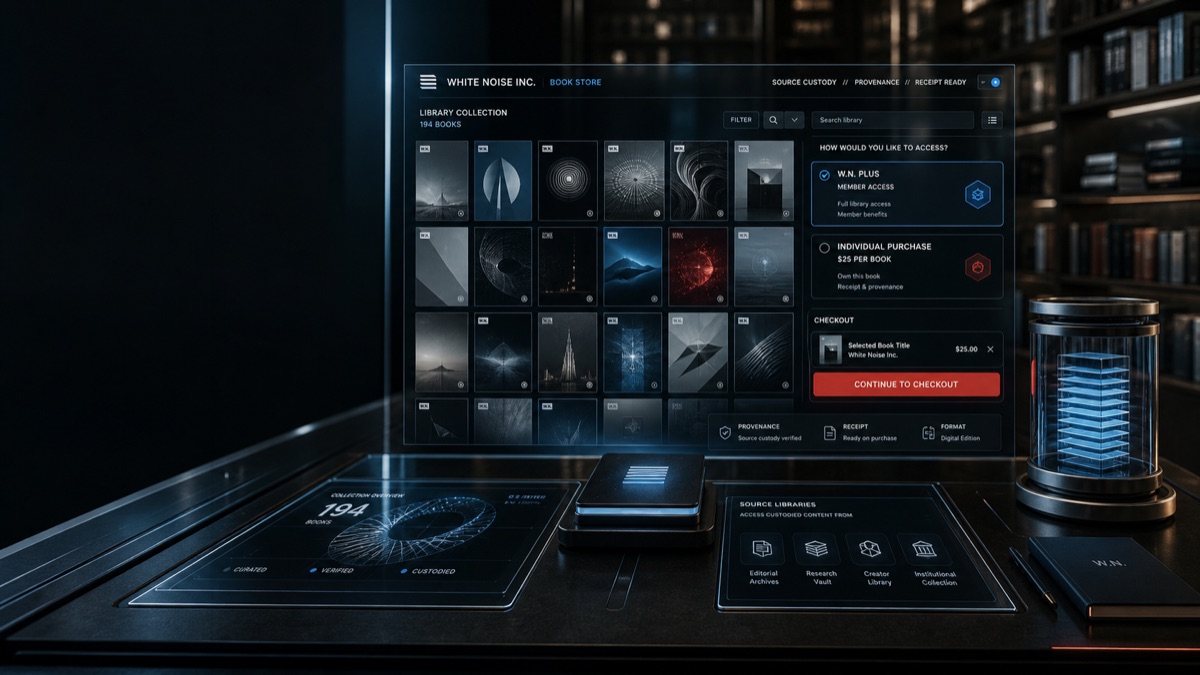
Choose the White Noise reading route that matches the actual job: White Noise Totality on Amazon for the canonical source text, one uploaded PDF for a narrow question, Member for the wider library plus member workspace, or services when reading is not the real return.
Best when you want the canonical White Noise thesis before the wider catalog.
First return: flagship source text through Amazon. Wrong route warning: do not use this if you really need library access or a scoped work packet. Route 02 Buy one uploaded PDF.Best when one narrow title can answer the question without recurring access.
First return: one $25 title with local unlock behavior in this browser. Wrong route warning: repeated buying friction means you should compare Member first. Route 03 Start Member instead.Best when the shelf is becoming a working library and you want the member workspace plus Academy access.
First return: trial-to-member route for recurring library use. Wrong route warning: do not pay recurring if you only need one title right now. Route 04 Leave the shelf for services.Best when the real need is a decision packet, scoped research, or new evidence.
First return: consulting intake or written R&D scope. Wrong route warning: more reading will not replace a missing decision or methods plan.Generated store surface
This page-owned image frames the catalog, access choice, checkout rail, receipt readiness, and source custody as an editorial commerce surface. It is not a live checkout screenshot, fulfillment backend, or payment-provider interface. Review the provenance record.
World-class product and commerce pages keep the chosen object, access route, receipt state, and support boundary together. The store now makes that contract explicit before a reader treats one book, membership, or services as the right answer.
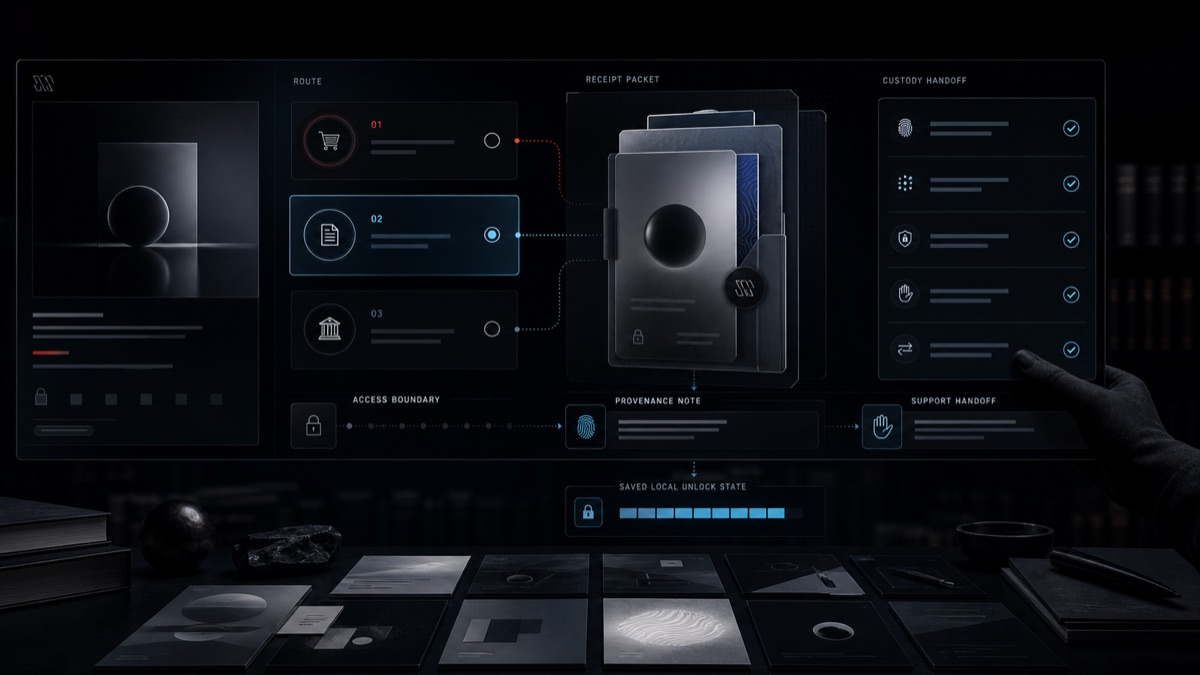
This original visual is editorial product-direction art. It is not a checkout screenshot, payment interface, customer account, fulfillment backend, or audited commerce dashboard.
The store should tell the reader whether they are opening the flagship source text, buying one uploaded PDF, or entering the recurring library route.
Benchmark pattern: keep the artifact in frame.Single-book checkout can explain payment approval and local unlock behavior without pretending there is server-side entitlement proof.
Benchmark pattern: show state without overclaiming.When the real need is a scoped decision, R&D method, or recurring reading workflow, the store should point away from a narrow PDF.
Benchmark pattern: conversion flow follows intent.The image supports the commerce story while carrying a local sidecar, prompt intent, usage boundary, and no model-training claim.
Benchmark pattern: proof and polish travel together.Image provenance Original GPT-generated store receipt-custody concept created for this run. Asset: assets/store/wn-store-receipt-custody-route-20260702.jpg. Review the provenance record. Usage boundary: editorial orientation only, not proof of a live checkout screenshot, payment-provider interface, production fulfillment backend, customer account view, or trained image model.
The store has three buying commitments plus one assisted-work escape hatch hiding behind similar book language. This matrix separates them by checkout destination, access scope, and the first thing you actually receive.
Best when you want the canonical source text through a familiar retail checkout and external fulfillment.
Best when your question is narrow enough that one title answers it and you do not need the wider member stack.
Best when one book turns into a repeat workflow and you want member workspace, Academy paths, and the broader W.N. Plus library.
If none of the three store routes fit because the real job is a decision, a strategy packet, or new evidence, leave the shelf and use the service route below instead of buying blind.
If you expect to buy more than one uploaded title this month, the decision usually shifts from a one-time PDF to Member access. This calculator makes that tradeoff explicit before checkout.
Use the one-book route when the question is narrow. Switch to Member when the shelf is becoming a repeated workflow and you want the wider library plus tools.
At one book, the one-time route matches the need without committing to a recurring membership.
If you already expect a second title, membership removes the repeated checkout friction and adds the wider tool stack.
Use this when you want the source text that anchors the wider White Noise system and prefer the external retail route.
Best for: the canonical book, standard retail checkout, and a single flagship title. Boundary: checkout and fulfillment happen on Amazon, not inside the White Noise store.Use this when your question is narrow and you only need a specific title from the uploaded W.N. Plus catalog.
Best for: targeted reading, one-off purchases, and fast category-driven browsing. Boundary: site checkout can unlock the purchase in this browser, but protected delivery still requires production validation.Use membership when the catalog is becoming a working library and you also want member workspace, the Academy, and W.N. Plus access.
Best for: repeated reading, library-scale access, and source-grounded tools beyond a single title. Boundary: membership is a recurring service route, not a one-time PDF purchase.Books are the right route for reading. They are the wrong route when the real ask is “help me decide,” “pressure-test this plan,” or “generate a bounded findings bundle.” This section routes outcome-oriented buyers into the correct paid surface before they mistake shelf depth for service.
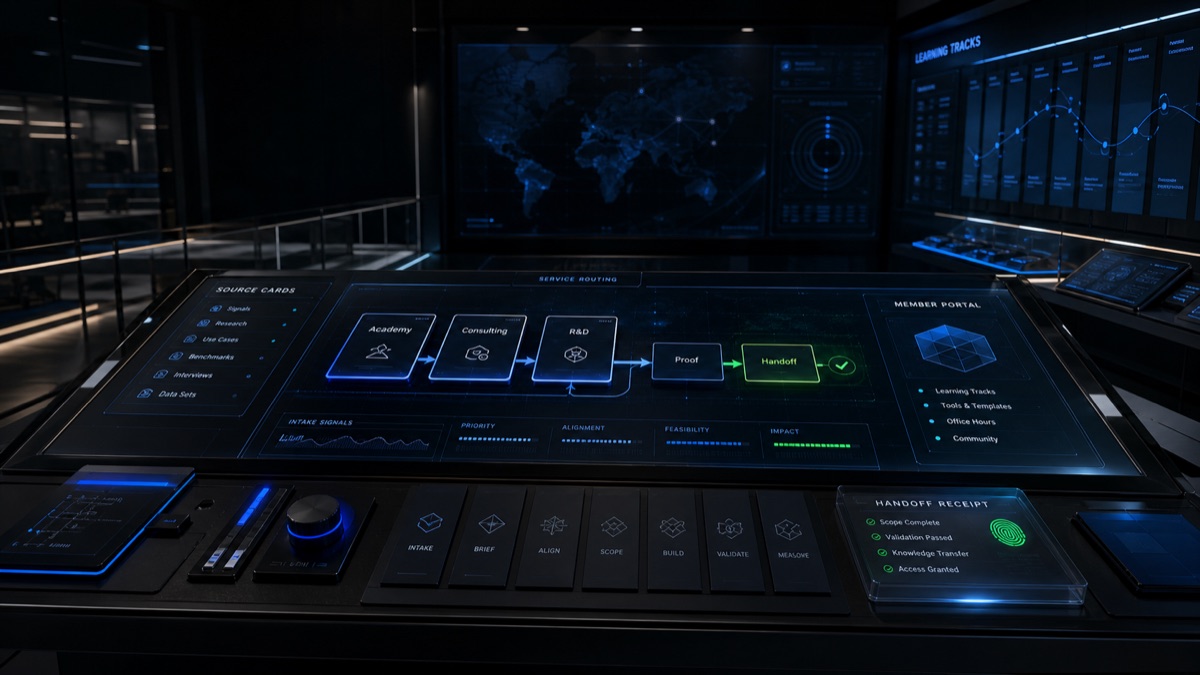
This page reuses the current White Noise services editorial image instead of publishing duplicate art. Review the provenance record. Usage boundary: conceptual orientation only, not proof of a live staffed workflow or completed delivery pipeline.
Use the store when a title itself answers the question and you do not need human judgment, a sprint, or a new artifact.
Use Consulting when you need scenario pressure, category framing, roadmap judgment, or a founder/operator decision packet.
Use Custom R&D when you need a bounded question turned into a methods plan, scoped artifact, and reproducible findings path.
Choose this when the problem is not “which book?” but “what should we do next?” The first useful return is a decision packet and sprint frame, not another reading list.
Best for founders, operators, and teams who can already name the decision, timing, and constraints.Choose this when you need a question translated into scope, methods, budget, timeline, and the first artifact rather than trying to infer all of that from the shelf.
Best for teams that need new evidence, an implementation brief, or a reproducible research path.
White Noise Totality opens on Amazon. The uploaded W.N. Plus books are listed here at $25 each, while members can browse the whole catalog inside W.N. Plus and use member workspace to generate source-grounded Totality text and generated visual tools from the corpus.
White Noise Totality uses Amazon. The uploaded catalog uses the PayPal checkout configured for the site, with local purchase unlocks stored in this browser.
The store separates three paths clearly: Totality opens on Amazon, uploaded books use the site's PayPal checkout, and member-scale reading routes into W.N. Plus plus the member workspace. A premium commerce page should make the handoff, receipt, and support boundary visible before the visitor commits.
The artwork is a generated editorial mockup with local provenance, not proof of live fulfillment or a payment dashboard.

The source text keeps its external retail route, while the uploaded catalog remains in the White Noise store and W.N. Plus library.
Review book page
Single-book purchases can create a local unlock after payment. The page stays honest that protected file delivery needs server validation.
Browse catalog
Perception and frontier-science titles point back to evidence, Labs, and product pages so volume does not substitute for proof.
Open evidence route
Buy a single PDF when the question is narrow. Use membership when the catalog becomes ongoing research material and you want member workspace to generate from it.
Compare membershipThe catalog is broad enough to create hesitation. This guide converts four common intents into one concrete next move, then routes you into the right filter, product page, or paid path.
Use the source text first when you want the shortest honest path into the White Noise system. It keeps the central thesis on the external retail route, then lets the wider catalog act as follow-on depth rather than replacing the anchor.
Every category is now its own visual entry point. Choose one to filter the catalog, then keep browsing through the horizontal book shelves below.
Rows are grouped just like the W.N. Plus library — your purchases first, then featured picks, then every category: canon, remote viewing, AI, quantum, settlement, biology, society, and more.
This panel explains whether checkout is live, what payment approval does, and when membership or contact is the safer route.
Checkout is ready.