Technical reader
Start with claim boundaries.
Use the dossier and Review Console to separate physics constraints, research primitives, speculative architecture, and governance requirements.
Open review console -> White Noise Inc.
A referenced technical brief on the White Noise Computer, the White Noise Replicator, the White Noise Library, WN Superfactories, and the settlement-scale roadmap implied by White Noise Totality.
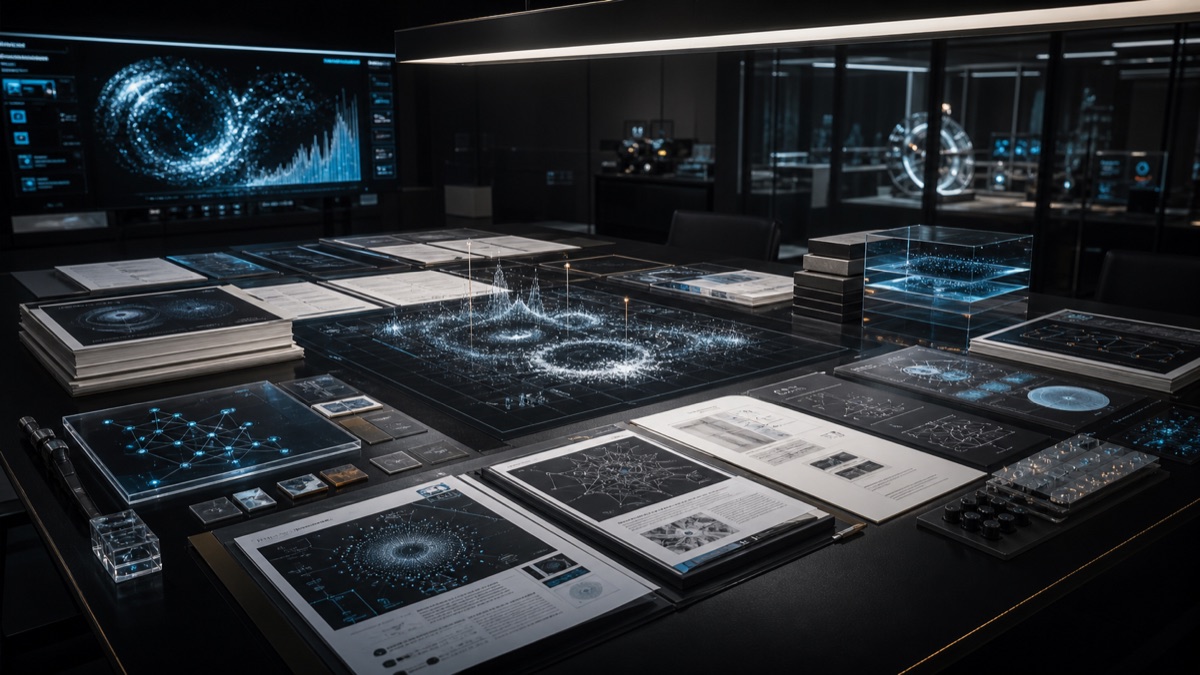
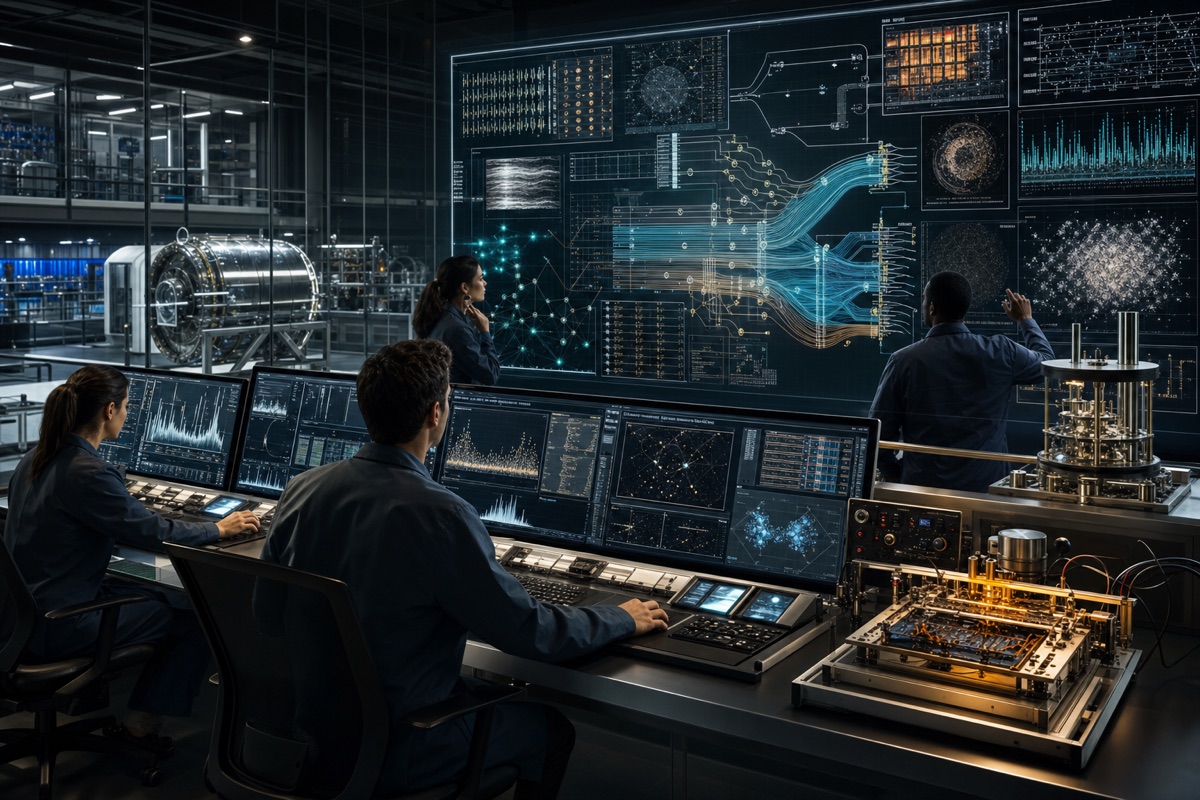
Visual provenance: original GPT-generated editorial asset for evidence-status review. Prompt intent: depict paper dossiers, evidence maps, provenance receipts, physics ledgers, and governance checkpoints so the white paper reads like a review surface, not a proof claim. Asset: assets/white-paper/white-noise-technical-review-room-20260628.jpg. It is not proof of a staffed diligence room, production lab, operational White Noise Computer, Replicator, settlement stack, audited controls, or investment process. View provenance.
World-class technical pages let different readers find the same truth at the right depth. This layer turns the white paper into routes for technical review, lab scoping, capital diligence, and editorial reading before the long-form argument begins.
Use the dossier and Review Console to separate physics constraints, research primitives, speculative architecture, and governance requirements.
Open review console ->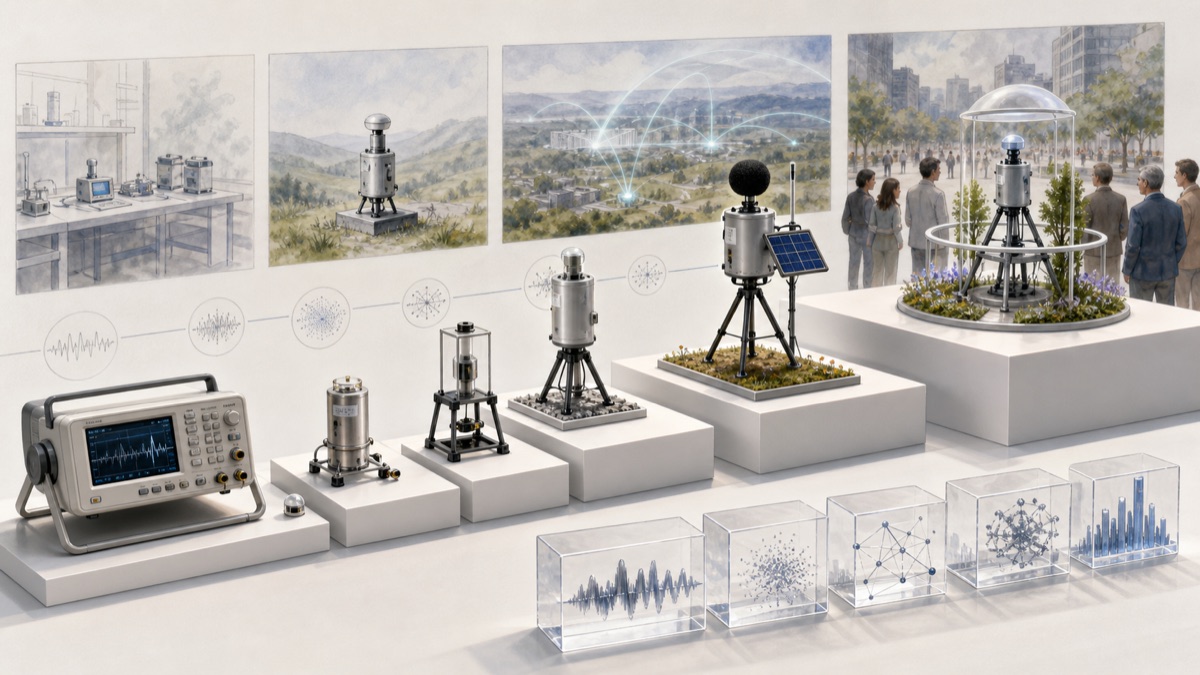
Move from the paper's program phases into a bounded simulation, measurement rig, materials workflow, robotics loop, or audit protocol.
Scope R&D ->
Read the ROI model as a leverage hypothesis with visible costs: energy, heat, capital intensity, misuse risk, governance burden, and social license.
Read ROI model ->
Start with the abstract, then move into Science and First Principles for the plain-language evidence map behind the technical brief.
Read abstract ->The paper gives reviewers a visible map: what is established physics, what is an instrumentable research primitive, what remains speculative architecture, and where a sponsor or technical reader should go next.
Information theory, thermodynamics, quantum limits, error correction, and space-settlement studies define the hard boundaries the thesis must respect.
Simulation benchmarks, sensing, materials handling, inspection, autonomous repair, and local resource loops can be scoped before any extraordinary claim is made.
The Computer, Library, Replicator, Superfactories, and OSTSS remain a composed research agenda: useful as a map, not presented as finished hardware.
Every stage needs status language, audit trails, energy ledgers, red-team review, and clear public claims so capability never outruns legitimacy.
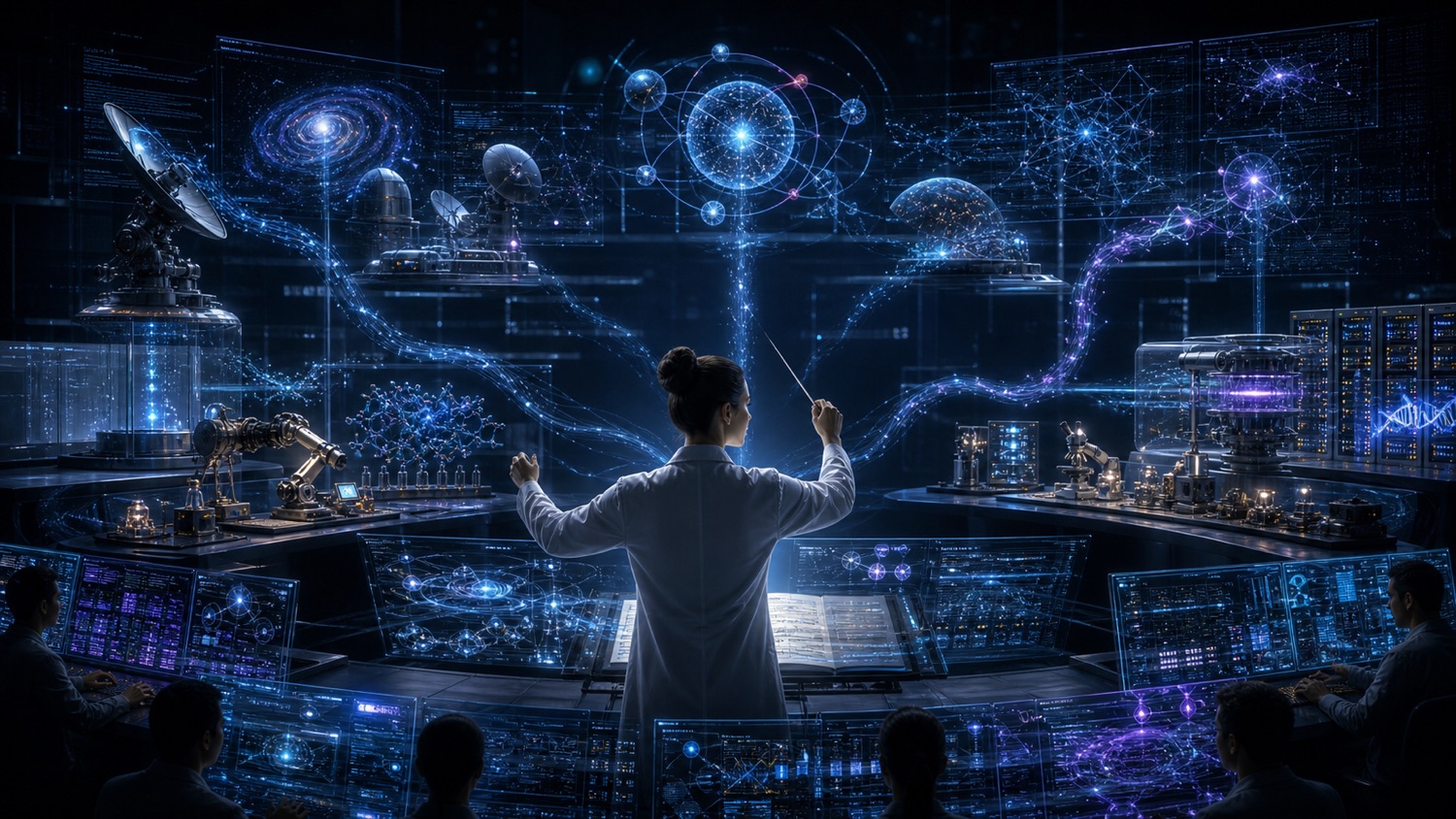
Supporting visuals on this page are editorial aids for review and route clarity. Unless a specific provenance record is linked, treat them as concept or reference illustrations rather than proof of a staffed diligence room, operational White Noise Computer, live research console, or completed settlement program. The page follows the generated visual disclosure standard while older supporting assets are backfilled.
Technical diligence starts when the path from vision to evidence is visible. This console gives a reader four handles before the long paper begins: claim boundary, test primitive, risk ledger, and decision route.
Every assertion should be marked as established constraint, engineering extrapolation, proposed experiment, speculative architecture, or governance requirement.
The useful next step is a smaller test: simulation benchmark, measurement rig, materials workflow, robotics loop, or audit protocol.
Energy demand, heat, safety, misuse, capital intensity, and social permission need to live beside capability claims from the first draft.
Researchers inspect methods, sponsors scope primitives, partners evaluate governance, and readers continue into the public science layer.
This white paper frames White Noise Technologies as a speculative but testable architecture for civilization-scale capability. The core thesis is that computation, matter synthesis, knowledge retrieval, robotics, and settlement become one compounding system when they are built around a shared model of physical information.
The paper is not a claim that the White Noise Computer, White Noise Replicator, or related technologies exist today as finished hardware. It is a roadmap for turning the ideas in White Noise Totality into research programs with constraints, benchmarks, references, and governance surfaces.
White Noise Technologies start from four linked observations. First, information theory gives a formal account of signal, uncertainty, and channel limits. Second, computation is physical: bits require energy, state, entropy management, and error control. Third, quantum theory offers nonclassical correlations, but those correlations must still obey no-signalling and measurement limits. Fourth, large-scale settlement is not mainly a transport problem; it is a closed-loop production problem.
The phrase "white noise" is used as a disciplined metaphor for total possibility before selection. A White Noise system attempts to search that possibility space, but every selected output must pass through physics: energy budget, material pathway, verification, safety, and governance.
Every architecture needs a ledger for bits, heat, bandwidth, and storage density.
A system that cannot verify its own outputs cannot be trusted at frontier scale.
Replicator and superfactory concepts only become useful when feedstock, energy, and error correction close in place.
Capability without legible stewardship increases systemic risk instead of reducing it.
The White Noise Computer is the most speculative element of the stack. Its near-term value is not that it is a finished machine; it is that it forces a precise research question: what would a computer need to sense, represent, simulate, coordinate, and verify if the operating domain were the entire physical environment rather than a contained device?
The research boundary is clear. Quantum entanglement is real, but it does not license arbitrary faster-than-light communication. The White Noise Computer thesis therefore cannot depend on ignoring no-signalling constraints. It must instead investigate physical computation, quantum information, distributed sensing, error correction, reversible computation, thermodynamic efficiency, and governance interfaces.
Models must declare assumptions, uncertainty, computational cost, and failure modes.
Every speculative capability must map to what can be sensed, logged, and reproduced.
Noise, decoherence, manufacturing drift, and software defects require layered correction.
Capabilities must expose who can ask for what, under which limits, with what audit trail.
The White Noise Replicator is the matter-output side of the architecture. In practical terms, the near-term version is not magic matter creation; it is a research program for high-fidelity design-to-matter workflows: feedstock characterization, robotic process planning, additive and subtractive manufacturing, in-situ resource use, inspection, repair, and provenance.
WN Superfactories extend the same idea to industrial scale. A superfactory is valuable only if it can increase capability faster than it increases fragility. The key metrics are replication ratio, local material closure, energy return, inspection depth, downtime, repair autonomy, and safety boundary enforcement.
Space settlement becomes economical when more of the settlement stack can be produced locally. NASA's historical studies on space settlements, in-situ resource utilization, automated space manufacturing, and self-replicating lunar factories point toward the same constraint: launch mass from Earth is a bottleneck, while local materials plus autonomous production can change the scaling law.
In the White Noise architecture, OSTSS is the integrated output: habitats that do not merely host humans, but also mine, manufacture, repair, compute, grow, govern, and replicate parts of their own infrastructure. The White Noise Computer supplies the coordination thesis; the Replicator and Superfactories supply the matter pathway; the Library supplies the design-search layer; WN Labs supply the verification path.
The claim that White Noise Technologies could become the highest ROI project in human history should be read as a leverage hypothesis, not an investment guarantee. The return would be civilizational: faster discovery, cheaper infrastructure, broader settlement, reduced single-planet risk, and a larger design space for human flourishing.
A White Noise project earns its ROI thesis only by improving that ratio with evidence.
Define interfaces, constraints, risk categories, metrics, and open questions for each technology family.
Build benchmark problems for computation, manufacturing, settlement logistics, and governance.
Prototype sensing, robotics, materials processing, inspection, and energy-accounting modules.
Integrate local feedstock, fabrication, inspection, repair, and software control in bounded environments.
Demonstrate partial closure in terrestrial analogs, then lunar, orbital, and asteroid-relevant settings.
Connect compute, manufacturing, medicine, life support, governance, and community operations.
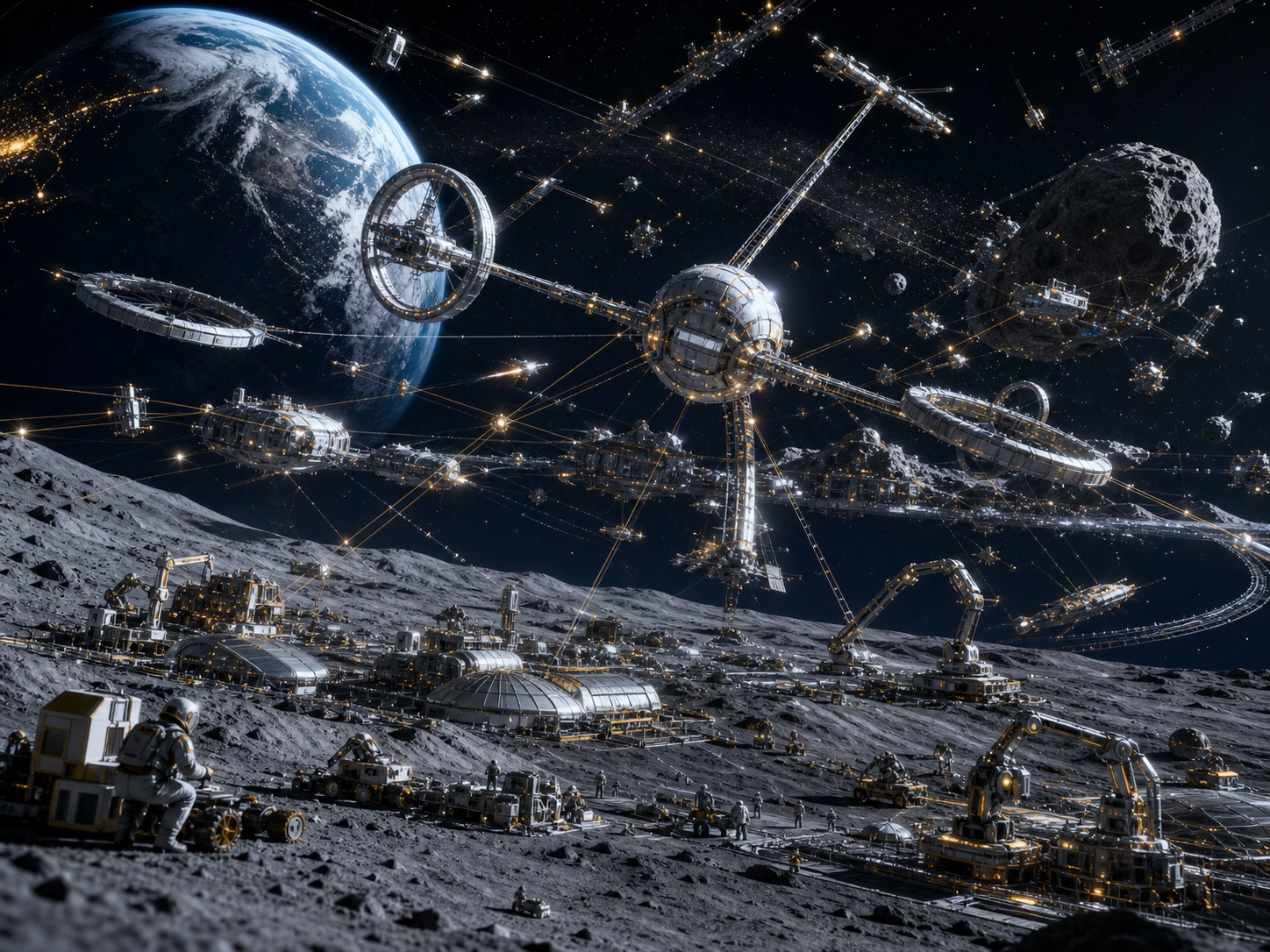
The Science page explains the same White Noise Totality thesis in a more visual and accessible form.