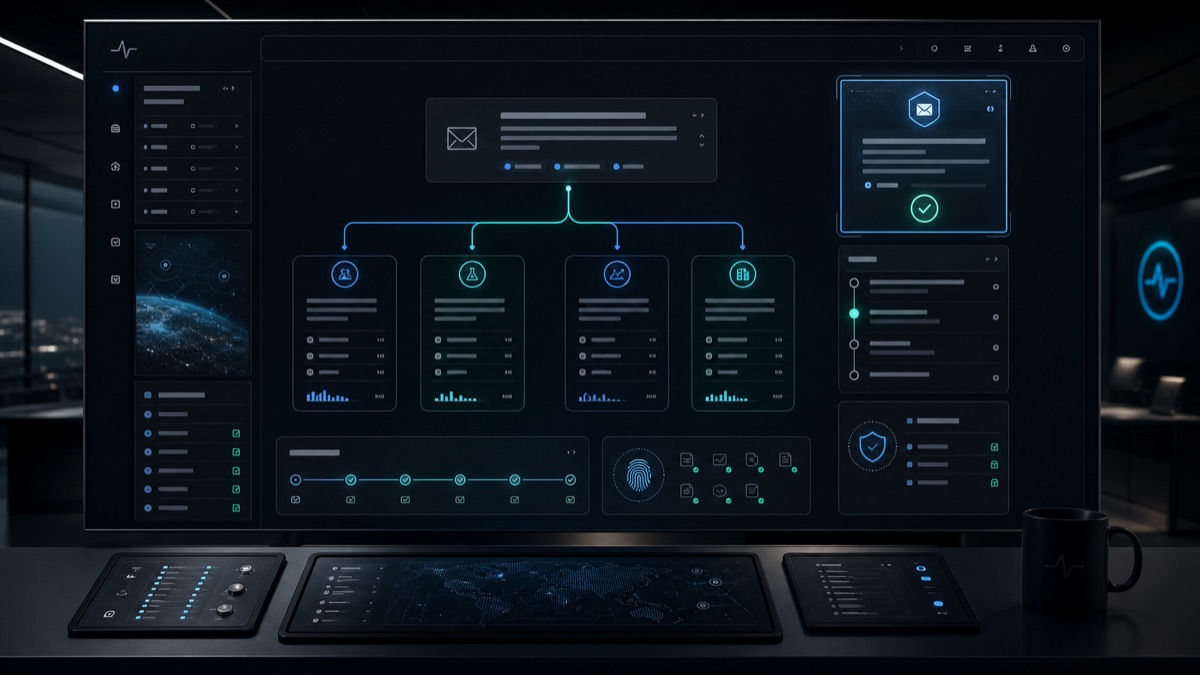
AI-generated White Noise contact intake routing surface with four route lanes, first-return artifact receipt, delivery status, privacy boundary, and provenance panels
Contact routing

Turn one serious inquiry into a routed first-note receipt.

Use this page to choose the right desk, attach the right boundary, generate a local fallback packet when needed, and send one bounded ask that can return a real artifact instead of a vague handoff.

What is live now

Route choice, explicit packet export, and the route-state readout are live on this page. Use them to send a bounded first note or decide that the safer next move is fallback instead of assuming a staffed inbox.

Reply expectation

When configured delivery is live, White Noise can attempt a best-effort routed first reply based on the current route state. Demo fallback should preserve a local receipt and point you to the safer next step instead of implying a staffed desk or guaranteed turnaround.

Privacy boundary

This public page is for first-pass routing only. Do not submit sensitive records that require a secure diligence room.

Not live yet

Do not infer a secure diligence room, staffed CRM, guaranteed turnaround, or shipped product capability from this contact surface alone. Consulting and Custom R&D still begin with scoped discussion or a written plan.

Operational status Checking whether this page is routing into a configured inquiry path or draft-only fallback.

Use this readout before you assume a monitored inbox. The page will tell you whether this environment reports configured delivery, or whether the safest move is to treat it as a bounded draft and use the fallback path.

Checking route mode
Current mode Route-state check in progress

Waiting for this environment to report whether configured inquiry delivery is available.

Safest next move Keep the note bounded

Choose the route and first-return artifact now so the note is usable whether delivery is live or not.

Do not assume No staffed workflow implied yet

A route-state check is not proof of CRM maturity, response metrics, or a secure diligence process.

Fastest serious route Preload the right desk from the hero instead of hunting for the qualifier below.

High-intent visitors should be able to choose consulting, research, investor, or general company routing in one move, then land directly on a prefilled form with the first artifact and boundary already attached.

Conversion rule Choose lane first, type second.

This is the shortest path from homepage traffic to a usable first note without weakening the trust boundary or implying live workflow maturity.

Enterprise Consulting fit

Use this when the first useful reply is service fit, scope shape, pilot posture, or advisory clarity.

Research Custom R&D scope

Use this when the first useful reply is a methods path, benchmark plan, scoping memo, or budget band.

Investor Diligence truth

Use this when the first useful reply is a capital note, evidence route, or current formal-process boundary.

General Company and trust route

Use this when the next step is orientation, the right public packet, or a route recommendation before narrowing the ask.

Trust before sending

Inspect the right proof surface before you write the note.

The highest-value contact improvement is not another open text box. It is a short path to the exact artifact that resolves uncertainty: proof shape, materials freshness, privacy boundary, first-response standard, generated-image disclosure, or contact-routing evidence.

Contact rule Read first when the blocker is clarity, not absence of a form.

If the right public artifact answers the question, use it. If not, the routed note below should ask for one named follow-up artifact instead of a broad introduction.

Proof

Start with the proof pack.

Use this when you need the public shape of real work, not a warmer description of capability.

Open proof pack
Freshness

Check the materials index.

Use this when the question is whether a packet, surface, or claim is current enough to justify a serious follow-up.

Open materials index
Privacy

Confirm what should stay out of public intake.

Use this before sending anything sensitive, regulated, or personally identifying through a first-pass routing surface.

Open privacy posture
Reply contract

Inspect the first-response standard.

Use this when you want to know what a credible first reply should contain before you decide whether to send the note.

Open response standard
Visual disclosure

Separate editorial visuals from product proof.

Use this when generated imagery could otherwise be mistaken for proof of a staffed tool, live workflow, or completed diligence system.

Review visual disclosure
Routing evidence

Check route-state truth before assuming monitored intake.

Use this when the real question is whether contact routing is live, fallback-only, or still just a public first-pass surface.

Open routing evidence
Mobile quick start Reach the routed form fast, then let the page preload the right lane for you.

Use the smallest route that matches the decision. The longer route maps and packet explainers stay available on larger screens, but mobile visitors should not have to scroll through four strategy blocks before they can act.

Enterprise Preload consulting

Use this when the first useful reply is service fit, scope shape, or delivery clarity.

Research Preload Custom R&D

Use this when the first useful reply is a scoped methods path, benchmark, or budget band.

Investor Preload diligence

Use this when the question is current proof depth, materials availability, or formal-process truth.

General Preload company route

Use this when you still need the right public packet, route recommendation, or trust surface first.

Fastest path on this page

Choose the first return you need before you send the note.

The strongest contact-page upgrade is to stop making serious visitors infer the answer format. Pick the lane that matches the first useful reply, preload the route, then send one bounded note from the form below.

Return contract One route, one artifact, one next step

If the right material is not ready, the expected reply is an explicit non-claim or route redirect, not a warmer promise.

Consulting

Need a decision-support reply.

Use this when the first useful answer is whether White Noise belongs in a strategy, advisory, or scoped services conversation.

First return: service-fit note, walkthrough, or route redirect. If the question is really a methods or benchmark problem, switch to Custom R&D instead.
Custom R&D

Need a bounded research reply.

Use this when the first useful answer is a scoping artifact, benchmark path, budget band, or methods note.

First return: scoping memo, methods path, or explicit not-ready boundary. If the question is mostly institutional fit or sponsorship, use the company route first.
Investor diligence

Need the current proof posture fast.

Use this when the first useful answer is a diligence artifact, claim-boundary note, or material-availability truth.

First return: capital note, evidence route, or formal-process boundary. If the question is operational fit for a paid project, use Consulting instead of warming the capital lane.
General company

Need orientation before narrowing the ask.

Use this when the first useful answer is which public surface, trust artifact, or commercial route should be reviewed first.

First return: trust-surface walkthrough or route recommendation. If you already know the work belongs in consulting or R&D, skip this and preload the narrower lane.
Start here in 20 seconds

Pick the role that matches the real decision.

The highest-friction part of this page is choosing a route when the question is still vague. This qualifier turns that into one concrete recommendation, one expected first artifact, and one boundary to keep the note commercially useful.

Routing rule One route, one first ask

Choose the role that best matches the decision-maker on your side. The page will preload the strongest route and the smallest useful first-return artifact before you send the note.

Use the arrow keys to move between roles. Press Enter or Space to preload the selected route.

Enterprise buyer

We need services clarity before a meeting.

Best when the live question is delivery shape, scope fit, security posture, or whether White Noise belongs in a services or advisory process.

Recommended route: Consulting
Strategic partner

We need fit, surfaces, and the right public packet.

Best when the decision is partnership, distribution, sponsorship, or institutional collaboration rather than a paid project quote.

Recommended route: General company
Investor or board

We need the current diligence truth fast.

Best when the question is evidence depth, governance, commercial readiness, material availability, or what the public build does not yet prove.

Recommended route: Investor diligence
Research sponsor

We need a bounded feasibility or methods path.

Best when the question should resolve into a scoped brief, benchmark, methods path, or budget band instead of broad company discussion.

Recommended route: Custom R&D
Recommended next step Choose a role to preload the right route.

The page will set the route, draft subject, first-return artifact, and main boundary so the form below starts from a defensible ask instead of an empty box.

  • First artifactNot selected yet.
  • Main boundaryNot selected yet.
  • RouteNot selected yet.
Open recommended reading
General company

Company context and trust surfaces

Start here if you need orientation, public trust materials, leadership context, or the broad company story before asking a narrower question.

Open About and trust routes
Member fit

Billing, access, and first-week utility

Use this route when the decision is whether Member is the right paid path, what unlocks now, or how the current billing and cancel boundaries work.

Open Member route
Consulting

Decision support and strategy work

Use the live consulting intake when you need category design, roadmap pressure-testing, or a structured decision before committing budget.

Contact the Consulting Practice
Custom R&D

Scope a bounded research question

Use the current R&D route for a written scope, success criteria, budget band, and a methods path that does not imply a shipped capability.

Open the Custom R&D scope form
Investor diligence

Review investor materials and inquiry paths

Use the investor page when your question is about governance, evidence ledgers, commercial readiness, or diligence review sequence.

Open investor relations
Inspect first

Give serious counterparties a better first read than a generic contact note.

This packet turns the contact page into a cleaner enterprise, partnership, and capital gateway. Each lane points to the smallest public artifact that should be inspected before anyone asks White Noise for a meeting, dataroom, or undefined follow-up.

Freshness rule Reviewed June 29, 2026

Use one bounded ask, one named risk boundary, and one expected first-return artifact. Treat this page as public routing only, not a secure diligence room or proof of enterprise workflow.

Enterprise buyers

Start with the starter brief, pilot gate, and security baseline.

Use this path when you need to understand current services posture, pilot-sized scope, data-handling language, and what still is not represented as enterprise-ready.

Best next ask: pilot-readiness review, public-surface walkthrough, or scoped services route.
Strategic partners

Start with fit, proof shape, and live commercial surfaces.

Use this path when the decision is sponsorship, institutional collaboration, distribution, or ecosystem fit rather than a generic company introduction.

Best next ask: partner-fit walkthrough or boundary memo.
Investors and board

Start with capital posture, material availability, and route-state truth.

Use this path when the real question is proof depth, current delivery maturity, missing formal-process materials, or what the public stack can verify today.

Best next ask: capital-readiness response or claim-boundary memo.
General trust review

Start with company context, trust surfaces, and proof anatomy.

Use this path when you need the broad company picture first and want to separate public trust artifacts from speculative product language before narrowing the inquiry.

Best next ask: trust-surface walkthrough or one named follow-up route.

Visual note: the hero image is a dedicated GPT-generated contact-route asset. It supports orientation only and does not represent a staffed CRM, live diligence desk, legal workflow, secure dataroom, production provider receipt, or guaranteed response state. Asset: assets/contact/white-noise-contact-intake-routing-surface-20260701.png. Review the provenance record.

Response contract

Make the first reply inspectable before the note is sent.

Current reference sites make the artifact, route, and operating boundary visible close to conversion. This contact layer applies that pattern to White Noise: every serious note should carry the expected first-return artifact, the boundary it needs answered, and the fallback if live routing is not configured.

Contact standard One answerable packet, not a broad invitation

If the requested material is not ready, the best first reply is a clear not-ready boundary and the next public route.

AI-generated White Noise response contract workspace with route, boundary, first artifact, reply standard, fallback draft, and provenance receipt panels
Generated contact visual Route, artifact, boundary, reply standard, fallback.

Editorial orientation art only. It does not prove a staffed CRM, secure diligence room, legal workflow, or guaranteed response state.

01

Route before relationship.

The sender chooses company, consulting, Custom R&D, or investor diligence before asking for a meeting.

Prevents generic handoff.
02

Artifact before persuasion.

The note asks for a memo, walkthrough, scoping path, route redirect, or not-ready boundary.

Prevents warm claims.
03

Boundary before private material.

The public form names the proof, delivery, security, or formal-process gap without uploading sensitive records.

Prevents unsafe intake.
04

Fallback before assumption.

If delivery is not configured, the page still returns a local receipt and email draft instead of implying a monitored desk.

Prevents false operational certainty.

Image provenance GPT-generated contact response-contract art created for this section. Asset: assets/contact/white-noise-contact-response-contract-room-20260701.png. Review the provenance record.

Routing controls

Serverless routing supports production providers, but warmer public routing claims still require the dated source record defined in the contact-routing evidence pack. Static demos still keep a CMS-visible local copy. Investor and WN Coin inquiries remain public first-pass routing only, not an offer of securities, investment advice, or proof of a formal financing process. Contact-route submissions should stay limited to route context, not private diligence records.

Send the first note

Finish the contact step on this page.

This intake turns the route chooser into an actual first-pass handoff. It keeps the note bounded to one route, one decision, one artifact need, and one risk boundary, then gives the sender a receipt-shaped packet instead of an empty contact form.

Use boundary Public routing only

Use this form for orientation, routing, and first-return artifact requests. Do not send confidential, personal, credential, or regulated records through this public intake.

Delivery state Checking configured inquiry-delivery state.

The page is checking whether this environment reports configured delivery or should stay in demo fallback mode. When delivery is live, White Noise can attempt a best-effort routed first reply based on the current route state. That route-state check is not the same as source-backed proof of staffed workflow or response metrics.

Waiting for route-state check.

Before you type Use one route and ask for one concrete first return.

Choose the lane that matches the real decision, then keep the first note small enough to answer honestly. This assistant rewrites itself as you switch routes so the draft below does not start from a blank interpretation problem.

Current route fit General company

Best when you need orientation, trust surfaces, or the right public packet before narrowing the ask.

Strong subject Name the decision, not the whole company. Example: Which public trust surface should we review before a partner call?
Ask for this Request one first artifact.

Ask for a walkthrough, memo, scoping note, route redirect, or explicit not-ready boundary.

Protect against this Name the main risk up front.

Call out the single proof gap, delivery concern, or formal-process boundary that matters most.

Fastest next move Pick a role above or a route preset here, then land on the first unfinished field.

This form keeps the route, first artifact, and boundary preloaded so you can finish one bounded note without rereading the whole page.

Completion tracker 0 of 8 required steps complete.

Finish the bounded-note essentials first, then export or send.

0/8

Next: Add your name to start the routed note.

Open send-ready email

Complete the required fields and safe-submit check to enable the right next action for this delivery mode.

The form attempts server-side routing through /api/wn-inquiry and saves a local fallback packet only when you explicitly send or save it in demo environments. If the route is not live here, use the generated email draft or the recommended route page instead of assuming a monitored inbox.

Outbound preview Choose a route to inspect the exact first note.

Subject: White Noise inquiry

Use one bounded ask so the first reply can return a real next artifact.
First-note rules Keep the first pass legible enough to answer honestly.
Send Decision, page, boundary, artifact.

Name the route, the surface being reviewed, the main risk, and the smallest acceptable first return.

Do not send Private records or formal-process assumptions.

Do not paste decks, credentials, customer data, contracts, or anything that assumes a secure diligence room already exists.

Expect back One route, one artifact, one next step.

The right reply is a concrete note, memo, walkthrough, redirect, or explicit statement that the requested material is not ready, returned on a best-effort basis when live routing is configured.