This packet is tied to the current partner-fit route, packet library, and public trust stack reviewed on June 29, 2026.
Home / Investor Relations / Partner First Meeting Packet
Standalone partner packet
Forward one bounded partner packet before a first serious review.
This page turns the White Noise partnership lane into one standalone link for institutions, sponsors, distributors, and strategic collaborators. It keeps the reading order, the rights and support boundary, and the clean next ask attached when the packet moves inside a program, channel, or sponsorship workflow.
Use boundary
This packet is for general information only. It is not a formal partnership proposal, not investment advice, not audited reporting, not a secure diligence room, and not proof of cleared institutional rights, accredited delivery, enterprise-scale support coverage, or commercially deployed speculative technology.
Visual boundary
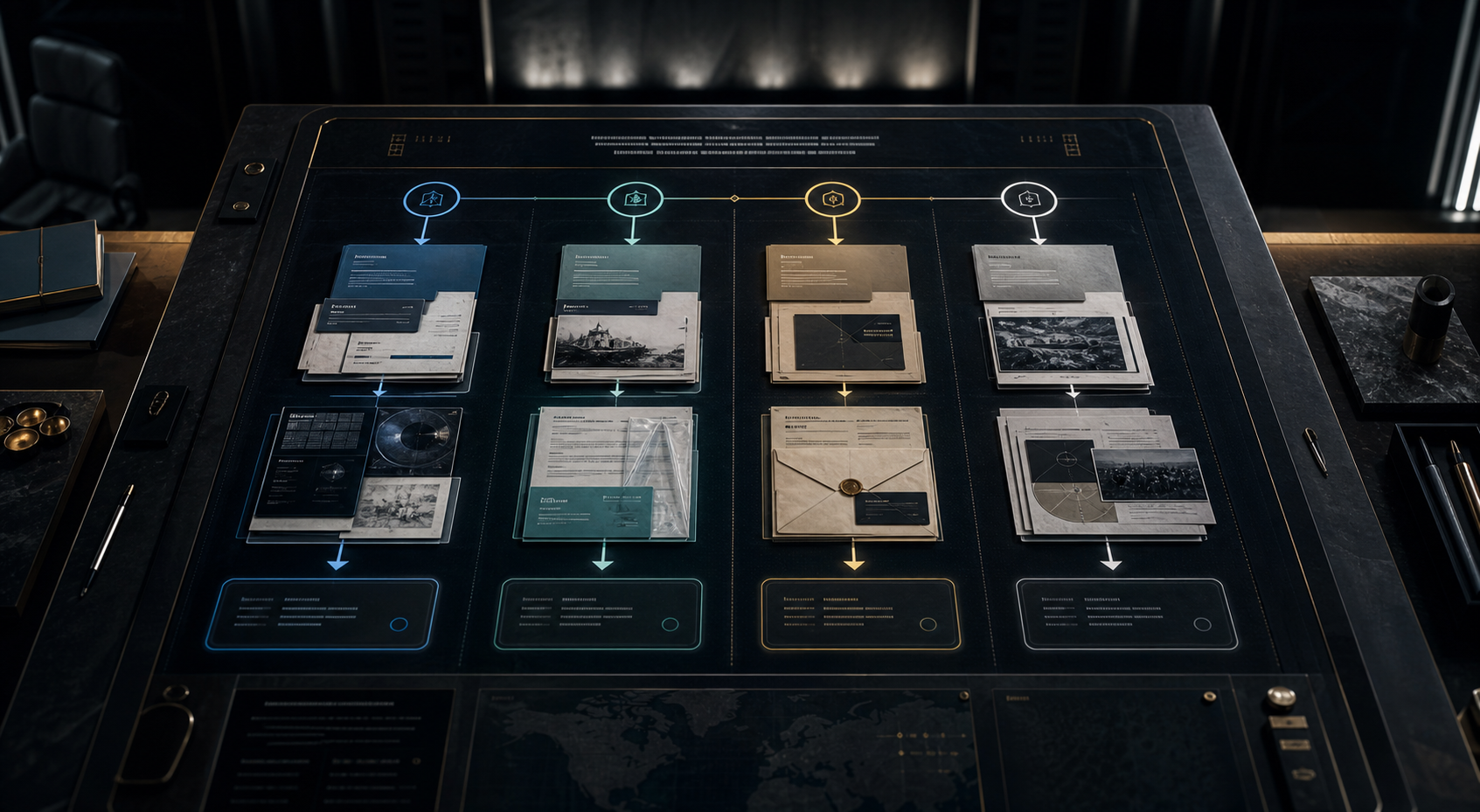
This route reuses the existing first-artifact route-board image because the improvement here is packet portability and partnership-route clarity, not missing visual explanation. The image is editorial support only, not proof of staffed partnership operations, completed rights clearance, production CRM, accredited institutional delivery, or enterprise-scale operating maturity. Review the provenance record.
Use it when the question is whether White Noise merits a narrow first partner conversation from current public materials.
Ask for one bounded artifact tied to one support-level, rights, delivery-shape, or timeline concern.
The packet does not imply cleared institutional rights, accredited delivery, grant administration maturity, or security-reviewed workflow proof.
Packet reading order
Read the partner lane in two passes.
The first pass should answer whether one bounded program or collaboration shape is credible enough for a first conversation. The second pass should show where rights, support, evidence, or workflow assumptions are still blocked.
Use these first before a partner review call is booked.
- Partner-Fit Memo for the current fit logic and clean non-claims.
- Enterprise Starter Brief for the compact route map across surfaces.
- Diligence Request Guide for the right first-return artifact by decision.
- Commercial Surface Register for live routes, counterparties, and supportable next asks.
- Public Proof Pack for sample artifact structure, route shape, and public proof anatomy.
- Public Operating Cadence for how the route is kept current without implying broader operating maturity.
Use these when the review narrows to trust and reuse boundaries.
- Source-Rights Register for current rights classes and stronger-use gates.
- Source-Rights and Corpus-Use Clearance Gate for reuse and institutional-rights boundaries.
- Customer Evidence Permission Source Record Gate for partner proof and case-study publication limits.
- Service-Level Dependency Source Record Gate for stronger support or workflow language.
- Generated Visual Disclosure Standard for provenance and non-proof reading discipline.
- Public Risk Register for current trust, rights, and operating risks that remain visible.
Forwarding summary
Send the packet without rewriting the boundary.
This draft is the practical improvement: an institutional champion, sponsor-side reviewer, or channel partner can forward one compact packet with the right reading order and non-claims intact instead of paraphrasing the partnership route from memory.
Copy-ready note
Use this as the first internal send.
Subject: White Noise first partner packet for June 29, 2026 review

Please start with the partner-fit memo, enterprise starter brief, diligence request guide, commercial surface register, and proof pack.

The first question is whether one program, sponsor path, distribution collaboration, or institutional partnership shape is supportable from current public proof.

Do not assume a signed partnership program, cleared institutional rights package, accredited delivery, grant administration maturity, enterprise-scale operating support, or security-reviewed workflow proof.

If useful, the next ask should be one partner-fit response, scoped program path, support-level clarification, or program-boundary memo tied to a single concern.
Forwarding summary ready to copy or email.
Supportable shapes
Keep the first partner conversation narrow enough to earn.
The best current partnership routes are the ones that stay attached to live surfaces, one concrete outcome, and one visible support boundary. This is where growth becomes more credible than a broad umbrella narrative.
Sponsored cohort or Academy pathway
Best when the program is about shared vocabulary, cohort design, or a bounded institutional learning path.
- Best next ask: Academy walkthrough or scoped institutional path.
- Do not imply accreditation or enterprise LMS maturity.
Editorial or distribution collaboration
Best when the decision is whether a narrative, research, or public-surface collaboration can be routed responsibly from current materials.
- Best next ask: route walkthrough or program-boundary memo.
- Do not imply completed rights clearance or mass-distribution infrastructure.
Consulting-backed program design
Best when the partner needs strategic sequencing, category design, or a boundary memo before committing budget or announcing a program.
- Best next ask: scoped program path or boundary memo.
- Do not imply named-customer traction or guaranteed outcomes.
Bounded feasibility or methods path
Best when the relationship should start as one sponsor-backed question instead of a broad company or platform partnership.
- Best next ask: methods-direction note or scoped research path.
- Do not imply proven frontier deployment or production research operations.
Reading rule
Use one packet, one program question, and one first-return artifact.
Partner memo
Open the partner-fit memo
If the real requirement is a broader rights, compliance, support, or financing process, the right answer is to say that plainly instead of letting a first meeting carry the assumption.
Use the dated memo when the packet needs the narrative fit logic behind the route.
Live surfaces Open the commercial registerUse it when the real question is which current public surfaces are commercially inspectable now.
Structured note Prefill the partner noteUse the investor-route intake when the next move is one bounded request tied to one real review concern.