White Noise Inc. turns frontier imagination into a public point of view, then into member artifacts: study paths, visual prompts, Exchange concepts, Club questions, and Custom R&D scopes that help members coordinate learning, making, discussion, and research without pretending the speculative horizon is already built.
Frontier culture keeps treating abundance as a supply problem only: more compute, more matter, more media, more access. The old problem is that excess capacity does not automatically become shared progress. Without coordination, knowledge scatters, incentives drift, artifacts lose provenance, and serious research questions get buried under spectacle.
The White Noise point of view is different: abundance becomes useful when people can coordinate around it. Each briefing turns a frontier thesis into a shared operating frame across the Academy, Exchange, Club, Custom R&D, and Member Portal, so members can learn, make, discuss, scope, and remember from the same map.
The goal is not more output. The goal is shared language, visible roles, useful artifacts, and member pathways that reduce the distance between reading, learning, making, discussing, and scoping.
Identify the old problem: a frontier claim with no shared map for who learns it, who makes with it, who questions it, and who scopes the next test.
Reframe the opportunity as a sequence members can use: study path, visual artifact, Club prompt, R&D question, and Portal memory.
Pair the argument with an image-led thesis: one scene, one coordination job, one honest distinction between creative worldbuilding and current capability.
Turn the public idea into a portal-ready note: roles, terms, prompts, provenance cues, study hooks, Exchange concepts, or R&D scoping questions.
The useful frontier company does not ask members to consume more signal. It helps them decide what the signal is for, who acts on it, and what record should survive the cycle.
Each briefing points to a course path so members learn enough shared language to work from the same base before they make or fund anything.
Visual prompts become collectible concepts and worldbuilding studies with source context and clear status markers. Exchange works remain digital art and creative artifacts, not securities or investment products.
Members can bring the briefing into WN Club as a focused discussion prompt: who needs to learn, who can build, what assumption matters, and what should move next?
When a claim deserves scrutiny, the briefing turns it into a Custom R&D request with assumptions, constraints, success criteria, and a clear handoff from conversation to lab work.
The Member Portal becomes the archive for coordination maps, prompt sets, study paths, provenance notes, and saved research questions that members can return to later.
Start with the course track closest to the claim, then align vocabulary before the group moves outward.
02Turn the thesis into imagery, metadata, and collection logic that preserve context instead of creating detached spectacle.
03Use the briefing as a Club question with enough structure to keep disagreement pointed at the next useful handoff.
04Ask what could be tested, modeled, compared, ruled out, or explicitly left speculative with a bounded R&D engagement.
05Save the coordination map so the next cycle builds on a clear record instead of scattered impressions.
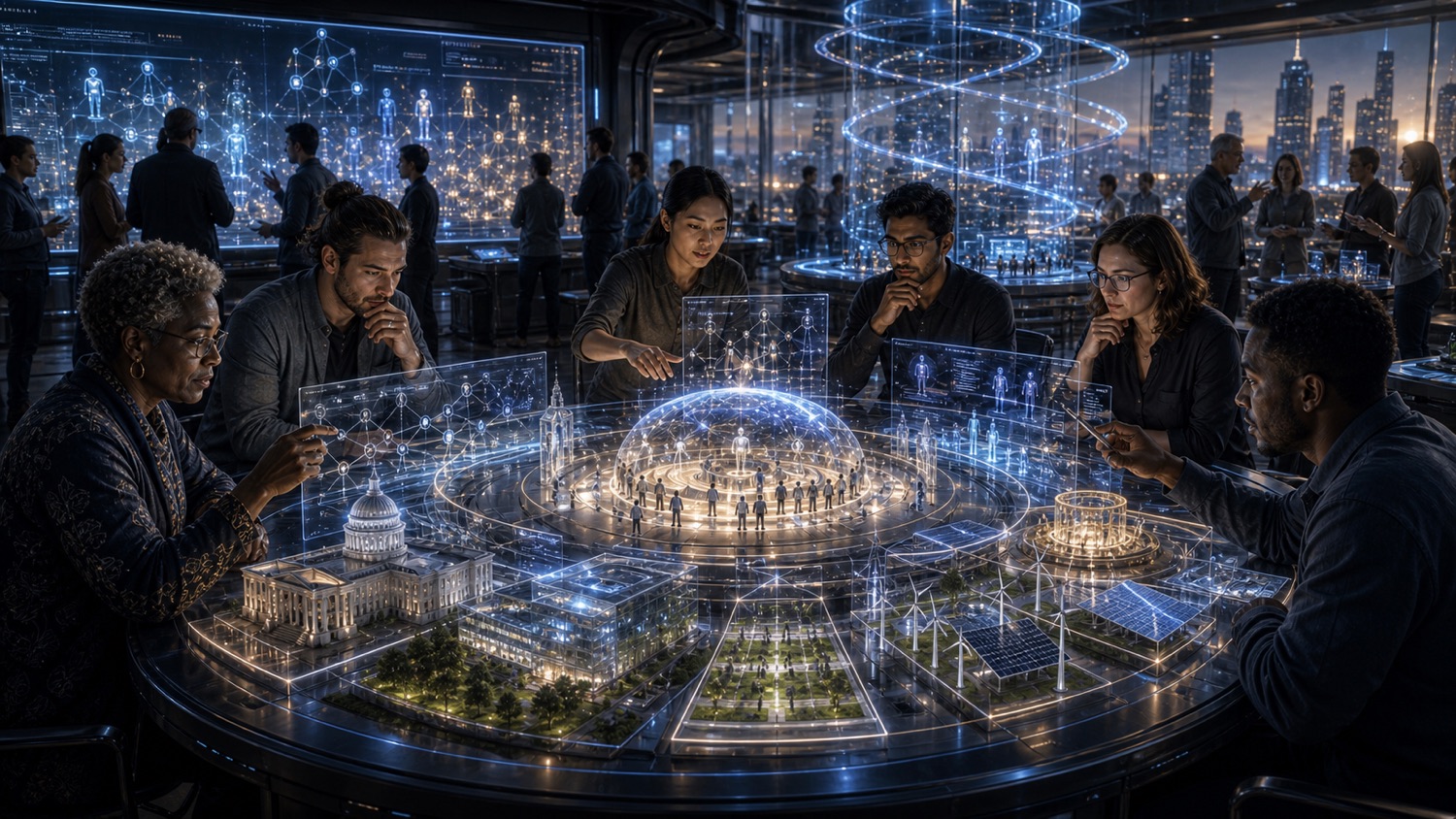
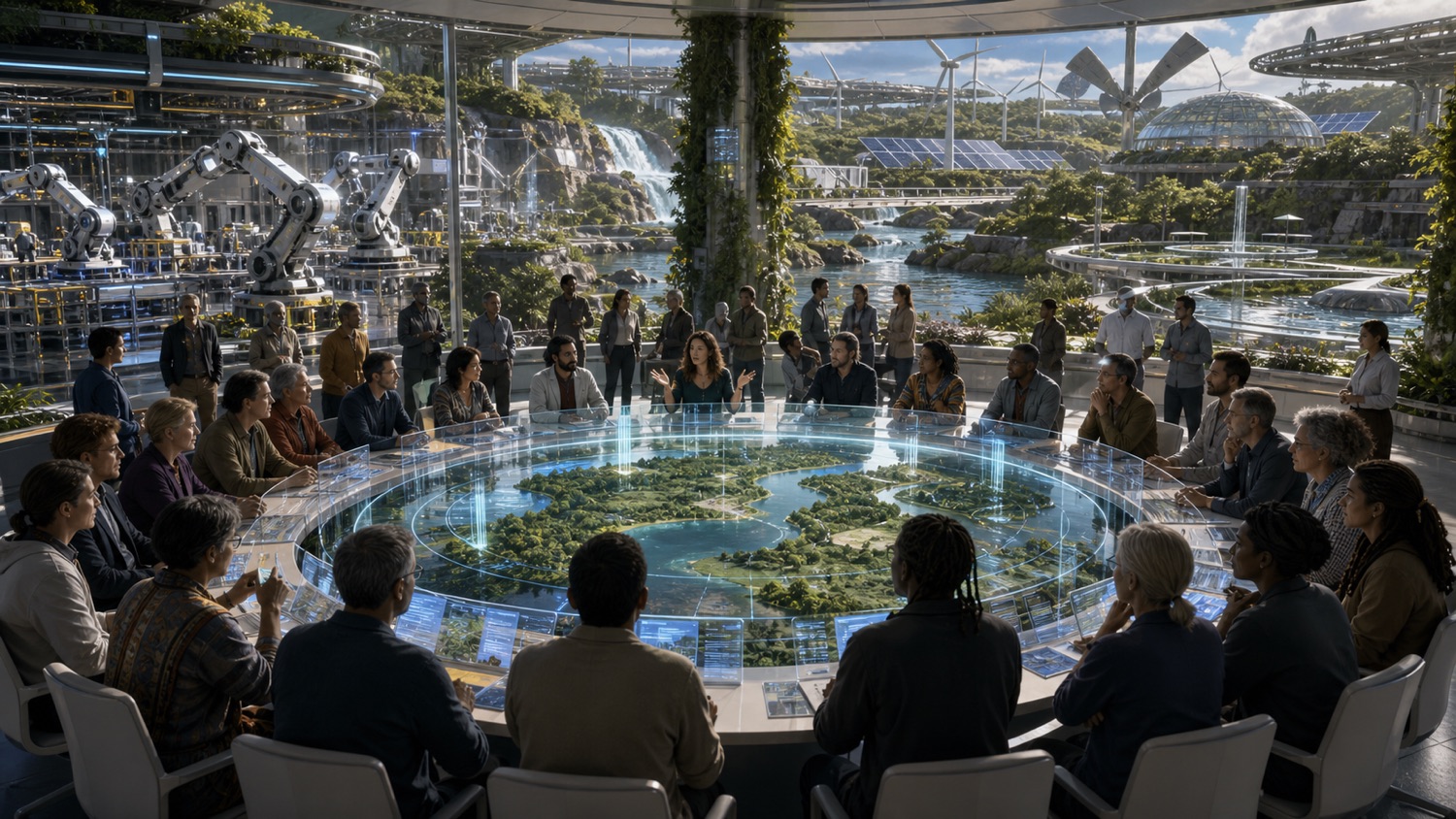
This cycle uses existing White Noise editorial assets as structured prompts. Each image carries a job: synchronize a civilization, design incentives, preserve provenance, govern the commons, and name what stays scarce.

The first coordination job is tempo: align learning, making, governance, and research so abundance does not fragment into private dashboards and disconnected claims.
Read the field note →
A frontier archive becomes valuable when members can see the incentive structure around a thesis, not just the most exciting prediction attached to it.
Open the model →
Coordination improves when members can trace where a claim, prompt, asset, or research question came from and what status it carries today.

More capacity creates more shared surfaces. The useful question is not only what can be made, but how access, norms, and accountability are coordinated.

Abundance does not erase attention, trust, judgment, or time. A coordination POV names the remaining scarcities before the system optimizes the wrong thing.
Signal Briefings expand the Member tier beyond access. They give members a regular stream of usable language, visual prompts, provenance cues, role maps, and decision artifacts they can bring into the Academy, Exchange, Club, or Custom R&D process.
Every public briefing is saved as a reusable reference: old problem, new White Noise view, visual thesis, handoff map, and member next steps.
Members get paired visual prompts and scene logic they can use to brief creative work, Exchange concepts, or research narratives without confusing art with proof.
Each cycle turns the public point of view into terms, role maps, checklists, prompts, and a lightweight action map for builders.
Briefings point members toward relevant Academy tracks, so a big thesis becomes a concrete learning path before it becomes a group project.
When a topic needs shared effort, it becomes a prompt Club members can use to compare roles, assumptions, limits, and next moves.
When a topic has research potential, it becomes a Custom R&D scoping note with assumptions, constraints, success criteria, and a clear non-investment boundary.
The recurring update process has a public standard: ship a polished briefing, use real visual assets, improve the member value proposition, and only add permanent pages when the idea makes the ecosystem easier to navigate.

A crisp argument that names the old coordination gap and the new operating category.

One hero image plus supporting editorial scenes drawn from the White Noise visual library.

A practical coordination kit: study hooks, prompts, provenance notes, and R&D questions that make membership more useful.

Navigation, pages, and offers expand only when they make the ecosystem easier to understand.
Signal Briefings are free to read. Member coordination kits, prompts, and operating notes live behind the Member Portal.
Open the Portal →