Home / Services
WN Services
Route receipt
Your selected service path is loaded.
Open routed section
This page can keep the selected route, first artifact, and spend boundary visible before you scroll into the full services stack.
Choose the right first move: proof, member access, consulting, R&D, or institutional review.
White Noise Inc. works best when the first route matches the job. Start free with the Proof Pack if you still need trust, start Member for the Academy and W.N. AI prototype workflow tied to the White Noise Computer and Totality technologies, use the Consulting Practice for a decision, commission Custom R&D for new evidence, or use the institutional route for partner and capital diligence that should stay outside the member funnel.
Pick the lane that matches your need: inspect proof for free, unlock member tools, use Consulting for a decision, scope Custom R&D before any lab spend begins, or open the institutional diligence route.
Before you choose
Use the Proof Pack if trust is still the blocker. Investor or partner diligence belongs in Investor Relations, and health-related scopes here are research and strategy only, not diagnosis, treatment, or clinical care.
Free first step
Inspect proof
Open the Proof Pack, materials index, and request guide.
Use now
Start member route
Open the paid member trial for Academy, portal, and W.N. AI prototype path.
Need a decision
Contact consulting
Route a business, strategy, or roadmap decision into the consulting intake.
Need evidence
Scope Custom R&D
Start with a written scope before any lab spend or delivery claim.
Institutional route
Open review path
Use the enterprise, partner, or capital diligence route outside the member funnel.
Fastest answer
Choose the job first and let the page point to the right route.
This compresses the first decision into one question before you read pricing, forms, or the full service catalog.
Free and public
Recommended because you need trust, boundaries, and a realistic picture of what White Noise can show now, public materials are enough for the first step, and you want the next action to happen immediately.
Free, public, self-serve.
Use the full route selector below only if you need to tune by proof type or timing.
Live now
Proof Pack and member access are the immediate paths.
Use proof first if you still need trust. Use Member if you want Academy, library, portal, and the W.N. AI prototype workflow.
Scoped work
Consulting and Custom R&D start with a bounded next step.
Consulting begins with a defined advisory route. Custom R&D begins with a written quote before funded lab work starts.
Not this route
Institutional and capital review should not enter through the member funnel.
Investor and partner diligence belongs in Investor Relations, not in consumer membership checkout or a generic service inquiry.
Proof first: free and public
Member: 7-day trial, then $25/mo
Consulting: scoped advisory
Custom R&D: quote before spend
Need trust first? Start with the Proof Pack. Need tools and the full corpus? Start Member. Need an AI-guided singularity roadmap? Open the W.N. AI Expert System. Need a decision? Use Consulting. Need new evidence? Send a Custom R&D scope.
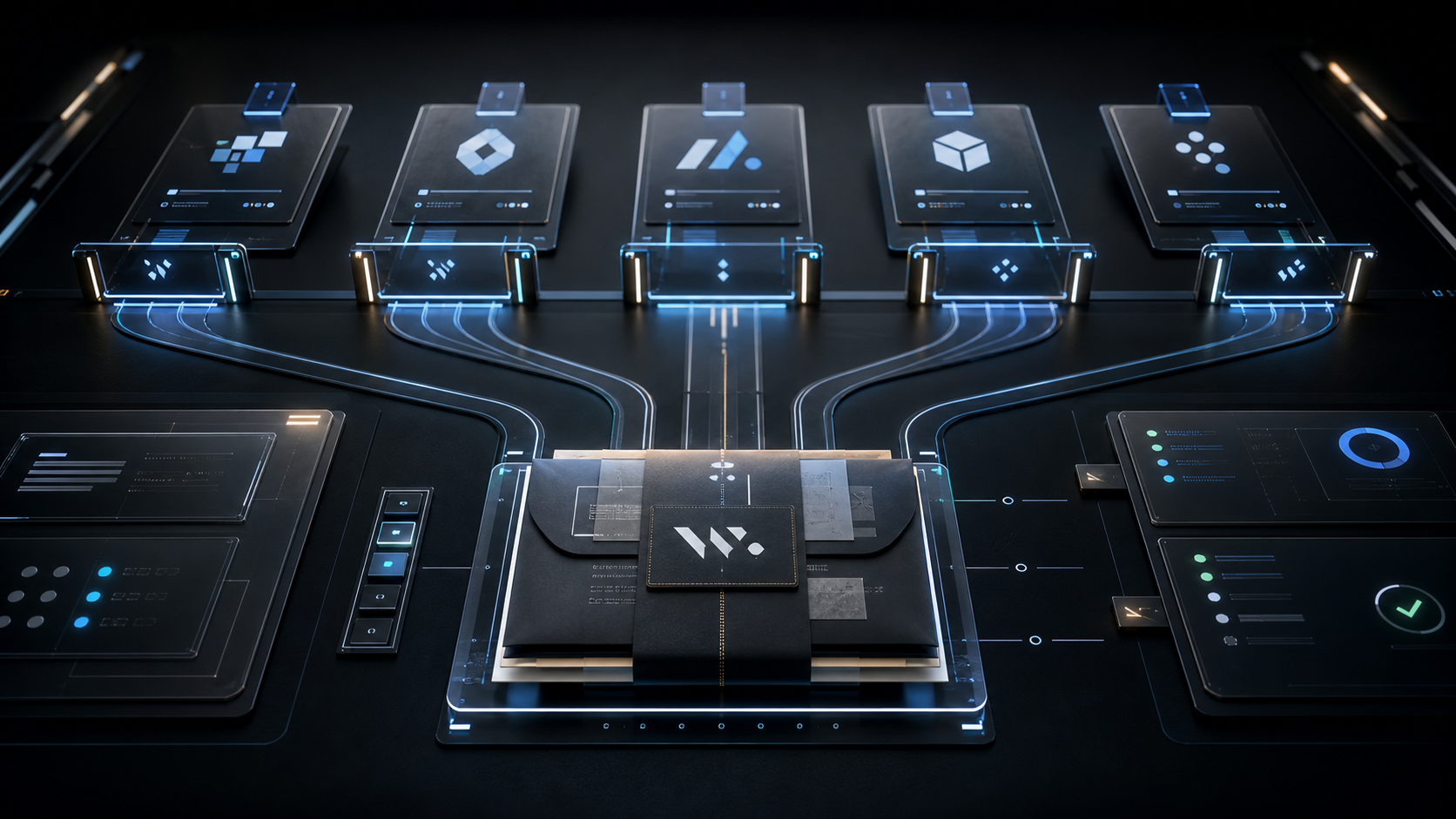
Image provenance: GPT-generated service-to-artifact handoff concept created on 2026-07-02 for White Noise services positioning. Prompt intent: show Proof Pack, Member, Consulting, Custom R&D, and institutional review lanes converging into a first-return packet with provenance and delivery-state checks. Asset: assets/services/wn-services-route-to-artifact-handoff-20260702.png. Review the provenance record. Usage boundary: editorial orientation only, not proof of a live internal console, customer record, production CRM, scientific proof, or completed delivery workflow.
Health-related scopes are research, model-evaluation, and strategy engagements only. White Noise Inc. does not provide diagnosis, treatment, patient-specific medical advice, or regulated clinical services on this site.
Route carry-through
You arrived with a routed service intent.
First artifact
The first useful output stays attached to the chosen route.
Spend boundary
The right route should say what is free, scoped, or quoted before commitment.
Wrong route signal
The selected path should make the incorrect purchase or inquiry feel unnecessary.
This page can carry that intent into the right section and preselect the closest next step so the first form does not start cold.
Live route board
See the service contract in one screen before you scroll into forms, pricing, or proof detail.
Each live route below names the first useful artifact, the spend boundary, and the wrong-job warning. If you still cannot name the first artifact you need back, do not pay yet.
Decision rule
Choose by next artifact, not by the broadest promise.
Proof resolves trust. Member unlocks present-day utility. Consulting frames a decision. Custom R&D buys new evidence. Institutional review stays outside the member funnel.
Free first step
Proof Pack
Use this when trust, claim boundaries, or current public proof are still the blocker.
Inspect proof first Paid utility nowMember
Use this when the first week itself is the product: portal access, Academy, library, and the W.N. AI prototype route.
Compare pricing and checkout Need a decisionConsulting
Use this when the next output should be a memo, model, roadmap, or pressure-tested recommendation.
Route into consulting Need evidenceCustom R&D
Use this when the question needs methods, tests, trade studies, or a result that can survive negative findings.
Request a scoped plan Institutional onlyEnterprise or capital review
Use this when the visitor is a buyer, partner, board, or capital reviewer who needs a bounded diligence packet.
Open institutional reviewTrust blocker
If the real question is belief, stay free and inspect proof before any paid move.
Utility blocker
If you want tools this week, Member is the shortest paid route.
Decision blocker
If leadership needs judgment, use Consulting before inventing a lab scope.
Evidence blocker
If the question needs a test, Custom R&D should start with a written plan.
4Core Services
1000Academy Courses
40Academy Fields
6WN Lab Stack Layers
Route to artifact
World-class service pages make the first return visible before the form.
The strongest product and studio references keep the user artifact, proof state, and next action in one field of view. White Noise applies that pattern by naming the route, spend boundary, wrong-route warning, and first-return packet before the visitor enters checkout, contact, or Custom R&D scoping.
Pattern applied
This section turns the services page from a long menu into a conversion handoff: proof first when trust is unresolved, Member when utility is immediate, Consulting when the next output is judgment, Custom R&D when the next output is evidence, and institutional review when the buyer needs diligence instead of checkout.
Five routes converge only after the first artifact is clear.
Original generated imagery supports service orientation and social preview polish. It is not operating proof, customer data, production CRM, a financial dashboard, or evidence that a speculative technology has shipped.
Artifact before persuasion.
Every service route now asks what the visitor should receive first: proof pack, member workspace, memo, methods plan, or diligence packet.
Page effect: less generic selling, more qualified action.Trust state stays adjacent.
Provenance, generated-image disclosure, delivery-state limits, and wrong-route warnings sit near conversion rather than hiding in footer policy links.
Page effect: aspiration and boundary travel together.Conversion routes are distinct.
Membership, consulting, R&D, and institutional review should not compete as interchangeable calls to action because they return different artifacts.
Page effect: fewer cold starts and fewer wrong purchases.Generated visuals stay accountable.
The image uses abstract interface marks only and carries a sidecar record with prompt intent, source output, hash, dimensions, alt text, and usage boundary.
Page effect: richer imagery without proof inflation.
TrustOpen proof first
UtilityStart Member
DecisionRoute consulting
EvidenceScope R&D
DiligenceOpen review path
Image provenance: original GPT-generated services handoff concept created for this run. Asset: assets/services/wn-services-route-to-artifact-handoff-20260702.png. Review the provenance record. Usage boundary: editorial orientation only, not proof of a shipped internal console, production CRM, staffed service desk, guaranteed response SLA, completed delivery workflow, customer data, financial dashboard, scientific or medical proof, or W.N.-trained image model.
Trust before payment
Inspect the smallest proof surface that resolves the buying risk.
Visitors who hesitate on services usually are not asking for more marketing. They need one verifiable artifact: what is public now, what billing does, how privacy works, how generated visuals are disclosed, or how routed contact behaves when checkout or live handoff is not available.
Buying rule
Read the contract that matches the blocker.
If trust is still unresolved, leave checkout and inspect the right proof surface first. That keeps paid conversion honest and reduces cold contact notes that should have been self-served.
Open the proof pack first.
Use this when the question is whether White Noise can show a credible public work-product shape before payment or scoped work.
Open proof packCheck the materials index.
Use this when you need to know what is public now, what still routes after fit review, and what is explicitly not represented as ready.
Open materials indexInspect billing terms before trial language.
Use this when the blocker is the paid contract: charge timing, guarantee, cancellation posture, or whether checkout is truly live in this environment.
Review billing termsCheck what public forms should not carry.
Use this when the hesitation is data handling, inquiry boundaries, or whether sensitive records belong in this route at all.
Open privacy postureInspect generated-image disclosure.
Use this when you need to separate editorial GPT visuals from proof of a shipped interface, trained model, or completed commercial workflow.
Review visual disclosureUse routed contact if the issue needs a reply.
Use this when the blocker is not self-serve proof but a bounded question about live checkout, service fit, or route choice.
Open routed contactUse this railMatch the blocker to the proof surface.
Serious reviewInvestor quickstartProof, freshness, billing, privacy, disclosure, and routed contact should not require a page hunt at the payment boundary.
Use the institutional packet if the question is diligence, not membership.
Routing evidenceContact-routing evidenceInspect route-state and fallback truth before assuming monitored intake.
Reply ruleFirst-response standardSee what a credible first reply should contain if you do need a human route.
ReturnContinue to member accessCome back to checkout only after the blocker is resolved.
Highest-leverage buying check
Member is the main paid self-serve route, so the purchase contract should appear before the visitor reaches checkout.
Buy Member for present-day utility: Academy access, W.N. Plus books, portal continuity, and the W.N. AI prototype workflow for Computer and product-catalog questions. If the open question is still trust, buyer diligence, investor review, or a bespoke deliverable, leave the paid lane and use the right route first.
The paid decision is small and reversible if the utility is real enough to keep.
The first return is self-serve use, not a sales call or a custom scope.
Do not use checkout to solve proof gaps, partner screening, or capital review.
Member is the correct route when the immediate need is repeated use of courses, books, portal memory, and the W.N. AI prototype route for White Noise Computer, Totality technology, and product-service questions.
First artifact: an active member workspace and first-week learning or prototype workflow.Membership is not proof of a public W.N. AI launch, not a substitute for consulting or Custom R&D, and not an institutional diligence flow for buyers, partners, or investors.
Wrong-route signal: you still need reassurance more than utility.
Free first
Proof Pack
Use when trust and claim boundaries still need inspection.
Decision route ConsultingUse when the next step is a memo, decision frame, or strategy route.
Evidence route Custom R&DUse when the question needs new methods, tests, or findings.
This section is intentionally commercial and narrow: it exists to prevent the wrong purchase, protect trust, and make the revenue path cleaner when Member is actually the right fit.
Start Here
Choose the fastest route into White Noise.
Most visitors do not need the full page first. Pick the path by outcome: trust and orientation, member access, AI expert-system architecture, a strategic decision, or evidence-producing lab work.
Trust boundary
Investor or institutional diligence should use Investor Relations, not the member funnel. Health questions on this page are research and strategy only, not clinical care.
Route 01
Inspect proof first
Best when you need trust, boundaries, and a realistic picture of what White Noise can show now before you pay or inquire.
First artifact: Proof Pack, materials index, and request guide. Spend boundary: Free and public. Not this route: no W.N. AI prototype workspace, Academy unlock, or commissioned lab work yet. Open the proof pack → Route 02Start Member
Best when you want the Academy, the member library, portal access, and the W.N. AI prototype route before buying services.
First artifact: Member Portal access, courses, certificates, and the W.N. AI prototype route. Spend boundary: 7-day trial, then $25/mo or $240/yr if you keep it. Not this route: no investor diligence process and no paid research crew until you move into scoped services. Start the trial → Route 03Build an AI Expert System
Best when you want a custom AI-enhanced guidance layer for singularity strategy, micro-dimensional mastery, or frontier decision support.
First artifact: Expert System Scope Memo with AI integration plan. Spend boundary: Scoped architecture before implementation. Not this route: no claim that singularity technology or micro-dimensional capability is already deployed. Open W.N. AI Expert System → Route 04Use Consulting
Best when the next move is a decision: category design, roadmap pressure-testing, market logic, or venture strategy.
First artifact: Memo, model, roadmap, or decision frame. Spend boundary: Scoped advisory, not open-ended by default. Not this route: consulting does not replace the Custom R&D findings bundle when you need new evidence. Contact consulting → Route 05Scope Custom R&D
Best when the question needs evidence, methods, trade studies, or a negative result you can trust more than a pitch.
First artifact: A written scoped plan before any funded run starts. Spend boundary: No lab work until you approve the quote. Not this route: not the fastest path for general browsing, basic learning, or institutional capital diligence. Request an R&D quote → Route 06Open institutional review
Best for buyers, partners, boards, and capital providers who need a clean diligence packet instead of consumer membership or generic service intake.
First artifact: Enterprise starter brief, pilot gate, proof routes, and diligence packet request path. Spend boundary: Review and diligence first; bound the pilot-sized ask before any member purchase or scoped work. Not this route: not the fastest path for Academy access, W.N. AI utility, or a scoped research quote. Open the enterprise brief →Need trust first
Stay free and inspect the canon before paying for access.
Need utility now
Member is the direct paid route into the Academy, W.N. Plus, portal access, and the W.N. AI prototype route.
Need a decision
Consulting frames strategy before you fund a build or program.
Need evidence
Custom R&D starts with a scoped plan and explicit spend boundary before any lab work begins.
Need capital diligence
Use the capital route inside the enterprise starter brief or Investor Relations for institutional review.
First-Return Packet
Make the first reply feel like an artifact, not a vague follow-up.
World-class product and studio sites reduce uncertainty by keeping the user's object, workflow state, and next route on the same surface. For White Noise services, the equivalent is a first-return packet: the route chosen, the scope question, the evidence already available, and the next artifact the visitor should expect.
Conversion rule
A service route should not just say "contact us." It should tell the visitor what comes back first, what remains unproven, and which spend boundary applies before the conversation moves.
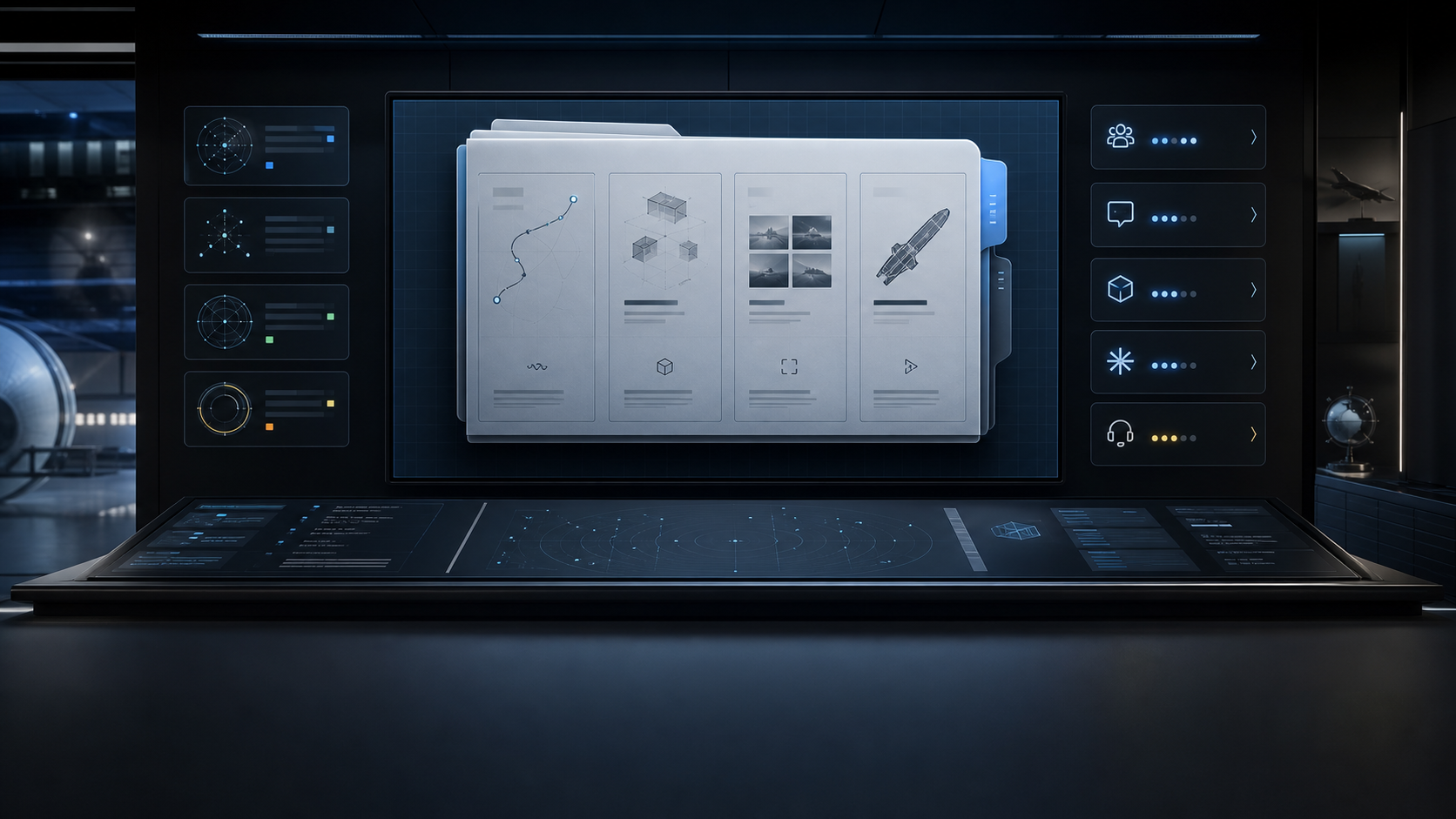
Route, scope, evidence, and next artifact belong in one packet.
This GPT-generated visual is editorial concept art for service conversion clarity. It is not proof of a shipped dashboard, production CRM, staffed service desk, first-response SLA, or deployed speculative technology.
Name the lane before the reply.
Member, consulting, Custom R&D, W.N. AI, and institutional review should each have a different first-return shape.
Prevents generic intake driftCompress the ask into a researchable or decidable question.
The first packet should restate the requested outcome, constraints, timing, and first artifact before a quote, sprint, or review route starts.
Turns ambition into workAttach the proof surface instead of implying proof.
Public materials, generated-image provenance, sample packets, and known blockers should travel with the response so the visitor can inspect status.
Open proof before spendMake the next object concrete.
A useful route returns a memo, scope plan, methods gate, member workspace, expert-system blueprint, or diligence packet rather than a loose promise.
Review provenance
MemberWorkspace and first-week use plan
ConsultingDecision packet or sprint frame
R&DScoped plan before funded work
W.N. AIExpert-system scope memo
ReviewStarter brief and diligence route
Image provenance: original GPT-generated first-return packet concept created for this run. Asset: assets/services/wn-services-first-return-packet-studio-20260702.png. Review the provenance record. Usage boundary: editorial orientation only, not proof of a shipped internal console, production CRM, staffed service desk, guaranteed response SLA, completed delivery workflow, or W.N.-trained image model.
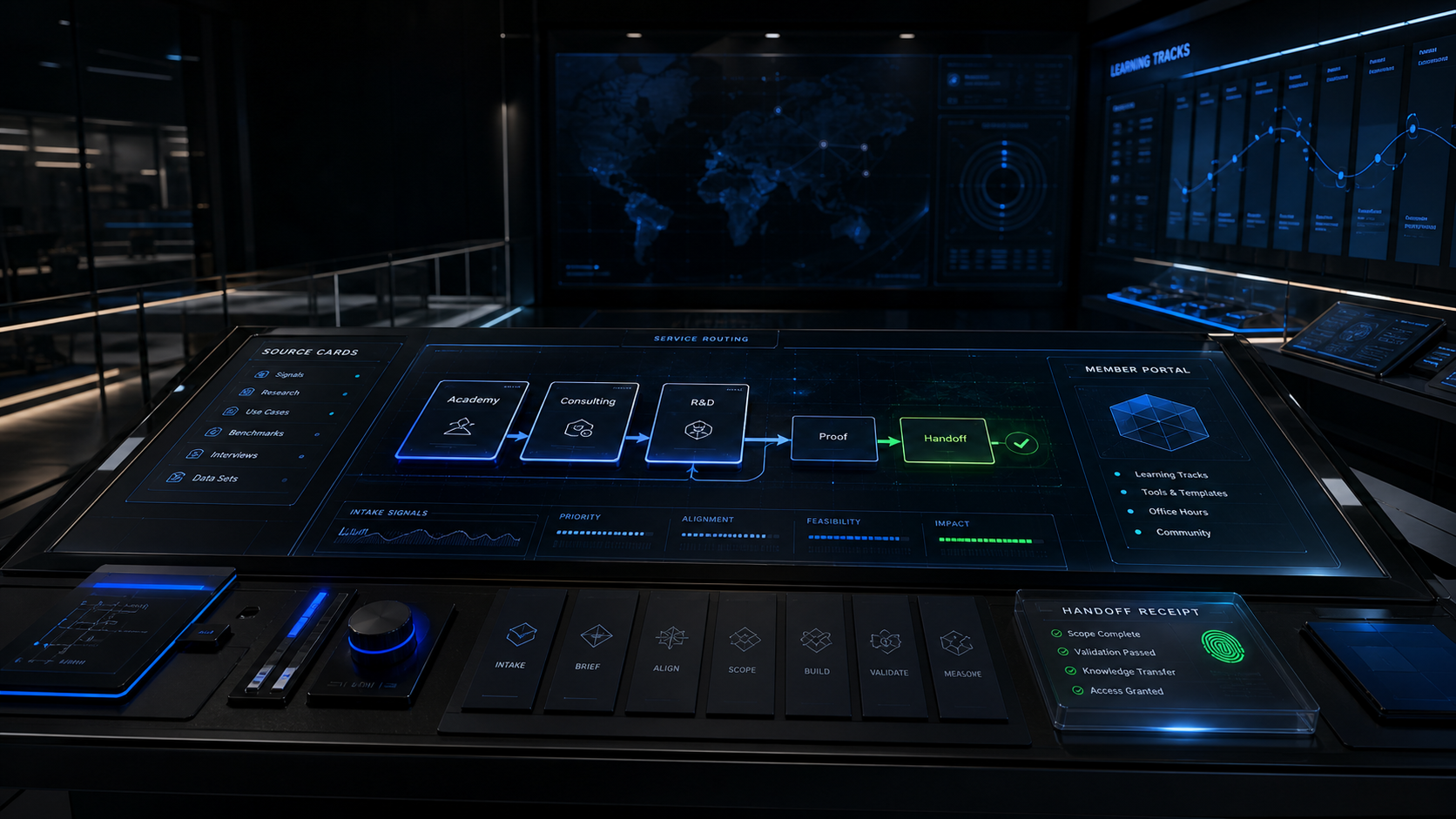
The image system stays cinematic while the engagement path behaves like an operating console.
W.N. AI to Services
Turn a generated image turn into a scoped brief.
Current AI and studio leaders make the object, controls, and next route visible at the same time. For White Noise, the important conversion is not just "generate." It is whether the prompt, assistant note, source trail, receipt, rights state, and first artifact can travel into Member, WN Labs, or Services without starting over.
Applied benchmark
The generated canvas stays dominant, but the route layer is close: evaluate the turn, preserve the provenance packet, decide whether it belongs in member access, scoped lab work, or a services handoff.

The first useful output should leave with its packet and its service route.
This GPT-generated services bridge is product-direction art. It does not claim a public W.N. AI launch, production provider receipt, staffed CRM handoff, completed W.N.-trained image model, or licensed web-scale source ingestion.
Keep the request readable.
The scoped brief should carry the prompt intent, assistant summary, selected image, and the reason the user wants another pass, export, or lab review.
Prompt to artifact, not prompt to loose fileMove the receipt with the work.
Seed, source posture, redraw lineage, rights gate, evaluation checks, alt text, and usage boundary should follow the route into Member, Labs, or Services.
Review provenanceAsk for the next concrete artifact.
A serious user should choose a first-return artifact: implementation brief, rights review, prompt pack, export packet, dataset gate, or evaluation harness.
Route before the work goes coldDo not imply training or clearance.
External references inform product patterns only. Future source ingestion still needs license evidence, ML-training permission, robots/TOS review, provenance, and removal paths.
World-class polish with claim discipline
InspectOpen W.N. AI prototype route
MemberUse the prototype route
ScopeRequest an R&D brief
BoundaryRead visual disclosure standard
Image provenance: original GPT-generated services bridge created for this run. Asset: assets/services/wn-services-ai-turn-scope-bridge-20260630.png. Review the provenance record. Usage boundary: editorial orientation only, not proof of public product launch, production provider setup, commercial-use clearance, staffed delivery workflow, or W.N.-trained image model.
Handoff Receipts
Every serious route should leave with a receipt.
The most polished AI and studio experiences keep state close to action: what the user asked for, what evidence exists, what boundary applies, and what artifact comes next. White Noise services now make that same rule explicit before a visitor enters a form or checkout path.
Applied benchmark
Visible proof and route state reduce ambiguity: members get a saved workspace, consulting gets a decision packet, R&D gets a methods gate, and institutional review gets a diligence packet instead of a generic funnel.
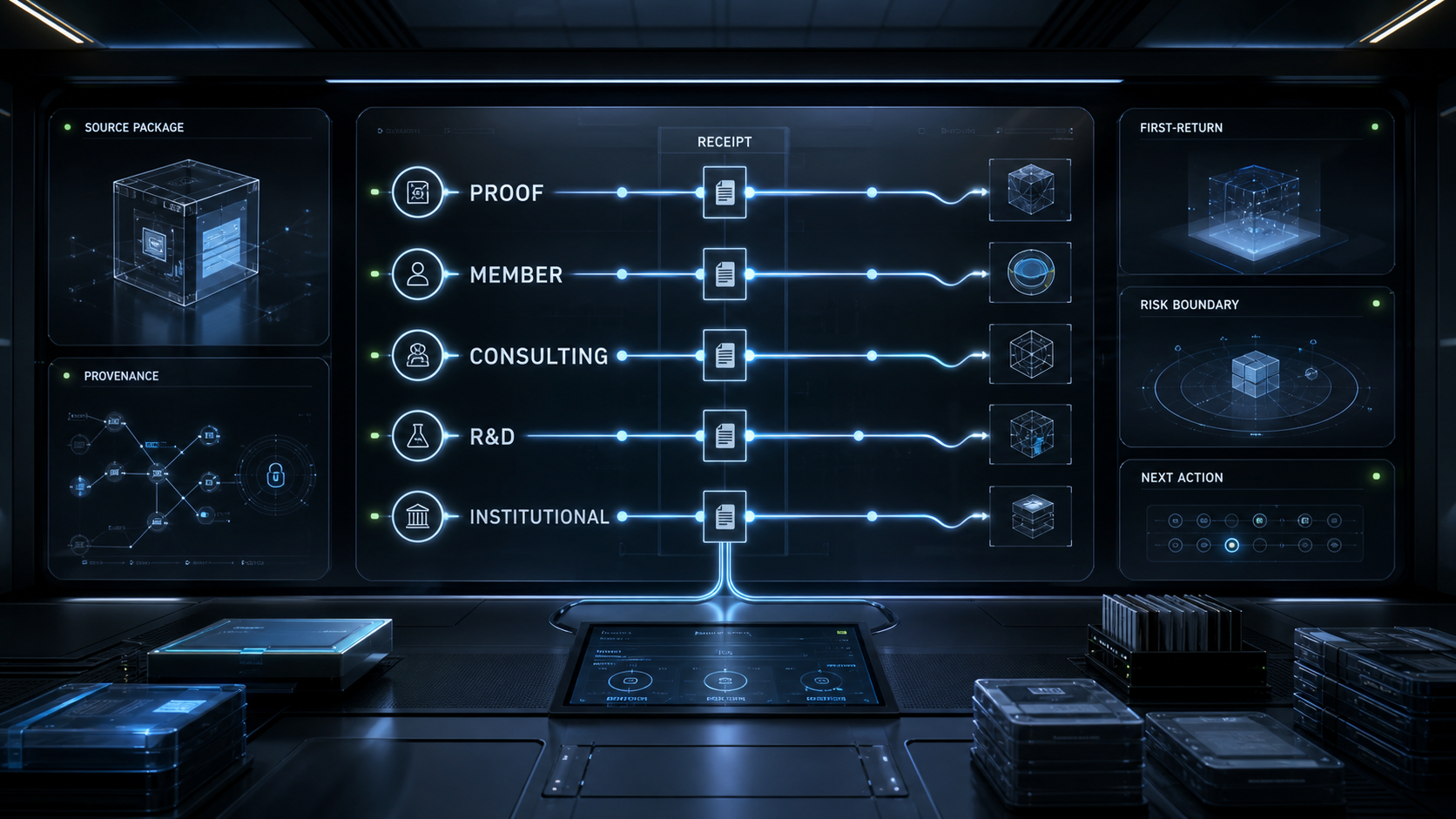
Route, source package, risk boundary, first-return artifact, and receipt stay together.
This GPT-generated services visual is concept art for the public handoff standard. It is not a shipped internal console, staffed CRM proof, live diligence room, or trained W.N. model claim.
Separate buyer intent before persuasion.
Proof, member access, consulting, Custom R&D, and institutional review each need their own first artifact and boundary.
Route clarity before conversionName the evidence state plainly.
The page should say what is live, what is scoped, what is conceptual, and what a reviewer can inspect next.
Less hype, more statusLet the next step carry context.
Forms and route links should preserve the chosen job, expected artifact, spend boundary, and proof route.
Intent survives the handoffMake services feel inspectable.
Cinematic imagery works hardest when paired with receipts, source trails, and explicit non-proof language.
Review provenance
ProofClaim boundary and sample artifacts
MemberWorkspace, Academy, library, W.N. AI prototype path
ConsultingDecision packet and sprint frame
R&DMethods gate and evidence plan
InstitutionalStarter brief and diligence route
Image provenance: original GPT-generated services handoff concept created for this run. Asset: assets/services/wn-services-handoff-receipt-room-20260629.png. Review the provenance record. Usage boundary: editorial orientation only, not proof of a live internal console, staffed CRM, formal diligence room, completed provider integration, or W.N.-trained image model.
How It Works
Learn it · strategize it · build it
Service 01

Learn in the Academy
Study a growing course library across 10 categories and earn certificates that document what you completed and how deeply you engaged.
Browse the Academy →Service 02

Engage the Consultants
Bring in the Consulting Practice — Infinite Strategy, Market Insight, and scenario modeling for real ventures.
Meet the practice →Service 03

Commission Custom R&D
Start from a premade R&D type, including WN Prime spaceship studies, or have White Noise Inc. shape a bespoke research program in a standardized WN Lab.
Scope a project →From Book to Practice
Three services, three ways to enter White Noise Totality.
The services are the practical layer around the book: learn the thesis, apply it to a real venture, or commission a lab program that turns one impossible question into an instrumented research loop.

Academy
Learn the source material like an operator
Courses follow the book's stack from entanglement computing to post-scarcity economics.
Browse courses
Consulting
Turn a wild thesis into a disciplined decision map
Infinite Strategy is the book's governance-and-scenario logic translated into venture choices, category design, product roadmaps, and risk registers.
Meet the practice
Custom R&D
Commission a loop around the hard part
A lab engagement turns a frontier claim into hypotheses, instruments, data, and repeatable next questions.
Scope researchWho It's For
Three ways people put the stack to work
The same body of knowledge serves the curious individual, the venture builder, and the deep-research team — each entering through a different door.
The Learner

Master the architecture
Start free, go deep at your own pace, and earn certificates that prove you understand how compute, matter, and settlement fit together.
The Builder

Design a category
Bring the Consulting Practice into a real venture — Infinite Strategy and scenario modeling turned on your market, your roadmap, your bets.
The Team
Run frontier research
Commission a Custom R&D engagement in a standardized WN Lab — a staffed crew, modern instruments, and open, reproducible results.
Service 01 · Learn
The Academy
1,000 full-length courses across 10 categories, from quantum computing and synthetic biology to settlement systems and civilization-scale leadership. Each track ends in a certificate that proves you understand the stack — the foundation for consulting and R&D alike.
1,000Courses
40Fields
∞Library Access
Learn the stack
Strategic advisory
Service 02 · Strategize
Consulting Practice
Advisory built on the ecosystem's strategic layer. We bring Infinite Strategy, Market Insight, and scenario modeling to real ventures — mapping options, pressure-testing decisions, and designing the categories and roadmaps that turn ambition into a plan.
Engagements range from a single strategy sprint to an ongoing retainer alongside your team.
Consulting handoff
Consulting is for decisions that need structure before a build, hire, fundraise, or research spend.
The consulting path now keeps intent inside the consulting lane: define the decision, route it into the right engagement, and move to R&D only if the work genuinely needs evidence production.
Use consulting when the immediate need is judgment, framing, prioritization, or a decision memo rather than software access or lab execution.
The first output should help you choose what to do next, what not to fund yet, and whether the problem belongs in membership, consulting, or Custom R&D.
The team should recommend a bounded sprint or named engagement first. If the work needs evidence production, we route you into a scoped R&D quote instead.
Consulting Practice
Contact a consultant
Tell us about your venture and what you want to decide. Pick an inquiry type and send it — the page will either route the note through the live portal workflow or tell you that it was only saved locally in this browser.
Consulting is for the moment when the next move needs to become visible.
After You Send
Consulting starts with a route, not a surprise invoice.
The first useful reply should tell you whether the question belongs in a sprint, a longer advisory engagement, another White Noise surface, or nowhere at all. When live routing is configured, White Noise can aim for a first reply in a few business days.
Name the decision
The team checks whether the request is about category design, roadmap pressure-testing, market work, or a broader company decision.
Choose the right engagement
The note is routed into a strategy sprint, multi-week project, retainer conversation, or another White Noise surface if consulting is not the right tool.
Return a concrete next action
You get a recommended handoff such as a meeting agenda, a short list of scoping questions, or a redirect into membership or Custom R&D.
See The First Return
Consulting should feel concrete before you submit the note.
The safest commercial move here is to show the shape of the first consulting artifact, not just promise that one exists later. These previews tell a serious buyer what White Noise should return first and what that return should not imply.
Trust rule
If the right first artifact does not exist yet, the team should say so plainly and route you to the smallest public next step instead of inventing readiness.
Start with one decision, one owner, one next move.
- Should answer: what decision is being made, what options exist, and what should happen next.
- Should not imply: product-market proof, shipped capability, or a hidden lab engagement.
Show whether the problem belongs in Consulting, Member, or Custom R&D.
- Should answer: why this is a strategy sprint, a member onboarding move, or an evidence-production question.
- Should not imply: that every serious inquiry deserves a custom engagement.
Move into R&D only when the next step requires new evidence.
- Should answer: whether a memo is enough or the work now needs a scoped plan and methods path.
- Should not imply: that White Noise should jump straight from orientation into frontier spend.
Public sample delivery artifact: wn-sample-delivery-case-study.html. Use boundary: editorial orientation only, not a named client record, revenue claim, or proof that speculative White Noise systems are deployed.
Demo: messages are saved to this browser first. When live routing is configured, the same note can move into the White Noise workflow without exposing an admin surface on the public page.
Service 03 · Build
Custom R&D
Commission White Noise Inc. to run a bespoke research program on your behalf in a standardized WN Lab, with the methods plan, named tools, and reproducibility bar defined before work begins. The engagement scopes the research crew and candidate toolchain around your question instead of implying a fixed always-on hardware stack.
Start with a premade type — Innovating Computing Solutions, Medical Research & Digital Medicine, BCI & Consciousness Interfaces, Replicator & Programmable Matter, OSTSS & Space Settlement Systems, or WN Spaceships Fleet Research — then customize the question. We also scope fully bespoke research across synthetic biology, energy, governance, AI strategy, and the rest of the Totality stack.
20AI Models
20BCIs
OpenResults Ledger
Built in WN Labs
Premade Custom R&D Types
Pick a starter, then make it yours
These premade types give scoping a clean starting point. Each one is customized around your goal, budget band, constraints, and the evidence you need to make a decision.
Compute
Innovating Computing Solutions
Research quantum, hybrid, AI-accelerated, and entanglement-inspired computing architectures for a new product, toolchain, or technical thesis.
- Architecture options
- Constraint map
- Prototype pathway
Medical Research & Digital Medicine
Scope Digital Medical System ideas, longevity hypotheses, nanomedicine pathways, regenerative research, and safety-first health infrastructure studies.
- Evidence review
- Risk boundaries
- Research roadmap
BCI & Consciousness Interfaces
Compare consent-based neural decoding methods, cognitive loops, signal quality, latency, robustness, and human-in-the-loop research designs.
- Method comparison
- Consent model
- Benchmark plan
Replicator & Programmable Matter
Turn matter-compilation and fabrication ideas into feedstock screens, error-correction checks, and practical manufacturing trade studies.
- Feedstock screen
- Error budget
- Build decision brief
OSTSS & Space Settlement Systems
Model seed packages, closed ecologies, self-building settlement sequences, habitat sizing, propulsion assumptions, and first-break constraints.
- System model
- Closure math
- Feasibility margin
WN Prime Transformer Spaceship Research
Scope the final transformer ship: any-form transformation, White Noise Computer navigation, zero-point drives, forcefields, Replicator power, time travel, interuniversal travel, and future sale planning.
- Prime architecture
- Scale-state map
- Sale-path roadmap
WN Spaceships Fleet Research
Choose one ship class or a whole fleet division and study propulsion, power, autonomy, life support, stargate routing, and Superfactory build paths.
- Ship-class scope
- Subsystem ledger
- Build-path roadmap
WN Supermax Capability Package
Package White Noise Computer intelligence, OSTSS settlement planning, Replicator resource paths, Supermaxed, Human Omega Genome interests, Max Property Ownership, and space-development advantages into one scoped program.
- Capability atlas
- Ownership map
- R&D inquiry
Energy, Zero-Point & Climate Systems
Pressure-test energy claims, closed-loop designs, zero-point assumptions, and climate or planetary restoration interventions against realistic losses.
- Energy ledger
- Loss model
- Intervention ranking
AI Superintelligence & Strategy Tools
Design AI strategy tools, alignment checks, decision simulations, and capability-governance studies for systems that need disciplined oversight.
- Scenario runs
- Alignment checks
- Decision tools
Synthetic Biology & Life Support
Research biosynthesis pathways, food and water closure, programmable biology, and life-support sizing for sealed habitats or resilient infrastructure.
- Pathway shortlist
- Closure model
- Safety review
Governance, Markets & Post-Scarcity
Build mechanism-design studies, reputation systems, market simulations, and post-scarcity policy models for abundance-scale technologies.
- Mechanism map
- Risk register
- Policy prototype
Custom R&D · How it runs
From brief to evidence, in four steps
Every engagement follows the same path, so you always know what happens next — and nothing starts or is charged until you approve the plan.
 One visible path
Step 01
Scope
Turn the ambition into one researchable question, success criteria, and a budget band.
Step 02
Assemble
Provision the WN Lab stack and staff the crew around the approved plan.
Step 03
Run
Execute the work and log every result as it happens: positive, negative, or inconclusive.
Step 04

Deliver
Hand back the findings brief, open ledger, and reproducible methods bundle.
Custom R&D · What you receive
Every engagement hands back the same four things
No matter the question or budget band, the work closes with a standard bundle: a readable answer, a checkable record, and the materials needed to re-run the result.
Evidence you can inspect
Image provenance: this reused editorial asset visualizes provenance review and evidence custody, not a live customer workspace or shipped delivery console. Asset: assets/magazine/provenance-is-the-product.jpg. Review the provenance record.
Deliverable 01
Findings brief
The question, method, result, and limits in plain language.
Deliverable 02

Methods bundle
The data, code, settings, and protocols needed to re-run the work.
Deliverable 03

Open ledger
A transparent record of each run as it happens, not just the final story.
Deliverable 04

Portal reports
Live progress in the Member Portal while the engagement runs.
The bundle is yours to use as you see fit; openness refers to the method and result being checkable, not a claim on what you build on top.
Custom R&D · Common questions
Before you scope a project
The questions members ask most often before commissioning a Custom R&D engagement, trimmed to the answers people need before they take the next step.
 Clear gates before work begins
Who can commission it?
Club Syndicate members
Custom R&D of White Noise Inc. products is the headline perk of the Club Syndicate tier. Anyone can submit the quote form above; an active Syndicate membership is what turns an approved scope into a funded engagement.
What does it cost?
You pick a budget band
Scoping is free and carries no obligation. You choose a budget band on the quote form, and nothing is charged until you approve the written plan and success criteria. Follow-on work reuses your assembled stack instead of starting from zero.
What do I receive?
A brief plus the bundle
Every engagement delivers a plain-language findings brief and the full reproducible methods bundle — logged to an open ledger as the work happens, whether the result is positive, negative, or inconclusive.
Where does it run?
A standardized WN Lab
Work runs in a provisioned WN Lab with a named methods stack, so every run is reproducible and comparable across projects. Track progress from your Member Portal R&D reports once a scope is approved.
Who owns the results?
Yours to use, open by design
You receive the full findings brief and reproducible methods bundle to use as you see fit. Openness here means the method and result are logged to a transparent ledger so the work can be checked and reproduced — not a claim on whatever you bring or build on top. Recognized milestones may also be recorded in the White Noise Library.
How long does it take?
Set by the scope, not the clock
Timeline is fixed when you approve the plan — a tight screen on the standardized stack can close in days, while a multi-stage trade study runs longer. Either way you watch it move in your Member Portal R&D reports, and the open ledger records each milestone as it lands rather than waiting for a final hand-off.
What if it doesn't work?
A negative result is still an answer
Because every run is logged to the open ledger whether the outcome is positive, negative, or inconclusive, you still receive the findings brief and reproducible methods bundle. A clear "this approach doesn't clear the bar, and here's why" is a real result — it spares you from betting on a dead end and narrows what follow-on work needs to explore, instead of the finding being quietly buried.
What won't you take on?
Some questions are out of bounds
We scope work that can be run safely and logged openly. Engagements that depend on harming people, on using a brain–computer interface without consent, on weaponization, or on results that can't be checked are declined — the same "consent, not control" line the rest of White Noise Inc. holds to. If a question can't clear that bar, scoping will say so plainly rather than quietly reshaping it.
How involved do I need to be?
As hands-on as you want
You don't run anything yourself or need to be a domain expert — the research crew does the work on the standardized stack. Your involvement is concentrated at the decision points: the scoping conversation that frames the question, approving the written plan before anything starts, and choosing among the forks the work surfaces. Between those, you can watch every step land in your Member Portal R&D reports as closely or as lightly as you like.
Is my work confidential?
Open method, private inputs
Open by default means the method and result are logged so the work can be checked and reproduced — it does not require publishing who you are or the proprietary inputs you bring. Where a finding depends on confidential data, the ledger records the method and the verifiable outcome while keeping those private inputs out of the public record, and you choose whether the engagement is attributed to you. Openness is about the science being checkable, not about exposing your identity or your edge.
My question isn't on the list?
The focus areas are a starting map, not a fence
The focus areas on the quote form are the domains members commission most often, not the limit of what we'll take on. If your question crosses several of them, or sits in a field that isn't named at all, describe it anyway — scoping starts from your ambition, not from a category. The real test is the same one every engagement faces: can the question be turned into something researchable, run safely on the standardized stack, and logged openly so the result can be checked? If it clears that bar, the absence of a matching label changes nothing.
What happens after delivery?
A result is a foundation, not a dead end
A finished engagement doesn't have to be the last one. Because every job runs on the same standardized stack and ships with a reproducible methods bundle, a second question that builds on the first starts from the assembled stack rather than from scratch — so follow-on work is usually faster and cheaper than the original. You might sharpen the question the open ledger surfaced, push a promising fork further, retest an earlier finding as the field moves, or branch into an adjacent domain. Each follow-on is scoped and quoted on its own, with the same free scoping and approval gate before anything is charged; nothing locks you in, and your results stay yours to extend whenever you choose.
What keeps the result honest?
You're paying for an answer, not a verdict
Because you're commissioning the work, it's fair to ask what stops the crew from simply telling you what you hoped to hear. The safeguards are structural, not promises: success criteria and the baseline to beat are fixed in the written plan before any run, so the bar can't be moved to fit a flattering outcome afterward; every run lands in the open ledger as it happens — positive, negative, or inconclusive — so nothing convenient gets kept and nothing disappointing gets buried; an independent reviewer pressure-tests the methods and keeps the ledger straight; and the whole reproducible methods bundle is yours, so any claim can be re-run and checked rather than taken on trust. The honest "this didn't clear the bar" is worth as much to us as the win — what you're buying is a result you can rely on, not a verdict shaped to your wishes.
Can you research products that aren't built yet?
We research the question, not a finished product
You can point at the White Noise Computer, the Replicator, the Library, or any of the fourteen product theses and commission an engagement on something that doesn't yet exist as shipping hardware — and we'll take it on. It's only fair to be clear about what arrives. Custom R&D works at the level of the open question: we model feasibility, compare the candidate approaches, map what would have to be true for the thesis to hold, and pressure-test it on the standardized stack — simulation, AI models, and analysis — rather than handing you a built device. A result might sharpen which path is most credible, surface the first constraint that breaks it, or quantify how far today's methods actually reach. That's research on a direction, delivered with the same open ledger and reproducible methods bundle as any other engagement, and honest at every step about where the science is already established and where the leap is still speculative.
What if the question needs more than the budget band I picked?
You decide at the fork, never mid-surprise
You pick a budget band up front, and the scope is sized to fit it — so the engagement is built to land a real answer inside the band you chose, not to quietly run over. If the crew finds the question is genuinely bigger than the band can carry, that surfaces at the free checkpoint, not as a late invoice: we tell you what the band can still settle, what would need a larger band or a follow-on engagement, and what the cheaper next question would cost. You then steer — keep the result tight inside the original band, expand it, or stop with what's already in hand. Nothing past the band you agreed to ever happens without you choosing it first, and every option comes with the same open ledger so you can see exactly what each path buys.
What if the answer already exists?
We don't bill you to re-derive what's already known
Because every engagement logs to an open ledger and recognized milestones can enter the White Noise Library, some of what you want to know may already have been settled by earlier work. Scoping checks that first: if a confirmed result already answers your question, we point you to it rather than quoting a run to rediscover it — you're paying for new evidence, not to repeat what the ledger already holds. Where the existing finding is close but not quite yours — run on different assumptions, gone stale as the field moved, or never pushed as far as you need — that becomes a follow-on that starts from the assembled stack and the prior methods bundle, so it's scoped cheaper than a cold start. And if the question is genuinely unanswered, you'll know that too, before anything is charged.
Can several of us sponsor one engagement together?
A syndicate charters one question, and the open ledger keeps it fair
Yes — a Club Syndicate can coordinate member time, compute, Academy credits, notes, and an approved sponsored budget around one research question, then commission the work together. The scope, success criteria, budget band, and contribution rules are agreed by the group before anything is charged, and the open results ledger does double duty: it is the shared record members watch in their Member Portal R&D reports as the work runs. When the engagement closes, the findings brief and reproducible methods bundle go to the named participants under the written charter. Contribution records support attribution, handoff, and project governance; they are not equity, profit share, token upside, liquidity rights, or a promise of return.
Can I stop it early?
You can step off between gates, and only pay for work done
An engagement isn't a single irreversible commitment. The work is scoped into stages with an approval gate before each one, so if your priorities shift, the budget runs out, or an early finding makes the rest moot, you can call it off at the next gate rather than ride it to the end. You're billed for the work actually completed up to that point, not for the unstarted remainder, and whatever the crew has already produced — the open ledger so far, the partial methods bundle, any interim findings brief — is handed over and stays yours. Stopping early is treated as a normal outcome, logged like any other; an unfinished question is still an honest record of where the evidence stood when you chose to pause.
Who actually does the work?
A small named crew, not an anonymous black box
Every engagement is run by a small crew assigned to your question, and you know who they are — the open ledger records which person ran which step, so the methods bundle isn't handed down from somewhere unnamed. The crew's job is to design the test, run it in your provisioned WN Lab, and write down exactly what happened, including the parts that didn't go to plan; an independent reviewer who didn't run the work then checks the claims before anything reaches you. You can ask who's on your crew at scoping, raise a question with them at any gate, and see their entries accumulate in your Member Portal R&D reports as the work runs. The point of naming the people is the same as opening the method: a result you can trace to a person and a step is one you can actually check, rather than one you simply have to trust.
What happens during free scoping?
A conversation before any commitment
Submitting the quote form starts a free scoping conversation, not an invoice. Its only job is to turn your ambition into something researchable: we take the one thing you want to know, agree on how you'll judge a good answer, and check the open ledger and White Noise Library in case the question is already settled or partly so. From that we propose a written plan — the test to run, the baseline to beat, the success criteria, a budget band and timeline — and tell you plainly where the science is established and where the leap is still speculative. You read it, push back, and reshape it as many times as you like; nothing is charged and you owe nothing if you walk away. Only when you approve that plan does an engagement begin, which is also the moment the bar gets locked so it can't be moved to flatter the outcome later.
If I pay for it, does my result become public Library knowledge?
Only confirmed milestones join the open Library — never your inputs
White Noise R&D is open by design, but that openness is precise about what it shares. A result is only promoted into the White Noise Library once it has cleared its success criteria and been independently reproduced and reviewed — a confirmed milestone, not a half-run or a private hunch. What gets promoted is the finding and the methods that make it checkable, so the next member's work can build on settled ground instead of re-deriving it; the other side of that same bargain is that your membership gives you the whole Library to build on in return. What never travels is the proprietary material you brought — the data, samples, and prior work logged as your private inputs stay yours, as does your right to use the result. So promotion enriches the shared body of knowledge with a verified answer, not with the confidential inputs behind it, and most exploratory runs that never clear the bar simply stay on your engagement's ledger and go nowhere near the Library at all.
Custom R&D · In action
The kinds of questions members commission
A smaller set of examples leads the section: enough to show the pattern without turning the page into a catalogue.
 Examples become testable questions
Materials & nanofabrication
Replicator feedstock screening
A member wants candidate feedstocks ranked for a Replicator process. The crew screens each on the standardized stack and returns an open ledger ordering them by yield, stability, and cost, with the methods bundle so the screen re-runs unchanged.
Energy & zero-point
Closed-loop energy modeling
A member asks how close a candidate closed-loop design gets to break-even under realistic losses. The crew sweeps configurations and returns a ledger comparing where each approach gains or sheds energy — and where the claim holds or fails.
Grand Challenge frontier
Milestone feasibility study
A member sketches a Kardashev- or Omega-scale milestone and wants it tested for physical feasibility. The crew models candidate approaches and returns a ledger ranking each by feasibility margin and the first constraint that breaks — logged either way.
Brain–computer interfaces
Decoding-method comparison
A member wants candidate signal-decoding methods for a consent-based interface compared on the same data. The crew benchmarks each on the standardized stack and returns an open ledger ranking them by decode accuracy, latency, and robustness to noise — with the methods bundle so the comparison re-runs unchanged.
Longevity & healthspan
Intervention-target screening
A member wants candidate longevity targets prioritized before committing to one. The crew screens each on the standardized stack and returns an open ledger ranking them by predicted effect size, off-target risk, and strength of supporting evidence — flagging which signals are robust and which rest on a single study, with the methods bundle so the screen re-runs unchanged.
WN Immortality Genome
Genomic-upgrade feasibility study
A member wants the proposed Immortality Genome broken into testable parts — which aging hallmarks a computational genomic edit could plausibly address, and at what confidence. The crew models each mechanism on the standardized stack and returns an open ledger ranking them by predicted effect on healthspan, off-target and reversibility risk, and the first constraint that breaks — with the methods bundle so the study re-runs unchanged as the science moves.
WN Immortality · DMS & wearables
Continuous-management modeling
A member wants to know whether a portable white-noise controller — worn as a watch, lens, or BCI — and the Digital Medical System behind it could keep a genomic upgrade corrected in real time across a population. The crew models sensing cadence, correction latency, and network scaling on the standardized stack and returns an open ledger ranking architectures by coverage, safety margin, and the load at which management degrades — with the methods bundle so the model re-runs unchanged.
Health AI review
Clinical-model risk comparison
A member building a health-research or digital-medicine tool — an AI diagnostic, a continuous-monitoring model, a triage or risk-prediction system — wants candidate models compared honestly before any regulated clinical use is considered. The crew runs each on the standardized stack against the same held-out clinical data and returns an open ledger ranking them by real diagnostic accuracy rather than a headline score, how reliably that holds across ages, sexes, devices, and care settings instead of only the population it was trained on, the false-alarm and missed-case rate at the threshold that would actually be used, and the first subgroup or condition where the model quietly fails — flagging which tools look robust and which only look strong on the validation slide, with the methods bundle so the comparison re-runs unchanged as the model and the data improve. This is pre-deployment research analysis, not diagnosis, treatment, or patient-specific medical advice.
Space systems & propulsion
Propulsion trade study
A member weighing several propulsion approaches for a mission profile wants them compared on equal terms before committing. The crew models each on the standardized stack and returns an open ledger ranking them by delta-v per unit mass, thermal and structural margins, and the first constraint that breaks under load — with the methods bundle so the trade re-runs unchanged as the mission spec evolves.
Climate & planetary restoration
Intervention impact modeling
A member weighing candidate climate or ocean-restoration interventions wants them compared before backing one. The crew models each on the standardized stack and returns an open ledger ranking them by projected effect, side-effects and reversal risk, and the conditions under which the benefit holds or unwinds — with the methods bundle so the comparison re-runs unchanged as assumptions are updated.
Synthetic biology
Biosynthesis pathway screening
A member wants candidate biosynthesis pathways for a target molecule ranked before committing to one. The crew screens each on the standardized stack and returns an open ledger ordering them by predicted yield, metabolic burden, and containment risk — flagging which routes are robust and which hinge on a single fragile step, with the methods bundle so the screen re-runs unchanged as the design is refined.
Governance, security & cryptography
Protocol resilience review
A member wants a proposed on-chain governance or cryptographic scheme stress-tested before it ships. The crew models failure and attack paths for each design on the standardized stack and returns an open ledger ranking them by resilience under adversarial pressure, the trade-offs each makes, and the first condition under which it breaks — with the methods bundle so the review re-runs unchanged as the spec evolves.
Robotics & automation
Manipulation-policy comparison
A member wants candidate control policies for an autonomous manipulation task compared before committing hardware. The crew trains and benchmarks each on the standardized stack and returns an open ledger ranking them by task success rate, sample efficiency, and robustness to sensor noise and disturbance — flagging which policies generalize and which overfit the rig, with the methods bundle so the comparison re-runs unchanged as the task is refined.
Quantum computing (W.N. Chip)
Algorithm-advantage check
A member with a hard optimization or simulation problem wants to know whether a candidate quantum algorithm actually beats the best classical approach once decoherence, gate error, limited qubit counts, and shot noise are accounted for. The crew runs each formulation across the standardized quantum backends against a strong classical baseline and returns an open ledger ranking every approach by solution quality, time-to-result, and the problem size at which any advantage holds or disappears — with the methods bundle so the check re-runs unchanged as hardware improves.
Food, water & life-support
Closed-loop life-support sizing
A member designing a sealed habitat or long-duration mission wants candidate closed-loop life-support configurations — water recovery, air revitalization, and food production — compared before committing to one. The crew models each on the standardized stack and returns an open ledger ranking them by resource-closure fraction, mass and power cost per crew-day, and the first subsystem that fails under load — with the methods bundle so the comparison re-runs unchanged as the mission profile evolves.
Economics, markets & mechanism design
Incentive-mechanism stress test
A member designing a token reward, auction, or governance-vote mechanism wants to know how it behaves before it goes live — and where rational players can game it. The crew simulates each design on the standardized stack under strategic and adversarial agents and returns an open ledger ranking them by the outcomes they actually produce, their resistance to manipulation and collusion, and the first assumption under which the incentives invert — with the methods bundle so the comparison re-runs unchanged as parameters are tuned.
Immersive worlds & simulation
Engineered-verse coherence test
A member building a persistent engineered verse (Metaland) wants to know whether their world holds together as concurrent population, object count, and interaction rate climb — before players ever feel it break. The crew runs each world configuration on the standardized stack under rising synthetic load and returns an open ledger ranking them by the population at which state stays consistent, the latency and desync players actually experience, and the first subsystem that buckles under crowding — with the methods bundle so the test re-runs unchanged as the world grows.
Quantum sensing & metrology
Sensor-scheme sensitivity comparison
A member needs to measure a faint signal — a weak field, a tiny time shift, a small rotation — at the edge of what is physically detectable, and wants to know which sensing scheme actually delivers the best real-world sensitivity once noise, drift, and decoherence are counted, not the textbook ideal. The crew runs each candidate scheme on the standardized stack against the same target and returns an open ledger ranking them by sensitivity at a fixed measurement time, stability under drift and environmental noise, and the regime where any quantum advantage over a classical sensor holds or vanishes — with the methods bundle so the comparison re-runs unchanged as the hardware improves.
Omnipresent Internet & connectivity
Coverage-topology comparison
A member planning an always-on connectivity mesh — satellites, ground relays, and edge nodes — wants candidate network topologies compared before committing to one. The crew models each on the standardized stack and returns an open ledger ranking them by reachable coverage fraction, latency and resilience under node loss, and the load at which the mesh degrades into dead zones — flagging which topologies stay connected under failure and which hinge on a single critical relay, with the methods bundle so the comparison re-runs unchanged as the network scales.
Transportation, mobility & autonomous vehicles
Autonomy-stack safety trade study
A member designing an autonomous mobility system wants candidate planning-and-perception stacks compared on equal terms before committing one to the road. The crew runs each on the standardized stack across the same traffic scenarios — dense merges, occluded crossings, rare edge cases, degraded sensors — and returns an open ledger ranking them by safety margin (intervention and near-miss rate), trip efficiency and energy cost, and robustness when conditions fall outside the training set — flagging which stacks generalize and which quietly overfit the test route, with the methods bundle so the trade study re-runs unchanged as the operating domain widens.
Education, learning & skill acquisition
Curriculum-sequencing comparison
A member building a learning track — for WN Academy or an internal team — wants candidate ways of ordering and pacing the material compared before locking a syllabus. The crew models each sequence on the standardized stack against the same simulated learners and returns an open ledger ranking them by mastery reached per hour of study, how well knowledge survives weeks later, and where learners stall or drop out — flagging which orderings build durable understanding and which merely feel fast in the moment, with the methods bundle so the comparison re-runs unchanged as the curriculum grows.
Information theory & signal processing
Signal-recovery method comparison
A member with a faint pattern buried in noise — a weak channel, a sparse code, a structure they suspect is real but can't cleanly pull out — wants candidate ways of separating signal from noise compared before committing to one. The crew runs each method on the standardized stack against the same generated data, where the true signal is known, and returns an open ledger ranking them by how much real structure they recover versus how much noise they mistake for signal, how gracefully they hold up as the noise floor rises, and the point at which each one stops recovering anything at all — flagging which methods find a pattern that isn't there and which stay honest, with the methods bundle so the comparison re-runs unchanged as the data or the noise model changes.
Mathematics, logic & formal proof
Proof-strategy comparison
A member has a claim they believe is true — a bound, an invariant, a property they want to stand on — and several possible ways to establish it, but no sense of which line of attack actually closes. The crew sets each candidate strategy against the same precisely stated conjecture on the standardized stack and returns an open ledger ranking them by how far each one gets before it stalls, where the gap or hidden assumption sits, and how much the result weakens if a premise is relaxed — separating the strategies that fully close from the ones that only look like they do, with the methods bundle so every step re-checks unchanged as the statement is sharpened.
Neuroscience & consciousness research
Consciousness-marker comparison
A member wants to know how reliably a system or state can be told apart as conscious or not — and which candidate neural marker actually carries that signal — before relying on one. The crew runs each measure on the standardized stack against datasets where the underlying state is independently known — wakefulness, sleep stages, anesthesia, disorders of consciousness — and returns an open ledger ranking them by how cleanly each separates aware from unaware states, how well that holds across individuals and recording conditions, and the first regime where a marker gives a false read — flagging which measures track awareness itself and which only track arousal or attention, with the methods bundle so the comparison re-runs unchanged as the theory and the data improve.
WN Exchange & generative systems
Generator-quality comparison
A member building a generative system for the WN Exchange wants candidate generators compared before minting a collection on one. The crew runs each on the standardized stack against the same prompts and seeds and returns an open ledger ranking them by output quality, how much genuine variety they produce versus how often they collapse to a handful of near-identical templates, how original the results are rather than derivative of the training set, and the point at which quality degrades as the collection scales — flagging which generators hold up across a full mint and which only shine on cherry-picked samples, with the methods bundle so the comparison re-runs unchanged as the model is tuned.
Cosmic engineering & megastructures
Megastructure-architecture comparison
A member thinking decades ahead about climbing the outward scale wants rival megastructure architectures — Dyson-swarm collector patterns, orbital ring layouts, statite constellations — compared on the same terms before betting a roadmap on one. The crew models each on the standardized stack against the same star, mass budget, and bootstrap constraints and returns an open ledger ranking them by fraction of available energy actually captured, how the build scales as units are added, structural and orbital stability over time, and the materials-and-launch cost to reach first useful output — flagging which designs degrade gracefully when a fraction of units fail and which depend on assumptions that quietly break at scale, with the methods bundle so the comparison re-runs unchanged as materials, launch costs, and the target scale improve.
WN OSTSS & settlements
Settlement-architecture comparison
A member planning a self-deploying off-world settlement wants rival settlement architectures — different seed-payload mixes, ecological-closure strategies, and self-management schemes — compared on equal terms before committing one to a launch window. The crew models each on the standardized stack against the same destination, mass-and-power budget, and arrival conditions and returns an open ledger ranking them by how completely each closes its own ecology (water, air, food, materials looped versus resupplied), how long it can run unsupported when a subsystem fails, how the settlement scales as more seeds are added, and the energy-and-mass cost to reach first self-sufficiency — flagging which designs degrade gracefully when one loop breaks and which quietly depend on a resupply line that won't be there, with the methods bundle so the comparison re-runs unchanged as closure technology, launch costs, and target sites improve.
Superintelligence & theory of everything
Unifying-framework comparison
A member chasing the deepest White Noise thread — a single framework that explains more of reality from fewer assumptions — wants rival candidate theories, model families, or proposed unifications compared honestly before betting a research program on one. The crew formalizes each on the standardized stack and tests them on the same ground: how much known phenomena each actually accounts for versus quietly assumes, how few free parameters it needs to do so, whether it makes a new prediction that could be checked rather than only re-describing what we already knew, and where each one first breaks or collapses into hand-waving. The open ledger ranks them by real explanatory reach per assumption — separating a framework that genuinely unifies from one that just relabels the gaps — and the reproducible methods bundle lets the member re-run the whole comparison as a contender is sharpened or a new candidate appears.
Acoustics, audio & white-noise engineering
Noise-profile efficacy comparison
A member shaping a white-noise field — for a sleep product, a focus space, a tinnitus-masking device, or a calming environment — wants candidate noise profiles compared before tuning a product around one. The crew runs each profile on the standardized stack against the same target conditions and returns an open ledger ranking them by how effectively each masks the intrusive sound or sustains the desired state, how that holds across rooms, ears, and playback hardware rather than only in the ideal lab room, and the point at which a profile stops helping or starts to fatigue the listener — flagging which spectra deliver a real, repeatable effect and which only sound impressive on a spec sheet, with the methods bundle so the comparison re-runs unchanged as the hardware and the use case evolve.
AI tools & strategy
Model & tooling comparison
A member deciding which AI models, agents, or tooling to build a workflow around wants the candidates compared honestly before committing a roadmap to one. The crew runs each on the standardized stack against the same realistic task set the member actually cares about and returns an open ledger ranking them by how well each does the real job rather than how it scores on a generic leaderboard, how reliably it holds up on the messy and adversarial cases instead of only the clean ones, what it truly costs at the member's expected volume, and where each one first fails, hallucinates, or quietly degrades. The methods bundle ships every prompt, harness, and dataset so the member can re-run the whole comparison unchanged as models update and prices move — separating the tool that genuinely fits the workflow from the one that only demos well.
White Noise Replicator
Matter-assembly approach comparison
A member drawn to the Replicator thesis — assembling a target structure from a simple feedstock rather than machining it — wants the candidate routes weighed honestly before betting a research direction on one. The crew models each approach on the standardized stack and returns an open ledger ranking them by how much of the target each can plausibly assemble and at what fidelity, how the energy and time cost scales as the object grows more complex, how tightly each holds tolerances before errors compound, and the first physical limit that stops a route cold rather than the one that sounds most futuristic. The findings brief is honest about where the underlying science is established versus where the leap is still speculative, and the methods bundle ships so the comparison re-runs unchanged as the assumptions are sharpened — separating the path worth pursuing from the one that only reads well on paper.
White Noise Library
Generate-and-verify approach comparison
A member drawn to the Library thesis — every thing that can exist, returned on demand rather than searched for — wants the candidate ways of generating-then-verifying a valid artifact weighed honestly before building a direction around one. The crew runs each approach on the standardized stack and returns an open ledger ranking them by how much of the requested possibility space each can actually reach, how reliably the verification step catches a plausible-but-wrong result before it is handed back, how the cost and time scale as requests grow rarer and more specific, and the first regime where an approach starts returning confident fabrications instead of admitting it cannot. The findings brief keeps the established-versus-speculative line visible — retrieval and generation are real today, an on-demand index of everything that can exist is the speculative leap — and the methods bundle ships so the comparison re-runs unchanged as the generators and checks improve, separating the route that returns trustworthy things from the one that only looks complete.
White Noise Computer
Compute-substrate approach comparison
A member drawn to the Computer thesis — modeling power treated as a field to be read rather than a core to be clocked — wants the candidate ways of organizing such a substrate weighed honestly before betting a roadmap on one. The crew runs each approach on the standardized stack and returns an open ledger ranking them by how much useful modeling work each can actually extract from the available correlations, how the answer quality holds as a problem is scaled up rather than collapsing into noise, how addressing and read-out cost grows as more of the substrate is engaged, and the first physical or information-theoretic limit that stops an approach cold rather than the one that simply sounds most ambitious. The findings brief keeps the established-versus-speculative line plainly visible — entanglement and correlation structure are real today, while an addressable, universe-wide computer is the speculative leap — and the methods bundle ships so the comparison re-runs unchanged as the assumptions are sharpened, separating the direction worth pursuing from the one that only reads well on paper.
Photonics, optics & light engineering
Optical-design comparison
A member engineering with light — a laser source, an integrated photonic circuit, a waveguide or lens train, a free-space optical link — wants candidate optical designs compared honestly before committing a build to one. The crew models each design on the standardized stack against the same target and returns an open ledger ranking them by how much light actually makes it through end to end once insertion, coupling, and scattering losses are counted rather than the ideal-component figure, how cleanly beam or mode quality holds across temperature swings and real fabrication tolerances instead of the nominal spec, the bandwidth or spectral purity each genuinely delivers, and the first effect — dispersion, thermal drift, nonlinearity, alignment sensitivity — that degrades performance in practice. The methods bundle ships so the comparison re-runs unchanged as components and tolerances improve — separating the optical path that holds up on the bench from the one that only closes on the data sheet.
Illustrative examples, not specific commissioned results. Every engagement is scoped to your own question.
Choosing a service
Consulting or Custom R&D — which fits?
Both live on this page and often work together. The simplest way to tell them apart: Consulting helps you decide what to do, while Custom R&D runs the research to find out.
Decide first, test next
Service 02
Choose Consulting for a decision or plan
Map options, pressure-test a decision, or design the category and roadmap around your venture. Contact a consultant →
Service 03
Choose Custom R&D for lab evidence
Run a researchable question on a standardized WN Lab stack, with reproducible results and a methods bundle. Scope a project →
Not sure? Many members start with a Consulting sprint to frame the question, then commission Custom R&D to answer it.
Custom R&D · Frontier terms, decoded
The words on this page, in plain language
A short reference for the terms you need to read the page and your own quote with confidence.
 Plain words for frontier work
Scoping
The free conversation that shapes it
The no-charge, no-obligation conversation that turns a rough ambition into a plan the lab can run — a researchable question, agreed success criteria, and a budget band, written down. It ends at the approval gate: nothing is charged and no work begins until you approve what scoping produced. Distinct from the lab work it precedes — scoping decides what to ask and how the answer will be judged; the engagement then goes and finds it.
Researchable question
What scoping produces
The narrow, measurable, falsifiable form of a broad ambition. Scoping rewrites a fuzzy goal into a question the lab can actually answer — distinct from the success criteria, which set what counts as a good answer.
Success criteria
The agreed bar
The written test, set with you during scoping before any work begins, for what counts as a useful answer — so the ledger is read against a fixed target rather than a moving goalpost.
Standardized WN Lab stack
The common bench
The common methods and tooling baseline documented for an approved engagement, so results stay comparable and can be reproduced against the same recorded setup.
Open results ledger
The transparent record
The open-by-default, reproducible log of every run — positive, negative, or inconclusive. Recognized milestones can enter the White Noise Library; nothing useful gets buried.
Methods bundle
The reproducible package
The data, code, parameters, and protocols packaged so the work re-runs unchanged on the standardized stack. If a result can't be reproduced, it isn't claimed.
Findings brief
The human-readable layer
The plain-language write-up that travels with the ledger and methods bundle: what the work found, what it means, and — just as clearly — what it does not claim.
Budget band
The cost range you pick
The spending tier you choose on the quote form during scoping — not a line-item invoice but the range the engagement is sized to fit. You approve it before anything is charged, and follow-on work reuses your assembled stack instead of paying to rebuild it.
Research crew
The team on your question
The people assembled around your engagement once the plan is approved — the researchers who run the work on the standardized stack, keep the open ledger honest, and write the findings brief. "The crew" you'll see in the case studies; matched to your question, not a fixed department.
Approval gate
The no-charge checkpoint
The point between scoping and the lab where you read the written plan — researchable question, success criteria, budget band — and decide whether to proceed. Nothing is charged and no work begins until you approve it, so scoping stays free and obligation-free.
Follow-on work
The next question, cheaper
A later engagement that builds on one already run. Because your standardized stack, methods bundle, and open-ledger history are already in place, follow-on work starts from what's still open rather than rebuilding the bench — so a second question is scoped against a smaller budget band than the first.
Trade study
The head-to-head comparison
A structured run that puts several candidate approaches through the same test on the standardized stack and ranks them against the agreed success criteria — the "compared on equal terms" shape behind the case studies. A quick screen narrows many options fast; a trade study weighs the finalists in depth and names the first constraint that breaks each one.
Screen
The fast first pass
A wide, low-cost run that ranks many candidates quickly to cut a long list down to the few worth studying in depth — the "screening" you'll see across the case studies. It trades fine detail for breadth, so a promising shortlist often moves on into a deeper trade study; either way every run is logged to the open ledger.
Decision point
The fork where you steer
A planned pause inside a multi-stage engagement where a result is in and the next direction is yours to set — continue, change course, or stop. Distinct from the approval gate, which comes once before any work begins; decision points recur during the work, on the open ledger's evidence, so a Program or Flagship band stays steerable rather than locked to its first plan.
Negative result
An answer, not a failure
A run that shows an approach doesn't work, or doesn't beat the alternatives, against the agreed success criteria. It's logged to the open ledger as cleanly as a positive one — because knowing what doesn't work, and the first constraint that breaks it, narrows the next question and saves the cost of chasing a dead end. Distinct from an inconclusive result, where a run can't yet decide either way and points to what would settle it.
Inconclusive result
The honest "not yet"
A run that can't settle the question either way against the agreed success criteria — the evidence is too noisy, too thin, or too close to call. It's logged to the open ledger as cleanly as any other outcome, and its value is in what it points to next: the missing data, the tighter test, or the larger sample that would decide it. Distinct from a negative result, which does answer the question — "this doesn't clear the bar" — where an inconclusive one leaves it open and names what would close it.
Baseline
The reference to beat
The honest yardstick a candidate approach is measured against — the best existing method, the current standard, or a deliberately strong alternative. A result only counts as an advance if it clears the baseline, so the case studies pit each option against one rather than reporting a number in isolation. Without a baseline, "it works" means little; against one, the ledger can say by how much, and where the edge holds or vanishes.
Reviewer
The independent check on every claim
The person on the crew whose job is to pressure-test the work rather than produce it — vetting the methods, keeping the open ledger straight, and confirming a result actually clears its success criteria and baseline before it's reported. Separating who runs the work from who checks it is what stops an engagement from quietly confirming what you hoped to find. Distinct from the research crew that carries out the runs, and from the success criteria the reviewer checks against — the reviewer is the standing check that the answer you're paying for is one you can rely on, not one shaped to your wishes.
Milestone
A result worth recording
A result solid and checkable enough to stand on its own and be marked in the open ledger as a step the engagement has genuinely reached — a candidate that clears its baseline, a stage of a trade study settled, a question answered against its success criteria. Recognized milestones can also enter the White Noise Library, so a confirmed result outlives the engagement that produced it. Distinct from a decision point, which is the fork where you choose the next direction, and from the success criteria, which set the bar a milestone has to clear — a milestone is the moment the evidence is in and logged, not the choice you make next or the test it was judged against.
Reproducibility
A result anyone can re-run
The property that a finding can be obtained again by following the same recorded steps, rather than taken on trust — the standard every Custom R&D result is held to. It's why each engagement ships a methods bundle: the data, settings, and procedure packaged so you, the reviewer, or an outsider can run it once more and get the same answer on the documented WN Lab setup or an equivalent environment. A result that can't be reproduced isn't yet a result. Distinct from the methods bundle, which is the deliverable that makes reproduction possible, and from the reviewer, who uses it to check a claim — reproducibility is the underlying test those two exist to serve: an answer that survives being re-run is one you can build on.
Assumption
What the result rests on
A thing taken as given so the work can proceed — a fixed input, a simplification, a "what would have to be true" the question is conditioned on. Every result on the open ledger carries its assumptions in the open beside it, because a finding is only as solid as what it rests on, and the same run can flip from positive to inconclusive when one is loosened. Scoping names the load-bearing ones up front; a sensitivity check then probes which actually move the answer, and follow-on work re-runs as assumptions sharpen. Distinct from the success criteria, which set the bar a result is judged against, and from the baseline, the reference it's measured next to — an assumption is the ground the whole comparison stands on, kept visible so you can see exactly when it would give way.
Sensitivity check
Which assumptions actually move the answer
A run that deliberately wiggles the assumptions a result rests on — loosening an input, swapping a simplification, pushing a "what would have to be true" to its edges — to see which ones actually change the conclusion and which leave it standing. It separates the load-bearing assumptions, where a small change flips the answer, from the ones the result is robust to, so the open ledger can say not just what was found but how fragile or solid it is. Distinct from the assumption itself, which is the input being tested, and from the baseline, the reference a result is measured against — a sensitivity check is the stress test that tells you whether a finding would survive the real world being a little different from the model, and points follow-on work straight at the assumptions worth tightening first.
Pre-registration
The plan locked in before the first run
The practice of writing the whole plan — the researchable question, the success criteria, the baseline to beat, and the methods to be run — into the open ledger before any result exists, so it's on record while the outcome is still unknown. It's what makes the bar impossible to move after the fact: nobody can quietly loosen the criteria, swap the baseline, or rename a near-miss as a hit to flatter the answer you hoped for, because the original target is already logged for you and the reviewer to read against. Distinct from the approval gate, which is the no-charge checkpoint where you decide whether to proceed, and from the success criteria, which are one item the pre-registration fixes — pre-registration is the act of committing the entire plan in the open up front, so the engagement is graded against the question it set out to answer, not one quietly rewritten to fit what it found.
Custom R&D · From the book
The thinking the lab runs on
Every engagement inherits its discipline from White Noise Totality. Three ideas from the chapter on the epistemology of impossible engineering explain why scoping, the open ledger, and honest negative results are built into how we work.
 The book becomes method
The ladder of decreasing absurdity
“Each rung below the full vision is a weaker, nearer claim… The discipline this book proposes is to climb downward first. A reader who rejects the summit may still find the lower rungs solid, and the lower rungs are where laboratories actually work.”
Scoping does exactly this: it rewrites a grand ambition into the nearest researchable question the lab can test today.
Falsifiability as a design material
“Treat falsifiability not as a philosophical courtesy but as a design material. Every speculative system… can be paired with a minimum falsifiable experiment — the smallest test whose failure would force a revision of the architecture.”
That minimum test becomes your success criteria — the fixed bar the open ledger is read against.
A negative result relocates
“A negative result does not end the program; it relocates it, pushing the architecture toward generative reconstruction rather than literal extraction.”
It's why we log negatives as cleanly as wins: knowing what doesn't work, and the first constraint that breaks it, narrows the next question.
From White Noise Totality — “New Horizons I: The Epistemology of Impossible Engineering.”
Custom R&D · Engagement bands
What each budget band buys
Pick a band on the quote form so scoping starts at the right depth. Every band keeps the same standards; the band sets how wide and deep the work can go.
 Scope controls depth
Exploratory · under $25k
A fast first screen
A wide, low-cost pass that ranks many candidates quickly to tell you whether a question is worth pursuing — and to cut a long list down to the few worth deeper study. The cheapest way to find out where to point a bigger engagement.
Pilot · $25k–$100k
One question, end to end
A focused engagement that takes a single researchable question all the way through on the standardized stack and answers it against agreed success criteria — enough depth to act on the result or to justify a larger program.
Program · $100k–$500k
A multi-stage trade study
Several linked questions or a head-to-head comparison of finalists across multiple runs, with decision points where you steer the next fork. Sized for the work behind a real build decision, not a single screen.
Flagship · $500k+
A sustained research line
An extended engagement on a hard frontier question — deep trade studies, repeated runs, and a standing crew on your standardized stack. The scale at which a Grand Challenge milestone attempt becomes realistic.
Syndicate-sponsored
The scope, chartered
A Club Syndicate can coordinate time, compute, Academy credits, notes, and an approved sponsored budget to commission work together under a written charter. The charter names contributors, deliverables, attribution, and claim limits; it does not create return rights, liquidity, equity, or token upside. Form or join a syndicate →
Illustrative bands, not a price list — every engagement is scoped and quoted per project, and follow-on work reuses your assembled stack rather than rebuilding it.
Custom R&D · Before you send
Write a request that's easy to scope
You don't need a finished proposal. A few clear inputs make the scoping conversation faster and easier.
 Better inputs, faster scoping
01 · The question
One thing you want to know
State the single question you'd most like answered, in plain language. "Which of these three approaches actually works best?" beats "research this area." A focused question is what we shape into a researchable one.
02 · What “done” looks like
How you'll judge the answer
Say what a useful result would let you decide or do. That becomes the success criteria — the bar the open ledger is measured against — so we both know when the engagement has answered the question.
03 · Your constraints
Budget band, timeline, hard limits
Pick a budget band and note any deadline or boundary you won't cross. Constraints don't shrink the work — they help us scope a plan that fits, instead of one you'd have to turn down.
04 · What you've already got
Prior work, data, or attempts
Point to anything you've tried, any data you can share, or work that already exists. It keeps the engagement from re-running what's known and lets the crew start from the open edge of the question.
Missing a piece? Send the request anyway — scoping is free and no-obligation, and the conversation fills the gaps before anything is charged.
Custom R&D
Request a custom R&D quote
Tell us what you want to build. Pick a premade type or focus area, choose a budget band, and send the request — the WN Custom R&D team reviews every scope.
Before you write
Use this form when the next useful artifact is a written research plan, not a sales call, a trust tour, or immediate lab work.
The fastest way to a strong scope is a short, checkable brief: name the question, the constraint, the evidence you need back, and the decision that answer would unlock.
First return
A scoped plan comes first.
Before any funded run, White Noise should be able to return the proposed question, success bar, methods direction, budget band, timeline, and first artifact in writing.
This is the route for new evidence, not for browsing, basic orientation, or a generic future conversation.
- Name the outcome you want to judge.
- Name the constraint that matters most.
- Name what a useful answer would look like.
The form starts free scoping. Paid work begins only if you approve the written plan and still want the run funded.
Use Proof Pack for trust, Consulting for decisions, or institutional review for diligence instead of forcing the wrong job through R&D intake.
Scope the question first. The lab work only starts after you approve the plan.
After You Send
Custom R&D starts with a written plan, not immediate spend.
The quote form is a scoping door. It exists to turn a large ambition into a bounded question with a spend band, a success bar, and a visible first artifact.
Check the actual question
The team checks whether the ask is researchable, already answered, better framed as consulting, or out of bounds before any quote is prepared.
Draft the work before the work starts
The next artifact is a scoped plan with the success criteria, methods direction, budget band, and timeline that would govern an approved engagement.
Choose whether to fund the run
If you approve, the lab engagement starts and returns the findings brief, open ledger, and methods bundle promised on the rest of the page.
See The First Return
Custom R&D should show the pre-spend artifact before asking for the scope.
The conversion risk here is not lack of explanation. It is uncertainty about what comes back before paid work begins. This preview makes the written plan and evidence bundle legible before anyone commits to the form.
Spend rule
No lab work should be implied from this form alone. The first commercial artifact is the scoped plan; the findings brief and methods bundle come only after an approved engagement runs.
The first paid-step artifact should narrow the question before any run starts.
- Should answer: the research question, success bar, methods direction, budget band, and timing.
- Should not imply: that White Noise already proved the result or built the product.
After approval, the work should close with a readable answer and a checkable record.
- Should answer: what the brief, open ledger, methods bundle, and portal reports are meant to do.
- Should not imply: that an open ledger equals customer proof or audited enterprise maturity.
The page should also tell you when not to buy a research run.
- Should answer: whether the question is already resolved, out of bounds, or better handled by Consulting first.
- Should not imply: that every frontier idea deserves immediate lab spend.
This preview reuses the public sample delivery standard so the page demonstrates artifact quality with a real inspectable page, not just copy about process.
Demo: requests are saved to this browser and appear in the team CMS & your Member Portal. A production deployment routes them to the team directly.
Membership
Start free. Grow into a syndicate.
Three simple ways in: explore the public world, unlock the Academy, W.N. Plus, portal access, and the W.N. AI prototype route for Totality technologies, or join the syndicate layer for Custom R&D. Consulting and one-off R&D remain scoped separately.
 Pick the access level that matches the work
The goal is simple: reduce guessing before the user sees pricing, forms, a long catalog, or the wrong diligence surface.
Decision aid
Choose by goal, proof, and speed.
Most friction on this page is not pricing. It is route uncertainty. Pick what you need and the page will point you to the right White Noise surface before you over-read, over-buy, or mix institutional diligence into the member funnel.
Recommended route
Free and public
Inspect proof first
Start with the Proof Pack and public canon. This is the fastest path when you still need trust, boundaries, and a realistic picture of what White Noise can show now.
- First artifact
- Proof Pack, materials index, and request guide.
- Spend boundary
- Free, public, self-serve.
- Not this route
- No W.N. AI prototype workspace, Academy unlock, or commissioned research yet.
Best when you need trust first and can decide the next step today.
This keeps the wrong form, wrong price expectation, and wrong proof burden out of the conversation.
Image provenance: AI-generated service-map concept created on 2026-06-28 for White Noise services positioning. Asset: assets/services/wn-services-operating-surface-20260628.png. Review the provenance record. Usage boundary: editorial orientation only, not proof of a live internal console or completed delivery workflow.
This route map now uses the same provenanced White Noise services asset used higher on the page, so the conversion path keeps its visuals while making disclosure and usage boundaries explicit.
Start Here
Pick the first door that matches the job you need done.
If you need orientation, stay free. If you need tools and the full corpus, start Member. If you need a custom AI-guided expert system, open W.N. AI Expert System. If you need a decision, contact Consulting. If you need evidence, send a Custom R&D scope. If you need partner, board, or capital diligence, use the institutional route. Each path now shows the first artifact, the spend boundary, and what it explicitly does not cover.
No-cost Explorer route
7-day Member trial
14-day refund after first charge
Quoted before R&D spend
Route 01
Open the book
Route 02
Start the trial
Route 03
Open W.N. AI Expert System
Route 04
Contact Consulting
Route 05
Request an R&D quote
Read the canon first
Best for visitors who still need to understand what White Noise is, what is speculative, and where the serious present-day value lives.
You leave withThe book, public essays, and the conceptual map.
Start Member
Best for operators who want the Academy, the member library, certificates, and the W.N. AI prototype route before commissioning work.
You leave withMember Portal access, the full learning stack, and the W.N. AI prototype route.
Build a W.N. AI Expert System
Best for companies or individuals who want AI-enhanced guidance toward singularity strategy, micro-dimensional mastery, and frontier decision support.
You leave withAn Expert System Scope Memo, AI integration plan, and CMS-visible next route.
Use Consulting
Best for founders, teams, and institutions that need a category map, product decision, market logic, or risk framing before they fund a build.
You leave withA memo, model, roadmap, or decision frame.
Scope Custom R&D
Best for questions that need evidence, methods, trade studies, or a negative result you can trust more than a pitch.
You leave withA quoted plan first, then a findings brief, open ledger, and methods bundle if approved.
Need trust firstStay free and inspect the canon before paying for access.
Need utility nowMember is the direct paid route into the Academy, W.N. Plus, portal access, and the W.N. AI prototype route.
Need a decisionConsulting frames strategy before you fund a build or program.
Need evidenceCustom R&D starts with a written scope and explicit approval before spend.
Need capital diligenceInvestors and institutions should use the capital route inside the enterprise starter brief or Investor Relations, not the member funnel.
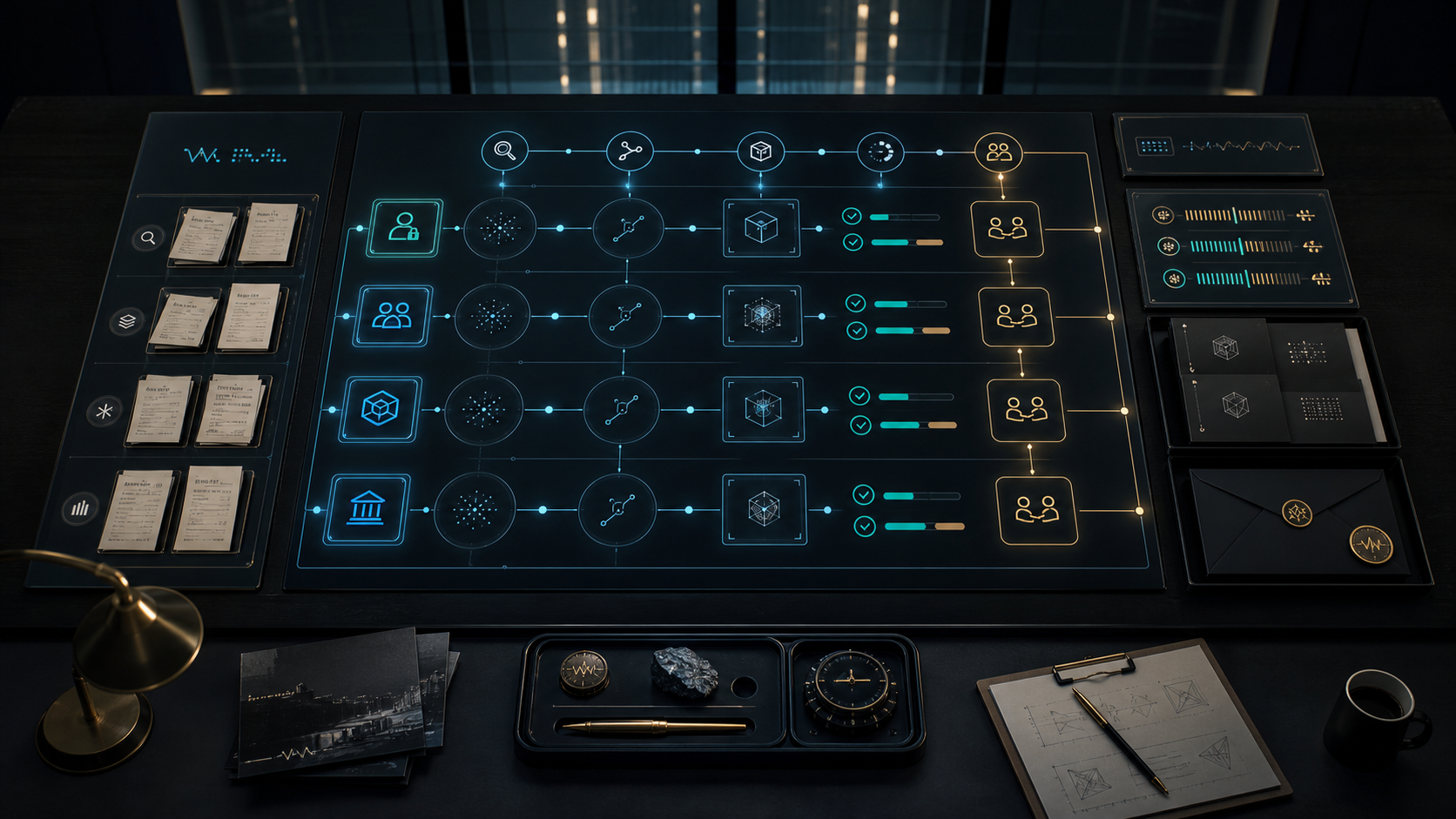
This original GPT-generated visual supports the buyer decision guide. It is not a shipped services console, staffed CRM proof, or W.N.-trained image-model output.
At a glance
Compare time-to-value, first return, and the wrong reason to choose each route.
The page already explains each lane in depth. This strip compresses the buying decision into four practical questions: what starts now, what comes back first, how quickly it usually moves, and when you should stop and pick another route instead.
Fast conversion rule: buyers need a delivery contract before they need more prose.
Use the route that matches the artifact you actually need first. If you are still asking for trust, stay free. If you need immediate utility, buy Member. If you need judgment or evidence, expect a scoped human response rather than instant checkout value.
Proof first
Start free when trust is still unresolved.
Open the public proof surfaces before you buy anything if the real blocker is credibility, current-state clarity, or route selection.
First return: Proof Pack, materials index, and request guide. Starts now: immediate self-serve review.- Best for
- Trust, orientation, and claim-boundary review
- Do not use for
- Portal utility, consulting judgment, or funded research
Buy utility when you want useful surfaces this week.
Member is the direct paid route into the Academy, member library, portal, and the W.N. AI prototype route.
First return: trial access to courses, library, portal, and member tools. Starts now: same-session access after checkout.- Best for
- Immediate learning, workflow use, and source access
- Do not use for
- Investor review, unresolved diligence, or custom evidence requests
Use judgment when the next move is a decision.
Consulting is for category design, roadmap pressure-testing, scenario work, and venture decisions that need structure before a build or spend.
First return: route recommendation, scoping questions, or a bounded sprint recommendation. Typical pace: best-effort first reply in a few business days when live routing is configured.- Best for
- Decision framing, strategy, and prioritization
- Do not use for
- Instant utility or evidence-producing lab work
Request evidence when the question needs a method, not a pitch.
Custom R&D turns a large ambition into a bounded research question, a written plan, and a visible approval gate before funded work begins.
First return: scoped plan, budget band, success criteria, and first artifact path. Typical pace: best-effort scoped recommendation in a few business days when live routing is configured.- Best for
- Benchmarks, trade studies, and reproducible findings
- Do not use for
- General browsing, consumer utility, or capital diligence
Immediate
Proof and Member are the only routes that should create value in the same session.
Few business days
Consulting and Custom R&D should return a bounded human next step, not silent submission.
Wrong purchase warning
Do not use checkout to solve unresolved diligence or institutional review.
Escalation path
Need enterprise, partner, board, or capital review? Use the enterprise brief or Investor Relations.
Explorer
Free
- Create a free account
- Browse public Academy material
- Explore the WN Exchange
- Read public briefings and the manifesto
Explorer is the right starting point when you still need trust, claim boundaries, and a realistic picture of what is live before paying for utility.
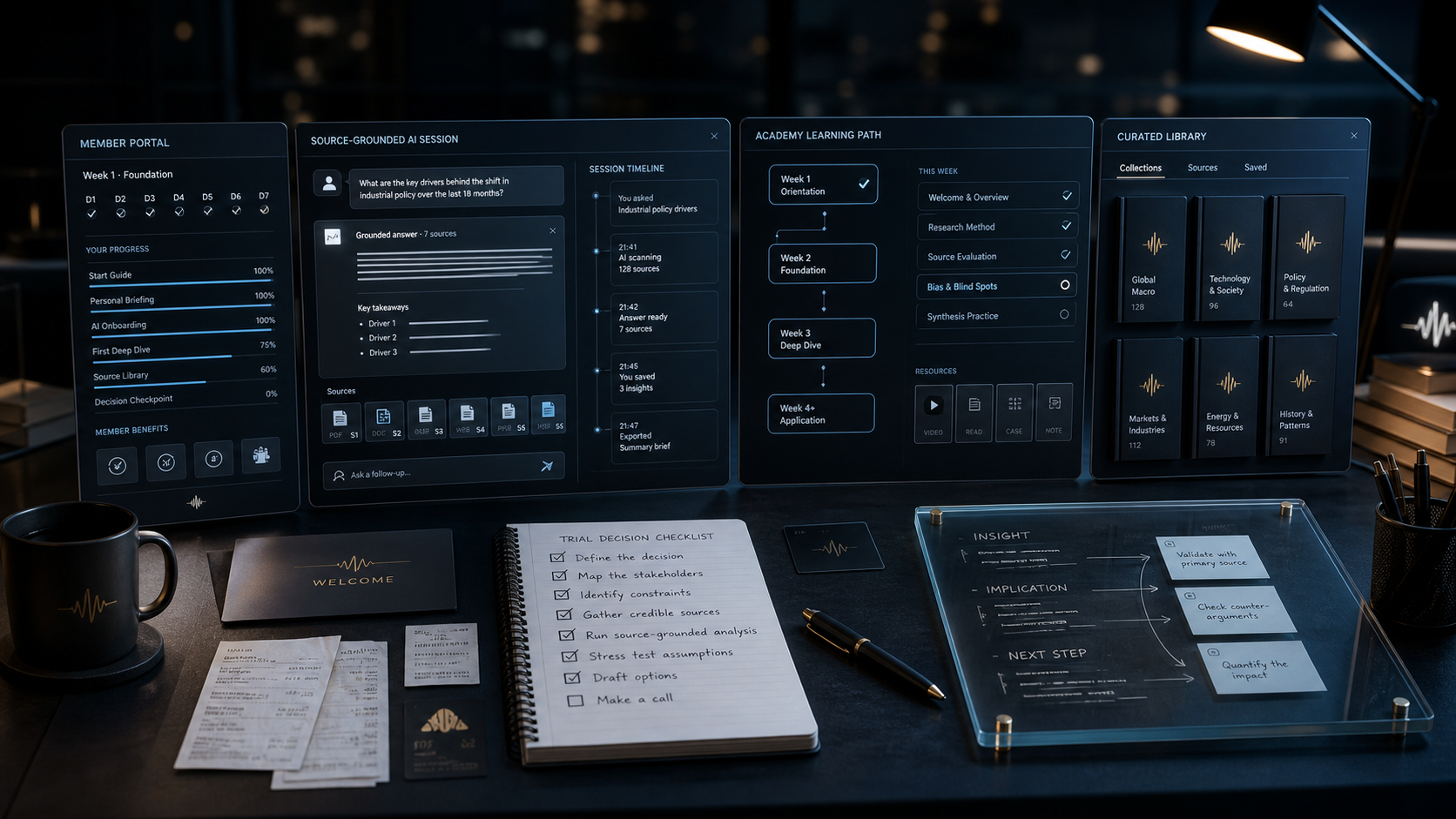
Member
7-day free trial
$25/mo
Billing choice
Monthly keeps the first decision smallest; annual is the lower-cost keep path if the first week already looks repeatable.
Start with the 7-day trial either way. The real choice is how you want billing to continue only after the trial if Member earns a place in your weekly workflow.
Monthly selected
A payment method is still required to begin the trial.
Use monthly when you want the easiest reversible continuation after the first week.
Annual works best only after the first week proves that the portal, Academy, library, and W.N. AI prototype path belong in your regular workflow.
Member is the paid route into current White Noise utility. Buy for the tools and library available now, not for roadmap items. Need the exact AI boundary first? Review the W.N. AI prototype boundary.
Image provenance: original GPT-generated member activation concept created for this run. Asset: assets/services/wn-services-member-activation-studio-20260630.png. Review the provenance record. Usage boundary: editorial orientation only, not proof of a shipped W.N. AI product, staffed support workflow, finished portal interface, or roadmap-complete member stack.
Routed from W.N. AI
This member route is for people who already decided the W.N. AI prototype boundary is good enough for a first week of utility.
Use Member when the goal is not more abstract evaluation. The useful first week is: open the portal, inspect the W.N. AI prototype workflow, start an Academy path, and use the member library as the source layer behind White Noise Computer and product-catalog prompts.
First-week standard
Member Portal access, W.N. AI prototype access, one Academy start, and the library unlocked.
This is a utility purchase, not proof of a public W.N. AI launch, custom support queue, institutional diligence flow, or finished roadmap release.
Confirm the limited-release workflow, source retrieval posture, and the present product boundary in the same place you will actually use it.
Turn product curiosity into structured learning instead of waiting for a larger W.N. AI roadmap release.
Pull from the 194-book library and the White Noise corpus so the value feels tangible before you consider any scoped service work.
Before checkout
Start Member when the first week itself is the product: portal access, the W.N. AI prototype, one Academy path, and the 194-book library unlocked.
Spend
7-day trial, then $25/mo or $240/yr
First-week return
Tools, courses, and source access in the same week
Refund boundary
14-day money-back guarantee after the first charge
If you still need basic trust, claim boundaries, or institutional review, stay in a free or diligence route first. Member is for present-day utility, not for evaluating future roadmap promises.
A payment method is required to start, but no charge lands today.
The route should create value in the same session, not after a sales process.
Use the first week to confirm fit before the membership rolls into a subscription.
Use it for Academy access, certificates, the member library, the portal, and the W.N. AI prototype workflow.
Start with the Proof Pack, the W.N. AI prototype boundary, or the public product and investor materials before paying.
Use Consulting, Custom R&D, or Investor Relations instead of forcing that job through checkout.
Buy for these current surfaces, not for roadmap interpretation.
These remain future-facing until White Noise publishes a separate release-state update.
Member is a utility purchase, not a substitute for institutional review or scoped work.
Use the trial well
Treat the first week like a decision sprint, not a vague subscription test.
The strongest membership path is concrete: verify the current AI boundary, create one useful output, start one learning path, then decide whether the live utility is strong enough to keep.
Decision rule
Keep Member only if the first week produces repeatable value.
If the real need turns out to be proof, a strategy memo, or a scoped research brief, leave checkout and route to the correct path instead of forcing the wrong job through a subscription.
Review the W.N. AI prototype boundary, the included utility, and the cancel path so the trial begins with informed expectations.
Use the live workflow preview the way you intend to use it, with source retrieval and real output, instead of only browsing marketing copy.
Pair the tool with one course and the 194-book source layer so the membership proves cross-surface value in the same week.
Continue only if the workflow is repeatable. Otherwise use the free portal, Consulting, or Custom R&D for the actual job.
Checkout handoff
This build should tell you plainly whether checkout is live or this is only a route preview.
Use this contract to confirm what happens after you click, where access lands, and whether you should ask a human before paying.
Live checkout path
A saved payment method is still required to start the trial.
Live team-side routing depends on whether the portal API is enabled in this environment.
Use this when the open question is trust, billing, support, or institutional review rather than self-serve utility.
14-day money-back guarantee. Full refund within 14 days of your first charge — no questions asked. See the billing terms.
Common checkout questions
Answer the hesitation questions before the payment step, not after it.
This section exists to reduce support-like uncertainty on the self-serve path. If one of these answers is still not enough, stop and use the contact route instead of guessing.
A payment method is still collected up front so renewal can start automatically after the trial unless you cancel first.
The expected first return is self-serve use this week, not a sales follow-up or a scoped human delivery process.
If the preview button is the only visible action or the widget never appears, no trial has started and no billing credentials were captured here.
Use the Proof Pack, Consulting, Custom R&D, or Contact instead of forcing the wrong job through checkout.
Preview path
If checkout is not visible here, use the portal as a preview only and keep the purchase decision reversible.
Preview mode is for inspecting the member workspace shape, plan boundaries, and first-week fit. It is not proof that a trial started or that paid access was unlocked.
Live checkout appears here only when PayPal billing is configured and the checkout widget loads successfully. If the preview button is the only option visible, or the checkout button never appears, no trial has started and no payment method has been collected; use the portal to inspect the member workspace shape, or review the billing terms, privacy posture, and contact route before asking for live checkout.
Club Syndicate
Free to join
- Free WN Club membership
- Form or join WN Club syndicates
- Submit Custom R&D scopes for quoted projects
- Pool funds for larger WN Lab engagements
- Live R&D reports and open results ledgers
Syndicate is a sponsor-and-scope layer for Custom R&D coordination. The Academy, W.N. Plus, portal access, and the W.N. AI prototype route remain part of Member, not the free Syndicate tier.
The Academy, W.N. Plus, portal access, and the W.N. AI prototype route are included with Member, with annual billing 20% off. Uploaded PDFs can also be purchased individually in the Book Store. Club Syndicate, Consulting, and one-off Custom R&D are scoped per engagement.
From Brief to Evidence
Research programs need a picture of the whole system
The Academy builds fluency, Consulting frames decisions, and Custom R&D turns one bounded question into an instrumented program. These four visual essays show the service arc: model broadly, design responsibly, measure at the frontier, and improve the infrastructure people actually depend on.
Consulting
Modeling at Civilization Scale
See interactions before choosing where to intervene.

Systems
Health as Infrastructure
The strongest solutions often sit upstream of the product.
R&D
Instruments of the Edge
Frontier work begins with reliable sensing and repeatable methods.
Strategy
Mechanism Design Over Prophecy
Build rules that adapt instead of betting everything on prediction.
A useful engagement ends with clearer choices, a reproducible record, and the next experiment already visible.
Scope a program →"With replicators and zero-point power, the foundations of money, ownership, and trade dissolve into a reputation economy where status flows from contribution and creativity." White Noise Totality — Part X
Get Started
Learn it, strategize it, or build it with us.
Join the Academy, bring in our consultants, or commission a custom research program in the WN Labs.